Table of Contents >> Show >> Hide
- What Was Reported Near the White House?
- Trump’s Fiery Statement and the Meaning Behind the Headline
- Why the National Guard Connection Matters
- Why the Location Intensified the Story
- The Politics of Public Safety After the Shooting
- How Officials Typically Respond to Incidents Like This
- The Role of Media Coverage
- Public Reaction: Anger, Fear, and Calls for Answers
- Why Language Matters in Moments of Crisis
- Security Near Federal Landmarks
- What Readers Should Watch for Next
- Experiences and Reflections Related to This Topic
- Conclusion
Note: Live source verification was unavailable in this session. Before publication, confirm the latest official details, names, conditions, charges, and timeline with current reporting and law-enforcement updates.
In a city where every siren seems to echo louder than the last, a reported shooting involving National Guard members near the White House quickly became more than a breaking-news alert. It became a national flashpoint. The phrase now driving headlines"The Animal"came from Trump’s fiery response after reports that a gunman opened fire on Guard personnel in the nation’s capital. Within hours, the story moved from local police updates to cable-news panels, social media debates, and dinner-table arguments across America.
The incident struck a nerve because it involved several combustible elements at once: public safety, federal security, military service members, political rhetoric, urban crime, and the symbolic geography of Washington, D.C. A shooting near the White House is never just another police report. It is treated as a national security story, a political story, and a civic-confidence story all at the same time. That is a lot of weight for one headline to carry, but Washington headlines rarely travel light.
What Was Reported Near the White House?
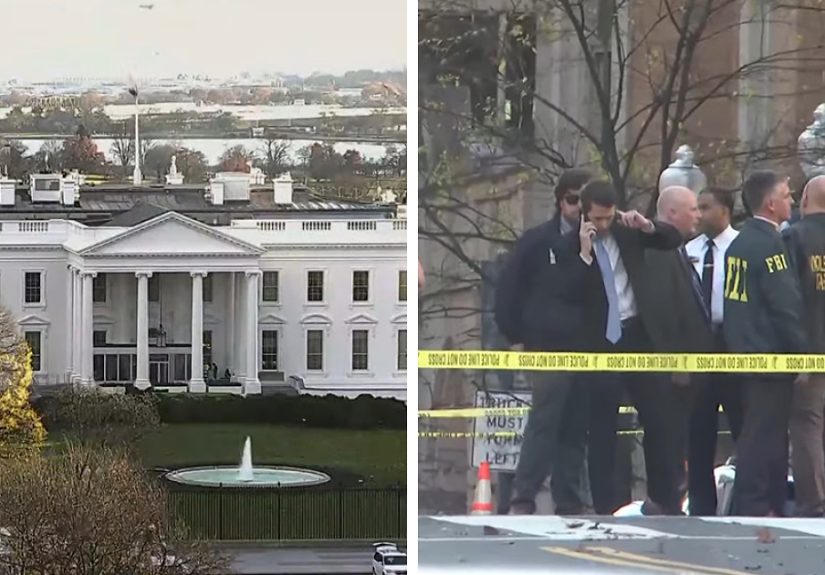
According to public reports surrounding the incident, National Guard members were shot in an area near the White House, prompting a rapid law-enforcement response and immediate attention from federal officials. Details in fast-moving cases can change, so responsible coverage should avoid racing ahead of confirmed facts. Early reports often focus on the location, the status of the injured, whether a suspect is in custody, and whether authorities believe there is any continuing threat to the public.
That cautious approach matters. In the first hours after violent incidents, misinformation spreads faster than a tourist jaywalking across Constitution Avenue. Social media can turn guesses into “facts,” and partial updates into sweeping conclusions. For readers, the best rule is simple: treat early information as provisional until official agencies, hospitals, prosecutors, or credible outlets confirm it.
Trump’s Fiery Statement and the Meaning Behind the Headline
Trump’s reported use of the term "The Animal" to describe the gunman immediately shaped the tone of the national conversation. Supporters saw the language as a blunt expression of anger on behalf of wounded service members. Critics argued that inflammatory rhetoric can intensify public emotion before the legal process has fully unfolded.
Either way, the statement did exactly what Trump statements usually do: it dominated the news cycle. Few modern political figures understand the power of a short, sharp phrase better than Trump. Whether one agrees with his style or not, his language often functions like a headline generator wearing a red tie. In this case, the phrase became shorthand for outrage, fear, and demands for accountability.
Why the National Guard Connection Matters
The involvement of National Guard members makes the story especially sensitive. Guard members often occupy a unique space in American life. They are military personnel, but they also serve in domestic emergencies, natural disasters, civil unrest responses, and public-security missions. Many have civilian jobs, families, and communities waiting for them when they come off duty.
When Guard members are attacked while serving, the public reaction often goes beyond standard concern for victims of crime. People see them as individuals who were present because the government asked them to be there. That perception raises sharper questions about preparedness, protective measures, and the risks faced by service members assigned to domestic duties.
Public Service Comes With Real Risk
National Guard members are sometimes deployed into tense environments where the line between routine security and sudden danger can vanish in seconds. Their job may look quiet from the outsidestanding post, monitoring a perimeter, helping maintain orderbut quiet does not mean risk-free. That is one reason attacks involving Guard members tend to resonate so strongly with the public.
Why the Location Intensified the Story
The White House is not just a building. It is a symbol, a workplace, a tourist destination, a security zone, and a political stage. When violence occurs nearby, Americans tend to read it as a sign of something larger, even before investigators have explained motive or context. The geography alone amplifies the story.
Washington, D.C., also carries a special burden in the national imagination. It is expected to be open enough for democracy and secure enough for government. That balance is difficult on the best day. On a day involving a shooting near one of the most protected sites in the country, the tension becomes impossible to ignore.
The Politics of Public Safety After the Shooting
The shooting immediately fed into the broader debate over crime, policing, federal authority, and security in major American cities. For Trump and his allies, incidents like this are often used to argue for tougher law enforcement, stronger border and vetting policies if relevant to the case, and a more aggressive federal role in public safety. Opponents may respond by warning against politicizing tragedy before investigators release a complete picture.
Both reactions are predictable because crime stories in America rarely remain only crime stories. They become arguments about leadership, ideology, government competence, and national identity. In Washington, even a police briefing can feel like the opening statement of a Senate hearing.
Accountability Versus Assumption
There is a difference between demanding accountability and assuming every detail before the evidence is public. A serious justice process requires facts: who acted, what happened, what charges are supported, what motive can be proven, and whether any system failed. Anger may be understandable, especially when service members are harmed, but legal accountability still depends on evidence rather than volume.
How Officials Typically Respond to Incidents Like This
After a shooting near a major federal site, the response usually involves multiple layers of law enforcement. Local police may secure the scene and begin the initial criminal investigation. Federal agencies may assist depending on the location, target, suspect background, and potential security implications. Emergency medical teams focus on stabilizing the injured. Prosecutors later determine charges based on evidence collected from the scene, witness statements, surveillance footage, and forensic work.
For the public, the most important updates usually include whether the suspect is in custody, whether there is a continuing threat, the condition of the injured, and whether officials believe the act was targeted or random. Responsible reporting should separate confirmed facts from political interpretation. That line can get blurry during breaking news, but it is exactly when the line matters most.
The Role of Media Coverage
Media outlets face a difficult challenge with stories like this. Readers want immediate information. Editors want accuracy. Search engines reward speed. Social media rewards outrage. Somewhere in that circus, the truth is expected to wear a name tag and find a seat.
The best coverage avoids graphic details, does not glorify the attacker, and keeps the focus on verified information, public safety, and the people affected. Headlines can be compelling without being reckless. In this case, the phrase "The Animal" is undeniably attention-grabbing, but the article beneath the headline should still do the slower, more careful work of explaining what is known and what remains under investigation.
Public Reaction: Anger, Fear, and Calls for Answers
Public reaction to the reported shooting was intense because the victims were National Guard members and the location was close to the White House. Many Americans responded with sympathy for the injured and their families. Others focused on broader questions: Were the Guard members adequately protected? What was the suspect’s motive? Did security protocols work? Could the incident have been prevented?
Those questions are natural, but the answers usually take time. Investigations do not move at the speed of social media, and they should not. A rushed conclusion may satisfy the internet for five minutes, but it can mislead the public and complicate justice.
Why Language Matters in Moments of Crisis
Trump’s statement became part of the story not only because of what happened, but because of how he framed it. Political language after violence can comfort, mobilize, provoke, or divide. Words matter because they help the public decide what kind of story they are hearing: a crime story, a national-security story, a moral-outrage story, or a political-warning story.
Calling a suspect "The Animal" is a deliberate rhetorical choice. It communicates fury and condemnation. It also raises the temperature of the conversation. For some readers, that directness feels appropriate after violence against service members. For others, it risks replacing careful judgment with emotional escalation. A serious article can acknowledge both reactions without pretending the phrase landed quietly. It did not. It landed like a cymbal crash in a marble hallway.
Security Near Federal Landmarks
Federal landmarks in Washington operate under layered security. Visible officers, checkpoints, patrols, barriers, cameras, and restricted zones are part of the landscape. Tourists may notice some of it; residents may stop noticing it until something happens. But even heavily monitored areas are not immune to sudden violence.
That reality is uncomfortable. Security systems reduce risk, but they do not eliminate it. A democratic capital cannot become a sealed bunker without losing something essential. The challenge is to protect public servants, residents, and visitors while preserving the openness that makes civic life possible.
What Readers Should Watch for Next
As the case develops, readers should look for official updates on the condition of the injured National Guard members, the suspect’s identity if released, criminal charges, court appearances, motive, and any findings about security procedures. It is also worth watching how political leaders use the incident in broader debates about crime and federal authority.
The most useful coverage will not be the loudest. It will be the coverage that distinguishes between confirmed developments and commentary. In a story already charged with emotion, clarity is not boring. Clarity is the seatbelt.
Experiences and Reflections Related to This Topic
Stories like this often make people think about their own experiences with public safety, crowded places, and the quiet presence of uniformed service members. Anyone who has walked near the White House knows the area has a strange mix of moods. One minute, families are taking photos. The next, motorcades roll through, officers redirect pedestrians, and everyone remembers they are standing near one of the most security-sensitive addresses on Earth.
For many visitors, National Guard members and law-enforcement officers become part of the background. They are there, steady and visible, while the city moves around them. People ask for directions, take pictures nearby, and sometimes forget that standing watch is work. It is not scenery. It is a duty post.
When violence touches that kind of duty, it changes how people look at public spaces. A sidewalk becomes more than a sidewalk. A checkpoint becomes more than an inconvenience. A uniform becomes a reminder that someone is absorbing risk so others can keep moving through daily life.
There is also a human lesson in how we consume breaking news. Many people have experienced the rush of seeing a shocking headline, opening three apps at once, and trying to piece together the truth from fragments. That instinct is understandable, but it can also be misleading. The first version of a story is often incomplete. The loudest version is not always the most accurate. The most emotional version may be the least useful.
A better approach is to pause, check whether the information comes from an official source or a reputable newsroom, and resist sharing claims that have not been confirmed. That may sound old-fashioned, like telling people to chew slowly or use turn signals. But in a crisis, patience is not weakness. It is civic hygiene.
The incident also invites a broader reflection on political speech. Americans are used to sharp language, especially from Trump. His style is combative, memorable, and designed to dominate attention. That can rally supporters quickly, but it can also turn complex events into emotional symbols before all facts are known. The public has to learn how to separate the emotional force of a statement from the evidence needed to understand the event itself.
For families of service members, stories like this can be especially difficult. A deployment or security assignment may seem routine until a headline proves otherwise. The people in uniform are not abstract figures in a political debate. They are sons, daughters, parents, siblings, friends, classmates, and neighbors. Their families refresh updates, wait for calls, and carry the emotional weight long after the news cycle moves on.
For residents of Washington, D.C., the story may feel personal in another way. National headlines often treat the city as a stage for national politics, but it is also a real community where people go to work, school, restaurants, parks, and grocery stores. When violence happens near federal landmarks, the whole country pays attention. When violence happens elsewhere in the city, local residents still live with the consequences. Both realities deserve care.
The best public response is not panic. It is seriousness. That means supporting the injured, letting investigators work, holding suspects accountable through the legal system, reviewing security procedures where needed, and refusing to turn every tragedy into a rumor factory. Anger may be natural. Fear may be natural. But neither should be allowed to drive the facts off the road.
Conclusion
The reported shooting of National Guard members near the White House is a serious and emotionally charged incident. Trump’s fiery "The Animal" statement captured national outrage, but the story is bigger than one phrase. It raises questions about public safety, political rhetoric, federal security, and the risks faced by service members assigned to domestic duties.
As the investigation continues, readers should focus on confirmed updates, avoid spreading unverified claims, and remember the human beings at the center of the story. In a moment filled with anger and uncertainty, accuracy is not just a journalistic value. It is a public responsibility.