Table of Contents >> Show >> Hide
- Who Is Anna Zimorodok?
- Why Her Miniatures Feel So Captivating
- The Lacquer Tradition Behind the Shine
- Miniature Art Has Always Been More Than “Small”
- What Anna Zimorodok’s Work Says About Art Today
- Why These Tiny Paintings Feel Like Heirlooms
- Experiences Related to the Topic: What It Feels Like to Encounter Miniature Lacquer Painting Up Close
- Conclusion
Some artists work on a grand scale. They need giant canvases, ladders, a dramatic studio photo, and probably one assistant holding a coffee the size of a flowerpot. Anna Zimorodok goes in the opposite direction. Her world is tiny, polished, and astonishingly detailed. Instead of asking viewers to step back and admire something wall-sized, she invites them to lean in so close that breathing suddenly feels rude.
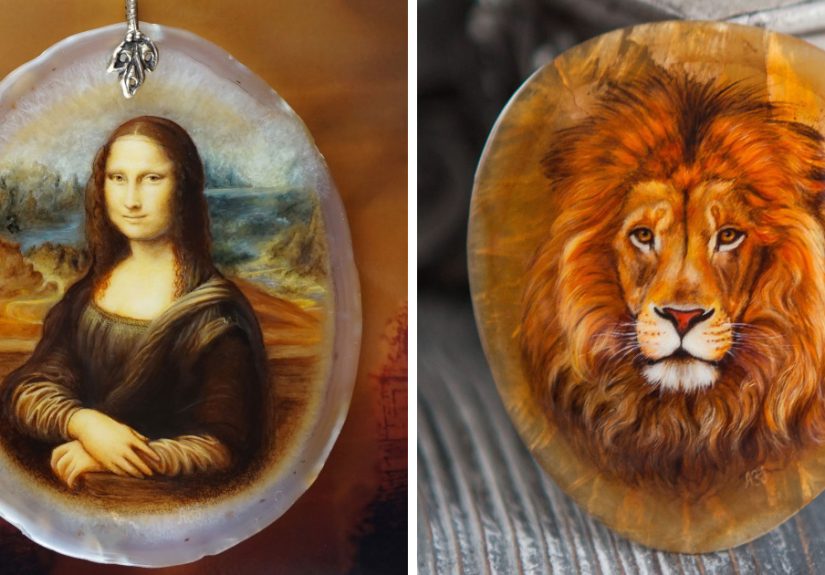
The magic of Anna Zimorodok’s miniature lacquer painting lies in that delicious contradiction: the artworks are physically small, yet emotionally expansive. They live on natural stones and pendants, but they behave like pocket-sized dreamscapes. Flowers bloom, animals gaze back with surprising tenderness, mandalas pulse with symbolic energy, and even references to famous masterpieces appear in forms small enough to fit in the palm of your hand. It is jewelry, yes. It is painting, absolutely. And it is also something rarer: a quiet reminder that scale has very little to do with impact.
That is exactly why her work stands out online and in person. In an era of speed-scrolling, giant visuals, and attention spans that occasionally last as long as microwave beeps, Zimorodok creates art that demands patience. You do not glance at it. You visit it. Her miniatures ask for the one luxury modern life keeps trying to steal from us: sustained looking.
Who Is Anna Zimorodok?
Anna Zimorodok is widely described as a self-taught artist from Moscow whose miniature lacquer paintings are created on natural stones such as agate, quartz, and jade. That alone is enough to make an art lover raise an eyebrow in respect. Painting is hard. Painting well is harder. Painting detailed, polished, jewel-like imagery on stone that may later become wearable art is the sort of thing that makes ordinary creative hobbies quietly pack their bags and go home.
What makes her story especially interesting is the way it combines personal independence with traditional discipline. A self-taught artist is often imagined as improvisational, instinctive, and free from rigid rules. Lacquer miniature painting, by contrast, is associated with patience, layering, finish, and exacting control. Zimorodok’s work appears to sit at the crossroads of those two forces. It feels intuitive and mystical, yet it also depends on painstaking craft.
Descriptions of her work note the use of oil paint, gold leaf, and lacquer, with one painted stone reportedly taking many days to complete. That timeline makes sense. Nothing about this medium suggests hurry. These are not pieces you make while half-watching television and answering texts. These are pieces that require a steady hand, a clear eye, and the willingness to revisit a surface again and again until it glows.
Why Her Miniatures Feel So Captivating
She paints on stone, not on convenience
A smooth stone already carries presence before the paint arrives. It has weight, temperature, natural pattern, and its own quiet personality. When Zimorodok paints on agate or quartz, she is not merely decorating a blank support. She is entering a dialogue with geology. The material already has history. Veins, translucency, color shifts, and polished contours all influence how the final image feels. The result is not a painting placed on top of an object. It is an artwork fused with the object’s identity.
That fusion matters because it gives the finished piece a sense of inevitability. The best stone miniatures do not look forced. They look discovered, as if the image had been waiting inside the mineral all along and the artist simply had the courtesy to reveal it.
Her small scale creates intimacy
Miniature art has always possessed a special kind of power. It pulls the viewer inward. Museums often describe miniatures as intimate, jewel-like, and personal, and that language fits Zimorodok’s work perfectly. A large painting can dominate a room. A miniature changes the rhythm of attention. It asks for closeness. You hold it in your hand. You tilt it toward the light. You notice details one by one, and the act of seeing becomes almost ceremonial.
That intimacy is one reason miniature art so often overlaps with jewelry. Historically, miniatures were mounted in lockets, brooches, bracelets, and other precious objects meant to be carried or worn. Zimorodok’s pendants continue that tradition in a modern, poetic way. They are not simply accessories with paint on them. They are personal images designed to travel with the body.
Her imagery balances beauty and symbolism
Flowers, animals, mandalas, and references to art history might sound like very different visual categories, but in her work they share a common mood: reverence. Nothing looks tossed in for decoration alone. A flower becomes more than a flower; it becomes a study in delicacy, impermanence, and renewal. An animal becomes more than a charming subject; it becomes a guardian, companion, or symbol of instinct. A mandala becomes more than pattern; it becomes an invitation to contemplation. Even when the piece is tiny, the emotional register is not.
This is where her work avoids becoming merely cute. Small art is sometimes unfairly treated as a novelty, as though reduced dimensions automatically reduce seriousness. Zimorodok’s miniatures reject that assumption. They are pretty, yes, but not shallow. They are decorative, but not disposable. They present beauty as something layered, symbolic, and worth slowing down for.
The Lacquer Tradition Behind the Shine
To appreciate Anna Zimorodok’s paintings fully, it helps to understand why lacquer carries such a distinguished artistic legacy. Across Asia, lacquer has been valued for centuries for its durability, luster, and transformative effect on surfaces. Museums and conservation experts describe lacquer as a material built through multiple thin layers, often over a core such as wood, cloth, or other support materials. That layered approach is part chemistry, part craftsmanship, and part patience test from the universe.
Lacquer has historically appeared on vessels, sculpture, boxes, bindings, writing equipment, and ceremonial objects. In each case, it does more than protect. It deepens color, sharpens contrast, and creates a surface that seems to hold light inside itself. That is why lacquered objects can feel so luxurious even before you examine their imagery. The finish itself announces care.
In miniature traditions especially, lacquer has a natural advantage. Tiny compositions need clarity. They need the image to read, glow, and endure. A polished lacquer finish helps deliver exactly that. It turns small things into precious things. It gives a miniature the authority of an artifact.
How Russian lacquer echoes in her work
Although Zimorodok paints on stone pendants rather than traditional papier-mâché boxes, her work still resonates with the broader history of Russian lacquer miniatures. Russian lacquer traditions, including the famous schools associated with places such as Fedoskino and Palekh, are known for dramatic dark grounds, luminous detail, and the use of metallic or reflective accents that make painted scenes shimmer. Gold leaf, glowing highlights, and jewel-box scale are not accidental choices in that lineage. They are part of what makes lacquer miniatures feel theatrical and intimate at the same time.
Zimorodok’s pieces seem to borrow that spirit without becoming historical reproductions. They are contemporary, wearable, and personal. Yet they still share the classic lacquer miniature ambition: to make a very small image feel impossibly alive.
Miniature Art Has Always Been More Than “Small”
One of the biggest misconceptions about miniature painting is that it is simply regular painting shrunk down. It is not. Miniature art has its own logic, traditions, and social meaning. Across different cultures, miniature paintings appeared in manuscripts, portrait medallions, lacquered bindings, devotional objects, and portable keepsakes. Their size made them private. Their detail made them prestigious. Their portability made them deeply personal.
That history matters because it explains why Zimorodok’s art feels strangely timeless, even when seen on a modern screen. We already know, culturally speaking, how to respond to objects like this. We recognize them as treasures. Not necessarily because they are expensive, but because they compress skill, memory, and symbolism into something close enough to touch.
There is also a psychological factor. Small things trigger protective attention. We cradle them. We inspect them carefully. We lower our voice around them, figuratively speaking. Miniature art creates a different kind of relationship than monumental art. It is not about awe from a distance. It is about attachment through proximity.
What Anna Zimorodok’s Work Says About Art Today
Contemporary visual culture loves scale, speed, and spectacle. Bigger launch. Bigger screen. Bigger installation. Bigger wow. Zimorodok’s miniature lacquer paintings move in the opposite direction, and that is exactly why they feel relevant. They are anti-noise objects. They refuse to shout. Instead, they whisper with enough precision that you choose to listen.
That refusal is not nostalgia. It is strategy. In a world flooded with images, intimacy can be more disruptive than size. A tiny pendant that rewards sustained attention can feel more memorable than a giant mural you snap once and forget by lunchtime. Her work also speaks to the renewed interest in craft, slowness, and handmade value. Viewers are increasingly drawn to objects that show evidence of time, care, and touch. Miniature lacquer painting offers all three.
There is also something refreshingly uncynical about her themes. Nature, spirituality, beauty, ornament, and tenderness are treated seriously rather than ironically. That matters. A lot of contemporary art is clever; not all of it is generous. Zimorodok’s paintings feel generous. They offer delight without apology.
Why These Tiny Paintings Feel Like Heirlooms
Some artworks impress you. Others stay with you. Zimorodok’s miniature lacquer paintings do a bit of both because they are built around permanence. Stone is durable. Lacquer is protective. Gold leaf suggests value. Miniature scale encourages personal attachment. Put those elements together and the result starts to feel less like a passing fashion item and more like an heirloom in waiting.
That heirloom quality is not just about materials. It is also about mood. Her pieces seem designed to become meaningful over time. A pendant worn often gathers memory. It appears in photographs, travels through seasons, accompanies conversations, and quietly absorbs personal history. That is the secret strength of wearable art: it does not stay fixed on a wall. It lives alongside a person.
And when the image itself contains flowers, animals, celestial motifs, or art-historical echoes, the object gains another layer. It becomes a small archive of feeling. Beauty, memory, symbolism, and craftsmanship all end up living in the same compact space. Not bad for something that fits in your hand.
Experiences Related to the Topic: What It Feels Like to Encounter Miniature Lacquer Painting Up Close
Looking at miniature lacquer painting in person is a completely different experience from seeing it online. On a screen, the work is impressive because the detail seems improbable. In real life, the effect is more emotional. First, you notice the size. It is always smaller than your imagination expected. Then you notice the surface. Lacquer does not behave like flat matte paint. It catches light, deepens shadows, and creates a sense that the image is hovering just beneath a polished skin. That combination of small scale and glowing finish makes the artwork feel intimate, almost secretive, like it is revealing itself only to careful viewers.
There is also a distinct bodily experience in holding or wearing art of this kind. A wall painting lives across the room. A miniature pendant lives in your personal space. You feel its weight. You turn it slightly and watch the highlights move. You lean closer, and suddenly the relationship becomes less like viewing a picture and more like reading a tiny visual poem. The artwork is not demanding your attention through size; it is earning it through concentration.
Many people who love miniature art talk about the pleasure of discovery, and that idea fits perfectly here. At first glance, you may see a flower, a fox, a bird, or a circular ornamental design. A second look reveals finer brushwork, subtler color transitions, and compositional choices that did not announce themselves immediately. A third look makes you realize that the artist has choreographed your gaze with incredible care. Tiny details become landmarks. The piece starts to feel larger not physically, but mentally.
There is something meditative about that process. Because the object is so small, distractions fall away. You stop multitasking. You stop scanning. You give the work the kind of patient attention usually reserved for a handwritten letter, a piece of antique jewelry, or something fragile borrowed from a relative who watches you like a hawk while you hold it. In other words, the art changes your behavior. That is a quiet achievement, but a profound one.
Miniature lacquer painting also creates a very personal experience of beauty. Monumental art can feel public and ceremonial. A miniature feels chosen. It can become part of daily life in a way large art cannot. Imagine wearing a hand-painted stone pendant to dinner, to work, or on a trip. Over time, the piece would collect associations: a compliment from a stranger, a reflection in a shop window, a special occasion, a difficult day made better by something beautiful. The object would stop being merely decorative and start becoming biographical.
That is why art like Anna Zimorodok’s can linger so powerfully in memory. It does not overwhelm you. It accompanies you. It asks you to come close, rewards you for staying, and then quietly follows you into the rest of your day. The best miniature lacquer paintings leave you with the delightful suspicion that maybe the most moving art is not always the biggest thing in the room. Sometimes it is the smallest thing, glowing patiently, waiting for you to notice.
Conclusion
Anna Zimorodok’s miniature lacquer paintings succeed because they bring together several qualities that rarely coexist so elegantly: technical discipline, poetic symbolism, material richness, and genuine intimacy. Her painted stones and pendants are not just pretty objects meant for a quick reaction and a faster scroll. They belong to a deeper tradition in which small-scale works carry large emotional weight.
They also remind us that refinement is not the same thing as restraint. A miniature can be lush. A pendant can carry narrative. A polished stone can hold an entire atmosphere. Through careful layering, jewel-like detail, and subjects that range from botanical to mystical, Zimorodok turns wearable surfaces into worlds. That is no small feat. Actually, scratch that. It is a very small feat. Which somehow makes it even more extraordinary.