Table of Contents >> Show >> Hide
- How to Practice Yoga Poses for Two Safely
- Beginner Partner Yoga Poses
- Intermediate Partner Yoga Poses
- Advanced Partner Yoga Poses
- How to Turn These 21 Poses Into a Routine
- Common Mistakes in Partner Yoga
- Why Yoga Poses for Two Are Worth Trying
- Experiences With Partner Yoga: What It Really Feels Like
- Conclusion
- SEO Tags
Some workouts build muscle. Some build patience. Partner yoga cheerfully tries to do both at the same time.
If solo yoga is about tuning in to your body, yoga poses for two add a second moving part, a second breathing rhythm, and occasionally a second opinion about whether you are “totally balanced” or “absolutely tipping over.” That is exactly what makes partner yoga so much fun. Done well, it can improve flexibility, body awareness, coordination, trust, and communication. Done badly, it still usually gives you a story.
This guide breaks down 21 partner yoga poses into beginner, intermediate, and advanced routines so you can choose moves that fit your comfort level. The goal is not to turn your living room into a circus audition. The goal is to move well, breathe steadily, support each other, and enjoy a practice that feels playful instead of punishing.
Before you start, use a yoga mat or other non-slip surface, warm up for several minutes, and agree on one important rule: if either person says “nope,” you both back out of the pose. Partner yoga works best when ego takes a snack break and communication shows up fully caffeinated.
How to Practice Yoga Poses for Two Safely
Partner yoga looks cute on social media, but real-life success depends on basics. Start with easy shapes, especially if one or both of you are new to yoga. Move slowly into each posture, match your breathing when possible, and never force depth just because your partner is more flexible. Flexibility is not a personality contest.
Use clear cues such as “lean a little,” “stop there,” or “I need more support.” Keep your core gently engaged during standing and balancing poses, and come out of anything wobbly with control. If either of you has a recent injury, ongoing back, neck, shoulder, knee, or wrist pain, vertigo, or any condition that affects balance, choose gentler options or ask a qualified instructor or healthcare professional what is appropriate first.
A simple warm-up helps a lot. Think shoulder rolls, easy twists, hip circles, cat-cow, and a few rounds of slow breathing. Save long, intense stretches for after your body is warm. That one small decision can make your practice feel dramatically better.
Beginner Partner Yoga Poses
These beginner-friendly yoga poses for two focus on mobility, light stretching, posture awareness, and trust. They are a great place to start if you want the benefits of couples yoga without feeling like you accidentally signed up for acrobatics.
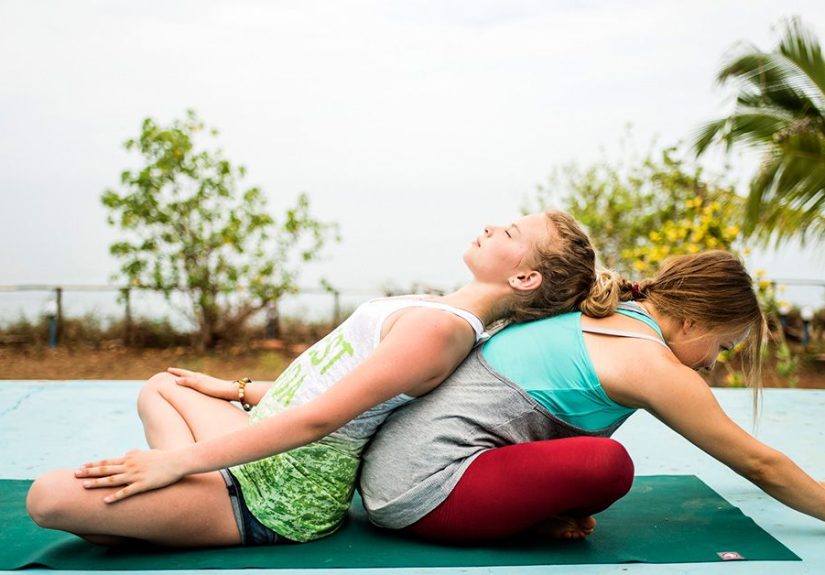
1. Seated Back-to-Back Breathing
Sit cross-legged with your backs touching and your hands resting on your knees. Lengthen your spines and take 5 to 10 slow breaths together. This pose looks simple because it is simple, which is exactly why it works. It helps both partners settle in, feel each other’s breathing rhythm, and begin the practice with calm instead of chaos.
2. Seated Side Bend Mirror Stretch
Sit facing each other or back-to-back. Raise one arm overhead and lean gently to the side, then switch. Keep both sitting bones grounded as much as possible. This opens the side body, ribs, and shoulders, and it is especially helpful if you both spend too much time hunched over laptops like determined little shrimp.
3. Partner Cat-Cow
Sit cross-legged facing each other and hold each other’s forearms or wrists lightly. Inhale to lift the chest and broaden the collarbones; exhale to round the upper back and draw the chin slightly in. Move slowly for several rounds. This is a friendly introduction to breath-led movement and can ease stiffness in the spine and shoulders.
4. Seated Partner Twist
Sit back-to-back with crossed legs. On an inhale, lengthen the spine. On an exhale, twist to the right, placing your left hand on your right knee and your right hand on your partner’s left knee or thigh. Repeat on the other side. Keep the twist gentle and tall rather than yanking yourself around like a stubborn pickle jar lid.
5. Double Child’s Pose
One partner kneels and folds into Child’s Pose. The second partner kneels just behind and folds forward, reaching the arms long or resting lightly over the first partner’s back without adding pressure. This creates a soft supported stretch for the shoulders and back. Go easy here; this should feel comforting, not like human furniture assembly.
6. Back-to-Back Chair Pose
Stand with your backs touching and feet about hip-width apart, slightly in front of your hips. Press gently into each other and bend your knees to lower into a supported Chair Pose. Hold for a few breaths, then stand back up together. This builds leg strength and helps both partners understand how shared support changes balance.
7. Standing Forward Fold with Hand Hold
Stand facing each other and hold hands. Step back until your arms are straight, then hinge at the hips so your torsos angle forward and your hips move back. Keep a soft bend in the knees if needed. This is a great beginner partner stretch for the chest, shoulders, hamstrings, and spine.
Intermediate Partner Yoga Poses
Once you are comfortable with basic communication, shared balance, and moving with control, these intermediate yoga poses for two add a little more challenge. They ask for stronger legs, steadier core engagement, and a bit more trust.
8. Twin Tree Pose
Stand side by side with your inside arms around each other’s waists or shoulders. Shift weight into the inside leg and place the outside foot on the ankle or calf of the standing leg, avoiding the knee. Bring the outside arm overhead or to prayer. This improves balance and focus while giving you both a chance to pretend you are serene forest beings.
9. Temple Pose
Stand facing each other and step close enough to place palms against your partner’s. Hinge forward from the hips until your arms are long and your torso forms an L-shape. Let the chest melt gently toward the floor while pressing evenly into the hands. This pose opens the shoulders and upper back beautifully and often feels better than expected.
10. Partner Boat Pose
Sit facing each other with knees bent and toes touching. Hold hands or wrists, lift one foot at a time, then press the soles together and gradually straighten the legs if possible. Stay tall through the spine. This move challenges the core, hip flexors, and concentration. It also reveals who has been skipping core day.
11. Double Downward Dog Variation
One partner comes into Downward-Facing Dog. The second partner stands near the first partner’s hands, places hands on the floor a short distance in front, and carefully steps one foot and then the other onto the lower back or upper hip area of the base partner, eventually lifting into a stacked version of Downward Dog. Only do this if both people are already confident with standard Downward Dog and comfortable bearing weight. If there is any strain, back out immediately.
12. Warrior II Support
Stand facing the same direction in Warrior II, with front knees bent and back legs strong. Hold each other’s inside hands or lightly touch forearms for support. This is less flashy than some partner yoga poses, but it is excellent for posture, leg strength, and awareness of how grounding changes stability.
13. Supported Bridge Pose
One partner lies on the back with knees bent and feet grounded, lifting the hips into Bridge Pose. The second partner kneels near the feet or stands beside the mat and offers hands for light support, helping the base partner feel steady through the chest and shoulders. This is a smart intermediate step before trying bigger backbends.
14. Partner Plank Hand Tap
Come into facing high planks with your shoulders stacked over wrists. From there, carefully lift one hand at a time to tap your partner’s opposite hand, then switch. Keep the hips as steady as possible. This move builds core stability and shoulder strength, and it turns a normal plank into a teamwork negotiation.
Advanced Partner Yoga Poses
These advanced partner yoga poses require strength, mobility, concentration, and honest communication. If you are not fully comfortable with the earlier levels, there is no prize for rushing ahead. The mat will still be there tomorrow, and it will still be equally smug.
15. Standing Partner Backbend
Stand facing each other and hold forearms. Step one foot back for stability, lift the chest, and lean away from each other into a controlled standing backbend. Keep the core engaged and the neck long rather than dropping the head back wildly. This creates a strong opening across the chest, front shoulders, and hip line.
16. Double Plank
One partner comes into a solid high plank. The second partner places hands on the floor in front of the first partner’s hands, then carefully steps the feet one at a time onto the lower back or hips of the base partner and lifts into plank. This is not a beginner move. It demands strong shoulders, steady wrists, and zero nonsense.
17. Assisted Wheel Pose
One partner lies on the back and presses up into Wheel Pose if already experienced with the posture. The second partner stands at the head or side and offers support at the shoulders or upper arms without pulling. If Wheel is not already part of your solo practice, skip this and stay with Supported Bridge instead. Advanced means prepared, not adventurous in a reckless way.
18. Partner Camel Pose
Kneel facing each other. Each partner places hands on the lower back or heels, lifts the chest, and leans back into Camel while lightly holding forearms or hands if that feels supportive. Keep the thighs upright and the front ribs contained. This pose can feel intense, so come out slowly and rest afterward.
19. Standing Split Counterbalance
Stand facing each other and hold hands or forearms. Shift weight into one leg and lift the opposite leg behind you into a standing split or dancer-like hinge, using your partner’s counterbalance to stay steady. Go only as high as you can maintain without twisting. This challenges hamstring length, balance, and control.
20. Advanced Partner Boat with Leg Extension
Start in Partner Boat Pose with soles touching. Once stable, both partners straighten the legs more fully, broaden the chest, and reach for a longer hold. Keep your spine tall instead of collapsing into the lower back. This becomes a serious core and hip flexor challenge very quickly, which is yoga’s polite way of saying “surprise.”
21. Back-to-Back Chair to Stand Flow
Begin in back-to-back Chair Pose. From there, press into each other and rise to standing together without using hands. Repeat for several controlled reps. It sounds simple until your legs file a formal complaint. This finishing move builds lower-body strength, timing, and trust in shared movement.
How to Turn These 21 Poses Into a Routine
Beginner Routine
Try poses 1 through 7 in order. Hold each for 3 to 5 breaths or about 20 to 30 seconds. Keep transitions slow and add extra breathing between poses if needed. This sequence works well as a gentle evening routine, a weekend reset, or a surprisingly wholesome date idea.
Intermediate Routine
Start with poses 1, 3, and 6 as a warm-up, then move to poses 8 through 14. Hold the balancing poses for 3 to 5 breaths per side and the strength poses for 15 to 30 seconds. Rest briefly between attempts of Double Downward Dog and Plank variations.
Advanced Routine
Warm up with beginner and intermediate poses first, then choose 3 to 5 advanced options rather than forcing all seven into one session. The smartest advanced practice is the one that still looks controlled at the end. Finish with a gentle seated twist and a quiet minute of back-to-back breathing.
Common Mistakes in Partner Yoga
The biggest mistake is going too big too soon. A close second is assuming your partner can read your mind because you once made eye contact during brunch. In partner yoga, communication matters more than ambition.
Other common issues include locking the knees, collapsing into the lower back, holding the breath, and treating balance poses like competitive events. Keep a soft focus, breathe normally, and prioritize stability over aesthetics. Nobody wins extra points for looking like a yoga catalog if the pose feels terrible.
Why Yoga Poses for Two Are Worth Trying
Partner yoga combines many of the best parts of traditional yoga with the motivation of practicing with another person. You get stretching, strength, coordination, and body awareness, but you also get feedback in real time. You notice when you rush. You notice when you tense up. You notice when breathing together makes a pose feel easier. Those are useful lessons on and off the mat.
For couples, friends, siblings, or workout partners, yoga for two can be a refreshing alternative to repetitive fitness routines. It encourages patience, trust, and shared progress. And unlike some partner workouts, it does not require matching neon outfits, though the option remains gloriously available.
Experiences With Partner Yoga: What It Really Feels Like
One of the most interesting things about practicing these yoga poses for two is how quickly the emotional side of the session shows up. On paper, partner yoga sounds like stretching with company. In practice, it often becomes a lesson in communication, timing, humility, and laughter. People usually begin thinking the challenge will be flexibility, but the real challenge is often learning how to move with another person without rushing, forcing, apologizing every three seconds, or turning every wobble into a dramatic event.
Beginners often describe the first few minutes as awkward in the best possible way. Back-to-back breathing feels simple, yet it can be surprisingly grounding. You start to notice your own posture more clearly because someone else is literally connected to it. In seated twists and side bends, many people realize one side of the body is tighter than the other, or that they tend to hold their breath when concentrating. That awareness is valuable. It turns a basic stretching session into something more mindful and more honest.
Another common experience is that partner yoga exposes habits fast. If one person is overly competitive, it appears almost immediately in balancing poses. If one person is hesitant, that also becomes obvious when a move requires trust. Tree Pose, Temple Pose, and Partner Boat are famous for this. At first, both people may wobble, laugh, reset, and try again. Then something changes. They slow down. They breathe. They listen better. Suddenly the pose is steadier, not because either person became magically stronger in 20 seconds, but because they started cooperating instead of improvising chaos.
Intermediate and advanced routines often feel even more memorable. Double Downward Dog, Double Plank, and Standing Counterbalance moves create a strong sense of teamwork because success depends on shared timing. If one person enters too quickly or shifts weight without warning, the pose falls apart. But when both partners move gradually and communicate clearly, the posture can feel unexpectedly smooth. That is one reason many people come away from partner yoga saying it helped them feel more connected, more focused, and more patient.
There is also a confidence-building effect that should not be overlooked. A person who feels intimidated by yoga alone may feel more relaxed with a trusted partner nearby. Another person who usually powers through workouts may discover that slowing down produces better results. In that sense, partner yoga is not only about performing poses. It is about learning how support works. Sometimes support means helping your partner deepen a stretch. Sometimes it means saying, “Let’s skip that one today.” Both are signs of a smart practice.
Perhaps the most universal experience is the shift from “Can we do this?” to “Oh, now I get it.” The first session may include tangled arms, crooked alignment, and plenty of giggling. The later sessions often feel more fluid, calm, and satisfying. You start to recognize each other’s pace. You trust the setup. You spend less time thinking about how the pose looks and more time noticing how it feels. That is where the real progress happens. Partner yoga becomes less about nailing an impressive shape and more about creating a shared rhythm that feels steady, playful, and strong.
In other words, the best experience with partner yoga is rarely perfection. It is the combination of effort, trust, adjustment, and joy. Some days you hold the pose beautifully. Some days you tip over and laugh so hard you need a reset. Honestly, both versions count.
Conclusion
These 21 yoga poses for two offer something for nearly every level, from gentle beginner stretches to advanced strength-and-balance challenges. Start where you are, move with patience, and let the practice grow gradually. The most rewarding partner yoga routine is not the fanciest one. It is the one that leaves both people feeling stronger, looser, more connected, and oddly proud of surviving Partner Boat without sending each other a strongly worded email.