Table of Contents >> Show >> Hide
- What Makes a Smart Thermostat Worth Buying in 2025?
- The 9 Best Smart Thermostats of 2025
- 1. Ecobee Smart Thermostat Premium Best Overall
- 2. Google Nest Learning Thermostat (4th Gen) Best Premium Pick for Google Homes
- 3. Honeywell Home T9 Smart Thermostat Best for Room-by-Room Comfort
- 4. Sensi Touch 2 Smart Thermostat Best Traditional-Style Smart Thermostat
- 5. Ecobee Smart Thermostat Essential Best Value Upgrade
- 6. Honeywell Home X2S Smart Thermostat Best Affordable Mainstream Choice
- 7. Amazon Smart Thermostat Best Budget Pick for Alexa Users
- 8. Mysa for Mini-Splits Best Smart Thermostat for Ductless Mini-Split Systems
- 9. Cielo Breez Max Best for Room ACs, Window Units, and Flexible Cooling Setups
- How to Choose the Right Smart Thermostat
- Final Verdict
- Real-World Experiences With Smart Thermostats in 2025
If your current thermostat still behaves like it’s emotionally attached to 2009, 2025 is a very good year to upgrade. The best smart thermostats now do far more than let you tap the temperature from your phone while you’re still in pajama mode at the grocery store. They can learn your routine, help balance hot and cold rooms, work with Alexa, Google Home, or Apple Home, and in many cases trim energy use without turning your living room into a meat locker.
After reviewing current U.S. rankings, hands-on testing roundups, and official product specs, one thing became clear: there is no single “best smart thermostat” for every home. Some are brilliant for central HVAC systems. Some are better for room sensors and multi-room comfort. Others are made for mini-splits, window units, or shoppers who want smart features without paying a premium price just to watch a shiny circle glow on the wall.
This guide breaks down the nine best smart thermostats of 2025 based on usability, platform support, installation friendliness, energy-saving features, and real-world practicality. In other words, this list is for people who want lower bills and better comfort, not just a fancy gadget that says “72” in a prettier font.
What Makes a Smart Thermostat Worth Buying in 2025?
A truly useful smart thermostat should do three things well: save energy, make daily comfort easier, and fit your HVAC setup without causing a weekend-long wiring meltdown. In 2025, the best models also stand out for room sensors, geofencing, app quality, voice assistant support, and better interoperability through platforms like Matter.
That last part matters more than it used to. Smart homes are getting less tribal, which means buyers no longer want one thermostat for Alexa, a different one for Google Home, and a third one for “I guess I’ll just wear a sweater.” Compatibility, flexibility, and ease of installation now matter almost as much as the thermostat’s brainy features.
Another big theme this year is specialization. Traditional central HVAC users still have lots of great options, but mini-split and ductless system owners finally have stronger choices too. So instead of pretending every home has the same ductwork and the same patience level, this list gives credit where it’s due.
The 9 Best Smart Thermostats of 2025
1. Ecobee Smart Thermostat Premium Best Overall
The Ecobee Smart Thermostat Premium earns the top spot because it delivers the most complete package for most households. It combines strong energy-saving automation with room comfort tools that actually solve a real problem: the fact that the hallway where your thermostat lives is often not the room you care about most. Ecobee’s sensor strategy remains one of the smartest in the category, making it especially useful for larger homes, split-level houses, or any place where one room always feels like Florida and another feels like a walk-in freezer.
Its premium appeal goes beyond temperature control. You get air quality monitoring, radar-based occupancy features, and deeper smart-home functionality than most rivals. It also works well across major ecosystems, so it is one of the safest recommendations for shoppers who do not want to get locked into one platform. Yes, it costs more, but it feels like a thermostat designed by people who remembered that comfort is supposed to happen in more than one room.
2. Google Nest Learning Thermostat (4th Gen) Best Premium Pick for Google Homes
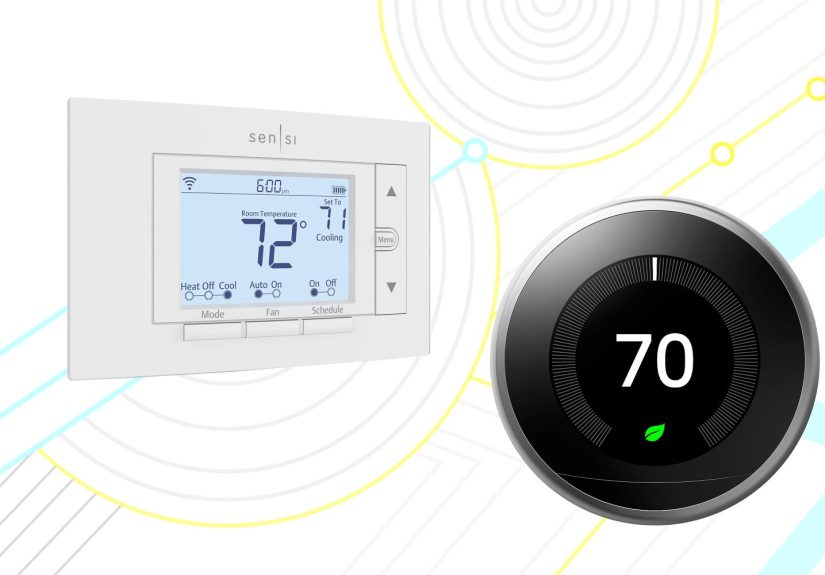
The Google Nest Learning Thermostat (4th Gen) is the sleek overachiever of the bunch. It looks great on a wall, has a larger display than older Nest models, and adds smarter learning features without becoming obnoxiously complicated. If you already use Google Home, this is the most natural fit. It also makes a strong case for buyers who want a thermostat that feels genuinely modern rather than “techy” in a slightly dated way.
Where Nest still shines is automation. It learns schedules, uses sensors and presence signals intelligently, and generally reduces the number of times you need to fiddle with settings. The included temperature sensor is a nice bonus, especially for homes with uneven heating or cooling. The downside is obvious: it is pricey. But if you want the most polished learning thermostat of 2025, this is the one that makes other thermostats look like they’re trying a little too hard.
3. Honeywell Home T9 Smart Thermostat Best for Room-by-Room Comfort
The Honeywell Home T9 Smart Thermostat remains one of the smartest choices for families who care less about flashy design and more about finally fixing that one bedroom, nursery, or upstairs office that never matches the rest of the house. Its remote room sensor support is the headline feature, and it is a good one. Instead of averaging your discomfort into submission, the T9 lets you focus comfort where it matters.
This makes it a great fit for practical buyers. The design is straightforward, the app experience is solid, and the thermostat plays well with the major smart assistant platforms. It is not the coolest-looking device on this list, but that is almost part of its charm. The T9 feels like it was built by people who know the thermostat’s main job is to make the house comfortable, not to audition for a science-fiction reboot.
4. Sensi Touch 2 Smart Thermostat Best Traditional-Style Smart Thermostat
The Sensi Touch 2 Smart Thermostat is ideal for buyers who want smart features without radically changing how a thermostat feels. It looks more familiar than many modern rivals, but it packs plenty of intelligence under the hood, including geofencing, remote access, sensor support, and a reputation for easier installation. For people who want a smart thermostat that behaves like an upgraded thermostat rather than a wall-mounted tablet, Sensi nails the brief.
It also deserves extra credit for privacy-conscious shoppers. Sensi has leaned into data privacy as part of its identity, which gives it a meaningful edge for buyers who love automation but are not eager to turn every square foot of their home into a data buffet. It is not as flashy as Nest or as feature-stuffed as Ecobee Premium, but it is balanced, dependable, and refreshingly sane.
5. Ecobee Smart Thermostat Essential Best Value Upgrade
The Ecobee Smart Thermostat Essential is proof that “budget-friendly” does not have to mean “stripped down until it becomes sad.” This model was introduced to bring Ecobee’s reputation and app experience to a lower price point, and it succeeds by keeping the important stuff while trimming the luxury extras. You lose some premium bells and whistles, but you still get an attractive interface, solid smart controls, and a more approachable entry into the Ecobee ecosystem.
This is an especially smart pick for first-time buyers who want a thermostat that feels modern without crossing into premium territory. It does not try to be the all-singing, all-dancing flagship. Instead, it gives you the essentials that actually matter day to day: convenience, scheduling, remote control, and energy-minded automation. Think of it as the sensible shoes of smart thermostats. Not flashy, but unexpectedly satisfying once you start using it.
6. Honeywell Home X2S Smart Thermostat Best Affordable Mainstream Choice
The Honeywell Home X2S Smart Thermostat is one of the best affordable smart thermostat options of 2025 for buyers who want low cost, easy DIY setup, and wide platform support. It brings scheduling, auto-away functionality, app control, and Matter certification into a package that feels easy to recommend to mainstream households. It is not trying to out-Nest the Nest or out-Ecobee the Ecobee. It is trying to be useful, accessible, and not ridiculously expensive. Mission accomplished.
If your goal is to replace an old programmable thermostat with something smarter, cleaner, and easier to manage, the X2S makes a lot of sense. It is especially strong for homeowners who want dependable basics and broad smart-home compatibility without paying for features they may never use. In a market where some thermostats seem to think they are luxury watches, the X2S has the refreshing energy of a device that remembers it works for you.
7. Amazon Smart Thermostat Best Budget Pick for Alexa Users
The Amazon Smart Thermostat is still one of the easiest recommendations for budget-conscious buyers already living in Alexa world. If you own Echo devices and want a thermostat that keeps costs low while still offering smart scheduling and app-based control, this is the obvious bargain pick. It is not loaded with advanced room-balancing tools, and it is not the thermostat for tinkerers who want every imaginable control. But for simple, reliable smart HVAC control at a low price, it punches well above its weight.
Its biggest strength is ecosystem fit. Amazon has done a good job making the thermostat feel like part of a larger Alexa home, especially when paired with compatible devices that help add smarter automation. In other words, this thermostat is less “luxury climate concierge” and more “quietly competent coworker who never misses a calendar reminder.” For under-$100 shoppers, that is a very good thing.
8. Mysa for Mini-Splits Best Smart Thermostat for Ductless Mini-Split Systems
The Mysa for Mini-Splits is one of the best specialty smart thermostat picks of 2025 because it solves a problem many roundups still treat like an afterthought: not everyone has central air. If your home uses a ductless mini-split heat pump, Mysa is one of the most appealing options on the market. It installs without wiring in many cases, pairs with your existing remote, and adds app control, scheduling, and voice assistant support without forcing you into HVAC contortions.
This makes it perfect for apartments, renovated attics, home offices, and homes that rely on ductless systems for comfort. It is a focused product rather than a one-size-fits-all thermostat, and that is exactly why it works so well. Mysa understands the assignment. Instead of pretending mini-split users should settle for clunky controls forever, it brings them into the smart-home conversation with far less hassle.
9. Cielo Breez Max Best for Room ACs, Window Units, and Flexible Cooling Setups
The Cielo Breez Max is not a traditional central HVAC thermostat, but it absolutely deserves a place on this list because of how well it handles room air conditioners, mini-splits, and portable AC units. For households using those systems, it delivers a genuinely smart climate-control experience with scheduling, geofencing, app control, and broad brand compatibility. It is especially useful in spaces where central HVAC is not available or not worth the cost.
What makes it stand out is flexibility. Cielo supports a huge range of compatible units, which makes it a practical upgrade for renters, older homes, garages, workshops, and bonus rooms. Instead of replacing your whole cooling setup, it makes your existing setup smarter. That is the kind of upgrade people actually appreciate, because it saves money and frustration at the same time.
How to Choose the Right Smart Thermostat
Before you buy, start with system compatibility. This sounds boring because it is boring, but it is also the difference between a smooth upgrade and a very educational evening spent staring at wires. Central HVAC users should check whether the thermostat supports their heating and cooling stages, heat pump setup, and C-wire situation. Mini-split users should skip the central-thermostat aisle entirely and focus on products built for ductless systems.
Next, think about your ecosystem. Google households will usually be happiest with Nest. Alexa-heavy homes often get more value from Amazon or Ecobee. Mixed-platform households should lean toward the models with broader support, especially if Matter compatibility is on the table. Finally, be honest about your house. If you have hot and cold spots, prioritize room sensors. If you just want cheaper app control, a lower-cost model may be all you need.
Final Verdict
If I had to recommend just one smart thermostat for the widest number of buyers in 2025, it would be the Ecobee Smart Thermostat Premium. It has the best blend of sensors, platform flexibility, energy-saving intelligence, and day-to-day usefulness. The Google Nest Learning Thermostat (4th Gen) is the strongest premium alternative, especially for Google homes. The Honeywell Home T9 is the best practical choice for room prioritization, while the Amazon Smart Thermostat and Honeywell Home X2S offer strong value for budget shoppers.
And if you use a mini-split or room AC setup, do not let central-HVAC roundups boss you around. Mysa and Cielo Breez Max are excellent reminders that the best thermostat is the one built for the system you actually own.
Real-World Experiences With Smart Thermostats in 2025
Living with a smart thermostat in 2025 usually starts with one thought: “Nice, I can control the temperature from my phone.” That is the gateway feature, and it is useful. But after a few weeks, the real value shifts from novelty to rhythm. You stop thinking about the thermostat as a thing you manually adjust and start thinking about it as a system that quietly handles comfort in the background.
For many households, the first noticeable improvement is the morning routine. Instead of waking up in a room that feels like a storage unit in January, the house is already comfortable before anyone gets out of bed. In the summer, the thermostat can cool things down before the sticky part of the day hits. It sounds minor, but these small timing changes make a home feel much more polished. It is the difference between reacting to discomfort and arriving before it does.
Then there is the away-from-home factor. Smart thermostats are great at fixing the classic “Did I leave the AC blasting while nobody’s home?” problem. Geofencing and auto-away features are not glamorous, but they are the kind of boring genius that saves real money over time. The best part is that most people do not need to babysit these features after setup. Once the routines settle in, the thermostat starts acting less like a gadget and more like a quiet household habit.
Homes with uneven temperatures feel the biggest change. A good room-sensor setup can make an upstairs bedroom, nursery, or office much more livable. This is where premium models start to justify their cost. Instead of forcing the whole house to obey the temperature of one hallway wall, they respond to the rooms where people actually spend time. In daily life, that means fewer arguments, fewer blanket piles in one room and fans in another, and fewer moments where someone says, “Why is it always weird in here?”
Budget smart thermostats create a different kind of satisfaction. They are not trying to impress guests. They are trying to help a homeowner ditch an outdated programmable thermostat with an interface that feels like it was designed by a microwave in 2004. These models are often the most appreciated upgrades because the leap in convenience is so large. You get scheduling that makes sense, remote control that actually works, and a much better sense of what your HVAC system is doing without paying premium prices.
Specialty smart thermostats for mini-splits and room ACs are also changing the experience for renters and nontraditional homes. For years, plenty of people had smart lights, smart speakers, and smart locks, but their cooling setup was still controlled by a remote that disappeared into couch cushions twice a week. Products like Mysa and Cielo close that gap. They bring automation, scheduling, and app control to systems that used to feel disconnected from the rest of the home.
The biggest surprise for many users is that a smart thermostat does not feel “smart” for very long. That is actually a compliment. The best ones stop feeling like a gadget and start feeling like your house simply got better at being a house. It is warmer when it should be warmer, cooler when it should be cooler, and less expensive to run when nobody is around. That is not flashy. It is just really, really nice.