Table of Contents >> Show >> Hide
- Why Vintage Cookbooks Got So Weird in the First Place
- The Anatomy of a Properly Cursed Vintage Recipe
- The 50-Recipe Mood Board: Classic Types of Vintage Culinary Chaos
- Why These Recipes Keep Winning the Internet
- What Modern Cooks Can Actually Learn From This Madness
- A Longer Reflection on the Experience of Falling Into the Vintage Cookbook Rabbit Hole
- Conclusion
Some recipes make you hungry. Some make you nostalgic. And some make you stare at the page like you’ve just witnessed a casserole commit a minor crime. That is the energy behind the “Napa Cabbage Angel” style of vintage cookbook chaos: food so sincere, so decorative, and so wildly committed to its own vision that modern readers can only salute it from a safe distance.
If you have ever flipped through an old community cookbook, a mid-century women’s magazine, or a spiral-bound church collection that smells faintly of cinnamon and attic, you already know the genre. There are salads that contain no lettuce, desserts that pretend to be side dishes, meats trapped in gelatin like bugs in amber, and sandwich loaves frosted as if they were birthday cakes. The result is not just funny. It is a time capsule with mayonnaise.
This is what makes vintage cookbook oddities so irresistible. They were not created to become internet punchlines. They were built for potlucks, buffets, ladies’ luncheons, holiday tables, church suppers, and family gatherings where presentation mattered almost as much as taste. In other words, these recipes were trying very hard. And somehow, that makes them even funnier now.
Why Vintage Cookbooks Got So Weird in the First Place
Gelatin once read as glamorous, not suspicious
Today, a tomato suspended in a shimmering ring of savory jelly looks like something a science lab misplaced. In its heyday, though, gelatin signaled elegance, skill, and a bit of culinary magic. Before convenience products made it easier, molded dishes took time, planning, and proper chilling. Even once boxed gelatin became common, it still carried that glow of effort-meets-modernity. A wobbly mold said, “I cared enough to unmold this on purpose.”
That is how you end up with legends like tomato aspic, Perfection Salad, layered rings, fruit molds, shrimp molds, and a whole universe of dishes that jiggle with confidence. Mid-century cooks were not trying to prank future generations. They were embracing texture, presentation, and the thrilling possibility that dinner could also look like architecture.
Postwar convenience foods changed the rules
Vintage American cooking was shaped by thrift, wartime substitution, and later by the postwar boom in convenience ingredients. Canned soups, packaged gelatin, mayonnaise, whipped toppings, boxed puddings, canned fruit, and ready-made mixes promised speed, stability, and consistency. For busy home cooks, that was not laziness. That was progress wearing an apron.
And convenience foods did more than save time. They encouraged invention. Suddenly, home cooks could stack, whip, fold, suspend, chill, pipe, and glaze with ingredients designed to behave. Want a loaf made of sandwich fillings that slices like cake? Go for it. Want lime gelatin packed with vegetables and topped with cottage cheese? No one is stopping you. Want to make a holiday centerpiece from tuna, crackers, and blind optimism? America had entered its “why not?” era.
Potluck culture rewarded spectacle
Vintage recipes were social creatures. They were born to be carried into a fellowship hall, placed on a folding table, and admired before anyone dared serve them. Community cookbooks, charity collections, and church compilations were full of dishes designed to feed a crowd and make an impression. A plain plate of sliced cucumbers might taste great, but it does not have the theatrical flair of a molded seafood ring crowned with parsley and paprika.
Potluck logic also explains the strange marriage of affordability and drama. These dishes often used inexpensive pantry ingredients, but they were arranged as if they were auditioning for a pageant. The visual ambition was sky-high. The ingredient budget was… grounded.
The Anatomy of a Properly Cursed Vintage Recipe
Step one: Give it a majestic name
Vintage cookbook titles were not here to whisper. They gave us names that sounded heavenly, glamorous, or faintly medicinal: angel, delight, dream, surprise, fluff, chiffon, perfection, supreme, sparkle, and mousse. The more dramatic the title, the better the odds that the ingredients included canned pineapple, gelatin, or something whipped into an identity crisis.
That is why “Napa Cabbage Angel” feels so perfect as a symbol for the whole category. It sounds elegant, innocent, and vaguely celestial. Then you picture a carved cabbage centerpiece sprouting vegetable wings and realize you have wandered into a produce-based fever dream.
Step two: Make food do a costume change
One of the greatest recurring themes in vintage cookbooks is food disguised as something else. Bananas became candles. Pear halves became salads. Bread became frosted layer cake. Gelatin became a wreath, a ring, a tower, a tree, or a stained-glass window to your pantry choices. Mid-century cooking loved a transformation, especially when it could be achieved with a mold and a prayer.
This is part of why these recipes still feel so fascinating online. They are not just meals. They are performances. They ask vegetables and leftovers to do character work.
Step three: Refuse to choose between sweet and savory
Modern cooking often wants clear categories. Is it dessert? Is it a side? Is it a salad? Vintage cookbook culture looked at those questions and said, “Yes.” That is how sweet gelatin ended up beside vegetables, mayonnaise ended up in fruit salads, cheese met pineapple without warning, and salty pretzels found themselves living beneath a cloud of cream cheese and strawberries.
To modern eaters, these combinations can seem chaotic. But they also reflect a real American love of contrast: sweet and tangy, creamy and crunchy, salty and bright. Sometimes the execution was delicious. Sometimes it looked like a dare. And sometimes it was both.
The 50-Recipe Mood Board: Classic Types of Vintage Culinary Chaos
1. The gelatin galaxy
This is the grand empire of retro weirdness. Think tomato aspic, Perfection Salad, cranberry molds, ham Jell-O salads, layered rings, and any dish that arrives trembling but determined. These recipes were often beautiful by the standards of their time: glossy, symmetrical, and made to be sliced with ceremonial seriousness.
To modern eyes, they range from charmingly retro to “please explain this to me slowly.” Still, they remain essential to understanding vintage American food culture. Without gelatin, the entire cursed-cookbook canon loses its most dramatic special effect.
2. The sandwich engineers
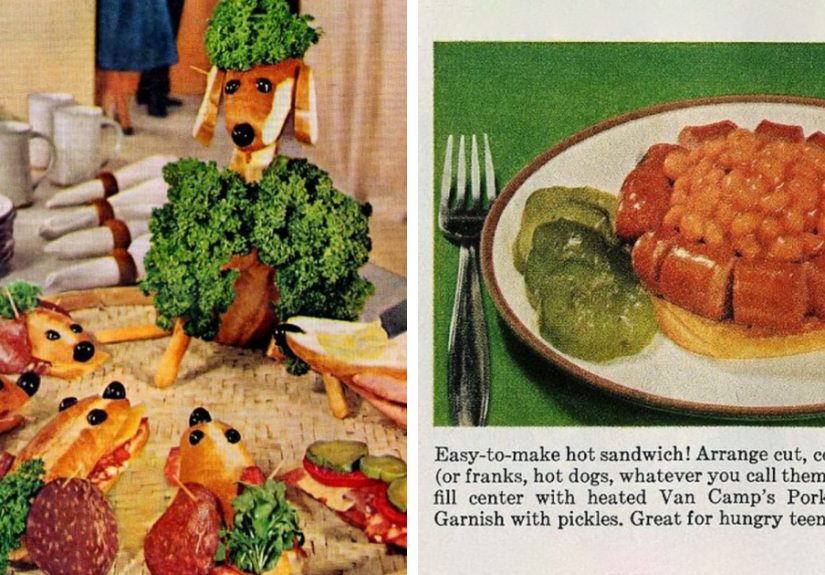
Nothing captures mid-century party ambition like the frosted sandwich loaf. This marvel took stacked bread, savory fillings, and creamy spread, then iced the outside as if the ham salad had booked itself a bakery consultation. Sliced at parties like cake, it was practical, shareable, and just unsettling enough to live forever in our collective imagination.
Related members of this family include party loaves, ribbon sandwiches, tea sandwiches cut into stars, and ring-shaped savory constructions that seem built by people who deeply trusted both refrigeration and geometry.
3. Produce with a secret identity
This is where fruit and vegetables stopped being ingredients and started being props. Candle salad is the obvious celebrity here, but it is far from alone. Pear salad, stuffed celery, radish roses, carved cucumbers, and molded cabbage centerpieces all belong in this category. The visual logic was simple: if the food could also decorate the table, it was doing double duty.
And honestly? There is something admirable about that level of commitment. It takes vision to look at a pear and think, “This could wear mayonnaise.”
4. Meat as modern art
Vintage cookbooks were surprisingly comfortable turning proteins into sculptures. Turkey in aspic, tuna molds, ham mousse, seafood towers, and savory loaves all leaned into the idea that dinner should arrive with structure. Sometimes it worked beautifully. Other times it looked like a museum exhibit titled After the Buffet, 1967.
These recipes were especially common in entertaining culture because they could be made ahead, chilled, sliced neatly, and served to a crowd. Functionally, they made sense. Aesthetically, they were one olive away from becoming internet legends.
5. Dessert dressed as a side dish
Then we have the dishes that still confuse family tables to this day: fluff salads, strawberry pretzel salad, Watergate salad, and all those sweet “salads” that show up next to ham as if this is the most normal thing in the world. They are not exactly cursed. In fact, many are delicious. But they absolutely continue the vintage tradition of refusing culinary boundaries.
That boundary-blurring spirit is what connects the genuinely bizarre recipes to the ones that endured. Not everything from vintage cookbooks deserves mockery. Some dishes survived because, underneath the suspicious name or odd presentation, they actually slap.
Why These Recipes Keep Winning the Internet
Vintage cookbook oddities go viral because they hit three pleasure centers at once. First, they are funny. Second, they are visually unforgettable. Third, they reveal how sincerely people once believed in a different kind of culinary beauty. That last part matters. These dishes are rarely ironic. They are earnest. They were trying to delight guests, stretch budgets, follow trends, and show care.
That sincerity is what keeps a recipe from being merely “bad.” A frosted sandwich loaf is not just odd. It is hopeful. A tuna tree is not just terrifying. It is festive with reckless confidence. A Napa Cabbage Angel is not merely cursed. It is a handcrafted monument to the belief that dinner can also be an event.
And in a digital world where everyone is desperate to be memorable, those old cookbook pages are suddenly very modern. They stop the scroll. They invite commentary. They make people laugh, argue, remember their grandmother, and confess that they would absolutely try one bite.
What Modern Cooks Can Actually Learn From This Madness
Presentation still matters
Vintage cooks understood something the internet has rediscovered: people eat with their eyes first. Sure, not every molded dish deserves resurrection, but the instinct to make food playful, sculptural, and celebratory was not wrong. If anything, social media has proven that visual drama is alive and well. We just swapped gelatin rings for butter boards and towering snack spreads.
Resourcefulness can be creative
A lot of these odd dishes came from constraints: rationing, tight budgets, limited fresh ingredients, church-supper practicality, and the need to feed a crowd. Vintage recipes show how inventive people become when they are working with what they have. Sometimes that ingenuity produced comfort classics. Sometimes it produced something that appears to have been assembled during a thunderstorm. Both outcomes are still part of food history.
Food trends are temporary, but feelings stick
What looks bizarre now often once looked fashionable, efficient, or luxurious. That should humble all of us, especially anyone currently paying extra for foam, smoke, deconstruction, or a dessert served inside a light bulb. Every era has its food swagger. Vintage cookbooks just happen to preserve theirs in glossy, heavily garnished detail.
A Longer Reflection on the Experience of Falling Into the Vintage Cookbook Rabbit Hole
Spending time with these recipes is a strange emotional ride, and that is exactly why people cannot stop sharing them. At first, you laugh. The names are dramatic, the photos are chaotic, and the garnish appears to have been applied by someone with a very strong relationship to paprika. You see a molded fish shape, a tree made of party food, or a salad that includes whipped cream, and your brain does a tiny double take. It feels like opening a portal into a universe where the laws of lunch were written by interior decorators.
But then something shifts. The longer you look, the less these dishes feel like punchlines and the more they feel like artifacts of real life. You start noticing the optimism baked into them. Somebody clipped that recipe, typed it up, or sent it to print because they thought it would make people happy. Somebody carried that shimmering mold into a room full of relatives and hoped it would impress. Somebody probably defended it. Somebody definitely asked for the recipe. That changes the joke.
There is also a weird warmth in the repetition. So many of these dishes come from church cookbooks, community collections, women’s magazines, and family binders stained by actual use. They are not chef showpieces. They are domestic ambition in its most public form. They tell you what ingredients were available, what textures people liked, what counted as modern, what counted as elegant, and what hosts believed guests would remember. Sometimes the answer was “a lovely molded salad.” Sometimes the answer was apparently “a loaf frosted like a wedding cake, but with ham.”
And if you have ever sat at a family gathering where one dish makes everyone groan, laugh, and still take a spoonful, then you already understand the power of these recipes. They are social. They create reaction. They start stories. Even now, long after many of them drifted out of fashion, they still do the same thing online. People send them to friends with captions like, “I need you to see this.” That is not failure. That is longevity with extra parsley.
The funniest part is that modern food culture is not nearly as far away from this as we pretend. We still love novelty. We still worship presentation. We still chase viral recipes because they are surprising, photogenic, and fun to talk about. Vintage cookbook chaos just did it with canned fruit, molded gelatin, and a fearless disregard for category labels. In that sense, the Napa Cabbage Angel is not a relic. It is a grandparent of internet food culture: theatrical, sincere, slightly unhinged, and impossible to ignore.
So yes, these recipes may leave your stomach confused. They may leave your eyes blinking in disbelief. But they also leave you with a sharper sense of how Americans cooked, hosted, improvised, and dreamed at the table. And that is what makes them more than weird. They are funny little monuments to taste, trend, thrift, and the eternal human urge to make dinner memorable, even if the result looks like a vegetable-themed hallucination.
Conclusion
“Napa Cabbage Angel” is the perfect banner for the gloriously cursed world of vintage cookbooks because it captures everything that makes these recipes unforgettable: ambition, whimsy, confusion, and sincerity. Beneath the molded salads, frosted loaves, tuna trees, and produce-based table art lies a very real story about American home cooking. These dishes were shaped by rationing, convenience foods, church potlucks, community cookbooks, and an era that believed dinner could be efficient, impressive, and just a little theatrical all at once.
That is why we still laugh at them, share them, and secretly admire them. They are not just odd recipes from the past. They are snapshots of how people wanted to feed one another, show off a little, and turn ordinary ingredients into something worth talking about. If nothing else, they prove one timeless truth: food does not have to be perfect to be memorable. Sometimes it just has to wobble into the room wearing olives and confidence.