Table of Contents >> Show >> Hide
- What Is Age-Related Macular Degeneration?
- Dry vs. Wet AMD: Same Family, Very Different Personalities
- Symptoms of AMD
- Who Is Most at Risk?
- How Doctors Diagnose AMD
- Stages of AMD
- Treatment Options for AMD
- Can AMD Be Prevented?
- Living With AMD Day to Day
- When to Call an Eye Doctor Right Away
- Experiences Related to Age-Related Macular Degeneration (AMD)
- Conclusion
Age-related macular degeneration, or AMD, is one of those eye conditions that sounds technical until it starts messing with ordinary life. Suddenly, reading a menu feels like decoding ancient ruins. Faces look familiar but slightly blurry. Straight lines start acting suspiciously wavy. That is because AMD affects the macula, the part of the retina responsible for sharp, central vision. In plain English: it targets the vision you rely on for reading, driving, recognizing faces, sewing, scrolling, and pretending you can still read restaurant lighting without help.
The good news is that AMD usually does not cause total blindness, because peripheral vision is often preserved. The less-good news is that it can still make everyday life a lot harder. AMD tends to become more common with age, especially after 55 or 60, and it can progress slowly or move faster depending on the type. If you have ever heard someone say, “I can see around it, but not right at it,” they may be describing central vision loss from AMD.
This guide breaks down what age-related macular degeneration is, the difference between dry and wet AMD, the symptoms to watch for, how doctors diagnose it, what treatments actually help, and what daily life with AMD often looks like. No fluff. No panic. Just real information, practical advice, and a few gentle reminders that your eyes deserve better than “I’ll get it checked eventually.”
What Is Age-Related Macular Degeneration?
AMD is a disease that damages the macula, a small but crucial area near the center of the retina. The retina lines the back of your eye and turns light into signals that your brain interprets as vision. The macula is the precision tool in that system. It helps you see fine detail clearly, which is why AMD mainly affects central vision rather than side vision.
People with AMD may notice blurry or distorted vision in the center of what they are looking at. Reading can become exhausting. Letters may disappear. Faces can lose detail. Colors may seem duller. The condition is often painless, which is part of why people sometimes ignore it longer than they should. Your eye is not sounding an alarm with pain, but it is still asking for help.
Dry vs. Wet AMD: Same Family, Very Different Personalities
Dry AMD
Dry AMD is the more common form. It usually develops slowly over time as the macula thins and tiny yellow deposits called drusen build up under the retina. Early dry AMD may not cause obvious symptoms at all. That is why regular dilated eye exams matter so much, especially for older adults. You can have changes in the eye before your vision starts filing formal complaints.
As dry AMD progresses, central vision may become blurrier, dimmer, or patchy. Some people develop geographic atrophy, an advanced form of dry AMD in which retinal cells are lost over time. This stage can significantly reduce central vision and make detail work extremely difficult.
Wet AMD
Wet AMD is less common, but it is generally more serious and more aggressive. It happens when abnormal blood vessels grow under the retina and leak fluid or blood. That leakage can damage the macula faster than dry AMD typically does. One classic warning sign is that straight lines begin to look bent, wavy, or broken. If your door frame suddenly looks like it had a rough night, that is not a normal aging quirk.
Wet AMD can cause sudden changes in vision, so it is considered more urgent. The earlier it is treated, the better the chances of preserving useful sight.
Symptoms of AMD
AMD symptoms can range from subtle to obvious. Early disease, especially early dry AMD, may cause no noticeable symptoms. Later on, common signs include:
- Blurred or fuzzy central vision
- Difficulty reading or seeing fine detail
- Straight lines appearing wavy or distorted
- A dark, empty, or blank spot in the center of vision
- Trouble recognizing faces
- Needing brighter light for close-up tasks
- Reduced contrast or less vivid colors
AMD often affects one eye first, which can make it sneakier. The stronger eye may quietly compensate for the weaker one. That is why some people do not realize anything is wrong until the condition is more advanced. Covering one eye at a time while reading or checking an Amsler grid can sometimes reveal changes earlier.
Who Is Most at Risk?
The biggest risk factor is age. AMD becomes more common as people get older, especially after age 55. But age does not work alone. Other factors can increase the risk or the chance of progression:
- Family history of AMD
- Smoking
- High blood pressure
- Cardiovascular disease
- Obesity
- A diet high in saturated fat and low in nutrient-rich foods
- Being white or having certain inherited genetic traits
Smoking deserves its own spotlight here because it is one of the clearest modifiable risk factors. In other words, it is one of the things you can actually change. AMD may be age-related, but that does not mean lifestyle gets a free pass.
How Doctors Diagnose AMD
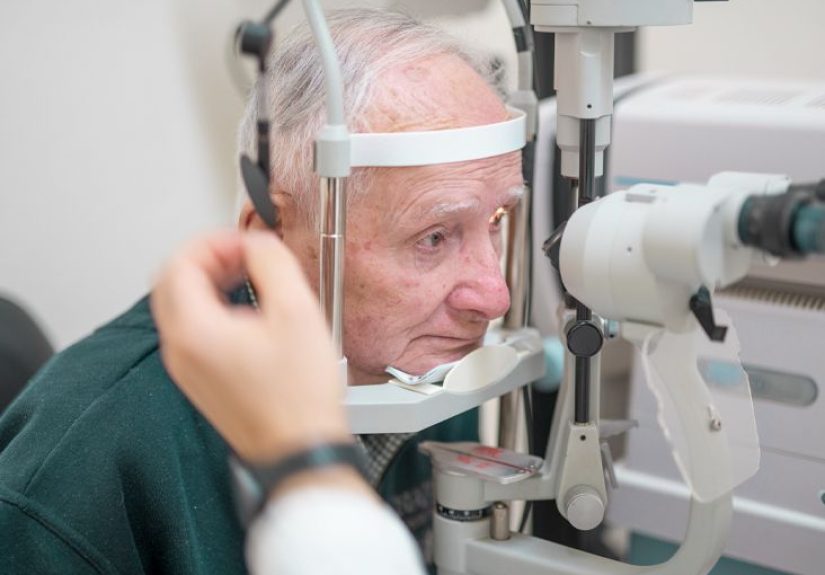
An eye doctor may detect AMD during a comprehensive dilated eye exam, sometimes before symptoms become obvious. Diagnosis can involve several tools:
Dilated Eye Exam
Eye drops widen the pupils so the doctor can look at the retina and macula. This is how they often spot drusen and other changes.
Amsler Grid
This is the checkerboard-like grid that looks innocent until it reveals that your straight lines are not straight anymore. Missing, bent, or warped lines can suggest macular changes.
Optical Coherence Tomography (OCT)
OCT creates detailed cross-sectional images of the retina. It helps doctors see swelling, thinning, or fluid buildup and is especially useful for monitoring wet AMD and geographic atrophy.
Fluorescein Angiography
In some cases, a dye is injected into a vein so photographs can show leaking or abnormal blood vessels in the eye. This can help confirm wet AMD or guide treatment decisions.
The main lesson here is simple: you cannot diagnose AMD by squinting harder. It takes a real exam and, often, retinal imaging.
Stages of AMD
Doctors often describe AMD as early, intermediate, or late.
Early AMD may involve drusen and retinal changes without noticeable symptoms. Intermediate AMD can still be symptom-light, but the risk of progression is higher. Late AMD includes either wet AMD or advanced dry AMD with geographic atrophy. This is when central vision loss becomes more significant and daily tasks can be seriously affected.
Knowing the stage matters because treatment recommendations are not the same for everyone. Eye vitamins that help one patient may not be useful for another. And some newer treatments are meant for specific forms of advanced disease, not for early AMD.
Treatment Options for AMD
Early Dry AMD
There is currently no treatment that reverses early dry AMD. That may sound frustrating, but it does not mean “do nothing.” This is the stage where regular monitoring, healthy habits, and follow-up care become your best strategy. Your eye doctor may recommend periodic exams and home monitoring for visual changes.
Intermediate AMD and AREDS2 Supplements
For some people with intermediate AMD, or advanced AMD in one eye, doctors may recommend the AREDS2 formula. This specific combination of vitamins and minerals has been shown to reduce the risk of progression to advanced disease in certain patients. The standard AREDS2 formula includes vitamin C, vitamin E, zinc, copper, lutein, and zeaxanthin.
Important detail: AREDS2 is not a cure, and it is not a magic eye potion for everyone over 50. It does not restore lost vision, and it has not shown benefit for people with early AMD. The supplement decision should be based on your doctor’s guidance, not a bottle that promises “vision support” in very confident font.
Geographic Atrophy in Dry AMD
For years, advanced dry AMD had very limited treatment options beyond monitoring and low-vision support. That has recently changed. Newer drugs for geographic atrophy, an advanced stage of dry AMD, can help slow the progression of retinal damage. These treatments do not reverse vision already lost, but they can help preserve remaining sight longer. They are typically given as eye injections and are not meant for early dry AMD.
This is a meaningful development, because “slowing progression” may not sound dramatic until you remember that preserving vision for longer can mean more time reading independently, recognizing faces, cooking safely, and navigating daily life with confidence.
Wet AMD and Anti-VEGF Injections
Wet AMD treatment has changed dramatically over the past two decades. The mainstay is anti-VEGF therapy, a class of drugs injected into the eye to reduce leakage from abnormal blood vessels. These medications can slow vision loss and, in some cases, improve vision. Common examples include aflibercept, ranibizumab, bevacizumab, and other newer agents used by retina specialists.
Yes, eye injections sound like a terrible way to spend a Tuesday. But anti-VEGF treatment has helped protect sight for many patients with wet AMD, which is why timely care matters so much. Delaying treatment can mean losing vision that cannot be recovered later.
Low Vision Rehabilitation
When AMD reduces central vision, rehabilitation can make a huge difference. Low-vision specialists can help with magnifiers, special lighting, large-print devices, electronic readers, contrast tricks, and daily-living strategies. This is not “giving up.” It is adapting intelligently, which is a much better vibe.
Can AMD Be Prevented?
There is no guaranteed way to prevent AMD, but you can lower your risk and support long-term eye health by doing the following:
- Do not smoke, and quit if you do
- Get regular comprehensive eye exams
- Manage blood pressure and cardiovascular health
- Eat a diet rich in leafy greens, colorful produce, and healthy fats
- Maintain a healthy weight and stay active
- Ask your eye doctor whether AREDS2 is appropriate for your stage
- Monitor vision changes promptly, especially distortion or new central blind spots
Think of eye health like retirement savings: the earlier and more consistently you invest, the better the long-term results tend to be.
Living With AMD Day to Day
AMD affects more than eyesight. It affects routine, confidence, safety, mood, and independence. Reading may take longer. Driving may become stressful or unsafe. Grocery labels turn tiny for no reason, apparently out of spite. Even pouring coffee can feel more complicated when the center of your vision is unreliable.
Helpful adjustments often include brighter task lighting, larger screens, bold contrast at home, audiobooks, voice assistants, talking devices, and organizing frequently used items in consistent locations. Family members can help too, but the most effective support usually starts with understanding that AMD changes how a person sees, not how hard they are trying.
When to Call an Eye Doctor Right Away
You should seek prompt eye care if you notice:
- Sudden worsening of central vision
- New wavy or distorted lines
- A new dark or blank spot in the center of vision
- Rapid change in one eye, even if the other eye seems fine
These symptoms can suggest wet AMD or progression that needs urgent attention. With macular disease, “I’ll wait and see” is sometimes exactly the wrong strategy.
Experiences Related to Age-Related Macular Degeneration (AMD)
Living with AMD is often described less as one dramatic event and more as a string of oddly personal frustrations. A person may first notice that words on a page seem faded in the middle, even though the edges stay sharp. Someone else may realize that faces across the room look familiar but strangely featureless, as if the details were smudged by an invisible thumb. Many people say the experience is confusing at first because their vision is not entirely gone. It is just unreliable in the exact place they want to look.
One common experience is the mismatch between how people look and how they feel. A person with AMD may seem physically fine, yet struggle to read a text message, sign a receipt, or see the thermostat clearly. That can be isolating. Others may assume they are distracted, clumsy, or “not trying.” In reality, they may be working much harder than everyone else just to do ordinary tasks.
Reading is one of the most emotional losses people talk about. Book lovers may move from printed novels to magnifiers, then to large print, then to tablets, then to audiobooks. Each step can be useful, but it may also feel like grieving an old habit. The same goes for hobbies like sewing, crossword puzzles, woodworking, needlepoint, cooking from a recipe card, or identifying pills by small labels. AMD does not just interfere with vision. It barges into routines people associate with comfort, competence, and identity.
Driving is another major turning point. Some people with AMD can drive safely for a while, depending on severity and legal vision standards, but many begin to avoid night driving, unfamiliar routes, or busy intersections long before they stop completely. That gradual retreat can feel like a quiet loss of independence. Suddenly, errands require planning. Social invitations depend on rides. A once-simple outing starts to involve logistics, favors, and timing.
There is also the emotional surprise of how tiring vision loss can be. People often report eye strain, slower reading, and mental fatigue from trying to fill in missing information. When the brain is constantly compensating, everyday tasks take more concentration. That can make someone seem withdrawn when they are actually exhausted.
At the same time, many people with AMD become impressively resourceful. They learn to use brighter light, high-contrast settings, large-print phones, voice assistants, handheld magnifiers, talking clocks, and organization systems that reduce visual guesswork. Some become devoted users of retinal specialists, low-vision rehab tools, and Amsler grids. Others find emotional support through family, counseling, or vision-loss groups where no one needs the phrase “No, really, the middle part is missing” explained twice.
Perhaps the most encouraging experience many patients describe is this: after the shock wears off, life does not end. It changes. It may become more deliberate, more assisted, and sometimes more frustrating, but it can still be full. People still read, travel, cook, laugh, work, garden, text badly, and argue with technology. AMD is serious, but it is not the whole story of a person’s life. It is a condition to manage, not a personality replacement.
Conclusion
Age-related macular degeneration is common, complicated, and often underestimated. It affects the vision people rely on most for daily detail, but it does not have to go unchecked. Early eye exams, smart risk reduction, timely treatment, and practical support can make a real difference. Dry AMD usually moves slowly, wet AMD can move fast, and both deserve respect. If straight lines are bending, faces are blurring, or your reading vision is acting suspicious, get your eyes checked. Your future self would like to keep seeing the fine print, and not just in a metaphorical life-advice kind of way.