Table of Contents >> Show >> Hide
- Why BB-8 Felt So Different Right Away
- BB-8 Was Not One Droid. He Was Several.
- The Biggest Myth: BB-8 Was Purely Mechanical in Every Shot
- How the Red-Carpet BB-8 Changed Everything
- What Sphero Had to Do with the BB-8 Phenomenon
- Why BB-8 Feels Alive Even Without a Human Face
- BB-8’s Real Achievement Was Not Engineering Alone
- What the BB-8 Experience Feels Like in Real Life
- Final Thoughts
- SEO Tags
Note: This article is an original, web-ready feature written in standard American English and based on real production details, industry reporting, and behind-the-scenes interviews.
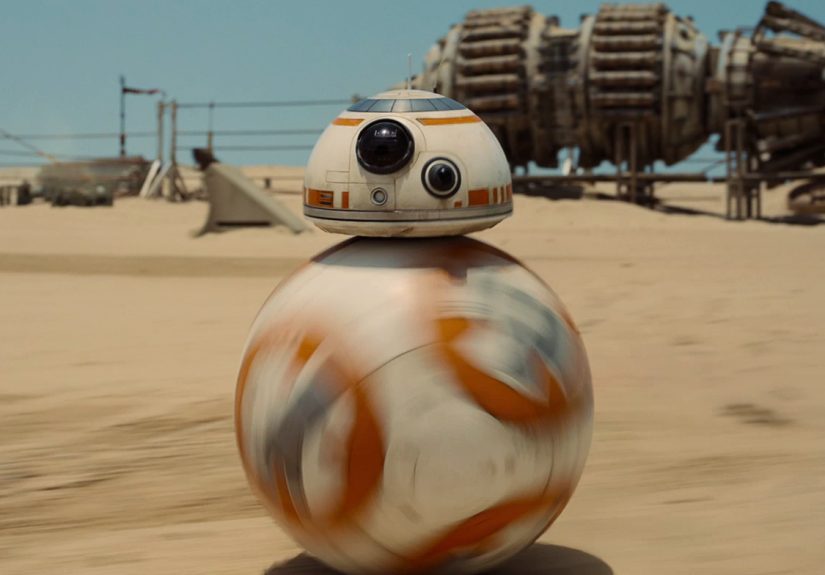
When Star Wars: The Force Awakens first showed the world BB-8, the collective internet reaction was basically, “Hold on… that little rolling orange-and-white droid is real?” It looked too smooth to be a puppet, too charming to be a plain machine, and too physically present to feel like a fully digital effect. In other words, BB-8 landed right in the sweet spot where movie magic becomes delightful confusion.
That confusion was the point. BB-8 was designed to feel like a true member of the Star Wars universe: tactile, expressive, and a little dusty around the edges. Not a shiny tech demo. Not a sterile CGI stunt. A real character you could imagine bumping into a wall, wobbling indignantly, and then pretending it meant to do that.
So how did filmmakers actually pull it off? The short version: BB-8 was not one single robot doing everything. He was created through a clever combination of practical puppetry, multiple physical builds, hidden rigs, digital cleanup, sound performance, and later, a fully self-contained demonstration droid that made fans lose their minds on red carpets. In short, BB-8 was real, but movie-realmeaning brilliant teamwork, engineering, and a little cinematic cheating. The good kind.
Why BB-8 Felt So Different Right Away
Part of BB-8’s magic starts with design. He is simple enough for your brain to understand in an instanta sphere, a dome head, a few circles and panelsyet unusual enough to feel fresh. He is also incredibly readable on screen. Even before he moves, his proportions and “face” tell you he is curious, alert, and somehow endearing. That is not an accident. The team behind the droid reportedly refined the placement of his eye, panels, and head features until the character could “speak” emotionally without saying a word. That is industrial design meeting character acting, which is a very fancy way of saying: they made a beach-ball robot with outstanding screen presence.
Director J.J. Abrams also wanted the new Star Wars to reconnect with the tactile DNA of the original trilogy. That meant leaning heavily into practical effects wherever possible. Creature and droid designer Neal Scanlan and his team were tasked with building characters that actors could see, react to, and physically work with. BB-8 became one of the clearest examples of that philosophy. He was developed not as a purely digital fantasy, but as a practical-effect character from the start.
BB-8 Was Not One Droid. He Was Several.
Here is the secret that makes the whole illusion click: there was no single BB-8 unit that handled every shot in the movie. The production used multiple versions of the droid, each built for a specific purpose. That is how filmmaking usually works when something looks impossibly effortless. The more effortless it looks, the more likely a whole army of specialists is hiding just outside the frame.
According to behind-the-scenes reporting, the production used several BB-8 builds during filming. Some were puppets. Some used external support systems. Some were better for controlled close-ups. Others were better for rougher environments. A separate, more advanced version was eventually built for public appearances. That modular approach allowed the filmmakers to match the tool to the shot instead of forcing one machine to do the impossible.
The Puppet BB-8
One of the most important versions was the puppet-style BB-8. This is the model that helped sell the droid as a physical character in many scenes. Instead of freely gliding in any direction like a magical orb from the future, this BB-8 worked more like a controlled practical prop built around an internal axle and rocking motion. It could roll, tilt, and shift in ways that felt alive, even if it was not secretly a tiny robotics PhD on wheels.
The head, which appears to float above the body, was another big challenge. The solution involved careful control and support so the dome would stay oriented convincingly while the ball moved beneath it. On screen, the result looked wonderfully impossible. Off screen, it was a marvel of puppetry, rigging, and very patient people probably muttering, “Nope, reset, the cute robot looked weird that time.”
The “Trike” and Assisted Versions
For other shots, BB-8 used mechanically assisted versions that could be guided more reliably. Some of these rigs included support systems or attached control units that were later removed in post-production. This meant filmmakers could capture the exact movement they wanted on set, then use digital effects not to create BB-8 from scratch, but to erase the evidence of how the trick was done.
This matters because it explains why BB-8 felt so convincing. He was usually not an all-CGI creation pretending to be physical. He was typically a physical effect enhanced by digital cleanup. That is a very different recipe. Viewers subconsciously register real light, real shadows, real dust, and real interaction with the environment. That authenticity is hard to fake, even with excellent visual effects.
The Biggest Myth: BB-8 Was Purely Mechanical in Every Shot
Let’s bust the friendliest myth in the galaxy: BB-8 was real, yes, but not in the “one fully autonomous droid did all the acting on set with zero visual effects” sense. The production blended practical effects with digital assistance. Rigs were painted out. Puppetry supports were removed. Some shots were enhanced. Some motion was refined. In the broader effects language of The Force Awakens, practical and digital work were partners, not rivals.
That blend was actually part of the design philosophy. The goal was not to reject digital effects like they were a Sith temptation. It was to use them in service of tactile realism. BB-8 could be puppeteered in a scene, then polished digitally so the audience only saw the character, not the engineering trick. That is why the final effect feels seamless. The technology never shouts, “Look how smart I am!” It just helps the droid be believable.
How the Red-Carpet BB-8 Changed Everything
If the on-screen BB-8 proved that the character could exist practically, the red-carpet BB-8 proved that the illusion could leave the movie and stroll straight into real life. This was the version that rolled around at public events and made fans react like someone had smuggled a living cartoon into our dimension.
This self-contained BB-8 reportedly came later in the process, after the filmmakers had already solved the movie shots with a combination of puppets and assisted rigs. Engineers continued developing a freer-moving version during downtime in production. The resulting design used internal mechanisms to drive the spherical body while keeping the head aligned magnetically. One reported approach compared the final method to a pendulum-based robot, while also distinguishing it from the “hamster in a cage” logic associated with consumer spherical robot toys.
That distinction is important. A movie droid and a toy droid may look similar on the outside, but they are solving different problems. The film version needed to perform for cameras, hold character, and fit the demands of specific shots. The toy version needed to survive living rooms, coffee tables, curious dogs, and the kind of user who immediately says, “I wonder what happens if I ram it into a couch at top speed.” Different missions. Same adorable silhouette.
What Sphero Had to Do with the BB-8 Phenomenon
Once BB-8 became the breakout star of the new trilogy, Sphero helped turn that movie magic into something consumers could actually own. The company’s BB-8 toy made the character feel even more real because fans could watch a version of the droid roll around their homes, respond to controls, and project personality through movement alone.
But the toy did not mean the movie had secretly used the same off-the-shelf robot in the desert and called it a day. Far from it. The consumer product was its own engineering challenge. It translated the idea of BB-8 into a durable, mass-produced device using internal drive logic suited to toys and home use. In other words, the toy reinforced the myth that BB-8 was “just a robot,” while the film truth remained more interesting: BB-8 was a performance built through many methods working together.
Why BB-8 Feels Alive Even Without a Human Face
Here is where the whole thing gets extra impressive. BB-8 does not have eyebrows. He does not have a mouth. He is, on paper, a rolling ball wearing half a helmet. And yet he acts. He worries. He brightens up. He gets impatient. He does that tiny head tilt and somehow communicates more emotion than some live-action humans do in three seasons of prestige television.
The trick is performance language. BB-8’s body roll, head turns, pauses, speed changes, and line of sight all function like acting choices. The droid’s design team understood that character could be built through silhouette and motion. The puppeteers and operators understood timing. The sound team added layers of personality through chirps, beeps, and expressive modulation. Even BB-8’s credited “vocal consultant” work reflected the idea that sound should feel mechanical but still emotionally legible. The result is a character who feels sentient without ever needing a conventional face.
BB-8’s Real Achievement Was Not Engineering Alone
It is tempting to talk about BB-8 like he was simply a robotics breakthrough wearing a cute paint job. But that undersells what really happened. BB-8 succeeded because art and engineering were fused from the beginning. Design shaped emotion. Puppetry shaped personality. Mechanical rigs shaped movement. Visual effects shaped invisibility. Sound shaped charm. Editing shaped rhythm. None of those departments “added a little something.” Together, they created the illusion of life.
That is the deeper answer to “How did they do it?” They did it by refusing to treat BB-8 like just a prop. He was approached as a performer. Every technical decision had to support character. That is why the droid became such an instant icon. Audiences were not impressed only because he rolled. They were impressed because he seemed to think.
What the BB-8 Experience Feels Like in Real Life
Seeing BB-8 for the first timewhether in the trailer, on a convention stage, on a red carpet, or even in toy formhits a very specific part of the brain. It is the same part that loves practical movie magic and also still half-believes the Muppets are not made of fabric. You know there is a trick. You know, rationally, that engineers, puppeteers, programmers, and visual effects artists are all standing behind the curtain. And yet the second BB-8 starts rolling, something in you decides that details can wait.
That experience matters because BB-8 lands in the sweet zone between machine and mascot. Real robots often impress us by being precise, powerful, or efficient. BB-8 impresses us by being present. He wobbles. He turns his head like he is listening. He rushes forward with the enthusiasm of a puppy that has just remembered where the snacks are stored. When that happens, the technology stops feeling abstract. It feels social.
That is why so many fans responded emotionally rather than just technically. Nobody came away from BB-8 saying, “What a satisfying demonstration of mixed practical and digital workflow integration.” They came away saying, “I would protect that droid with my life.” Frankly, that is better branding than most Fortune 500 companies have managed in decades.
There is also something uniquely fun about the way BB-8 collapses the distance between blockbuster spectacle and household familiarity. The design is cinematic, but the scale and movement feel approachable. R2-D2 is beloved, of course, but BB-8 has a slightly different energy. He feels like a piece of impossible future tech that somehow wandered into your driveway and politely asked where the Wi-Fi password is.
At events and public appearances, that effect becomes even stronger. A practical screen-used creature can be admired, but a mobile droid that rolls into the room changes the atmosphere. People stop observing and start reacting. Kids point. Adults grin in a way they probably do not when reviewing quarterly budgets. Cameras come out immediately. And for a few seconds, everyone behaves as if a fictional universe has developed a small but meaningful leak.
Even owning or watching a consumer version of BB-8 carries some of that emotional charge. The toy is obviously not the full movie illusion, but it preserves the essential trick: motion creates personality. A slight head turn, a pause before rolling off, a nervous little pivotthose gestures tell your brain there is “someone” there. That feeling is powerful because it reveals how little we actually need to believe a machine has character. We do not need perfect realism. We need timing, intention, and just enough charm to fill in the rest ourselves.
In that sense, the real experience of BB-8 is not just about special effects history. It is about why practical storytelling still matters. Audiences love things they can imagine touching. They love characters who seem to share space with actors instead of being added later like expensive wallpaper. BB-8 gave viewers that tactile thrill while still benefiting from modern digital polish. He felt old-school and futuristic at the same time.
And maybe that is why BB-8 stuck. He was not merely a successful droid design or a clever piece of movie engineering. He was a reminder that wonder often comes from the blend, not the purity. A puppet can become a robot. A robot can become a character. A character can become a cultural mascot. And a rolling orange-and-white sphere can somehow make an entire audience believe that the galaxy is once again very, very close.
Final Thoughts
So yes, BB-8 was realbut not in the simplistic way the headline implies. He was real because filmmakers built him into reality through multiple practical versions, clever mechanical systems, puppetry, digital cleanup, and performance design. The magic was never one machine. The magic was the collaboration.
That may be the most satisfying answer of all. BB-8 was not a cheat, and he was not a gimmick. He was a reminder that the best blockbuster effects are not about choosing practical over digital or digital over practical. They are about choosing whatever makes the character feel alive. In BB-8’s case, that choice worked beautifully. The result was a droid who rolled straight out of a trailer, across a stage, into pop culture, and into the very crowded hall of “things audiences instantly wanted to adopt.”
Not bad for a ball with a head.