Table of Contents >> Show >> Hide
- Why This Show Basically Begs to Be Animated
- Picking the Animation Style: What Kind of Cartoon Are We Talking?
- How the Cartoon Would Keep the Show’s DNA
- Character Design: Turning the Cast into Icons (Without Breaking Them)
- Michael: Big gestures, earnest eyes, and a tie that never sits right
- Dwight: Angles, intensity, and posture like a marching instruction manual
- Jim: Soft edges, relaxed posture, and “camera glance” mastery
- Pam: Warm expressions and quiet confidence (plus the art-eye details)
- Supporting cast: Built for visual callbacks
- Comedy Upgrades Only Animation Can Deliver
- How an Animated Mockumentary Would Be Produced
- What Episodes Would Look Like in Cartoon Form
- Would It Still Feel Like Scranton?
- of “Been There” Experiences (Because This Idea Feels Weirdly Real)
Imagine the same fluorescent-lit chaos of Dunder Mifflin… but drawn. The camera still zooms in at the worst possible moment.
The talking-head interviews still trap people into saying things they immediately regret. And the stapler? Now it has dramatic
lighting and a tiny, heroic “ding!” sound effect every time it hits the desk.
Turning The Office into animation isn’t just a goofy “what if.” It’s a fun way to see why the show works: the timing,
the awkward pauses, the micro-expressions, and that documentary-style perspective that makes everyday office nonsense feel
weirdly epic. Let’s break down what an animated version could look likestyle, structure, character design, voice choices,
and the kind of cartoon-specific gags that would make Scranton even more unhinged (in a very HR-complaint-forward way).
Why This Show Basically Begs to Be Animated
A lot of sitcoms rely on big sets, crowds, or “you had to be there” energy. The Office relies on something animation
loves: reaction shots. The quick glance to camera. The long stare that says, “I can’t believe this is my paycheck.”
In live action, that’s already funny. In animation, it becomes a superpowerbecause you can exaggerate it by 5% (not 50%),
and suddenly the awkward lands even harder.
Animation also helps with something the series mastered: mood whiplash. One moment it’s a dumb prank. The next, it’s a
surprisingly sincere beat. Cartoons can switch tone quickly through pacing, music stings, and visual compositionwithout
losing the human core. In other words: you can keep the heart, and still make Dwight’s beet-farm intensity look like a
nature documentary about a man who refuses to blink.
Mockumentary… but drawn with “handheld” energy
The biggest challenge is keeping that documentary vibe. In a cartoon, “handheld camera” isn’t a physical camerait’s a
choice. You’d build the illusion with subtle shakes, quick zooms, imperfect framing, and awkward “caught it late” pans.
Done right, it would feel like the same crew is still lurking near the copier, waiting for somebody to say something
lawsuit-adjacent.
Picking the Animation Style: What Kind of Cartoon Are We Talking?
“Cartoon” can mean a lot of things. If you go too broad, it stops feeling like The Office. If you go too realistic,
you lose the fun of animation. The sweet spot is a grounded style that can still stretch facial expressions when the moment
calls for it.
Option A: Grounded 2D with expressive faces
Think clean linework, natural color palettes, and facial acting that’s detailed enough to sell cringe. This style keeps the
workplace setting believable, so jokes still feel like they could happen in a real officejust with slightly more dramatic
eyebrow physics.
Option B: Soft 3D with “documentary” camera rules
A 3D approach could make Scranton feel tactile: the carpet texture, the coffee stains, the sad balloon remnants from last
month’s party. But you’d still keep the documentary grammartight zooms, off-center framing, and uncomfortable silence that
lasts exactly one beat longer than anyone wants.
Option C: Hybrid2D characters in a realistic office
This is the bold, artsy version: animated characters against a more grounded environment, like a visual reminder that office
life is surreal even when it’s “normal.” It’s also perfect for moments where the workplace feels like a maze built by someone
who hates joy.
How the Cartoon Would Keep the Show’s DNA
The goal isn’t to turn the series into a wacky slapstick festival. The goal is to preserve what already workedthen use
animation to sharpen it.
1) Cold opens that feel like mini animated shorts
The cold open is already a self-contained comedy sketch. In a cartoon, you can elevate it with tiny visual flourishes:
a close-up on a suspiciously labeled Tupperware container; a slow pan across the office like it’s a crime scene; or a
dramatic “zoom… zoom… zoom” into someone’s face as they realize they made eye contact with a camera they forgot existed.
2) Talking-head interviews with visual “truth leaks”
In live action, interviews are raw confessionals. In animation, you can keep them grounded while adding subtle visual cues:
a character’s confident story plays normally, but the background props quietly contradict themlike a “World’s Best Boss”
mug appearing in the frame at exactly the wrong time.
3) The camera becomes a character without speaking
The documentary crew is part of the comedy. In a cartoon, you can show the camera reacting: a hesitant zoom; an accidental
bump; a pan away that screams “I do not get paid enough.” You don’t need the crew to talkjust to behave like exhausted
professionals documenting chaos with the calm of someone who has already updated their résumé.
Character Design: Turning the Cast into Icons (Without Breaking Them)
A good animated adaptation doesn’t “transform” characters into cartoonsit reveals what’s already cartoonish about them in
a flattering, specific way. Each character should have a silhouette you recognize instantly.
Michael: Big gestures, earnest eyes, and a tie that never sits right
Michael’s animated design would emphasize his emotional volume. Slightly too-big hands for overconfident pointing, a face
that can flip from “proud dad energy” to “oh no, I said it out loud” in half a second, and a wardrobe that always looks like
it tried really hard… and almost succeeded.
Dwight: Angles, intensity, and posture like a marching instruction manual
Dwight in animation is a gift. Strong triangular shapes, sharp posture, and eyes that lock onto a target like a fax machine
with a vendetta. He should move like he’s always ready for a surprise fire drill that he personally scheduled.
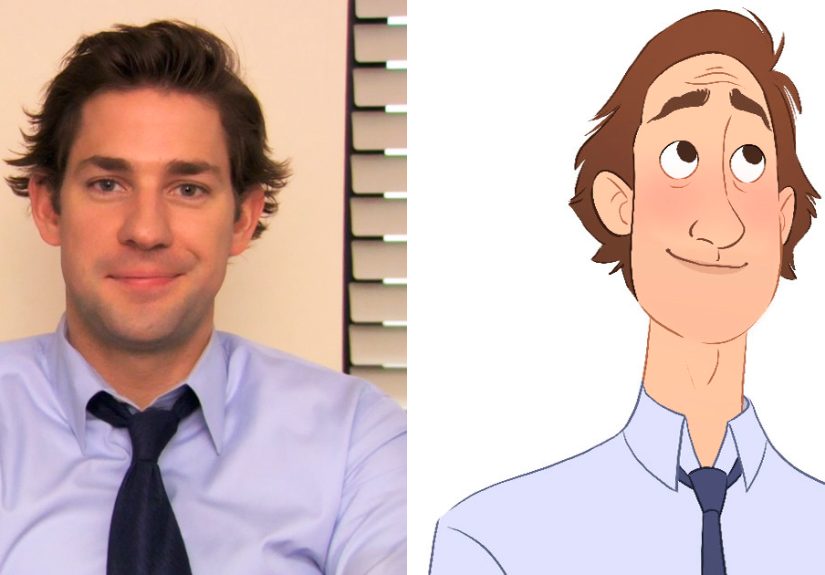
Jim: Soft edges, relaxed posture, and “camera glance” mastery
Jim’s whole superpower is subtlety. His design should be approachable, slightly slouched, with facial acting that can
communicate entire paragraphs with one look. The camera glance becomes an animated art form: not huge, not muggyjust precise.
Pam: Warm expressions and quiet confidence (plus the art-eye details)
Pam’s design can carry gentle detail: how she holds a pen, how she notices small changes, how her expression shifts when
she’s choosing kindness over chaos. In animation, you can highlight her artistic perspective with quick cutaways to doodles,
sketches, and tiny moments of observation.
Supporting cast: Built for visual callbacks
Animation loves recurring background gags. That means the supporting cast becomes even more powerful: the same break-room
corner, the same vending machine, the same awkward group meeting compositioneach one a stage for tiny, repeatable jokes.
- Kevin gets visual timing: slow blinks, long pauses, and snacks treated like serious business.
- Angela gets crisp posture and controlled expressions that crack when she’s cornered by nonsense.
- Oscar gets precision: neat movements, efficient gestures, and “I’m surrounded” facial commentary.
- Creed gets… an aura. Not explained. Never explained.
Comedy Upgrades Only Animation Can Deliver
Here’s where the cartoon version earns its paycheck. Animation can add jokes that don’t exist in live action, while still
staying true to the show’s grounded tone.
Micro-gags in the background
The office could quietly evolve: a motivational poster replaced with a slightly worse one; a “New Copier Rules” sign that
gets longer and more passive-aggressive every episode; a plant that keeps dying and being replaced with a plant that also
dies. Background jokes reward rewatching without screaming for attention.
Visual metaphors for awkwardness (kept subtle)
Not big fantasy sequencesjust tiny flourishes: a tense silence shown by the camera lingering on a buzzing fluorescent light,
or a character’s confidence shrinking as the frame slowly widens and they realize everyone heard them. The key is restraint:
animation enhances discomfort, it doesn’t turn it into a superhero movie.
Pranks that are safer, sillier, and more inventive
In animation, prank props can be more elaborate without becoming unrealistic. The prank still feels like something a bored
employee would do at 10:47 a.m. on a Tuesdayjust with slightly better timing, cleaner visual payoffs, and fewer injuries.
Because HR is tired. The camera crew is tired. We’re all tired.
How an Animated Mockumentary Would Be Produced
An animated version would likely follow a familiar pipeline: plan the story, board it, time it, then animate itwhile
keeping the “documentary camera” language consistent. The mockumentary style adds a twist: you’d storyboard not only what
happens, but how the camera “finds” it.
Storyboards and animatics: timing the cringe
The magic of The Office is timing: a pause, a glance, a delayed reaction. In animation, that timing is engineered.
Storyboards map the shots; animatics test pacing with rough sequences and temporary audio; and the final animation builds
expressions and camera moves that sell the joke.
Voice acting: letting characters breathe
Comedy voice performance isn’t about yellingit’s about rhythm. The “uh,” the half-sentence, the confident statement that
immediately collapses. A smart animated adaptation would give actors room to play inside the mockumentary tone: natural,
conversational, and slightly uncomfortable, like someone is answering a question they didn’t prepare for.
Sound design that makes the office feel real
A cartoon office still needs real office sounds: printer whirs, chair squeaks, muffled phone calls, distant laughter that’s
either friendly or ominous. The mockumentary vibe benefits from “imperfect” audio toolike a mic catching someone’s sigh
right before they pretend everything is fine.
What Episodes Would Look Like in Cartoon Form
The best episodes wouldn’t need to change their plots. They’d just gain new layers. A tense meeting becomes a visual comedy
of composition and eye lines. A party becomes a controlled disaster with background gags and awkward staging. A classic
office conflict becomes a slow-moving, beautifully animated parade of “I can’t believe I’m witnessing this.”
Example: The conference room as a “stage”
The conference room is already a comedy arena. In animation, it becomes a repeating set where blocking and framing create
jokes: who sits where, who leans away, who keeps raising their hand like this is school, and who stares into the middle
distance like they’re trying to astral-project out of the meeting.
Example: The parking lot becomes a recurring “world”
In a cartoon, the parking lot can be a mini-universe: the same pothole, the same awkward walk-ins, the same “someone is
arriving late and hoping nobody noticed” energy. The camera can spot people from far away, zoom in slowly, and make the
moment funnier without anyone saying a word.
Would It Still Feel Like Scranton?
Yesif the cartoon respects the ordinary. The show’s setting isn’t glamorous; it’s familiar. The comedy comes from how
people behave when they’re trapped together in a small world with limited snacks and unlimited opinions.
Animation shouldn’t replace that vibe; it should underline it. The beige walls can stay beige. The lighting can stay
slightly sad. The office can remain a place where a tiny eventlike a new chairfeels like a major life development.
of “Been There” Experiences (Because This Idea Feels Weirdly Real)
If you’ve ever watched The Office and thought, “Why does this feel like a documentary about my own workplace?” you’re
not alone. Part of the fun is recognizing the tiny truths: the person who takes meetings too seriously, the person who’s
weirdly competitive about office trivia, the person who replies-all like it’s a hobby. Now imagine all of that translated
into animation, and the experience gets even sharperbecause cartoons are basically the language of exaggeration without
lying.
Think about how it feels to binge a few episodes and start noticing the rhythm: cold open, theme, slow escalation, then
a payoff that’s funnier because the show didn’t rush it. In a cartoon version, you’d feel that rhythm in your bones. A slow
zoom becomes a joke you can anticipate, like hearing a familiar beat drop in a song. You’d catch yourself waiting for the
frame to widen, waiting for the glance, waiting for the camera to “accidentally” linger on someone who is absolutely
thinking, “I should have called in sick today.”
And then there’s the shared experience of watching with other people. Someone laughs early because they know what’s coming,
and suddenly the room feels like a mini documentary crew tooeveryone staring at the screen like they’re witnessing a
workplace experiment. In animation, that becomes even more communal because cartoons invite commentary. You start pointing
out details: the way someone’s posture changes when they’re lying, the way a background sign gets more passive-aggressive
each time it appears, the way a character’s smile is just half a millimeter too confident.
If you’ve ever had a job where the “big excitement” was a new coffee machine (that broke immediately), you know why an
animated version would hit. Cartoons can turn small events into dramatic momentswithout making them unrealistic. The new
coffee machine can get a heroic introduction shot. The broken machine can get a sad close-up like it’s a fallen warrior.
And the employees can react with the exact seriousness you’ve seen in real life: way too much, and also completely
understandable because boredom makes people invent meaning wherever they can.
The best part is the mental game you’d start playing: “How would this scene look animated?” You’d imagine the camera
tilting slightly when someone says something wild. You’d imagine a slow pan to a coworker’s face that says, “Don’t rope me
into this.” You’d imagine the quiet chaos of an office party as a series of background gagssomeone trapped in small talk,
someone guarding the snacks, someone pretending they love the playlist, someone doing a dance move that should be illegal
in at least three states.
In a weird way, imagining The Office as a cartoon is also imagining how we experience work: a bunch of ordinary people
trying to make it through the day, sometimes failing spectacularly, sometimes surprising themselves, and alwaysalwaysbeing
one awkward pause away from comedy. If the animated version got that right, it wouldn’t feel like a gimmick. It would feel
like the same show, just with a pencil, a storyboard, and a little extra space for the camera to zoom in on the exact moment
someone realizes they have made a terrible choice.