Table of Contents >> Show >> Hide
- Who Is Karl Alomar?
- The M13 Model: Venture Capital With an Operator’s Backbone
- Why “Doubling Down” Defines Alomar’s Investment Mindset
- From DigitalOcean to M13: The Value of Scaling Experience
- What Karl Alomar Looks for in Founders
- M13’s Focus Areas: Work, Health, Commerce, Money, AI, and Web3
- Specific Examples: Prepared and Piñata
- Lessons Founders Can Learn From Karl Alomar
- Why Alomar’s Approach Matters Now
- Additional Experience-Based Insights: Doubling Down the Smart Way
- Conclusion
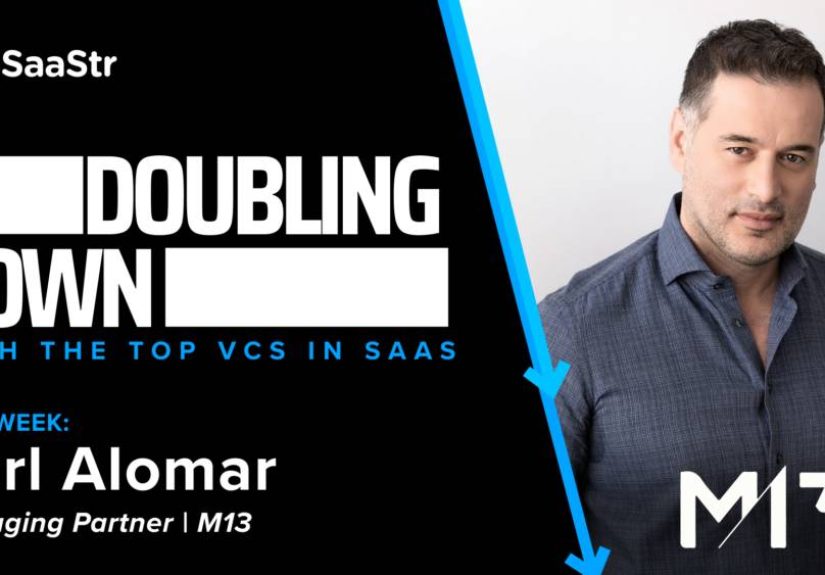
In venture capital, “doubling down” sounds dramatic, like a poker scene with better shoes and fewer cowboy hats. But for Karl Alomar, Managing Partner at M13, the phrase feels less like a gamble and more like an operating principle: when the fundamentals are strong, the founder is sharp, and the market is big enough to matter, you lean in with conviction.
Alomar is not the stereotype of a venture capitalist who discovered startups from a spreadsheet. His reputation comes from the operator’s side of the table. Before becoming a leading investor at M13, he helped scale DigitalOcean from its early product days into one of the most recognizable cloud infrastructure companies for developers and small businesses. He also co-founded and exited technology companies, including China Export Finance and Clearview Networks. In other words, he has lived the founder roller coaster: the thrilling climbs, the “why is everything on fire?” descents, and the occasional investor meeting where the coffee is somehow the most stable thing in the room.
Today, at M13, Alomar applies those hard-earned lessons to early-stage venture investing. The firm backs software-driven companies across work, health, commerce, money, AI, web3, and infrastructure. M13 presents itself as more than a check-writing shop. Its model emphasizes operational support through its Propulsion platform, a team designed to help founders scale with practical systems, strategic guidance, and hands-on expertise.
This article explores Karl Alomar’s path, M13’s investment style, and what founders can learn from a venture partner who believes that execution, humility, and data matter more than a shiny pitch deck with 47 gradients.
Who Is Karl Alomar?
Karl Alomar is Managing Partner at M13, an early-stage venture capital firm focused on founders building disruptive software businesses. His background blends engineering, entrepreneurship, company building, and investing. That combination matters because venture capital often rewards pattern recognition, and Alomar’s pattern library was built in the trenches.
Before M13, Alomar served as COO of DigitalOcean, the cloud infrastructure company known for simplifying cloud hosting for developers, startups, and small to midsize businesses. During his tenure, DigitalOcean grew rapidly, expanded its employee base, and matured into a business capable of entering public markets. DigitalOcean later listed on the New York Stock Exchange under the ticker DOCN, validating the company’s position as a major player in cloud infrastructure.
Alomar’s operator experience did not begin at DigitalOcean. He previously co-founded and exited two technology companies as CEO. China Export Finance grew into a meaningful revenue business before its exit, while Clearview Networks gave him additional founder experience in building and selling technology ventures. Those exits are important not because “exit” is a magical word that makes investors nod knowingly, but because they show he has repeatedly moved companies from idea to execution to outcome.
The M13 Model: Venture Capital With an Operator’s Backbone
M13 was founded in 2016 by Carter Reum and Courtney Reum and has grown into a well-known early-stage venture firm with roots in Los Angeles and a broader presence across major U.S. startup hubs. The firm has raised substantial capital, including a $400 million third fund, and has backed companies across consumer technology, software, infrastructure, and emerging platforms.
What makes M13 interesting is not simply the size of its funds or the buzz around its portfolio. The firm’s core pitch is that founders need more than capital. They need leverage. They need operators who can help them avoid common mistakes, build repeatable systems, recruit talent, refine go-to-market motions, and survive the awkward middle stage when a startup is too big to run casually but too young to run like a corporation.
M13 calls this support model “Propulsion.” The idea is simple: a founder should not have to learn every painful lesson from scratch. If one company figures out a stronger hiring process, sharper sales motion, or more disciplined planning framework, those learnings can help the next company move faster. That is the difference between a passive platform and an active operating system.
For Alomar, this is a natural fit. Having scaled companies himself, he understands that advice is only useful when it becomes action. “You should hire better” is not advice; it is a fortune cookie with a LinkedIn account. A more helpful investor can help define the role, structure the interview process, benchmark compensation, introduce candidates, and pressure-test whether the hire actually solves the business problem.
Why “Doubling Down” Defines Alomar’s Investment Mindset
In startup investing, doubling down does not mean throwing more money at every exciting idea. It means increasing conviction when evidence supports it. Alomar’s public comments and interviews show a consistent preference for fundamentals: data trends, sustainable business models, scalable solutions, founder quality, and market depth.
That approach is especially relevant in an era of hype cycles. AI, crypto, climate tech, digital health, and the future of work can all produce enormous opportunities. They can also produce stampedes where investors chase the same buzzwords with the grace of shoppers on Black Friday. Alomar’s view is more measured: hype often starts because a real shift is happening, but excitement is not a substitute for diligence.
For founders, that distinction is crucial. A hot category might help open doors, but it will not carry a weak business forever. Investors like Alomar want to know whether the company has repeatable demand, a defensible product, a strong team, and a path to scale. In plain English: is this a business, or is it just a very enthusiastic conference panel?
From DigitalOcean to M13: The Value of Scaling Experience
DigitalOcean’s rise is central to understanding Alomar’s credibility. The company found a powerful wedge by making cloud infrastructure easier for developers and smaller businesses. At a time when cloud computing was becoming essential, DigitalOcean offered simplicity, accessible pricing, and a developer-friendly experience.
Scaling that kind of company is not just about adding servers and smiling in all-hands meetings. It requires operational discipline across product, customer support, infrastructure, finance, hiring, and culture. A company that serves developers must earn trust repeatedly. If uptime suffers, documentation confuses users, or pricing feels unpredictable, customers notice quickly. Developers are not known for silently accepting bad tools. They will leave, complain publicly, or both.
Alomar’s role as COO gave him exposure to the gritty realities of scaling. That matters at M13 because many founders he meets are entering the same messy stage: the product works, early customers care, and now the company must transform from a scrappy team into a durable organization. This is where startups often wobble. The founding team may still be making every decision. Processes may live inside someone’s brain. Customer success may depend on heroic effort rather than systems. Growth looks exciting, but underneath, the machine is rattling.
Operator-investors can spot those stress points early. They know that revenue growth is wonderful, but if gross margins, churn, hiring quality, and customer acquisition costs are flashing warning signs, the celebration should be postponed. Maybe bring cupcakes, but keep the spreadsheet open.
What Karl Alomar Looks for in Founders
Alomar’s investment philosophy starts with the founder. He has emphasized the importance of execution, clarity, humility, and the ability to build a productive relationship with investors. Execution is table stakes. A founder can have a brilliant idea, but if they cannot hire, sell, prioritize, adapt, and make decisions under pressure, the idea will remain a beautiful slide deck.
1. Clear Thinking
Great founders can explain complicated problems simply. They understand the customer pain, the market gap, and why now is the right moment. They do not hide behind jargon. If a founder needs 20 minutes to explain the first sentence of the pitch, the business may not be ready, or the audience may need snacks.
2. Data With Direction
Alomar has spoken about the importance of data trends and track record. A startup might show impressive early numbers, but investors need to know whether momentum is sustainable. A viral spike can look like product-market fit until the attention disappears. Strong data shows whether customers return, revenue repeats, usage deepens, and growth channels can scale.
3. Business Model Discipline
Some startups grow quickly while losing money in ways that do not improve with scale. That is not a strategy; it is a very expensive hobby. Alomar looks at the economics of the business model, both today and at maturity. Can the company eventually become profitable? What capital will it need? What does it look like at $100 million in annual recurring revenue or equivalent scale?
4. Coachability Without Weakness
One of Alomar’s stated red flags is hubris. Confidence is essential, but arrogance can damage a company. A founder who believes they already know everything will struggle to learn from customers, teammates, market feedback, and investors. The best founders are not passive students; they are strong leaders who can absorb new information without losing conviction.
5. A Market Worth the Fight
Startups are hard enough when the market is large. When the opportunity is tiny, the difficulty level becomes comical. M13’s focus on infrastructure, AI, work, health, commerce, and money reflects a preference for categories where durable platform shifts can create large outcomes.
M13’s Focus Areas: Work, Health, Commerce, Money, AI, and Web3
M13’s investment thesis has evolved since the firm’s early days. While it originally became known for consumer and direct-to-consumer investments, the firm has broadened toward enabling technologies and infrastructure. Today, M13 focuses on areas such as the future of work, health, commerce, money, AI, and web3.
This shift reflects a broader trend in venture capital. Consumer behavior still matters, but many of the biggest opportunities now sit in the infrastructure layer: tools that help companies operate, automate, analyze, transact, and serve customers more efficiently. AI has accelerated that shift. Startups can now build products that automate workflows, support decision-making, personalize services, and create new interfaces between people and software.
Still, Alomar’s measured approach is important here. AI is powerful, but simply adding “AI-powered” to a homepage does not create a moat. The best AI companies solve painful problems, own valuable workflows, create measurable outcomes, and improve over time through data, distribution, or product depth.
Specific Examples: Prepared and Piñata
Two examples help illustrate M13’s style and Alomar’s interest in execution-heavy businesses.
Prepared is a public safety technology company focused on improving emergency response. The company builds tools that help 911 teams access richer information during emergencies. Alomar has highlighted the clarity and passion of Prepared’s founder, Mike Chime, whose early explanation of the public safety problem left a strong impression. The lesson is not that every founder should chase investors to their cars, though please use judgment in parking lots. The lesson is that clarity of thought can stand out quickly when the problem is real and the founder’s energy is authentic.
Piñata is another example. The company builds an operational platform for distributed workforces, helping brands manage field teams, sampling programs, and other decentralized work. That may not sound as flashy as a robot that writes poetry while making espresso, but it addresses a real operational pain. Many companies still coordinate distributed teams with spreadsheets, emails, and manual processes. Software that replaces that chaos can create meaningful value.
These examples reveal a key theme: Alomar appears drawn to founders who understand messy, practical problems and build tools that improve how work gets done. In startup land, unglamorous workflows can become very attractive businesses. Boring is often where the money is hiding, wearing sensible shoes.
Lessons Founders Can Learn From Karl Alomar
Build for Evidence, Not Applause
Founders often face pressure to look successful before the business is truly healthy. Press mentions, social media buzz, and investor attention can be useful, but they are not substitutes for customer retention, revenue quality, and product value. Alomar’s focus on data trends reminds founders to build proof, not theater.
Know Your Unit Economics Early
Even early-stage companies should understand the economics behind growth. What does it cost to acquire a customer? How long does it take to recover that cost? What margins can the business achieve at scale? If the answer to every financial question is “we’ll figure that out after Series B,” investors may suddenly remember another meeting.
Do Not Confuse Speed With Panic
Startups must move quickly, but fast decision-making should still be thoughtful. Alomar’s comments on hype cycles suggest that good investors and founders need calm judgment. The goal is not to ignore new technologies; it is to avoid being dragged around by the market’s mood swings.
Choose Investors Who Add Operating Leverage
Capital is increasingly abundant for the best founders, but useful capital is rarer. M13’s Propulsion model reflects a belief that venture firms should help companies execute. Founders should ask potential investors specific questions: How do you help with hiring? Can you support go-to-market strategy? What have you done for companies at our stage? Do you bring repeatable resources or only friendly encouragement?
Why Alomar’s Approach Matters Now
The startup environment has changed dramatically from the easy-money years. Investors are more disciplined, founders are expected to do more with less, and public markets have become less forgiving of growth without credible economics. In this climate, Alomar’s operator-first mindset feels especially relevant.
The next generation of category-defining companies will likely be built by founders who combine ambition with restraint. They will use AI and infrastructure shifts intelligently, not cosmetically. They will understand that fundraising is a milestone, not a business model. They will build cultures that can survive stress. They will choose investors who can help them turn uncertainty into systems.
That is where “doubling down” becomes powerful. It is not blind aggression. It is conviction earned through evidence. For Alomar and M13, the best opportunities appear to be those where a talented founder, a large market, a scalable product, and operating support come together at the right moment.
Additional Experience-Based Insights: Doubling Down the Smart Way
One of the most useful ways to understand Karl Alomar’s career is to think about the emotional discipline required to keep building when conditions change. Every founder eventually meets a moment when the original plan stops working. A customer segment disappoints. A funding round takes longer than expected. A key employee leaves. A competitor launches something suspiciously familiar. Suddenly, the beautiful strategy document looks less like a map and more like modern art.
Alomar’s background suggests that resilience is not motivational poster material; it is an operating skill. Scaling DigitalOcean required navigating a competitive cloud market dominated by giants. Building earlier companies required surviving the daily uncertainty of entrepreneurship. At M13, those experiences translate into empathy for founders, but also into a sharper filter. He knows that difficulty alone does not make a company special. The question is whether the team can learn, adapt, and keep moving.
For founders, this is the practical meaning of doubling down. You do not double down simply because you are emotionally attached to your idea. You double down when customers are giving you evidence, when the product is improving, when the market is pulling, and when the team is becoming stronger through pressure. Conviction without feedback is stubbornness. Conviction with evidence is leadership.
Another lesson is that founder-investor fit matters more than many entrepreneurs realize. A great investor is not always the most famous name on the cap table. The best partner is often the one who understands your company’s specific bottlenecks. If your startup needs help building an enterprise sales process, you need someone who has seen that movie before. If your company is scaling infrastructure, you need someone who understands reliability, developer trust, and operational complexity. Alomar’s operating history makes him especially relevant for founders facing the transition from promising product to scalable business.
There is also a cultural lesson here. Alomar’s emphasis on humility and dislike of hubris should not be mistaken for a preference for timid founders. Venture-backed startups require enormous ambition. But ambition works best when paired with intellectual honesty. The strongest founders can say, “Here is what we know, here is what we are testing, here is where we might be wrong, and here is how we will find out.” That kind of clarity builds trust.
In my experience analyzing startup stories, the companies that endure are rarely the ones with the loudest launch. They are the ones that build learning loops. They talk to customers constantly. They measure what matters. They hire people who raise the talent bar. They treat capital as fuel, not proof of greatness. They stay curious even when early success makes arrogance tempting.
That mindset aligns closely with Alomar’s public investment philosophy. Look for real data. Respect the business model. Study the scale path. Beware of hype without diligence. Back founders who can execute and evolve. None of that sounds flashy, which is exactly why it matters. Startup success is usually not one giant cinematic breakthrough. It is a thousand disciplined decisions stacked on top of each other until the market finally notices.
For readers, entrepreneurs, and operators, the takeaway is clear: doubling down is not about being reckless. It is about earning the right to be bold. Karl Alomar’s journey from founder to DigitalOcean operator to M13 managing partner shows how experience can turn risk-taking into a craft. In a market crowded with noise, that kind of measured conviction may be one of the most valuable assets a founder can find.
Conclusion
Karl Alomar’s story is a useful case study in modern venture capital because it connects three worlds: founding, scaling, and investing. He has built and exited companies, helped scale DigitalOcean, and now supports early-stage founders at M13. His approach is not built on chasing every hot trend. It is built on understanding when a trend contains real opportunity, when a founder has the ability to execute, and when a business has the fundamentals to grow into something durable.
For founders, the message is refreshing and demanding. Be bold, but bring evidence. Tell a big story, but make sure the numbers can support it. Move fast, but do not confuse activity with progress. Choose investors who can help you build, not just applaud from the sidelines. And when the right ingredients are present, do not be afraid to double down.
Note: This article is based on publicly available information about Karl Alomar, M13, DigitalOcean, and related startup investment discussions. Before publication, verify current titles, fund details, and portfolio updates for the latest accuracy.