Table of Contents >> Show >> Hide
- Why Heavy Mirrors Fall in the First Place
- Before You Hang Anything, Check These 3 Things
- The Best Ways to Hang a Heavy Mirror
- How to Hang a Heavy Mirror Step by Step
- Placement Tips for a Statement Mirror That Looks Expensive
- Common Mistakes to Avoid
- Final Thoughts
- What the Experience Is Really Like: of Real-World Lessons
- SEO Tags
A big, beautiful mirror can do a lot of heavy lifting in a room without ever saying a word. It can bounce light around a dark entryway, make a tiny dining room feel less like a shoebox, and turn a bland wall into the star of the show. But before that statement piece starts serving looks, it needs to stay on the wall. Permanently. Not “until the dog runs by” permanently. Actually permanently.
If you want to hang a heavy mirror the right way, the secret is not bravery. It is strategy. The safest installation comes down to four things: knowing the mirror’s real weight, understanding your wall type, choosing hardware that matches both, and installing everything with the kind of care that prevents midnight crashes and heart attacks. Below is a step-by-step guide to help you hang a heavy mirror securely, cleanly, and with enough confidence to stop checking on it every 20 minutes.
Why Heavy Mirrors Fall in the First Place
Most mirror disasters are not caused by the mirror being “too heavy.” They happen because the hardware is wrong for the wall, the fasteners are under-rated, or the mirror is hanging from a single point when it really needs two. In other words, the mirror is not the drama. The installation is.
Drywall is a common troublemaker here. It looks sturdy, but by itself it is not designed to hold a large framed mirror with a giant ego. Plaster can be even trickier because it is thicker and more brittle. Masonry walls need their own drill bits and anchors. Then there is the classic DIY mistake of trusting whatever flimsy hanger came attached to the mirror from the store. That tiny sawtooth hanger may be fine for lightweight art, but a substantial statement mirror needs something more serious.
Before You Hang Anything, Check These 3 Things
1. Weigh the mirror
Do not guess. “It feels like 30 pounds” is how people end up shopping for replacement glass. Check the packaging, the product listing, or place the mirror on a bathroom scale. The exact weight matters because every anchor, screw, hanger, and cleat has a load rating. Your hardware should comfortably exceed the mirror’s weight, not barely match it.
2. Identify the wall type
Most interior walls are drywall or plaster, but some fireplaces, older homes, and bathrooms may have masonry, tile, or other harder surfaces. The wall type determines whether you need wood screws, toggle bolts, hollow-wall anchors, masonry anchors, mirror clips, or a French cleat system. One size does not fit all in mirror hanging, no matter how optimistic the package copy sounds.
3. Inspect the mirror’s back hardware
Look at what is already attached to the back of the frame. Heavy mirrors are commonly fitted with D-rings, a hanging wire, mounting brackets, or a cleat-style system. For truly heavy pieces, D-rings with two mounting points or a French cleat are typically more stable than relying on one centered hanger. If the back hardware looks thin, crooked, loose, or suspiciously decorative, replace it with better-rated hardware before the mirror ever meets the wall.
The Best Ways to Hang a Heavy Mirror
Mount into wall studs whenever possible
If you can line up your hanging points with wall studs, that is usually the strongest and simplest solution. A stud gives your screws solid wood to bite into, which makes the whole setup more dependable than hanging only from drywall. Use a stud finder to mark stud locations, then measure carefully so your screws align with the mirror’s hanging hardware.
This works especially well for large framed mirrors in entryways, bedrooms, and living rooms. If your mirror has two D-rings, use two screws into the wall so the weight is spread out and the mirror is less likely to shift out of level over time.
Use heavy-duty anchors when studs do not line up
Sometimes the perfect mirror location and the perfect stud location are not on speaking terms. In that case, heavy-duty drywall anchors or toggle-style anchors can help, provided they are rated for the load and installed correctly. For heavy mirrors on drywall, this is often the next-best option when direct stud mounting is not possible.
The rule here is simple: choose anchors rated above the full weight of the mirror, and follow the manufacturer’s instructions exactly. This is not the moment for creative improvisation. If the hardware says it is for light-duty decor, believe it and move on.
Choose a French cleat for oversized or especially heavy mirrors
If your mirror is large, expensive, awkward, or all three, a French cleat is one of the smartest hanging methods available. A cleat system uses two interlocking metal pieces: one attaches to the back of the mirror, and the other attaches to the wall. When they lock together, the weight is distributed more evenly, and the mirror sits snugly against the wall.
This method is especially useful for statement mirrors above consoles, buffets, and mantels where you want a secure hold and a clean, professional look. It is also a good choice when you want less wobble and more confidence.
Use mirror clips for frameless mirrors
Frameless mirrors are a different animal. Since they do not have a wood frame for screws or rings, they are often installed with mirror clips, a bottom support channel, and in some cases mirror-safe adhesive. This is common in bathrooms and powder rooms. If you are dealing with a frameless mirror, use products specifically made for mirrors and glass. General-purpose adhesive is not the hero of this story.
How to Hang a Heavy Mirror Step by Step
Step 1: Pick the exact location
Decide where the mirror should sit before you drill anything. A large mirror works best when it has room to breathe. Over a console table, leave enough space so it does not feel crammed. Across from a window, it can reflect more natural light and make the room feel larger. Above a fireplace, make sure the scale looks intentional rather than accidental.
Step 2: Mark the center point
Measure the wall and mark the center of where you want the mirror to hang. Then measure the mirror itself and locate the exact position of the D-rings, brackets, or wire relative to the top edge. This is the step people rush through and regret later. Slow down now so you do not end up with a mirror hanging one inch off-center forever.
Step 3: Find studs or mark anchor points
Use a stud finder to locate studs behind the wall. If your hanging points can hit studs, great. If not, mark the points where your anchors will go. Always double-check the spacing before drilling. Heavy mirrors are not forgiving.
Step 4: Use a level
Draw a light level line so both mounting points land evenly. If the mirror uses two D-rings, accuracy matters. One bad mark can leave the mirror crooked, twisted, or wobbling like it has stage fright.
Step 5: Drill pilot holes and install hardware
Drill pilot holes where needed. Install screws into studs or insert the correct anchors into drywall or plaster. For masonry, use a hammer drill and masonry-rated anchors. Tighten everything securely, but do not overtighten to the point that you damage the wall surface or strip the fasteners.
Step 6: Hang the mirror with help
Get a second person for this part. Even if you are strong, heavy mirrors are bulky and awkward. One person can lift while the other lines up the hardware. Lower the mirror gently into place rather than forcing it onto the fasteners like you are parking a shopping cart.
Step 7: Check for movement
Once it is on the wall, test the stability carefully. The mirror should feel secure, not loose, tippy, or eager to slide. If it rocks or shifts, take it down and fix the issue now. “Probably fine” is not a real installation standard.
Step 8: Add bumpers or felt pads
Small bumpers at the bottom corners help protect the wall, reduce rattling, and keep the mirror from tilting forward. This is a small detail that makes a big difference, especially in hallways, bathrooms, or busy households where walls get bumped more often.
Placement Tips for a Statement Mirror That Looks Expensive
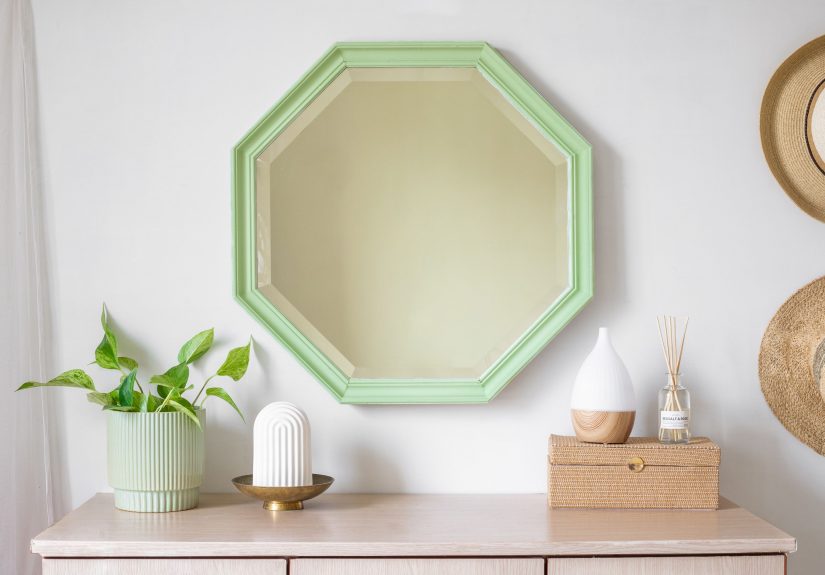
Hanging a heavy mirror securely is half the job. Making it look like it belongs there is the other half. For a true statement piece, think about scale, reflection, and balance.
- Use the reflection on purpose. A mirror opposite a window can brighten the room beautifully. A mirror that reflects laundry piles, not so much.
- Match the mirror to the furniture below it. Over a console or mantel, the mirror should feel proportional, not tiny and apologetic.
- Hang it at a useful height. In most rooms, that means close to eye level unless architectural features suggest otherwise.
- Choose a frame that fits the space. Thin metal frames feel modern, warm wood frames feel grounded, and ornate frames can turn a plain wall into a full-blown main character.
Common Mistakes to Avoid
Using adhesive strips for a truly heavy mirror
Adhesive hanging products can be useful for smaller, lighter decor, but a heavy statement mirror calls for mechanical support. If the mirror is large, framed, or valuable, skip the adhesive-only shortcut.
Ignoring hardware ratings
If the package says a hanger is rated for less than your mirror weighs, that is not a challenge. It is a warning.
Using one hanger instead of two
Two mounting points usually create better balance and help keep the mirror level. A single center hook may be faster, but it is more likely to let the mirror twist or drift.
Skipping the wall type check
A fastener that works beautifully in drywall may be completely wrong for plaster, tile, or brick. Choose hardware for the actual wall in front of you, not the wall you wish you had.
Trying to do it solo
This is how mirrors get chipped, knuckles get smashed, and marriages get tested. Call in backup.
Final Thoughts
Learning how to hang a heavy mirror is really about respecting the weight, the wall, and the hardware. The mirror may be the glamorous part, but the hidden installation details are what make the whole thing safe and successful. When you weigh the mirror, check the wall type, use properly rated fasteners, and give the installation the patience it deserves, you end up with a statement piece that looks polished and stays put.
And that is the goal: a mirror that opens up the room, catches the light, and does not make you flinch every time a door slams.
What the Experience Is Really Like: of Real-World Lessons
Anyone who has ever tried to hang a heavy mirror knows the project looks deceptively simple at first. You start with confidence. You have the mirror. You have a drill. You have measured the wall once, which feels responsible. Then you lift the mirror and immediately realize it weighs roughly the same as your sense of peace. That is usually the moment the project becomes less about decorating and more about problem-solving.
One of the most common experiences homeowners talk about is surprise at the mirror’s true size and awkwardness. A mirror can seem manageable leaning against the wall, but once you try to line up D-rings with screws while holding it level, it suddenly behaves like a giant reflective toddler. That is why people who have done this job before almost always recommend a second set of hands. Not because the process is impossible alone, but because it becomes dramatically less frustrating with help.
Another common lesson is that placement decisions feel different once the mirror is physically in the room. A mirror that looked perfect in a product photo may sit too high above a console, feel too narrow over a mantel, or reflect the least attractive corner of the house with shocking commitment. Many people discover that hanging a mirror successfully is not just a technical task. It is also a visual one. The best results come from taping out the mirror’s dimensions on the wall first or temporarily holding it in place before drilling.
There is also the emotional journey of discovering what is behind the wall. Sometimes you find a stud exactly where you need it and feel chosen by the DIY gods. Other times the stud lands several inches off from your ideal location, and suddenly you are researching anchors with the intensity of a graduate student defending a thesis. That experience teaches an important truth: the best installation is often a compromise between design goals and structural reality. The mirror should look great, yes, but it also has to stay attached to the house.
People also tend to underestimate how much small details matter. A mirror may be hung securely, but without bumpers at the bottom it can click against the wall or lean forward slightly. Without a level, it can look “almost straight,” which is just a more irritating version of crooked. Without careful measurement of the hanging hardware, even a beautiful, expensive mirror can end up visibly off-center. These little issues are rarely catastrophic, but they are the kinds of things that bother you every single time you walk by.
Perhaps the biggest shared experience is the relief that comes once the mirror is finally on the wall and stable. It changes the room immediately. The space looks brighter, taller, and more finished. The work feels worth it. More importantly, the mirror no longer feels like a hazard waiting to happen. That confidence is the real reward of doing the job correctly. A heavy statement mirror should add style, not suspense.