Table of Contents >> Show >> Hide
- From Fashion Instinct to Lighting Obsession
- Why a Brooklyn Brownstone Makes the Perfect Canvas
- The Real Signature: Lighting That Behaves Like Jewelry
- Room by Room, What Makes the Home Work
- What Fashion Teaches a Better Home
- How to Borrow the Look Without Moving to Brooklyn Tomorrow
- Experiences Inside a Home Like This: The Last , and Maybe the Best Ones
- Conclusion
Note: Body-only HTML in standard American English, ready for copying and web publishing.
Some homes are decorated. Others are dressed. The difference matters, especially when the person doing the styling once made a career out of understanding proportion, texture, drama, restraint, and that mysterious little thing called “the finishing touch.” In the case of Brooklyn lighting designer Michelle James, the shift from fashion to interiors does not feel like a career pivot so much as a natural evolution. You can almost picture the thought process: first the outfit, then the room, then the fixture that makes the room wink.
James’s Brooklyn home has long captured the imagination of design lovers because it feels edited the way a great wardrobe feels edited. Nothing screams. Nothing begs for applause. And yet every element seems to know exactly why it is there. The old brownstone bones bring history. The palette keeps things grounded. Velvet, brass, glass, wool, paint, and patina do the flirtation. And overhead? Not some sad builder-grade ceiling blob that looks like it lost a fight with a hardware aisle. Instead, there are statement fixtures with mood, memory, and a little glamor.
That is what makes the idea behind At Home with a Brooklyn Fashionista-Turned-Lighting-Designer so irresistible. It is not just a house tour. It is a lesson in how personal style can move from closet to corner, from jewelry box to chandelier, from getting dressed to getting the lighting exactly right. It also offers a bigger design truth: the most memorable homes are not assembled from trends. They are built from point of view.
From Fashion Instinct to Lighting Obsession
Michelle James’s background helps explain why her interiors feel so composed. Before becoming known for custom lighting, she worked across fashion, styling, merchandising, and jewelry design. That mix matters. Fashion trains the eye to notice silhouette. Jewelry teaches the value of shine, detail, and small-scale drama. Styling develops a ruthless instinct for editing. Put all three together, and you get someone who understands that a room, like an outfit, lives or dies by balance.
In other words, James did not stop being a fashion person when she moved into lighting. She simply changed the scale. A chandelier became the statement necklace. A pair of sconces became the earrings. A moody lamp became the perfectly cut jacket that makes everything else look more expensive. Once you see interiors that way, it is hard to unsee them.
That mindset also explains why her work avoids the cold, hyper-minimal trap that can make some design-heavy homes feel like stylish waiting rooms. Her rooms have polish, yes, but they also have softness. A crisp white backdrop meets darker, richer tones. Vintage finds keep the home from feeling too new. Sculptural fixtures add sparkle without turning the place into a disco ball with plumbing. The result is glamorous without being precious, curated without being uptight.
Why a Brooklyn Brownstone Makes the Perfect Canvas
A late-19th-century Brooklyn brownstone already comes with a head start. These homes tend to offer the kind of architectural character modern apartments spend their whole lives trying to fake: tall ceilings, defined rooms, generous moldings, deep windows, old staircases, and the pleasing sense that a house has witnessed a few decades of real life. James’s home leans into that inheritance rather than sanding it down into generic luxury.
That choice is smart. Historic homes look best when they are allowed to keep some memory in the walls. You do not need every room to cosplay as 1890, but it helps when new additions feel like they are in conversation with the house instead of trying to dominate it. James’s lighting does exactly that. Her fixtures often blend vintage glass with modern metals, which gives them a time-travel quality: part relic, part reinvention, part “Where did you find that?” and part “Please don’t say eBay because now I have to open seventeen tabs.”
The brownstone setting also gives lighting room to perform. Higher ceilings can handle bolder overhead fixtures. Old trim and plaster love angled shadows. Stair halls become mini galleries. Bedrooms with historic details suddenly feel more cinematic when layered light pools across navy walls, textured upholstery, or a matte painted bookshelf. Good lighting does not just brighten a room. In an old Brooklyn home, it reveals the architecture’s cheekbones.
The Real Signature: Lighting That Behaves Like Jewelry
Plenty of people say lighting matters. Michelle James’s world reminds us how it matters. A great fixture does more than provide visibility. It creates atmosphere, shapes how a room is read, and gives emotional weight to the objects around it. That is why the best lighting rarely feels purely functional. It feels intentional, a little seductive, and ever so slightly theatrical.
James’s approach is especially compelling because it is rooted in materials with history. Vintage glass globes, aged brass, steel, jewelry elements, and reclaimed lamp parts bring irregularity and texture that mass-produced pieces often lack. The eye likes that variation. It reads as depth, craft, and confidence. Perfectly uniform fixtures can look clean, but imperfect ones often look alive.
This is also where her fashion past shows up again. The smartest dressers know that an outfit gets better when you mix clean lines with something tactile, polished with something worn, classic with something slightly eccentric. James applies that same formula to lighting. A sleek metal arm paired with old glass. A glamorous chandelier built from scavenged parts. A sconce that feels both industrial and glamorous. It is high-low dressing for the ceiling.
Layering, Not Floodlighting
The broader design world has finally caught up to what tastemakers have known forever: one overhead light is not a lighting plan. It is a cry for help. The rooms that feel warm, flattering, and adaptable usually combine ambient, accent, and task lighting. That means a central source for general illumination, plus lamps or sconces for mood, plus targeted light where you actually read, cook, work, or pretend to read while scrolling on your phone.
In a home like James’s, layered lighting is not just practical; it is the entire vibe. A chandelier can establish tone, but it should not have to do all the labor like an overworked intern. Add a lamp near the sofa, a focused sconce near art or shelving, and dimmers where possible, and suddenly the room can shift from energetic to intimate in seconds. Homes feel more expensive when they can change mood on command. So do dinner parties.
Room by Room, What Makes the Home Work
The Entry: Quiet Confidence
The entry sets the tone with classic detailing and restraint. This is not the place for twelve competing ideas and a bench that exists only to hold unopened packages. It is the visual equivalent of a firm handshake and a great coat. The architectural details speak first. Lighting follows with enough glamor to hint at what is coming next. You get the sense that the house knows exactly who it is before you even take your shoes off.
The Parlor Floor: White, But Never Blank
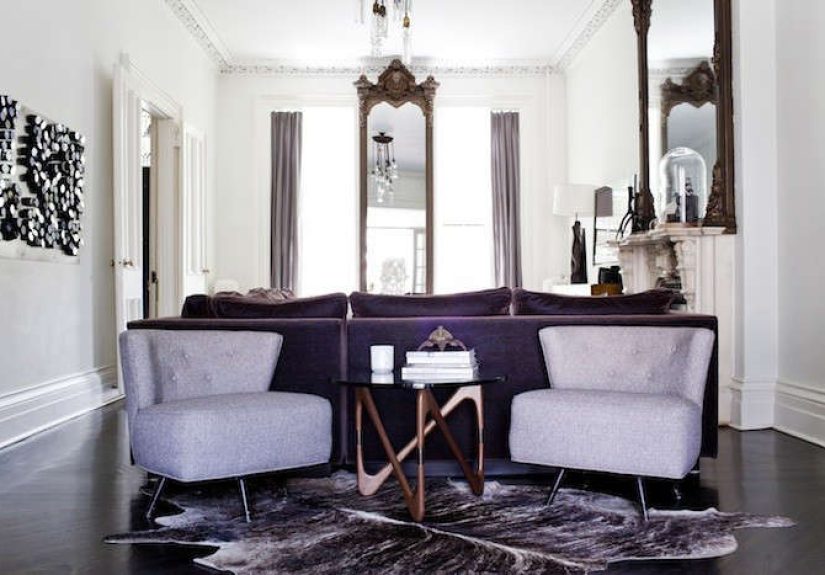
One of the cleverest moves in James’s home is the use of white on the parlor floor. White can be flat in the wrong hands, but in a historic home with trim, ceiling detail, and strong contrast pieces, it becomes a stage set. Here it sharpens the architecture, gives vintage pieces breathing room, and lets texture do the talking. Wool, mohair, brass, and glass step forward more clearly against a light envelope. The mood is polished, but not sterile. Think crisp shirt, not dentist’s office.
The Furnishings: Tailored, With a Pulse
The furniture mix tells its own story. Vintage chairs, custom upholstery, and sculptural accents create that sweet spot between comfort and composure. Nothing feels random, but nothing feels too matched either. This is important. Matchy-matchy rooms often look like they came as a package deal from a catalog. Rooms with soul mix eras, finishes, and forms. James’s interiors understand that tension beautifully. A tailored sofa can sit near a found object. An elegant chandelier can hang above something rougher, simpler, or more grounded. That push and pull is where the magic lives.
The Private Rooms: Darker, Deeper, More Personal
The darker paint moments in the home are especially memorable because they change the emotional temperature. Navy and whale-gray tones create intimacy and depth, which is exactly what private spaces need. Bedrooms and offices do not have to beam like an airport terminal. They should flatter, focus, and calm. Darker walls paired with warm lighting achieve that almost instantly, especially when the fixtures themselves have a little personality.
This is another lesson worth stealing: not every room should sing in the same key. Some spaces can be bright and architectural. Others can be cocooning and moody. A well-designed home unfolds rather than repeating itself. That sense of narrative is something fashion-minded creatives often understand instinctively. Every room, like every look, should contribute to the larger story without becoming a clone of the last one.
What Fashion Teaches a Better Home
The phrase “fashion meets interiors” gets tossed around so often it can sound like marketing fluff, but in a home like this, the crossover is real. Fashion sharpens awareness of scale. It teaches that one dramatic piece works better when the rest of the look gives it room. It teaches that texture can carry more emotional force than color alone. It teaches editing, and editing is the difference between collected and cluttered.
It also teaches confidence. A fashionable room is not necessarily trendy. It simply knows how to mix references without losing the plot. That is why James’s design language feels relevant now. Designers and homeowners alike are moving away from overly coordinated, showroom-perfect spaces and toward interiors with personal signatures: artisan lighting, vintage pieces, mixed metals, sculptural forms, and layered light that can support both Monday work mode and Saturday-night martini mode.
In that sense, the home is not just beautiful. It is instructive. It shows that lighting should not be the last thing you think about. It should be one of the first. It shows that old houses do not need to become museums, and contemporary design does not need to become cold. Most of all, it proves that style travels well across disciplines. A sharp eye is a sharp eye, whether it is dressing a person, a room, or a ceiling.
How to Borrow the Look Without Moving to Brooklyn Tomorrow
- Start with one memorable fixture. Choose a chandelier, pendant, or sconce that has shape and personality.
- Layer at least three light sources per room. Overhead, lamp, and accent lighting should work together.
- Use warm light and dimmers. Your walls, artwork, and face will all thank you.
- Mix vintage and modern. Too much new can feel flat; a single found piece adds instant depth.
- Treat lighting like styling. Think about proportion, shine, repetition, and where the eye lands first.
- Let each room have its own mood. A home should feel cohesive, not copy-pasted.
- Preserve character where you can. Original details are not inconveniences; they are the house’s personality.
Experiences Inside a Home Like This: The Last , and Maybe the Best Ones
What makes a home like this memorable is not only how it photographs, but how it behaves across a day. In the morning, the brownstone does not feel flashy. It feels composed. Early light slides across the moldings and catches the glass in ways that make even ordinary routines look slightly cinematic. Pouring coffee becomes a tiny performance. Walking down the stairs feels different when the banister has age, the ceiling has height, and the fixture above you looks less like hardware and more like punctuation.
By late afternoon, the house starts doing the thing great homes do best: it shifts mood without asking for attention. A white wall that looked crisp at breakfast takes on warmth. Brass starts to glow rather than shine. Upholstery gets richer. The room no longer reads as “decorated”; it reads as inhabited. This is where layered lighting earns its keep. You do not flip on one blinding source and flatten the atmosphere. You choose. A lamp goes on near the sofa. Maybe a sconce by the shelves. Maybe the chandelier gets dimmed just enough to make everyone in the room look like they suddenly have better posture and more interesting opinions.
Entertaining in a space like this would be half the fun of living there. People would drift toward the kitchen, of course, because people always do, but they would also pause in the stair hall, notice the fixture, ask where it came from, and then look mildly offended when the answer includes the words “vintage parts.” Someone would run a hand across a chair back. Someone else would ask about the paint color. Another guest would quietly decide to go home and replace every bulb in their apartment. Good interiors do that. They inspire low-key life choices before dessert.
There is also something deeply comforting about a home designed by someone who understands adornment. Not excess. Adornment. The two are not the same. Excess is noise. Adornment is intention. In a house like this, every object seems to have passed a test: Are you useful? Are you beautiful? Are you both? Even the more glamorous moments are anchored by practicality. You can imagine a child doing homework in one room, someone sourcing vintage globes in another, laundry existing somewhere off-camera because real life is rude like that, and yet the house still holding its poise.
At night, the place would become its truest self. That is when a lighting designer’s home has to deliver, and this one surely does. The fixtures would stop reading as objects and start reading as atmosphere. Reflections would deepen in old glass. Brass would soften. Darker walls would recede just enough to feel enveloping. The house would not shout, “Look at me.” It would murmur, “Stay a little longer.” That may be the most enviable quality of all.
And maybe that is the real takeaway from living, or wanting to live, with a Brooklyn fashionista-turned-lighting-designer aesthetic. It is not about owning the exact chandelier or finding the exact brownstone or spending your evenings in a dramatic silk robe while researching sconces. Although, to be fair, that does sound fun. It is about understanding that a home can be edited with the same care as a wardrobe and lit with the same intention as a stage set. It can hold glamour and usefulness in the same hand. It can respect history without becoming dusty, and embrace style without becoming shallow. Best of all, it can make daily life feel a little more elegant, a little more considered, and a lot more alive.
Conclusion
Michelle James’s Brooklyn home endures as design inspiration because it translates fashion intelligence into livable interiors. It proves that statement lighting works best when it is grounded by architecture, texture, and restraint. It shows how vintage sourcing can create originality that catalog shopping rarely delivers. And it reminds us that the most stylish homes are not necessarily the loudest ones. They are the ones with rhythm, mood, and an unmistakable point of view. In a world full of flat overhead lighting and forgettable rooms, that feels less like decoration and more like a public service.