Table of Contents >> Show >> Hide
For a glorious minute, laser headlights looked like the future had finally pulled into the driveway. They had everything a luxury-car buzzword needs: science-fiction branding, blue accents in the housing, and the kind of promise that makes a product planner whisper, “Wait until the brochure team sees this.” On paper, they sounded unbeatable. They were smaller than LEDs, more intense, more efficient, and capable of throwing light far down a dark road. In press materials, laser headlights were presented like the next great leap in nighttime driving. In reality, at least in America, they became something else: a flashy, expensive, half-unlocked technology that arrived just in time to get politically delayed, economically outgunned, and technologically leapfrogged.
That does not mean laser headlights literally vanished from every new vehicle sold in the United States. A few premium models still use them, usually as part of a pricey package or as a high-beam booster attached to a more conventional LED or matrix-LED setup. But as the industry’s supposed next big thing, laser headlights absolutely died in the U.S. They did not become the new normal. They did not spread downmarket. They did not transform American night driving the way the hype suggested. Instead, they became a case study in how a great-sounding technology can lose momentum when the market changes faster than the regulations, the costs stay stubbornly high, and smarter alternatives become more useful in everyday life.
First, What Laser Headlights Actually Are
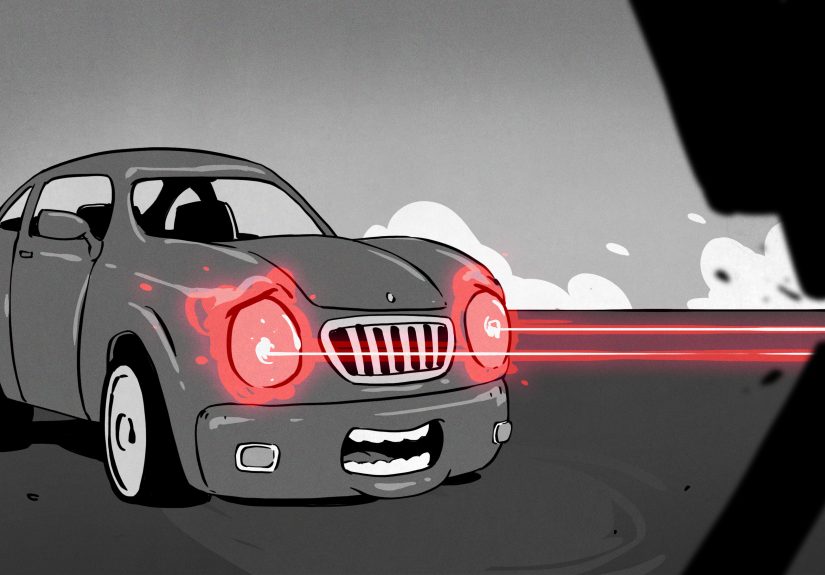
Despite the name, laser headlights do not blast a raw laser beam directly at the road like a villain’s moon base. In automotive applications, blue laser diodes shine into a phosphor material, which converts that energy into bright white light. That light is then directed outward through the headlamp optics. In other words, the laser is inside the system, not the thing your retina is directly negotiating with at 65 mph.
The appeal was real. Laser diodes are tiny, which gives designers more flexibility. They can produce an extremely intense light source, which means very long-range illumination is possible. Early hype around the technology emphasized how far it could project and how little space it needed. Luxury brands loved that combination because it turned a safety feature into both a styling feature and a status symbol. Tiny, jewel-like lamps on the outside; “look at my future” energy on the inside.
BMW pushed hard on that message. The 2016 BMW i8 became the first car in the U.S. to offer laser headlights, and the option itself was not subtle: it cost real money and came with real bragging rights. Audi soon followed with laser-light branding of its own on halo products like the R8 and later on upper-end SUVs and EVs. If you were building a six-figure car and wanted people to know you were not messing around, a little blue accent in the headlamp housing was the automotive equivalent of wearing sunglasses indoors and somehow pulling it off.
Why Laser Headlights Looked Like Winners
For a moment, the business case almost made sense. Headlights matter more than people realize. Night driving is riskier, and better illumination can genuinely help drivers spot hazards earlier. That is not marketing fluff. Good headlights improve real-world safety outcomes, which is one reason the industry kept chasing more capable lighting systems in the first place.
Laser systems also fit beautifully into the luxury-car logic of the 2010s. Carmakers were in an arms race over visible technology: giant screens, animated lighting, gesture control, soft-close doors, and enough sensors to make your driveway feel under surveillance. Laser headlights fit right into that ecosystem. They sounded advanced even to people who had no idea how they worked. You did not need to understand phosphor conversion; you just needed to hear the word “laser” and imagine your commute being handled by a mildly judgmental spaceship.
And there was a practical edge to the promise. When paired with adaptive systems, laser-assisted headlights could provide serious down-road visibility. Reviewers who experienced the technology in its best form did not come away shrugging. The beam was bright, the reach was impressive, and on an empty rural road the effect could feel downright luxurious. That part was never fake. The problem was everything that came next.
Why They Stalled In America
The U.S. Regulated the Magic Out of Them
The single biggest reason laser headlights fizzled in the U.S. is that the real breakthrough was never just “laser.” It was intelligent beam control. The sexy part of modern lighting is not raw brightness. It is precision. It is the ability to keep the road brightly lit while carving shadow around oncoming traffic, vehicles ahead, pedestrians, lane edges, and curves. That is what adaptive driving beams and matrix lighting are about. The light becomes software-defined. It stops acting like one big blunt flashlight and starts behaving more like a digital tool.
For years, American rules effectively prevented automakers from using the full functionality of these systems. Brands like Audi sold U.S.-market hardware that was capable of more overseas, but the dynamic beam-shaping features had to be dialed back or disabled to comply with federal standards. So American buyers could pay for advanced hardware without getting the full futuristic experience. That is not a great recipe for mass adoption. It is more like paying for a gaming PC that arrives with the frame rate capped because the neighborhood association is nervous.
NHTSA finally issued a rule in 2022 allowing adaptive driving beam headlights on new vehicles, which was a meaningful change. But timing matters. By then, laser headlights had already spent years in the American market as compromised technology. The momentum was gone. The “wow” period had passed. Carmakers had already learned an important lesson: if U.S. rules are going to slow-walk advanced lighting, you are better off investing in systems that can survive the regulatory maze and deliver more obvious everyday value.
The Real Revolution Turned Out to Be Matrix LEDs, Not Lasers
This is the part that really ended the laser-headlight dream. While laser systems were stuck waiting for their full capabilities to make sense in the U.S., LED-based lighting got smarter. Much smarter.
Audi’s newer digital matrix LED systems, for example, rely on fine-grained light control that behaves more like a display than a traditional lamp. Some systems use millions of micromirrors to steer light with astonishing precision. Others use increasingly complex pixel structures that allow multiple light signatures, adaptive shaping, and highly sophisticated low-beam behavior. In plain English: LEDs learned new tricks while lasers were busy living off their reputation.
That changed the market. Once matrix LEDs could deliver the most useful part of the experience, the laser component started to look less like the hero and more like the sidekick. On many vehicles, the laser element became a high-beam range extender rather than the central story. Nice to have, yes. Industry-defining, no. That is a much tougher sell when the option sheet is already crowded with things buyers can actually use every day, like better driver assistance, better infotainment, and seats that can apparently perform a Swedish spa ritual on your lower back.
They Were Expensive to Buy and Brutal to Fix
Luxury tech only works when the benefits feel worth the bill. Laser headlights had a problem here from the start. They debuted as premium options on already expensive vehicles, and they never escaped that zip code. Early U.S. examples could add thousands to the sticker price. That alone limited volume.
Then came the ownership reality. Modern headlamp units are often sealed, integrated assemblies with modules, actuators, and electronics packed tightly together. When something breaks, you are usually not replacing a cheap bulb. You are replacing a small glowing mortgage. Recent repair examples for BMW laser headlight systems have crossed into genuinely silly territory, with parts and labor costs that can make a driver briefly consider bicycling at night and trusting destiny.
That matters because headlights sit in one of the most vulnerable places on a vehicle: the corners. Minor crashes, parking-lot scrapes, and random road debris love the front corners. So even if a laser headlight system works beautifully, the financial downside of damaging one can scare off buyers, insurers, and manufacturers alike. A technology that saves you from one deer but bankrupts you after one parking mishap is going to have a tough time becoming mainstream.
Most Drivers Did Not Need the Full Laser Pitch
There is also a less glamorous truth: the ideal use case for laser headlights is not how most Americans drive most of the time. The greatest benefit comes on dark roads, at higher speeds, where long-range visibility really matters. That is valuable, but it is situational. Plenty of driving happens in cities, suburbs, traffic, and illuminated corridors where the real bottleneck is not beam reach. It is glare control, object detection, weather management, and adaptive shaping.
That shifted the center of gravity away from “How far can the beam go?” and toward “How intelligently can the beam behave?” Once that happened, LEDs had the stronger hand. Laser headlights were still impressive, but their killer feature became a niche feature. In the U.S., niche features usually survive on prestige models or quietly fade into the long grass behind a press release about “customer demand.”
Performance Ratings Reward Beam Quality, Not Sci-Fi Vocabulary
Another reason the laser mystique faded is that safety evaluators care about results, not drama. IIHS does not hand out extra credit because your headlights sound like they were developed by a stealth aerospace startup. It looks at visibility and glare. That is it. A headlight system can be LED, HID, adaptive, laser-assisted, or moon-powered by emotionally available robots; if it does not put useful light where drivers need it without creating too much glare, it does not win.
That changed the conversation. The market started rewarding well-tuned systems instead of merely advanced-sounding systems. Some laser-equipped packages have tested well. Others have not changed the conversation nearly as much as their marketing suggested. Once consumers and reviewers realized the important question was not “Is it laser?” but “Is it actually better on the road?” the technology lost some of its mystique. Turns out the future is less interested in labels than in execution. Rude, honestly.
So Did Laser Headlights Really Die?
As a literal statement, no. As a market story, yes.
Laser headlights still exist in the U.S., but mostly as niche hardware on upper trims, halo cars, or specific luxury models. Audi still offers laser-enhanced lighting on some high-end vehicles. BMW still uses Laserlight branding on select expensive models. But that is not the same as winning. The original vision was broader: laser headlights were supposed to be the next big step in automotive lighting, the headline feature that would move from exotica to prestige cars to premium crossovers and then eventually farther down the market. That did not happen.
What actually happened is more interesting. The market took the useful parts of the laser-headlight era, folded them into a larger story about adaptive lighting, and then gave most of the spotlight to smarter LED systems. Laser survived as an accessory to the real revolution rather than the revolution itself. In America, it was not so much murdered as outmaneuvered.
And in that sense, the title holds up. Laser headlights died in the U.S. not because the hardware was fake, and not because the idea was stupid, but because the version that reached American buyers was too limited, too expensive, too late, and too easy for rapidly evolving LED systems to overshadow. They arrived like a blockbuster and left like a deluxe trim-package footnote.
What The Laser Era Felt Like From the Driver’s Seat
The experience of laser headlights is the reason enthusiasts still talk about them with a slightly dreamy tone. On the right road, in the right conditions, they could feel special in a way ordinary lighting never does. Imagine leaving a brightly lit suburb and easing onto a black two-lane road where the lane markers start disappearing into the countryside. This is where advanced lighting stops being a spec-sheet argument and starts feeling personal. The beam stretches farther, the shoulders of the road become readable sooner, and the whole night seems to move back a few feet from the hood of the car. That extra visual cushion buys confidence. It lowers stress. It makes the driver feel less like they are outrunning their own vision.
That was the emotional hook. Owners and reviewers often described laser-equipped systems as theatrical in the best way. The startup animation, the blue accents in the housing, the way the high beams seemed to reach into the distance with unusual composure: all of it signaled that you were using something above the ordinary. And because many of these systems were packaged in expensive BMWs and Audis with thick glass, quiet cabins, and excellent seats, the effect was amplified. The car already felt premium; the headlight performance made the road feel premium, too.
But the American experience also had a strange frustration built into it. You could sense the technology was capable of more than you were allowed to enjoy. In Europe and other markets, adaptive systems could shape the beam around traffic with impressive precision, keeping more of the road illuminated without blasting other drivers. In the U.S., many of those capabilities were limited, softened, or fully disabled for years. So the owner experience became oddly split. On one hand, the lights were excellent. On the other, they came with the nagging suspicion that the cooler version existed somewhere else, living its best life across an ocean.
Then there was the ownership anxiety. Headlights used to be the sort of thing you noticed only when one burned out. Laser-era headlights changed that. Once buyers learned what these assemblies cost to replace, the emotional vibe shifted from “space-age luxury” to “please do not let a shopping cart touch the front corner of this car.” The technology that made a mountain road feel effortless could also make a small collision estimate feel medically significant. That tension became part of the experience, too. Laser headlights were wonderful right up until you had to imagine paying for them.
In a way, that contradiction explains the whole American story. Laser headlights delivered a real premium sensation, but not one that cleanly translated into mass appeal. They were excellent in moments, expensive in ownership, and often constrained in capability. Drivers could feel the promise. They could also feel the compromise. That is why the memory of laser headlights in the U.S. is not just about technology. It is about a specific kind of automotive almost: almost revolutionary, almost common, almost everything the hype promised. And if that sounds a little tragic, welcome to the history of cars, where the most fascinating features are often the ones that arrived too early, cost too much, and got replaced by something slightly less romantic but vastly more practical.
Conclusion
Laser headlights did not fail because they were useless. They failed because America never got the cleanest version of the idea at the moment when it would have mattered most. Regulation slowed the rollout, costs kept the tech exclusive, repairs made it intimidating, and matrix LEDs evolved into the more flexible, more scalable answer. So the U.S. market did what it usually does: it kept the fancy badge for a few expensive toys and moved the real volume toward the technology that delivered more practical value.
That is why laser headlights are best remembered not as a triumph, but as a transition. They helped push the industry toward better nighttime visibility and more intelligent beam control, yet they did not become the lasting symbol of that progress. In the American market, the future of headlights turned out to be less about shouting “laser!” and more about quietly doing the hard work of software-driven light placement. Which is less dramatic, sure. But it is also how laser headlights died in the U.S.: not with a zap, but with a shrug from a smarter LED.