Table of Contents >> Show >> Hide
- Can You Get Unemployment If You Were Fired?
- What Unemployment Agencies Usually Look At
- What Counts as Misconduct?
- Examples of Firings That May Still Qualify for Unemployment
- Examples of Firings That May Disqualify You
- Who Has to Prove Misconduct?
- Should You Apply Even If You Think You Might Be Denied?
- How to File for Unemployment After Being Fired
- What Happens After You Apply?
- What If Your Claim Is Denied?
- Tips to Improve Your Chances of Approval
- Can You Get Unemployment If You Were Wrongfully Fired?
- Does Severance Affect Unemployment?
- State Rules Matter
- Common Myths About Getting Unemployment After Being Fired
- Realistic Experiences: What Fired Workers Often Learn the Hard Way
- Conclusion
Getting fired can feel like being pushed off a moving treadmill while holding a cardboard box full of desk snacks. One minute you have a schedule, a paycheck, and a work email you mildly resent. The next minute you are wondering whether your state will help you pay rent while you hunt for your next job. So, can you collect unemployment if you get fired? In many cases, yes. Being fired does not automatically disqualify you from unemployment benefits.
The real question is not simply, “Were you fired?” It is, “Why were you fired, and does that reason count as misconduct under your state’s unemployment law?” That little wordmisconductdoes a lot of heavy lifting. It can be the difference between receiving temporary unemployment insurance benefits and getting a denial letter that makes your coffee taste worse.
This guide explains how unemployment works after termination, when fired employees may qualify, what can lead to denial, how appeals work, and what practical steps can improve your chances of approval.
Can You Get Unemployment If You Were Fired?
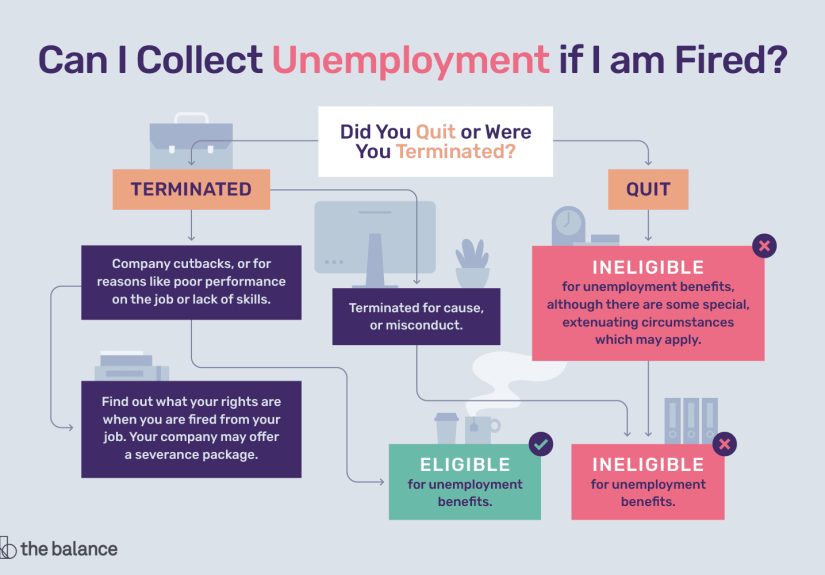
Yes, you may be able to collect unemployment if you were fired, as long as you meet your state’s eligibility rules and were not fired for disqualifying misconduct. In the United States, unemployment insurance is generally designed for workers who lose their jobs through no fault of their own. That sounds simple, but state agencies look carefully at the facts behind the job separation.
A layoff is usually the clearest path to benefits because the worker did not cause the job loss. A firing is more complicated, but it is not a locked door. Many people are fired for reasons that do not amount to misconduct, such as poor fit, lack of skills, slow performance, company restructuring, personality conflicts, or simply not meeting expectations despite trying. In those situations, unemployment benefits may still be available.
State unemployment agenciesnot your former employermake the final decision. Your employer can contest your claim, submit documents, or argue that you were fired for misconduct. But the agency reviews the evidence and applies state law. In plain English: your boss does not get to stamp “DENIED” on your forehead and call it a day.
What Unemployment Agencies Usually Look At
When you apply for unemployment after being fired, the agency usually reviews several major issues. First, it checks whether you earned enough wages during your base period. The base period is a past stretch of employment, often the first four of the last five completed calendar quarters, although state formulas vary.
Second, the agency looks at why your job ended. This is where fired workers often get nervous. The agency may contact your former employer and ask whether you were laid off, quit, discharged for performance, or fired for misconduct.
Third, you usually must be able to work, available for work, and actively seeking suitable work. Unemployment benefits are not paid as a vacation scholarship, sadly. Most states require weekly or biweekly certifications confirming that you are still unemployed, looking for work, and ready to accept appropriate employment.
What Counts as Misconduct?
Misconduct generally means more than making a mistake, being bad at a job, or having the charm level of a printer jam. Although each state defines it differently, misconduct often involves intentional or controllable behavior that violates an employer’s reasonable rules or shows disregard for the employer’s interests.
Common examples may include theft, fraud, repeated unexcused absences, falsifying records, workplace violence, serious insubordination, intoxication at work, harassment, or knowingly violating important safety policies. If the employer has clear rules, proves you knew about them, and shows you deliberately broke them, your unemployment claim may face trouble.
However, not every firing “for cause” is unemployment misconduct. Employers sometimes use “for cause” broadly to mean “we had a reason.” Unemployment law is usually narrower. Being terminated because you were not fast enough, made honest mistakes, failed to hit sales goals, or did not mesh with management may not be misconduct if you were making a good-faith effort.
Examples of Firings That May Still Qualify for Unemployment
1. You were fired for poor performance
Poor performance is one of the most common reasons employees are fired. It may feel personal, but unemployment agencies often treat it differently from misconduct. If you tried to do the job but simply could not meet expectations, you may still qualify.
For example, suppose a customer service employee was let go because call times were too long. The employee showed up, followed the rules, and tried to improve, but could not meet the company’s speed standards. That may be poor performance, not misconduct.
2. You were not a good fit
Sometimes a job and a worker fit together like socks and sandals: technically possible, socially questionable. If you were fired because management decided you were not the right fit, that usually does not automatically block unemployment.
A “bad fit” firing may involve communication style, team dynamics, or a mismatch between your skills and the role. Unless the employer can show intentional rule-breaking or serious misconduct, you may have a reasonable claim.
3. You made a mistake
Honest mistakes happen. A cashier may miscount change, a warehouse worker may scan the wrong item, or an office employee may send a report with errors. If the mistake was accidental and not part of a pattern of willful disregard, it may not disqualify you.
The details matter. One accidental mistake is different from repeated mistakes after warnings, especially if the mistake involves safety, money, confidential information, or legal compliance.
4. You were fired after a conflict
Workplace conflict can lead to termination, but conflict alone does not always equal misconduct. If you had a disagreement with a supervisor or coworker and were fired afterward, the agency may ask whether you threatened anyone, refused direct instructions, used abusive language, or violated company policy.
A professional disagreement may not disqualify you. A shouting match with threats, on the other hand, could make approval much harder.
Examples of Firings That May Disqualify You
1. Theft or dishonesty
Stealing from an employer, falsifying time records, lying on documents, or misusing company funds can be treated as serious misconduct. If the employer has proof, benefits may be denied.
2. Repeated attendance violations
Occasional lateness or one emergency absence may not be enough to deny benefits. But repeated unexcused absences, especially after written warnings, can be considered misconduct in many states.
3. Refusing reasonable work instructions
If an employee refuses to perform assigned duties without a valid reason, the agency may view that as insubordination. However, refusing unsafe or illegal instructions can be different, and the facts matter.
4. Serious policy violations
Violating safety rules, harassment policies, confidentiality rules, or drug and alcohol policies can lead to denial if the employer proves the rule was reasonable, known, and intentionally violated.
Who Has to Prove Misconduct?
In many states, when an employee is fired, the employer has the burden of proving misconduct. That means your former employer may need to provide evidence, not just dramatic adjectives. “They were terrible” is not the same thing as documentation.
Useful evidence for an employer may include written policies, signed acknowledgments, warning notices, attendance records, incident reports, emails, witness statements, video records, or performance documentation. Useful evidence for you may include schedules, messages, medical notes when relevant, performance reviews, proof that rules were unclear, or records showing you tried to correct the issue.
If your employer does not respond to the agency or fails to provide enough evidence, that can help your claim. Still, never assume silence will save the day. File accurately, respond quickly, and keep your own records.
Should You Apply Even If You Think You Might Be Denied?
In most cases, yes. If you are unemployed and believe you may qualify, apply. State agencies often encourage workers to file even when eligibility is uncertain because only the agency can make the official decision.
Do not let a former manager’s opinion stop you. An employer may tell you, “You will never get unemployment,” with the confidence of someone who also thinks replying-all is a leadership skill. But unemployment agencies make independent determinations.
Apply as soon as possible after losing your job. Benefits usually do not start before you file, even if you were unemployed earlier. Waiting can cost you money.
How to File for Unemployment After Being Fired
Start by visiting your state unemployment office website. Unemployment is a state-run program, so the application process, benefit amount, weekly certification rules, and appeal deadlines vary by state.
You will usually need your Social Security number, contact information, employment history, dates worked, wages earned, reason for separation, and your former employer’s name and address. Some states may ask for direct deposit information or identity verification.
When explaining why you were fired, be honest and brief. Do not write a novel titled “My Former Boss: A Tragedy in Twelve Acts.” Stick to facts. For example: “I was discharged for not meeting sales goals despite trying to improve,” or “I was terminated after a disagreement about scheduling.” Avoid exaggeration, insults, or guesses.
What Happens After You Apply?
After you file, the unemployment agency may contact your employer. If the employer reports that you were fired for misconduct, the agency may schedule a phone interview or request written information from both sides.
Take every request seriously. Missing a phone interview or ignoring a questionnaire can damage your claim. If you cannot attend a scheduled call, follow your state’s instructions to reschedule as soon as possible.
During the interview, answer only what is asked. Be calm, specific, and factual. If you made a mistake, say so, but explain whether it was accidental, whether you had been warned before, and whether you were trying to follow the rules.
What If Your Claim Is Denied?
If your unemployment claim is denied, you usually have the right to appeal. Read the denial notice carefully because appeal deadlines are strict. Depending on the state, you may have only a short window to request a hearing.
An appeal hearing is more formal than the initial claim review, but it is not usually as intimidating as a courtroom drama. A hearing officer or administrative law judge listens to both sides, reviews evidence, and asks questions. You may testify, present documents, and question your employer’s witnesses.
Prepare by gathering records that support your side. These may include positive performance reviews, emails showing unclear instructions, proof of approved absences, text messages about scheduling, handbook pages, warning notices, or witness statements. Organize your documents by date so you do not spend the hearing shuffling papers like a raccoon in a filing cabinet.
Tips to Improve Your Chances of Approval
Be honest from the beginning
Do not hide the fact that you were fired. State agencies usually verify separation details with your employer. If your version changes later, it may hurt your credibility.
Use simple, factual language
Explain what happened without emotional fireworks. “I was fired after missing a deadline because I misunderstood the new reporting process” is stronger than “My manager was evil and the spreadsheet was cursed.”
Keep documents
Save termination letters, emails, warnings, schedules, policy documents, pay stubs, and performance reviews. If your employer claims misconduct, documentation can help show whether the rule existed, whether you knew about it, and whether your actions were intentional.
Continue weekly certifications
If your claim is pending or on appeal, keep filing weekly or biweekly certifications if your state allows or requires it. If you win later but failed to certify, you may lose benefits for those weeks.
Keep looking for work
Most states require an active job search. Track applications, interviews, networking contacts, job boards used, and employer names. Think of it as building a paper trail with less glitter and more usefulness.
Can You Get Unemployment If You Were Wrongfully Fired?
You may be able to collect unemployment if you were wrongfully terminated, but unemployment benefits and wrongful termination claims are not the same thing. Unemployment focuses on whether you qualify for temporary wage replacement under state law. Wrongful termination focuses on whether your employer violated employment laws, contracts, or protected rights.
For example, if you were fired after reporting harassment, requesting legally protected leave, refusing illegal conduct, or raising safety concerns, you may have both an unemployment issue and a potential legal claim. The unemployment agency may still examine whether the employer’s stated reason was misconduct. If the firing was not truly based on misconduct, benefits may be approved.
If you believe your firing was illegal, consider speaking with an employment attorney or a legal aid organization in your state. Deadlines can be short, and signing severance documents may affect legal rights.
Does Severance Affect Unemployment?
Severance can affect unemployment benefits depending on your state and how the severance is paid. Some states may reduce or delay benefits if severance is allocated to certain weeks. Other states treat severance differently. Vacation pay, holiday pay, pension income, and part-time wages may also affect weekly benefit amounts.
Report all payments honestly when applying and certifying. Failing to report income can lead to overpayments, penalties, or fraud issues. Nobody wants their unemployment claim to become a sequel called “Paperwork Strikes Back.”
State Rules Matter
Unemployment insurance is a federal-state system, which means broad ideas are similar across the country, but details vary. California, Texas, Florida, New York, Illinois, Pennsylvania, and other states may use different definitions, deadlines, benefit formulas, and appeal procedures.
Some states distinguish between ordinary misconduct and gross misconduct. Some impose a temporary disqualification; others may require the worker to earn a certain amount in new employment before qualifying again. Because of these differences, the smartest move is to check your state unemployment agency’s current instructions.
Common Myths About Getting Unemployment After Being Fired
Myth 1: Fired employees never get unemployment
False. Many fired employees receive unemployment benefits, especially when the firing was based on performance, restructuring, lack of fit, or non-willful mistakes.
Myth 2: Your employer decides whether you qualify
False. Employers can challenge claims, but the state agency decides eligibility.
Myth 3: If you were fired for “cause,” you are automatically denied
Not always. “Cause” under company policy is not always the same as misconduct under unemployment law.
Myth 4: You cannot appeal a denial
False. Most states provide appeal rights, but deadlines matter. Read every notice immediately.
Realistic Experiences: What Fired Workers Often Learn the Hard Way
People who apply for unemployment after being fired often discover that the process is less about one dramatic moment and more about documentation, timing, and calm explanations. One common experience is the “performance firing.” A worker may be told they are not meeting expectations, even though they have been trying hard. At first, they assume unemployment is impossible because, technically, they were fired. Then they apply and learn that poor performance is not always misconduct. If they can explain that they made a good-faith effort, followed instructions, and did not intentionally break rules, they may still qualify.
Another common situation involves attendance. A worker may be fired after missing shifts, but the outcome can depend heavily on details. Were the absences approved? Was the employer notified? Was there a documented emergency? Did the worker violate a clear attendance policy after warnings? A person who simply stopped showing up may face denial. A person who communicated, had a legitimate reason, and can prove it may have a stronger case. The lesson is simple: save messages, call logs, schedules, and any approval records. Future you will want to hug past you for being organized.
Some fired workers also learn that the employer’s first story is not always the final story. An employer may tell the agency the worker was fired for misconduct, but at a hearing, the evidence may show something less serious. Maybe there was no written policy. Maybe the worker was never warned. Maybe other employees did the same thing without discipline. Maybe the supposed “refusal” was actually confusion about unclear instructions. Appeals exist for exactly these situations.
A useful practical experience is to write a timeline immediately after being fired. Include dates, conversations, warnings, schedule changes, performance reviews, and the exact reason given for termination. Memory fades fast, especially when stress is doing jumping jacks in your brain. A timeline helps you explain events clearly during interviews or appeals.
Many applicants also find that tone matters. Unemployment interviews and hearings are not the best place to unload every frustration about a former manager. The stronger approach is calm and factual: what happened, what you were told, what you did, and why your actions were not intentional misconduct. Agencies are not grading your former boss’s personality. They are deciding whether state law allows benefits.
Finally, fired workers often regret waiting too long to apply. The best time to file is usually soon after the job ends. Even if you are embarrassed, uncertain, or hoping to find another job next week, applying protects your place in line. Unemployment benefits are temporary support, not a character judgment. Losing a job is a career event, not a personal identity. File, follow instructions, keep records, search for work, and treat the process like a bridge to your next paycheck.
Conclusion
So, can you collect unemployment if you get fired? Often, yes. The key issue is whether you were fired for misconduct as defined by your state’s unemployment law. Poor performance, lack of fit, honest mistakes, or ordinary workplace disagreements may not automatically disqualify you. Theft, fraud, serious rule violations, repeated unexcused absences, or intentional misconduct may lead to denial.
If you are fired, apply promptly, tell the truth, keep documents, respond to agency requests, continue weekly certifications, and appeal on time if denied. Your former employer may have an opinion, but the state unemployment agency makes the decision. When in doubt, file the claim and let the process do its job.
Note: This article provides general information for readers in the United States and is not legal advice. Unemployment rules vary by state, so always check your state unemployment agency for current requirements.