Table of Contents >> Show >> Hide
- What a “survival rate” actually means
- The good news: the overall picture is much better than many people think
- The bad news: survival is not evenly distributed
- Why the “good news” is real anyway
- Screening, dense breasts, and the problem of false reassurance
- What improves the odds after diagnosis
- What the numbers do not tell you
- So, is the breast cancer survival rate good or bad?
- Experiences that put the statistics into perspective
- Final takeaway
- SEO Tags
Let’s start with the part everyone actually wants to know: yes, there is real good news in breast cancer survival. A lot of it. Compared with past decades, more people are being diagnosed earlier, treatment has become smarter and more personalized, and survival has improved enough that millions of Americans are now living after a breast cancer diagnosis. That is not spin. That is progress.
Now for the bad news, because this topic does not appreciate sugarcoating. Breast cancer is still one of the most common cancers in American women, and it still kills tens of thousands of people each year. Survival also changes dramatically depending on how far the cancer has spread. A stage that is caught early can have an excellent outlook. Disease that has traveled to distant organs is a very different story. And while survival has improved overall, not everyone has benefited equally.
So the headline is not “everything is fine,” and it is definitely not “everything is doomed.” The truth sits in the uncomfortable middle: breast cancer survival rates are one of medicine’s brighter success stories, but the story still has rough chapters, unfair plot twists, and a few places where the healthcare system could use a stern talking-to.
What a “survival rate” actually means
Before the numbers start marching across the page, it helps to know what they mean. A breast cancer survival rate is usually expressed as a 5-year relative survival rate. That compares people with breast cancer to people in the general population who do not have that diagnosis. In simple terms, it asks: how likely is someone with this cancer to be alive five years later compared with similar people overall?
That number is useful, but it is not a prophecy. It is a population-level estimate, not a fortune cookie from an oncology clinic. It does not know your exact tumor biology, your treatment response, your age, your health history, or whether your support system includes a ride to chemo and someone who remembers your pharmacy refill. Survival rates describe groups. They do not define individuals.
They also lag behind current reality. Most survival data reflect people diagnosed several years ago, which means someone diagnosed today may benefit from newer therapies that were not widely available when earlier patients were treated. In other words, the numbers matter, but they are often looking in the rearview mirror.
The good news: the overall picture is much better than many people think
The broadest number is encouraging: the 5-year relative survival rate for breast cancer overall in the United States is about 92%. That is a strong figure for a common cancer, and it reflects decades of improvement in screening, awareness, surgery, radiation, hormonal therapy, targeted drugs, and supportive care.
Even better, most breast cancers are found before they spread to distant parts of the body. About two-thirds of female breast cancer cases in the United States are diagnosed at a localized stage. When breast cancer is caught at that point, the 5-year relative survival rate is over 99%. That is the kind of statistic that deserves its own parade float.
Why has survival improved so much? Three major reasons stand out:
1. Earlier detection
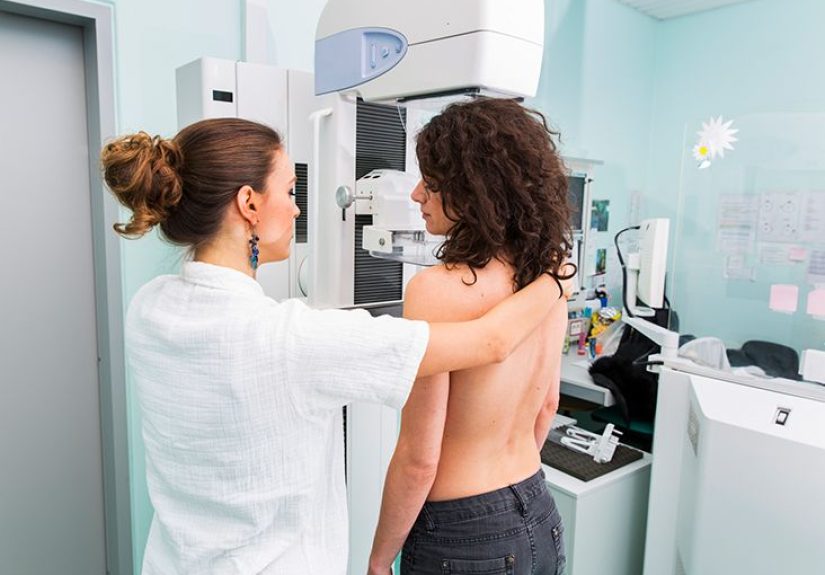
Mammography is not glamorous. No one has ever described it as the spa day of preventive care. But it remains one of the biggest reasons breast cancer is often found when it is still highly treatable. Current U.S. preventive guidance recommends biennial screening mammography for women ages 40 to 74 who are at average risk. Finding cancer earlier generally means smaller tumors, less spread, and more treatment options.
2. Better treatment matching
Breast cancer is not one disease wearing different hats. It is a group of diseases with different behaviors. Today, doctors do more than ask, “Is it breast cancer?” They also ask whether the tumor is hormone receptor-positive, HER2-positive, triple-negative, node-positive, high grade, slow growing, or carrying certain molecular features. That matters because modern treatment is increasingly tailored to the cancer’s biology rather than handled with a one-size-fits-all sledgehammer.
3. More people are living after diagnosis
Survivorship is now a major part of the conversation because so many people are living beyond treatment. More than 4.3 million breast cancer survivors were living in the United States as of early 2025, and that number is expected to keep growing. That does not mean survivorship is always easy, but it does mean breast cancer is not automatically the hopeless sentence many people still imagine when they hear the diagnosis.
The bad news: survival is not evenly distributed
Here is where the optimism needs adult supervision. That reassuring overall survival number can hide some very uncomfortable truths.
Stage still changes everything
The biggest divider is stage at diagnosis. Once breast cancer spreads beyond the breast and nearby tissues, survival drops sharply. For regional disease, the 5-year relative survival rate is around 87%. For distant disease, it falls to about 33%. That is the part of the story that keeps oncologists, patients, families, and public health experts from declaring victory.
This is why early detection is not a boring public health slogan. It is a practical difference-maker. Catching a tumor before it moves from “contained problem” to “systemic challenge” can change the odds in a big way.
Not all tumor subtypes behave the same way
Biology matters. Hormone receptor-positive, HER2-negative cancers tend to have better average survival than triple-negative breast cancer. Triple-negative disease is often more aggressive, more likely to affect younger patients and Black women, and harder to treat because it lacks some of the most effective targeted treatment pathways. That is one reason the phrase “breast cancer survival rate” can be misleading if it sounds too singular. It is really a bundle of many survival stories.
Subtype data underline this point. Some breast cancer subtypes have 5-year relative survival rates in the 90% range overall, while triple-negative breast cancer is notably lower. In metastatic disease, the gap becomes even more obvious. So when patients ask, “What is the breast cancer survival rate?” the honest answer is, “Which breast cancer are we talking about?”
Disparities are still a serious problem
This is one of the most sobering parts of the picture. Black women in the United States have slightly lower breast cancer incidence than White women, but a significantly higher mortality rate. They also have lower survival at every known stage of diagnosis. That is not because biology is the whole explanation. Researchers and cancer organizations point to later diagnosis, differences in access to high-quality treatment, structural barriers, and a higher burden of aggressive tumor types such as triple-negative disease.
That means the bad news is not only medical. Some of it is social, financial, and structural. Survival can be shaped by whether someone has insurance, paid time off, transportation, nearby specialists, clear communication from clinicians, or the ability to keep up with treatment without their life falling apart. Cancer may be biological, but outcomes are often logistical.
Why the “good news” is real anyway
It would be easy to look at the bad news and become cynical. That would be a mistake. The progress is real.
Breast cancer death rates in the United States have fallen substantially over time. That decline reflects improved screening and better treatment, not wishful thinking. Researchers are continuing to refine therapy for early-stage disease, metastatic disease, HER2-low disease, hormone receptor-positive disease, and triple-negative disease. Immunotherapy, antibody-drug conjugates, CDK4/6 inhibitors, more refined genomic testing, and smarter decisions about who needs more treatment and who can safely avoid extra treatment have all changed the landscape.
In plain English: medicine has gotten better at both fighting hard when necessary and avoiding unnecessary overkill when it is not. That is a good combination. People do not just want longer survival. They want better-quality survival too.
Screening, dense breasts, and the problem of false reassurance
One reason breast cancer outcomes still vary is that screening is powerful, but not perfect. Dense breast tissue can make cancers harder to spot on a mammogram and is itself associated with increased breast cancer risk. Recent U.S. policy changes have pushed for clearer breast density reporting so patients know when standard screening may not tell the whole story.
This matters because one of the most dangerous phrases in healthcare is, “Everything looked normal, so I ignored it.” A normal screening result is reassuring, but it is not permission to dismiss a new lump, nipple change, breast swelling, skin dimpling, or persistent one-sided symptom. Screening helps. Symptoms still matter.
What improves the odds after diagnosis
Once breast cancer is diagnosed, survival is influenced by more than one giant dramatic treatment moment. It is often the result of a chain of many smaller correct decisions.
Timely, evidence-based treatment
Breast cancer treatment may include surgery, radiation, chemotherapy, endocrine therapy, targeted therapy, immunotherapy, or a combination. The exact plan depends on the stage and subtype. In general, receiving guideline-based care from a qualified oncology team gives patients the best chance of a favorable outcome.
Following through on long-term therapy
Some patients finish surgery and maybe radiation, ring the metaphorical bell, and assume the hard part is done. But many hormone receptor-positive cancers require years of endocrine therapy. That long-haul treatment can reduce recurrence risk, but it only works if people can stay on it. Side effects, cost, and fatigue can make adherence tough, which is why survivorship care matters almost as much as the initial treatment burst.
Supportive care and survivorship planning
Survival is not just about being alive on a spreadsheet. It is also about managing side effects, watching for recurrence, maintaining bone health, protecting heart health, addressing menopausal symptoms, and getting mental health support when needed. A good survivorship plan is not fluff. It is part of good cancer care.
What the numbers do not tell you
Survival statistics do not tell you how scared someone was while waiting for pathology results. They do not tell you how many people kept showing up for treatment while still packing school lunches, working shifts, taking care of parents, or pretending to be “totally fine” at family dinners. They do not tell you how often a person with metastatic disease manages to live longer and better than anyone expected.
They also do not tell you how medicine keeps moving. A survival chart is a snapshot, not a ceiling. Today’s patient may have access to better imaging, better pathology, better treatment selection, and better drugs than the patient population used to calculate the published number. That is especially important in aggressive and advanced disease, where newer therapies continue to extend survival for some patients.
So, is the breast cancer survival rate good or bad?
The honest answer is: both.
The good news is that breast cancer survival is stronger than many people realize. Overall survival is high. Localized disease has an excellent outlook. Millions of survivors are living proof that breast cancer is often treatable and increasingly manageable.
The bad news is that the headline number can hide major risks. Metastatic disease remains dangerous. Triple-negative and other aggressive subtypes can be harder to treat. And racial and structural disparities still affect who gets diagnosed early, who receives the best care, and who survives.
If you want one sentence that captures the whole thing, here it is: breast cancer survival rates are impressive, but they are not permission to relax. They are proof that early detection, equitable access, and modern treatment work. They are also a reminder that there is still a lot of work left to do.
Experiences that put the statistics into perspective
Numbers are helpful, but people do not live inside percentages. They live inside appointments, biopsy calls, pathology reports, insurance forms, and group texts that begin with, “Hey, are you free to talk?” That is why experiences around breast cancer survival often sound more personal, messy, and human than any chart can capture.
For one person, the experience starts with a routine mammogram she nearly postponed because work was busy, the dog was sick, and honestly, who has time for breast compression before lunch? That screening finds a tiny tumor. The treatment is still stressful, but the cancer is localized, the survival outlook is excellent, and five years later she is talking about her diagnosis as a terrifying detour rather than the end of the road. In survival-rate language, she is a success story. In real life, she is someone who still remembers exactly what the radiology waiting room smelled like.
For another person, the experience is very different. She is younger than expected, too young in her mind to even be having this conversation, and her cancer is more aggressive. She gets diagnosed after feeling a lump between routine screenings. Suddenly, the language changes from “simple procedure” to “chemo first,” from “good prognosis” to “we need to move quickly.” Her survival odds may still be meaningful and hopeful, but the road is steeper. She becomes the reason doctors keep saying that not all breast cancers behave alike.
Then there are people living with metastatic breast cancer, whose experiences often challenge the public’s outdated assumptions. Many outsiders hear “stage 4” and think only in worst-case terms. But real patients may continue parenting, working, traveling, exercising, celebrating birthdays, and adjusting to treatment as part of long-term life management. The disease is serious, absolutely, but many people live with it far longer than older cultural stereotypes would suggest. Their experience adds an important footnote to the statistics: survival is not only about length, but also about quality, stability, and hope that keeps evolving with new therapy options.
Caregivers experience survival rates differently too. They often become amateur schedulers, pharmacy runners, snack smugglers, insurance translators, and quiet worriers. They learn that “good news” can still include surgery, drains, fatigue, and months of recovery. They also learn that “bad news” does not automatically erase hope. In many families, breast cancer creates a strange emotional rhythm where fear and gratitude somehow sit at the same table.
And survivors themselves often describe a complicated emotional aftermath. Reaching the end of treatment is not always a confetti cannon moment. Sometimes it feels more like, “Great, now why am I still scared?” Follow-up scans, lingering side effects, endocrine therapy, body image changes, and fear of recurrence can all remain part of the experience. That is one reason survivorship care matters so much. Living longer is the goal, but living well is the upgrade everyone deserves.
In the end, experiences around breast cancer survival tend to teach the same lesson: statistics are valuable, but they are terrible at bedside manner. They can tell you what is common. They cannot tell you what courage looks like in a chemo chair, what relief sounds like in a pathology call, or how much a person can carry while still moving forward.
Final takeaway
Breast cancer survival rates deliver both reassurance and warning. The reassurance is real: modern breast cancer care saves lives, especially when the disease is caught early. The warning is real too: advanced disease, aggressive biology, and unequal access still cost lives. The smartest response is neither panic nor complacency. It is informed action, regular screening, prompt attention to symptoms, and better access to high-quality care for everyone.