Table of Contents >> Show >> Hide
- What Is a Curved Mirror?
- The Best DIY Methods for Making Custom Curved Mirrors
- Glass Curved Mirrors: Should You Try It at Home?
- Materials and Tools You Will Need
- Planning the Shape Before You Cut Anything
- How to Make a Cold-Bent Acrylic Curved Mirror
- How to Make a Curved Mirror With Flexible Mirror Film
- Design Ideas for Custom Curved Mirrors
- Safety Tips You Should Not Skip
- Common Mistakes and How to Avoid Them
- Cleaning and Maintaining Your Curved Mirror
- Real-World Experience: Lessons From Making Custom Curved Mirrors At Home
- Conclusion
Making custom curved mirrors at home sounds like the kind of project that begins with a creative spark and ends with you staring into a warped reflection wondering whether your nose has always looked that dramatic. The good news is that curved mirrors are not just for funhouses, security corners, science museums, and dramatic boutique bathrooms. With the right materials, a patient plan, and a healthy respect for heat, sharp edges, and reflective coatings, you can create a beautiful custom curved mirror for wall decor, photography, display design, cosplay builds, garden art, or experimental interior styling.
The key is knowing what kind of “mirror making” you are actually doing. Grinding a true optical glass mirror for a telescope is a serious precision craft. Bending a thin acrylic mirror sheet into a decorative curve is a much more approachable home project. Applying flexible mirror film to a curved backing is even friendlier for beginners. This guide focuses on practical, at-home curved mirror projects that look good, hold their shape, and do not require turning your garage into a glass factory.
What Is a Curved Mirror?
A curved mirror is any reflective surface shaped into a curve rather than left flat. The curve changes how light reflects, which changes the image you see. A convex mirror bulges outward and gives a wider field of view, making objects appear smaller. A concave mirror curves inward and can magnify objects when viewed up close, although it can also flip and distort reflections depending on distance.
For home decor, custom curved mirrors are usually made for visual effect rather than perfect optical accuracy. You may want a soft panoramic reflection above a console table, a dramatic concave feature mirror for a studio wall, or a playful wavy mirror that makes guests pause and say, “Wait, is this art or did I skip breakfast?” Either way, the design begins with deciding how much distortion you want.
The Best DIY Methods for Making Custom Curved Mirrors
There are three realistic ways to make curved mirrors at home: cold-bending acrylic mirror sheet, heat-forming plastic before adding a reflective layer, or applying flexible mirror film to a curved substrate. Each method has pros, cons, and a different level of risk.
1. Cold-Bending Acrylic Mirror Sheet
This is often the best method for beginners. Acrylic mirror sheet is lightweight, cuttable, and easier to handle than glass. Thin sheets can be gently curved into a frame or backing without heat. The curve must be gradual, because forcing a tight radius can stress the plastic, crack the sheet, or create a reflection that looks like it was designed by a nervous accordion.
Cold-bending works especially well for convex wall mirrors, curved display panels, and decorative arches. The main trick is to build a smooth curved backing first, then let the acrylic mirror sheet conform to that shape with gentle pressure and secure mechanical support.
2. Heat-Forming Acrylic or Plastic Sheet
Heat-forming can create sharper or more permanent bends, but it requires more control. Acrylic softens when heated and can be shaped over a form, with strip heaters or line benders commonly used for controlled bends. However, mirrored acrylic has a reflective backing that may be damaged by heat, adhesives, or uneven stress. Some mirrored plastic products can be cold-formed; others should not be thermoformed. Always check the manufacturer’s recommendations and test a small offcut before committing your full sheet.
For home projects, heat-forming is usually better for clear acrylic, which can be shaped first and then covered with mirror film. Directly heating pre-coated acrylic mirror sheet can cause warping, bubbling, cloudy reflections, or coating failure. In other words, heat is useful, but it has a flair for drama.
3. Flexible Mirror Film Over a Curved Form
Flexible mirror film is the most forgiving option for large decorative curves, lightweight props, and budget-friendly experiments. You create a curved form from foam board, PVC, MDF ribs, or thin plywood, then apply the reflective film carefully. This method will not produce the crispest reflection, but it can create a stylish mirrored surface without cutting or bending rigid mirror sheets.
The quality depends heavily on the smoothness of the backing. Every bump, screw head, dust speck, and mysterious workshop crumb will appear in the reflection. Prepare the surface like you are getting it ready for a very judgmental beauty contest.
Glass Curved Mirrors: Should You Try It at Home?
Traditional curved glass mirrors are made through specialized processes such as slumping glass in a kiln, grinding and polishing optical surfaces, or applying reflective coatings after shaping. These methods are possible for advanced hobbyists, especially in telescope-making communities, but they are not casual weekend projects.
Grinding a telescope mirror takes patience, precise measurement, multiple abrasive stages, polishing, testing, and coating. Slumping glass requires kiln knowledge and proper glass compatibility. Chemical silvering involves materials and procedures that are not ideal for a typical home setup. For most DIY decor projects, acrylic mirror sheet or mirror film is safer, lighter, cheaper, and much less likely to turn your Saturday into a safety lecture.
Materials and Tools You Will Need
For a beginner-friendly custom curved mirror, gather the following materials:
- Thin acrylic mirror sheet or flexible mirror film
- Curved backing material such as MDF, plywood, foam board, PVC sheet, or kerf-cut plywood
- Cardboard or paper for making templates
- Jigsaw, utility knife, fine-tooth saw, or plastic cutting tool
- Sandpaper and sanding block
- Clamps and soft protective pads
- Mirror-safe adhesive, double-sided mounting tape, or mechanical retainers
- Wood strips, trim, or frame pieces
- Microfiber cloth and mild soap solution
- Safety glasses, gloves, dust mask, and good ventilation
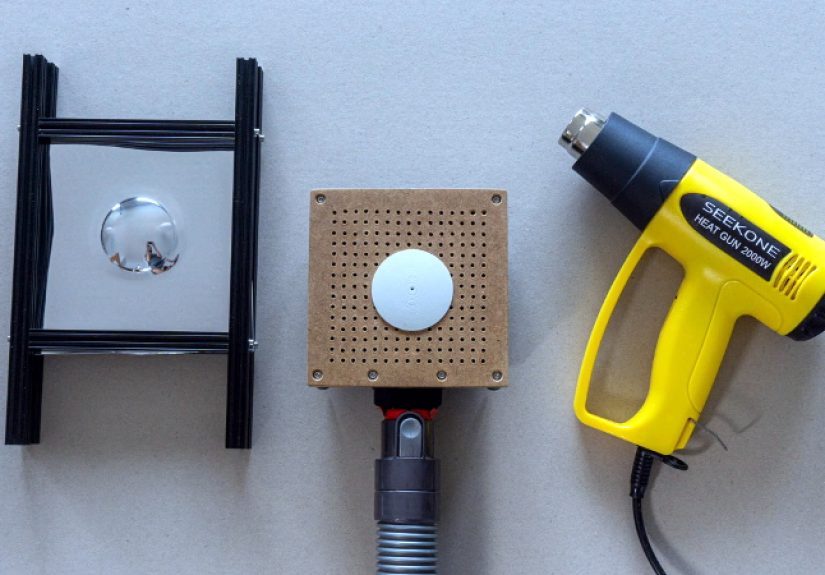
If you plan to heat-form plastic, you may also need a heat gun, strip heater, bending jig, heat-resistant gloves, and a well-ventilated workspace. Never leave heated plastic unattended, and avoid overheating because plastic can deform, discolor, or release irritating fumes.
Planning the Shape Before You Cut Anything
Before buying materials, decide whether your mirror will be convex, concave, wavy, cylindrical, or gently arched. For wall decor, a shallow curve is usually more elegant than an extreme bend. A deep curve creates stronger distortion, which can be fun, but it may also make the mirror harder to mount and more likely to show ripples.
Start with a full-size cardboard mockup. Tape it to the wall, step back, and judge the scale. Then create a curved side profile. You can draw a smooth arc using a string, pencil, and fixed center point, or trace around a large round object. The curve should be smooth and symmetrical unless you intentionally want an organic wavy design.
How to Make a Cold-Bent Acrylic Curved Mirror
Step 1: Build the Curved Backing
The backing determines the final shape. For a simple convex mirror, cut two or three identical curved ribs from plywood or MDF. Attach them to a flat base or wall-mounting frame. Then cover the ribs with a thin flexible panel, such as hardboard, thin plywood, or PVC sheet. Sand the surface until it feels smooth.
If the backing has ridges, gaps, or screw bumps, the mirror will reveal them. Reflective surfaces are brutally honest. They do not forgive lazy sanding.
Step 2: Cut the Acrylic Mirror Sheet
Measure your backing and cut the acrylic mirror sheet slightly oversized. Keep the protective film on during cutting to reduce scratches. Use a fine-tooth blade if cutting with a saw, and support the sheet fully to prevent chatter. For thin acrylic, scoring and snapping may work, but a saw usually gives more control for custom shapes.
Step 3: Test the Curve Gently
Before adding adhesive, place the acrylic mirror sheet over the curved backing and slowly flex it into position. Do not force the sheet. If it fights back aggressively, the curve may be too tight or the acrylic may be too thick. A gentle curve should feel controlled, not like you are arm-wrestling a shiny pancake.
Step 4: Secure the Mirror
Mechanical fastening is often safer than relying only on glue. Use a frame lip, side channels, retaining strips, or trim pieces to hold the mirror in place. If screws are necessary, drill oversized holes so the acrylic can expand and contract slightly. Avoid overtightening, which can create cracks or stress marks.
If you use adhesive, choose one compatible with acrylic mirror backing and test it on a scrap piece first. Some adhesives can attack the reflective coating or show through as stains. A 72-hour test is a smart habit because adhesive problems often appear after the “victory dance” phase.
Step 5: Add the Frame
A frame hides edges, supports the curve, and makes the finished piece look intentional. Wood trim, painted MDF, aluminum channel, or flexible molding can all work. For modern decor, a thin black or brass-style frame looks clean. For a playful design, paint the frame a bold color and let the curved reflection do the rest.
How to Make a Curved Mirror With Flexible Mirror Film
Flexible mirror film is ideal for large curved surfaces where perfect reflection is not required. Begin by building a smooth curved substrate. Foam board works for temporary props, while PVC or sealed MDF is better for long-term decor. Fill seams, sand smooth, and wipe away all dust.
Cut the mirror film slightly larger than the surface. Peel back a small section of the liner and apply the film gradually, using a soft squeegee wrapped in microfiber. Work from the center outward to push away air bubbles. Move slowly. Mirror film has a talent for sticking to itself at the exact moment you start feeling confident.
Trim the edges with a sharp blade and cover them with a frame or edge banding. This protects the film from peeling and gives the mirror a more polished appearance. For wavy mirrors, flexible film can be especially effective because it follows organic curves more easily than rigid sheet material.
Design Ideas for Custom Curved Mirrors
Curved Entryway Mirror
A shallow convex mirror in an entryway can make a narrow space feel wider and brighter. Use a round or vertical oval design with a slim frame. The reflection will be slightly panoramic, which is perfect for checking your outfit and your confidence level before leaving the house.
Concave Studio Mirror
A concave mirror can create dramatic visual effects for photography, art walls, or creative studios. Keep the curve moderate so the mirror remains attractive rather than dizzying. Pair it with soft lighting to create unusual reflections and depth.
Wavy Statement Mirror
Wavy mirrors are popular in modern interiors because they feel playful without needing much decoration. Use a shaped backing and flexible mirror film, or cut thin acrylic mirror into an organic silhouette and mount it with small spacers. The result can look custom, expensive, and slightly mischievous.
Curved Vanity Accent
A shallow curved mirror above a vanity can add a boutique feel, but avoid strong distortion if the mirror will be used for grooming. Nobody wants to apply eyeliner in a mirror that turns one eye into a weather balloon.
Safety Tips You Should Not Skip
Wear eye protection when cutting, sanding, drilling, or handling brittle materials. Use gloves when working with sharp edges, but keep loose gloves away from spinning tools. Cut plastics in a ventilated area, and avoid breathing dust. If heating plastic, use controlled heat, keep the work area ventilated, and stop immediately if you notice scorching, smoke, or strong odors.
Do not use regular glass unless you know how to cut, grind, and handle it safely. Broken glass can cause serious injury, and curved glass fabrication is much less forgiving than acrylic work. Also, do not experiment casually with chemical mirror silvering at home. It is better to buy a ready-made reflective material than to play chemist with a shiny outcome and questionable life choices.
Common Mistakes and How to Avoid Them
Using Material That Is Too Thick
Thicker acrylic is harder to bend and more likely to resist a gentle curve. For decorative cold-bent mirrors, thinner sheet is usually easier to work with. Choose thickness based on the curve radius, size, and support structure.
Forcing a Tight Radius
Acrylic can crack or develop stress marks when bent too sharply. If your design requires a tight curve, consider flexible mirror film or a professionally formed part.
Skipping the Adhesive Test
Adhesives can damage mirror backing, cause clouding, or create visible marks. Test first. This tiny step can save your entire project from becoming a shiny regret panel.
Mounting on an Uneven Surface
Curved mirrors magnify surface flaws. Sand, fill, and clean the substrate before applying reflective material. Smooth backing equals smoother reflection.
Expecting Optical Perfection
DIY curved mirrors are excellent for decor, display, and creative projects. They are not usually suitable for precision optics, scientific instruments, or telescope-grade reflection unless you follow advanced optical mirror-making processes.
Cleaning and Maintaining Your Curved Mirror
Clean acrylic mirror gently with a microfiber cloth and mild soap solution. Avoid ammonia-based glass cleaners, abrasive pads, harsh solvents, and paper towels that can scratch the surface. Dust first, then wipe lightly. Acrylic mirror can look beautiful for years if treated like a delicate surface rather than a kitchen countertop after taco night.
Keep curved mirrors away from high heat, direct outdoor exposure unless the material is rated for it, and damp areas where adhesive failure may occur. If used in a bathroom, make sure the backing, frame, and adhesive can handle humidity.
Real-World Experience: Lessons From Making Custom Curved Mirrors At Home
The first practical lesson is that the backing matters more than beginners expect. When people imagine making custom curved mirrors at home, they usually focus on the reflective sheet. But the mirror is only as good as the surface underneath it. A tiny ridge in plywood, a screw that sits slightly proud, or a seam that was “probably fine” will show up in the reflection like it hired a publicist. Spend more time building and smoothing the form than you think you need. That extra hour of sanding is boring, yes, but boring is often where good DIY projects are secretly made.
The second lesson is to start smaller. A small curved mirror sample teaches you how the material behaves, how much distortion you like, and whether your adhesive is compatible. A full-size sheet teaches the same lessons, but with more expensive consequences and louder sighing. Before making a large entryway mirror, create a 12-inch test panel. Try your curve, test your frame, clean the surface, and observe the reflection from different distances.
The third lesson is that flexible mirror materials are honest but not magical. They can follow curves beautifully, but they also reveal every imperfection underneath. When applying mirror film, slow down. Peel only a little backing at a time, use a clean soft squeegee, and work in a dust-free area. If dust lands under the film, it will look like a tiny mountain range in the reflection. If air bubbles appear, do not panic. Small bubbles can often be pushed toward the edge, but stretched or creased film rarely returns to perfection.
The fourth lesson is that acrylic mirror is easier than glass, but it still deserves respect. It scratches more easily than glass, expands and contracts with temperature, and can crack if drilled carelessly. Oversized screw holes, soft washers, and gentle clamping make a big difference. Never clamp directly onto the reflective face without padding. That is how you create permanent little “oops” marks that stare back at you forever.
The fifth lesson is to design for the distortion instead of fighting it. Curved mirrors are not supposed to behave like flat bathroom mirrors. A convex mirror can make a room feel wider and more open. A concave mirror can create moody, artistic reflections. A wavy mirror can become a sculptural object even when nobody is using it. The best projects embrace the curve as a feature. If you need accurate grooming, use a flat mirror. If you want personality, movement, and a little visual mischief, go curved.
Finally, finishing details make the project look professional. A clean frame hides edges, protects the material, and gives the mirror a sense of purpose. Painted trim, thin wood strips, aluminum channel, or flexible molding can transform a homemade reflective panel into a polished design piece. Mount it securely, clean it gently, and place it where the distorted reflection adds charm rather than confusion. A custom curved mirror should make the room feel more interesting, not make guests wonder whether your wall is melting.
Conclusion
Making custom curved mirrors at home is absolutely possible when you choose the right method for your skill level. For most DIYers, cold-bent acrylic mirror sheet and flexible mirror film are the safest, most practical options. Heat-forming can work, but it requires more testing and care, especially with mirrored surfaces. Traditional curved glass mirror-making belongs in the advanced category and is better left to trained hobbyists or professionals unless you are ready for a serious learning curve.
The secret is simple: plan the curve, build a smooth backing, test your materials, secure the mirror gently, and finish the edges neatly. Do that, and your custom curved mirror can become a standout piece of home decorequal parts functional, artistic, and just weird enough to make people smile.