Table of Contents >> Show >> Hide
- Why strength training belongs in the blood pressure conversation
- How strength training can help lower blood pressure
- What counts as strength training?
- What the research suggests
- How to build a blood-pressure-friendly strength routine
- Safety rules that matter if you have high blood pressure
- Common mistakes that can sabotage progress
- What kind of results are realistic?
- Real-life experiences: what people often notice when they start strength training for blood pressure
- Conclusion
If you hear the phrase lower your blood pressure, your brain probably jumps straight to walking, jogging, kale, and saying goodbye to potato chips like it is a dramatic breakup scene. Fair enough. Cardio and heart-healthy eating absolutely matter. But strength training deserves a seat at the table too, and not just the folding chair in the corner.
Done properly, strength training can support healthier blood pressure by improving how efficiently your body works, from your blood vessels to your metabolism to your overall fitness. No, it is not a magic dumbbell that fixes everything by Tuesday. But as part of a consistent routine, it can be a powerful, practical tool for people trying to manage or lower blood pressure.
The best part? “Strength training” does not have to mean flipping tractor tires while someone yells at you through a headset microphone. It can mean bodyweight squats in your living room, resistance band rows between meetings, or a few rounds with light dumbbells while dinner is in the oven. If your goal is better blood pressure, the smartest plan is usually not more punishment. It is more consistency.
Why strength training belongs in the blood pressure conversation
High blood pressure is sneaky. It often has no obvious symptoms, yet over time it can strain your heart, arteries, kidneys, brain, and eyes. That is why it gets so much attention from doctors, even when a person feels perfectly fine. Blood pressure is not just a number on a machine at the pharmacy. It is a running report on how hard your cardiovascular system is working.
For years, aerobic exercise got most of the spotlight for blood pressure management, and for good reason. Walking, cycling, swimming, and similar activities remain core recommendations. But more recent guidance and research make it clear that strength training is not some side quest. It is part of the main storyline.
When you build and maintain muscle, you are not just chasing toned arms or bragging rights. You are improving how your body handles daily demands. More muscle can support better blood sugar control, help with weight management, improve physical function, and make it easier to stay active overall. That matters because blood pressure tends to improve when your whole system is working more efficiently.
How strength training can help lower blood pressure
It can improve how well your blood vessels function
One of the most interesting findings in newer research is that resistance exercise may improve endothelial function. That is the ability of the inner lining of your blood vessels to relax and respond appropriately. Think of it as helping your vascular system become less cranky and more cooperative. Healthier blood vessels can expand more effectively, which may help reduce pressure over time.
It can make everyday movement easier
Strong muscles make ordinary life less physically taxing. Carrying groceries, climbing stairs, standing up from a chair, gardening, hauling laundry, and walking uphill all become easier when your body has more strength to work with. When daily tasks feel less exhausting, people tend to move more, sit less, and stay more active across the week. That extra movement adds up for blood pressure.
It supports weight management without acting like a fad
Weight is not the whole blood pressure story, but it is often part of it. Strength training helps preserve or build lean muscle, and muscle tissue is metabolically active. Translation: your body becomes a little more efficient at using energy. Pair strength work with sensible nutrition and regular walking, and you have a much more sustainable approach than the classic “go too hard for nine days, then disappear” strategy.
It may improve insulin sensitivity and metabolic health
Blood pressure rarely travels alone. It likes company: abdominal fat, insulin resistance, poor sleep, elevated blood sugar, and high cholesterol often show up to the same party. Strength training can improve insulin sensitivity and overall metabolic health, which may indirectly help blood pressure too. This is one reason it is such a smart long-game habit.
It can reduce stress in a surprisingly practical way
Stress does not cause every case of hypertension, but it absolutely does not help. A structured strength routine can be a useful pressure valve. It gives your nervous system a productive outlet, creates a sense of progress, and often improves sleep quality. Few things make blood pressure management harder than being stressed, sedentary, under-slept, and running on caffeine and vibes.
What counts as strength training?
Plenty of things. You do not need a giant gym membership card or a dramatic montage soundtrack. Strength training can include:
- Bodyweight exercises like squats, wall push-ups, lunges, and glute bridges
- Resistance bands
- Dumbbells or kettlebells
- Weight machines
- Cable machines
- Functional movements like step-ups or loaded carries
- Some isometric exercises, such as wall sits and planks
The common theme is simple: your muscles work against resistance. That resistance can come from gravity, elastic bands, free weights, machines, or your own body.
What the research suggests
The current evidence points to a reassuring message: strength training is generally safe and useful for blood pressure when programmed sensibly. Research does not suggest that you need to become a powerlifter to see benefits. In fact, the opposite is usually true. Moderate, regular resistance training appears to be the sweet spot for many adults.
Several reviews and recent studies suggest that resistance training can produce modest but meaningful reductions in resting blood pressure, especially in people who start with elevated readings or stage 1 hypertension. “Modest” is not a disappointing word here. In blood pressure medicine, even small improvements matter. A few points down, sustained over time, can be a very big deal for long-term cardiovascular risk.
There is also growing interest in isometric exercise, which involves contracting muscles without much joint movement. Wall sits and planks are the celebrity examples here. Some evidence suggests these exercises may help lower blood pressure too. That said, they work best as part of a bigger plan, not as a replacement for all other forms of activity.
How to build a blood-pressure-friendly strength routine
If your blood pressure goal is better heart health, not an audition for an action movie, keep your plan simple and sustainable.
A good starting template
A beginner-friendly routine often looks like this:
- Frequency: 2 to 3 nonconsecutive days per week
- Format: Full-body workouts
- Exercises: 6 to 10 movements that cover major muscle groups
- Sets: 1 to 3 per exercise
- Reps: 8 to 12, sometimes 10 to 15 for beginners or older adults
- Effort: Moderate, with good form and no breath-holding heroics
That is enough to get real results without turning your schedule into a hostage situation.
A sample full-body workout
- Chair squat or goblet squat
- Wall push-up or incline push-up
- Resistance band row
- Step-up
- Dumbbell deadlift or hip hinge
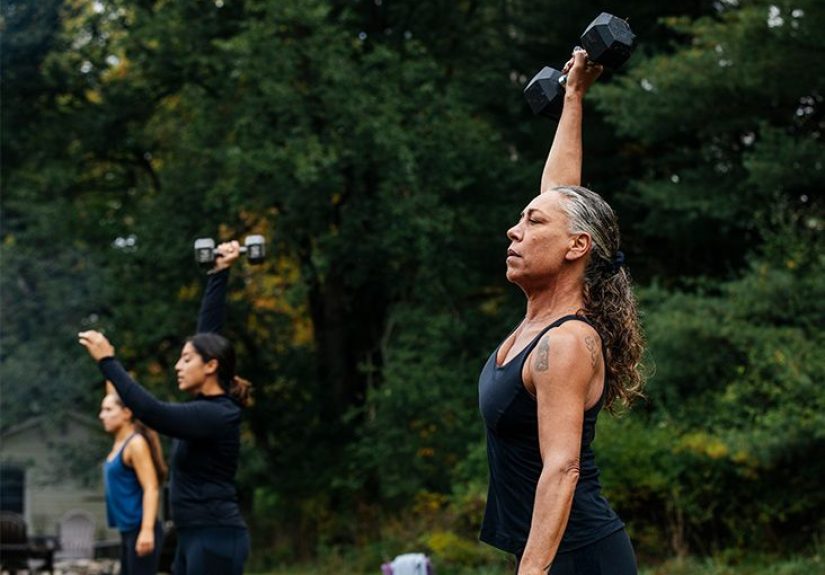
- Overhead press with light weights
- Glute bridge
- Farmer carry or march in place with weights
Rest between sets. Move with control. The goal is not to rush. The goal is to train.
How to combine it with cardio
Strength training shines brightest when it teams up with aerobic activity. A smart weekly routine might include two strength sessions plus brisk walking, cycling, or swimming on most other days. This pairing tends to work well because cardio supports heart and lung fitness, while strength training improves muscle function, metabolic health, and physical resilience.
A practical week might look like this:
- Monday: Full-body strength training
- Tuesday: 30-minute brisk walk
- Wednesday: Light mobility or another walk
- Thursday: Full-body strength training
- Friday: 30-minute brisk walk or bike ride
- Saturday: Longer walk, easy hike, or recreational activity
- Sunday: Gentle recovery movement
Not glamorous. Very effective. There is a lesson there.
Safety rules that matter if you have high blood pressure
This is the part where good intentions need a little adult supervision.
Do not hold your breath
Breath-holding during exertion can drive blood pressure up sharply. Exhale during the hardest part of the movement and inhale during the easier part. If you tend to turn tomato-red and sound like a tea kettle during a rep, that is your sign to lighten the load and breathe more steadily.
Skip maximal lifting
If you have high blood pressure, this is usually not the time to test your one-rep max just to impress the barbell. Very heavy lifting can create large temporary spikes in blood pressure. Moderate resistance, controlled tempo, and proper breathing are usually the more heart-friendly route.
Warm up and cool down
Start with 5 to 10 minutes of easy movement. March in place, walk, pedal, or do light dynamic mobility work. Cooling down matters too. Stopping abruptly after exercise can make some people feel dizzy, especially if they take blood pressure medication.
Know when to talk to a clinician first
If your blood pressure is uncontrolled, you have chest pain, dizziness, shortness of breath beyond normal exertion, kidney disease, recent cardiac issues, or you are starting exercise after a long inactive stretch, get medical guidance first. Strength training is helpful, but it should be matched to the person, not forced like a generic template from the internet.
Pay attention to how you feel
Stop and get checked if you feel chest pressure, faintness, unusual shortness of breath, or severe headache during exercise. “No pain, no gain” is a terrible slogan for blood pressure management. Ignore it cheerfully.
Common mistakes that can sabotage progress
Doing too much too soon
Starting with daily intense workouts sounds ambitious and usually ends with sore legs, skipped sessions, and existential regret. Start small enough that you can repeat it next week.
Thinking exercise cancels out everything else
Strength training helps, but it is not a hall pass for high-sodium takeout, six hours of sleep, and never checking your blood pressure. The best results usually come from stacking healthy habits: movement, sensible eating, medication if prescribed, weight management, stress reduction, and sleep.
Only training the “mirror muscles”
Biceps are fun, but your body also appreciates glutes, legs, back, and core. Full-body training tends to be more useful for health, function, and energy expenditure.
Ignoring consistency
One excellent workout does not lower blood pressure for life. The real win comes from repeatable habits. Boring consistency beats exciting inconsistency almost every time.
What kind of results are realistic?
Expect gradual improvement, not overnight fireworks. Some people notice better energy, better sleep, or easier movement before they notice changes in their home blood pressure readings. That is normal. Blood pressure response varies by age, baseline numbers, medications, stress, sleep, weight, and what else is happening in your routine.
In many cases, the best way to think about strength training is as part of a larger blood-pressure-lowering package. If you combine regular lifting with aerobic exercise, a heart-healthy eating pattern, less sodium, weight management, and medication when needed, the effects can become much more meaningful.
In other words, strength training is not a solo act. It is a very talented band member.
Real-life experiences: what people often notice when they start strength training for blood pressure
One of the most common experiences is surprise. A lot of people assume strength training will feel aggressive, risky, or too intense for someone trying to protect heart health. Then they start with basic moves, moderate effort, and proper breathing, and realize it feels far more manageable than expected. Instead of leaving a workout completely wiped out, they finish feeling more awake, more grounded, and oddly proud of themselves for doing something that seemed intimidating two weeks earlier.
Another common experience is that progress shows up outside the gym before it shows up on the blood pressure cuff. People notice they stand up from the couch more easily. Their back feels better. Stairs feel less dramatic. Carrying groceries stops feeling like an upper-body emergency. They sleep a little better. Their posture improves. They feel steadier and more capable. These changes matter because they make it easier to stay active throughout the day, and that consistency is where blood pressure benefits start stacking up.
Many beginners also discover that breathing is the sneaky skill they did not know they needed. At first, people tend to brace too hard, rush reps, or hold their breath without realizing it. Once they learn to exhale through the effort and slow down the movement, the workout feels smoother and safer. Confidence rises fast when exercise stops feeling chaotic and starts feeling controlled.
There is often a mental shift too. For some people, blood pressure management has felt like a list of restrictions: eat less salt, lose weight, cut back, avoid this, watch that. Strength training can feel refreshingly different because it adds something positive rather than just taking things away. It becomes a practice of building rather than merely avoiding damage. That mindset can be a game changer for long-term motivation.
Some people who monitor their blood pressure at home report that the numbers do not move much in the first week or two, which can be frustrating. Then, after several weeks of regular training combined with walking and smarter food choices, they begin to see a gentle downward trend. Not always dramatic. Not always linear. But enough to confirm that the routine is doing something useful. That can be incredibly motivating.
Older adults often describe another benefit: strength training makes them feel more independent. Better leg strength helps with balance, getting in and out of a car, climbing stairs, and avoiding that unpleasant feeling that the body is becoming less reliable with age. When people feel physically capable, they are more likely to keep up with other healthy behaviors, including regular aerobic activity and medical follow-up.
Of course, the experience is not always smooth. Some people start too hard, get sore, and decide the whole thing is not for them. Others pick weights that are too heavy, skip recovery days, or assume every session has to feel extreme to count. Usually, the most successful people are not the ones doing the fanciest routine. They are the ones doing the doable routine. The woman using resistance bands three times a week in her bedroom often gets farther than the man who designed a heroic six-day split and abandoned it by day nine.
That is the real experience of strength training for blood pressure: less drama, more rhythm. A person starts small, learns proper form, breathes better, gets stronger, moves more, and gradually builds a life where healthier blood pressure becomes more likely. It is not flashy. It is not instant. But it is real, and for many people, it works beautifully.
Conclusion
If you want to lower your blood pressure, strength training deserves a place in your plan. It can improve vascular function, support weight and blood sugar control, make daily movement easier, and help create the kind of body that stays active instead of avoiding effort. The key is to keep it safe, moderate, and consistent.
You do not need punishing workouts. You need smart ones. Start with two or three full-body sessions a week, combine them with regular walking or other aerobic activity, breathe through every rep, and give the process time. Your heart does not need a stunt show. It needs a routine.