Table of Contents >> Show >> Hide
- What Is a Skin Tear?
- Common Causes of Skin Tears
- Types of Skin Tears: The ISTAP Classification
- Skin Tear Pictures: What to Look For
- First Aid for a Skin Tear
- Best Dressings for Skin Tears
- When to See a Doctor for a Skin Tear
- Skin Tear Prevention: Best Practices That Actually Help
- How to Document a Skin Tear
- Common Mistakes to Avoid
- Practical Experience: What Caregivers Learn From Real Skin Tear Situations
- Conclusion
- SEO Tags
Skin tears may look like “just a little rip,” but anyone who has cared for aging, fragile, or easily bruised skin knows better. A small bump against a nightstand, a bandage pulled off too quickly, or a rushed transfer from bed to chair can create a painful wound that needs careful attention. Skin, unfortunately, does not come with a “handle with care” stickerso we have to provide the care ourselves.
This guide explains what skin tears are, how to recognize them, how they are commonly treated, when to seek medical help, what skin tear pictures can teach you, and the best prevention habits for families, caregivers, and healthcare settings. The goal is simple: protect the skin, support healing, and prevent a repeat performance from the villain known as friction.
Important medical note: This article is for general education only. A healthcare professional should evaluate deep, dirty, infected, heavily bleeding, painful, or slow-healing wounds, especially in older adults, people with diabetes, people with poor circulation, or anyone taking blood thinners.
What Is a Skin Tear?
A skin tear is a traumatic wound caused by mechanical force, such as friction, shearing, blunt impact, or adhesive removal. In plain English, the skin separates because it was pulled, rubbed, bumped, or peeled away faster than it could tolerate.
Skin tears often happen on the arms, hands, elbows, shins, and lower legs. These areas tend to bump into furniture, wheelchair parts, bed rails, doorframes, and other everyday objects that suddenly become surprisingly rude.
Why Older Adults Are at Higher Risk
As skin ages, it becomes thinner, drier, and less elastic. The protective fat layer under the skin decreases, and the bond between skin layers weakens. This makes the skin more vulnerable to tearing even from minor trauma. Healing can also take longer, especially when circulation, nutrition, mobility, medications, or chronic conditions are involved.
People at higher risk include older adults, people with fragile or dry skin, people who bruise easily, individuals taking blood thinners or long-term corticosteroids, people with limited mobility, patients who need help transferring, and anyone with a history of previous skin tears.
Common Causes of Skin Tears
Skin tears usually happen because of ordinary activities, not dramatic accidents. The most common triggers include:
- Friction: Skin rubs against clothing, bedding, furniture, or equipment.
- Shearing: Skin stays in one place while deeper tissue moves, often during transfers or repositioning.
- Blunt trauma: A bump against a chair, table, walker, bed rail, or doorway.
- Adhesive removal: Medical tape, bandages, or monitoring devices pull fragile skin when removed.
- Falls: Even a minor fall can tear delicate skin.
- Scratching: Dry, itchy skin may break open when scratched.
In caregiving situations, skin tears may occur during bathing, dressing, turning in bed, or moving from a wheelchair to a recliner. Prevention begins when caregivers slow down, protect exposed skin, and avoid pulling directly on the arms or hands.
Types of Skin Tears: The ISTAP Classification
Healthcare professionals often classify skin tears using the ISTAP system. This helps describe the wound clearly and choose the right care plan.
Type 1 Skin Tear: No Skin Loss
A Type 1 skin tear has a skin flap that can be gently repositioned to cover the wound bed. It may look like a flap or thin “door” of skin that has lifted but is still present. With proper care, Type 1 tears often have the best chance of healing smoothly.
Type 2 Skin Tear: Partial Skin Loss
A Type 2 skin tear has partial flap loss. Some of the skin flap remains, but it cannot cover the entire wound bed. This type needs careful dressing selection because exposed tissue is more vulnerable to drying, irritation, and infection.
Type 3 Skin Tear: Total Skin Loss
A Type 3 skin tear has total flap loss, meaning the wound bed is exposed. These wounds require extra attention, moisture balance, protection, and monitoring. A clinician should evaluate the wound, especially if the person has diabetes, poor circulation, immune problems, or signs of infection.
Skin Tear Pictures: What to Look For
Skin tear pictures can help caregivers understand what they are seeing, but they should never replace clinical judgment. Pictures are useful for education, wound tracking, and documentation when handled respectfully and privately.


When taking a picture for medical documentation, use good lighting, avoid filters, include the date, and keep the image private. Do not post wound pictures publicly. A picture can show size, location, drainage, color changes, and whether the flap is healthy-looking, but a healthcare professional should interpret concerning changes.
First Aid for a Skin Tear
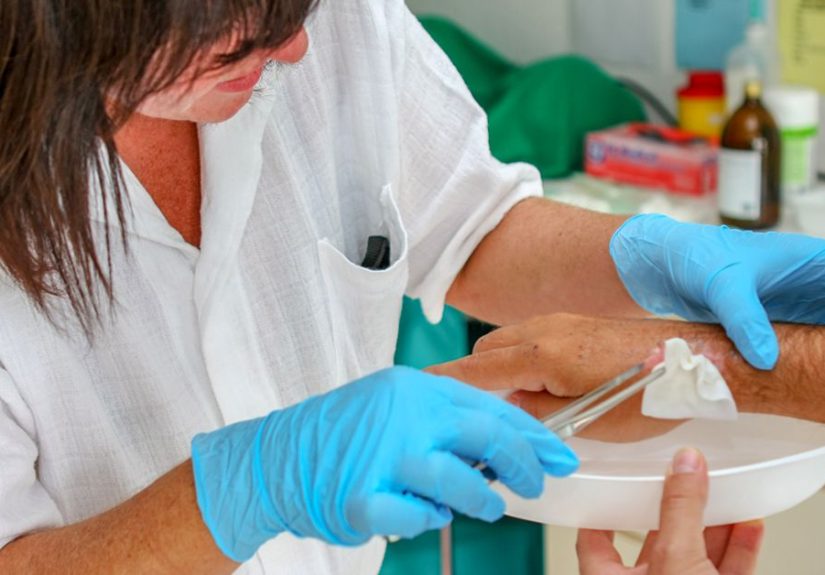
Skin tear treatment should be gentle, clean, and prompt. Think “calm hands,” not “panic wrestling match with gauze.”
Step 1: Wash Your Hands
Before touching the wound or dressing, wash your hands with soap and water. If gloves are available, use them. Clean hands reduce the chance of introducing germs into the wound.
Step 2: Control Bleeding
Apply gentle pressure with clean gauze or a clean cloth. Do not scrub, rub, or press aggressively. If bleeding is heavy, does not slow, or the person is taking blood thinners, seek medical care.
Step 3: Clean the Wound Gently
For a minor skin tear, rinse the wound with clean running water or sterile saline if available. Clean around the wound with mild soap and water, but avoid harsh scrubbing. Do not use hydrogen peroxide, iodine, or alcohol unless a healthcare professional instructs you to do so, because harsh products can irritate tissue and slow healing.
Step 4: Reposition the Skin Flap if Appropriate
If the skin flap is present and looks viable, it may be gently guided back into place using a moistened cotton swab or gloved finger. Do not stretch the flap. Do not force it. Do not trim skin unless a healthcare professional tells you to. The goal is to preserve living tissue whenever possible.
Step 5: Cover With a Nonadherent Dressing
Use a nonadherent dressing that will not stick to the wound. Foam dressings, silicone contact layers, soft silicone dressings, or other clinician-recommended dressings may help protect the area while supporting a moist healing environment. Plain dry gauze placed directly on a skin tear can stick and cause another injury during removalbasically the wound-care version of a bad sequel.
Step 6: Change Dressings as Directed
Dressings should be changed according to the product instructions or a healthcare provider’s plan. Change the dressing sooner if it becomes wet, dirty, loose, or saturated. When removing any dressing, go slowly and support the surrounding skin.
Best Dressings for Skin Tears
The best dressing depends on the wound’s size, drainage, skin condition, location, and infection risk. In general, skin tear dressings should protect the wound, maintain moisture balance, minimize pain, and come off without damaging fragile skin.
Nonadherent Dressings
Nonadherent dressings help protect the wound without sticking to the fragile surface. They are often used for mild skin tears or as a contact layer under another dressing.
Soft Silicone Dressings
Soft silicone dressings are commonly preferred for fragile skin because they can reduce trauma during dressing changes. They may be especially useful for older adults who have repeated skin tears or adhesive sensitivity.
Foam Dressings
Foam dressings may be helpful when the wound has moderate drainage. They provide cushioning and absorb fluid while helping protect the area from bumps.
Hydrogels
Hydrogels may be used when the wound is dry and needs moisture support. They usually require a secondary dressing and should be used under clinical guidance.
Dressings to Use With Caution
Strong adhesive bandages, aggressive tapes, dry gauze directly on the wound, and dressing products that dry out the wound may cause additional injury. If tape is necessary, paper tape or silicone tape may be gentler, but even gentle tape should be removed carefully.
When to See a Doctor for a Skin Tear
Not every small skin tear requires emergency care, but some wounds should be evaluated quickly. Seek medical help if:
- The wound is deep, large, dirty, or caused by a fall, bite, rusty object, or contaminated surface.
- Bleeding does not stop with gentle pressure.
- The skin flap is darkening, drying out, or cannot be repositioned.
- There is increasing redness, warmth, swelling, drainage, odor, or pain.
- The person has fever, chills, or red streaking near the wound.
- The person has diabetes, poor circulation, immune suppression, or takes blood thinners.
- The wound is not improving after several days or appears to be getting worse.
- The person may need a tetanus booster.
For older adults, it is better to ask early than to wait until a simple wound becomes complicated. Skin tears can become chronic wounds when they are ignored, repeatedly traumatized, or affected by infection and poor healing conditions.
Skin Tear Prevention: Best Practices That Actually Help
Preventing skin tears is not about wrapping someone in bubble wrap, although caregivers have probably considered it during stressful weeks. Instead, prevention is about reducing friction, improving skin health, and making everyday movement safer.
Moisturize Fragile Skin Daily
Dry skin tears more easily. Use a fragrance-free moisturizer regularly, especially on arms and legs. Apply gently and avoid rubbing too hard. Moisturizing is a small habit with a big payoff.
Protect Arms and Legs
Long sleeves, soft socks, shin guards, or protective arm sleeves can reduce injuries from bumps and friction. Choose breathable fabrics that are easy to put on and remove.
Pad Sharp Furniture Edges
Cover sharp corners on nightstands, bed frames, wheelchair parts, and tables. Many skin tears happen in the same locations repeatedly, so look for “usual suspects” in the home.
Use Gentle Transfer Techniques
During transfers, avoid grabbing the person’s forearms or pulling on fragile skin. Use transfer belts, slide sheets, or proper assistive devices when needed. Caregivers should use the palms of the hands and support stronger body areas when helping someone move.
Be Careful With Tape and Adhesives
Adhesive removal is a major skin tear trigger. Use adhesive remover when appropriate, peel slowly in the direction of hair growth, and support the skin while removing the tape. Ask healthcare providers about silicone-based options for fragile skin.
Keep Nails Short and Jewelry Smooth
Long fingernails, rings, watches, and bracelets can accidentally scratch or catch the skin. Caregivers should keep nails trimmed and avoid sharp jewelry during hands-on care.
Improve Lighting and Reduce Fall Hazards
Falls and bumps are easier to prevent when walkways are clear, rugs are secured, lighting is bright, and frequently used items are within reach. A safer room is one of the best wound-prevention tools available.
Support Nutrition and Hydration
Skin needs fluid, protein, vitamins, and minerals to maintain strength and heal. Poor nutrition, dehydration, and unintentional weight loss can increase vulnerability. A clinician or dietitian can help when appetite, chewing, swallowing, or medical diets are concerns.
How to Document a Skin Tear
Good documentation helps families and healthcare teams track healing. Record the date, time, cause if known, location, size, type of skin tear, dressing used, drainage amount, pain level, and any signs of infection. If you take a picture, keep it private and label it clearly.
Documentation is especially useful in assisted living, nursing homes, home health care, and family caregiving. It helps answer questions like: Is the wound smaller? Is drainage increasing? Did this happen during transfers? Is a certain chair, doorway, or piece of equipment causing repeated injuries?
Common Mistakes to Avoid
Even well-meaning care can accidentally make a skin tear worse. Avoid these common mistakes:
- Pulling off bandages quickly.
- Using strong tape directly on fragile skin.
- Letting the wound dry out completely.
- Scrubbing the wound.
- Using harsh antiseptics without medical direction.
- Ignoring pain, drainage, odor, or increasing redness.
- Assuming a “small tear” is harmless in a high-risk person.
The best skin tear care is often boring in the best possible way: clean, protect, moisturize, monitor, and prevent repeat trauma.
Practical Experience: What Caregivers Learn From Real Skin Tear Situations
After caring for fragile skin, many families discover that prevention is not one big heroic act. It is a series of small, almost invisible habits. The first lesson is that speed is the enemy. A rushed sleeve change, a quick bandage pull, or a hurried transfer can cause more trouble than anyone expects. Slowing down by even ten seconds can protect the skin and reduce stress for both the caregiver and the person receiving care.
Another common lesson is that the environment matters. One family may notice that a parent keeps getting tears on the same forearm. After a little detective work, they realize the arm is brushing against the edge of a narrow bathroom doorway. Another caregiver may discover that a wheelchair brake, bed rail, or favorite recliner has a rough edge. Prevention often begins with asking, “Where does the skin keep meeting the world too aggressively?” Once the culprit is found, padding, rearranging furniture, or changing transfer technique can make a major difference.
Caregivers also learn that adhesive is not always a friend. Tape can be useful, but on fragile skin it can act like a tiny bulldozer. A dressing that looks secure on Monday may cause a new injury when removed on Tuesday. This is why soft silicone dressings, paper tape, tubular bandages, or wrap-style retention products may be discussed with a clinician. The goal is to secure the dressing without creating the next skin tear.
Moisturizing is another habit that seems too simple to matteruntil it does. Dry skin is more likely to crack, itch, and tear. Applying a gentle, fragrance-free moisturizer daily can become part of a morning or evening routine. It is also a chance to check for bruises, dry patches, redness, or early signs of pressure and friction. Think of it as a skin “weather report.” If the skin looks dry, irritated, or vulnerable, tomorrow’s forecast calls for extra protection.
Families often find that clothing choices make a difference. Soft long sleeves, easy-open garments, and breathable protective layers can reduce friction during daily activities. Tight sleeves, rough seams, and difficult buttons can turn dressing into a wrestling match. Skin usually loses that match. Clothing should help the person feel comfortable and dignified while making care easier.
Finally, experienced caregivers learn not to minimize pain or embarrassment. A skin tear may look minor to someone else, but it can be frightening and painful to the person living with it. Gentle reassurance matters. Explain what you are doing, ask about discomfort, and give the person as much control as possible. Wound care is not only about dressings and documentation; it is also about trust. When people feel safe, they are more likely to report injuries early, cooperate with care, and accept prevention steps.
The best practice is simple but powerful: treat the wound in front of you, then investigate why it happened. A healed skin tear is good. A prevented skin tear is even better.
Conclusion
Skin tear treatment works best when care is gentle, timely, and prevention-focused. Clean the wound, control bleeding, preserve the skin flap when possible, use nonadherent dressings, watch for infection, and seek medical help when the wound is deep, dirty, worsening, or slow to heal. For prevention, focus on moisturized skin, safer transfers, protective clothing, reduced adhesive trauma, and a home environment that does not ambush fragile arms and legs.
Skin tears may be common, but they should never be dismissed. With the right care plan, many skin tears can heal welland with smarter prevention, many can be avoided altogether.