Table of Contents >> Show >> Hide
- The Airplane Story That Turned Into a Relationship Lesson
- Why the Wedding Ring Changes the Social Math
- The Real Problem Was Not the Conversation
- Emotional Labor: The Invisible Carry-On Bag
- Boundaries Are Not About Being Cold
- Friendly Conversation vs. Flirting: Where Is the Line?
- Why Public Relationship Drama Feels So Uncomfortable
- What the Husband Should Have Done Differently
- What the Wife Could Have Done Differently
- What the Other Woman Learned
- Practical Rules for Talking to Married People Without Creating Drama
- The Bigger Dating Lesson: Choose Partners Who Act Like Teammates
- Why This Story Went Viral
- of Related Experience and Real-Life Lessons
- Conclusion
Some life lessons arrive gently, like a handwritten note or a wise auntie saying, “Baby, use your head.” Others arrive at cruising altitude, in first class, next to a married man, while his furious wife appears from the back of the plane with two kids and the emotional energy of a courtroom prosecutor. That is the kind of lesson nobody packs for.
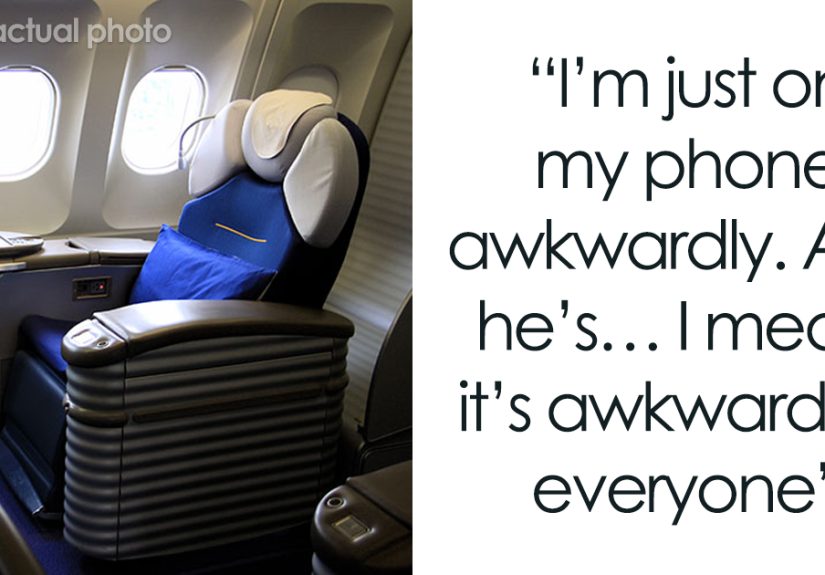
The story behind “Woman Learns To Never Talk To A Man With A Ring On His Finger The Hard Way” became popular because it is awkward, funny, painfully relatable, and loaded with relationship lessons. A woman seated beside a man wearing a wedding ring starts a casual conversation. Nothing scandalous. Nothing dramatic. Just polite airplane chatter about work, travel, and life. Then comes the plot twist: his wife is sitting in economy with their young children while he enjoys the comforts of first class, a drink, and a conversation with a stranger.
Suddenly, the issue is not whether the woman was flirting. The real issue is bigger, messier, and more familiar: boundaries, emotional labor, public embarrassment, marital expectations, and the tiny social signals that can explode when one partner feels unsupported. In other words, this is not just a “don’t talk to married men” story. It is a “read the room before the room reads you back” story.
The Airplane Story That Turned Into a Relationship Lesson
Imagine you are on a flight. You get upgraded. Angels sing. Your knees finally experience freedom. You sit beside a man who seems normal enough. He is working on his laptop, wearing a wedding ring, and making small talk. He mentions the perks of first class. You order wine. You chat about his career. You ask harmless questions because humans are social creatures and airplanes are basically metal tubes full of accidental conversations.
Then he reveals that his wife and children are sitting in the back of the plane. He explains that he needs to work. On paper, that sounds reasonable. Parents sometimes divide tasks. Work deadlines happen. Upgrades happen. Life happens. But then the wife walks up with the kids and sees him not buried in urgent work, but chatting comfortably with a woman while sipping a drink. Cue the turbulence, and not the kind the pilot warns you about.
Her frustration makes sense. From her perspective, she is managing children in the cramped part of the plane while her husband is enjoying space, peace, and adult conversation. He may not have intended to create a problem, and the woman beside him may have done nothing wrong. Still, appearances matter, especially when one partner already feels overloaded.
Why the Wedding Ring Changes the Social Math
A wedding ring is small, shiny, and socially loud. It says, “I belong to a committed relationship.” It does not mean the person wearing it can never speak to anyone else. Married people are allowed to have conversations, friendships, coworkers, neighbors, baristas, dentists, and the occasional seatmate who asks about nature conservation. The ring is not a muzzle.
However, a ring does create context. A friendly conversation with a single stranger can read one way. A friendly conversation with a married stranger whose spouse is nearby handling the kids can read very differently. Social meaning does not live only in intention; it also lives in timing, setting, body language, and who is being left out.
That is why the woman in the story walked away with the dramatic lesson: never talk to a man with a ring on his finger. Is that rule a little extreme? Absolutely. Is it emotionally understandable after being trapped in someone else’s marriage drama at 30,000 feet? Also absolutely.
The Real Problem Was Not the Conversation
The viral headline makes it sound as if the woman’s mistake was simply speaking to a married man. But the deeper problem was not conversation. The deeper problem was imbalance.
The husband said he needed first class to work, yet he was not fully working. His wife appeared to be carrying the harder parenting load. Their kids became part of an uncomfortable public argument. The stranger beside him got pulled into a marital scene she never auditioned for. It was a full emotional group project, and nobody volunteered.
In many relationships, resentment builds not from one single event but from repeated small moments. One partner gets the quiet seat. The other gets the sticky snack bag, the bathroom emergency, the crying child, and the silent question: “Why am I doing this alone?” On a normal day, that question may stay buried. On an airplane, after watching your spouse enjoy first class like he has personally defeated capitalism, it may come out fast.
Emotional Labor: The Invisible Carry-On Bag
Every family travels with luggage. Some bags go overhead. Some go under the seat. And some are invisible: remembering snacks, calming children, tracking boarding passes, packing wipes, answering questions, preventing meltdowns, and managing everyone’s mood while pretending not to be one pretzel stick away from losing it.
This invisible work is often called emotional labor or the mental load. In households with children, one partner may become the default manager of everything: appointments, school forms, food, clothing, routines, and social expectations. When the other partner relaxes without noticing that imbalance, resentment grows like a houseplant nobody remembers buying.
That is why the wife’s reaction was not just about another woman talking to her husband. It was about feeling abandoned in a shared responsibility. The stranger became the visible symbol of a deeper frustration. Fair? Maybe not entirely. Human? Very.
Boundaries Are Not About Being Cold
Some people hear the word “boundaries” and imagine emotional barbed wire. But healthy boundaries are not about being rude, suspicious, or robotic. They are about clarity. They help people understand what is respectful, what is comfortable, and what could become messy.
For a married person, boundaries might include avoiding secretive conversations, not complaining intimately about a spouse to someone who could become emotionally tempting, and not creating situations where a partner feels publicly disrespected. For a single person, boundaries might mean noticing the ring, keeping the conversation light, and stepping back when the situation starts to feel complicated.
In the airplane story, nobody needed to act like speaking across armrests was a federal offense. But once the wife arrived upset, the best move was obvious: politely disengage. Sometimes wisdom looks like opening your phone and becoming deeply fascinated by emails you do not even care about.
Friendly Conversation vs. Flirting: Where Is the Line?
The difference between friendliness and flirting can be slippery because people interpret tone differently. One person’s “pleasant chat” is another person’s “why are you smiling like that?” The safest way to tell the difference is to look at energy, privacy, and intention.
Friendly conversation usually stays open and casual
It includes neutral topics, relaxed body language, and no need to hide it. Talking about work, travel, a conference, a book, or the horror of airport coffee is usually harmless. If the spouse joined the conversation and nothing felt weird, that is a good sign.
Flirting often creates a private bubble
It may involve personal compliments, teasing with romantic tension, emotional over-sharing, secrecy, or ignoring the partner’s presence. If the conversation would become embarrassing the moment the spouse walked up, that is not a small red flag. That is a red flag wearing tap shoes.
Context matters more than clever excuses
A married man chatting with a stranger while his wife is overwhelmed with children nearby is not automatically cheating. But it can still be inconsiderate. Relationships are not only protected by avoiding major betrayals; they are protected by small choices that say, “I see you, I respect you, and I am on your team.”
Why Public Relationship Drama Feels So Uncomfortable
Public arguments are uniquely painful because nobody knows where to look. Passengers pretend to read safety cards. Flight attendants suddenly become very interested in ice. The stranger in the seat becomes part witness, part furniture, part emotional hostage.
Still, public conflict usually has a backstory. Most people do not calmly stroll into first class with two kids and a complaint unless something has already been simmering. The airplane simply gave the resentment a stage, lighting, and an unwilling audience.
The better approach for couples is to address problems before they become public explosions. A simple conversation before boarding could have changed everything: “If you take the upgrade to work, I need you to actually work, and I need relief halfway through the flight.” Or, “Let’s switch seats after an hour.” Or, “No, you are not disappearing into first class while I wrestle two tiny humans and a juice box.” Clear, direct, effective.
What the Husband Should Have Done Differently
The husband’s biggest mistake was not talking to another passenger. His biggest mistake was failing to support his partner in a visible, practical way. If he truly needed to work, he should have shown that. Laptop open. Head down. No leisurely drink-and-chat energy. If he got a surprise upgrade, he should have discussed it with his wife and offered a fair plan.
He could have swapped seats for part of the flight. He could have taken one child from the beginning. He could have used first class for focused work and then returned to help. He could have explained the situation to the seatmate briefly and kindly: “My wife is with our kids, so I may need to jump back and help.” That one sentence would have made him look responsible instead of suspiciously comfortable.
In relationships, perception matters because love is not only what you feel. It is what your partner experiences from your behavior.
What the Wife Could Have Done Differently
The wife’s frustration was understandable, but the public confrontation probably made a bad moment harder. When kids are present, arguments carry extra weight. Children may not understand the details, but they feel tension quickly. A calmer approach could have protected everyone’s dignity.
She might have said, “I need help now. Please take one child.” Then the deeper conversation could happen later, away from strangers and tray tables. That does not mean swallowing anger forever. It means choosing the right battlefield. Airplane aisles are narrow, and so are the odds of having a productive marital breakthrough beside a beverage cart.
What the Other Woman Learned
The woman beside the husband learned a practical lesson: when someone has a wedding ring, friendliness is fine, but caution is wise. Not because every married person is dangerous territory, but because you do not know the state of their relationship. You do not know whether their spouse feels secure, exhausted, ignored, or already fed up.
Her safest move after realizing the situation was to step back, avoid becoming emotionally involved, and let the couple handle their own issue. That is not cowardice. That is self-preservation with good posture.
Sometimes, being kind means not asking one more question. Sometimes, being respectful means letting a conversation end before it becomes a chapter in someone else’s argument.
Practical Rules for Talking to Married People Without Creating Drama
Keep it transparent
If the conversation would feel normal with their spouse standing there, it is probably fine. If it depends on privacy, secrecy, or a special emotional bubble, step back.
Respect the ring, but do not fear it
A wedding ring is not a “do not speak” sign. It is a reminder to keep the interaction appropriate, especially in intimate settings like travel, late-night messages, private rides, or emotionally vulnerable conversations.
Do not become the complaint department
When a married person starts unloading personal problems about their spouse, be careful. Sympathy can become emotional intimacy faster than people expect. A simple response works: “That sounds hard. I hope you two can talk it through.” Then change the subject or exit.
Avoid competing with the spouse
Never position yourself as the person who “understands” them better than their partner. That road may look paved with compliments, but it often ends in chaos, guilt, and screenshots.
Notice discomfort early
If a spouse appears uncomfortable, do not argue your innocence. Just create space. You do not need to prove you did nothing wrong by continuing the exact behavior that is making the situation worse.
The Bigger Dating Lesson: Choose Partners Who Act Like Teammates
The most valuable lesson in this story may not be “avoid married men.” It may be “choose a partner who does not leave you alone with the hard part while they enjoy the upgrade.”
Healthy relationships require teamwork. That means sharing childcare, emotional labor, planning, stress, and sacrifice. It means not treating your partner like unpaid background staff while you chase comfort. It means understanding that loyalty is not only about avoiding affairs. Loyalty is also taking the crying toddler, packing the snacks, checking in, and not making your spouse feel foolish in public.
A relationship can survive many awkward moments, but repeated unfairness is dangerous. When one partner feels alone inside the partnership, resentment becomes a third roommate. And resentment never pays rent.
Why This Story Went Viral
The story spread because it sits at the intersection of comedy and truth. Everyone can picture the awkwardness. Everyone can imagine the wife’s fury, the husband’s panic, the stranger’s regret, and the children absorbing the drama like tiny emotional sponges.
It also gave people a safe way to debate bigger questions: Should married people accept upgrades without their family? Is talking to strangers harmless? Are mothers still expected to carry too much of the parenting burden? When does a friendly chat become disrespectful? Why do some partners notice comfort for themselves faster than stress in their spouse?
That is the power of a good viral story. It looks small, but it opens a much larger door.
of Related Experience and Real-Life Lessons
Many people have experienced a version of this situation, even if it did not happen in first class. Maybe it happened at a wedding, when someone’s husband spent too long laughing with another guest while his wife handled the kids alone. Maybe it happened at a work event, where a married coworker became a little too eager to share personal frustrations after the second sparkling water. Maybe it happened in a group chat, where friendly messages slowly became daily emotional check-ins that would be hard to explain honestly.
The lesson is not that men and women can never speak. That would make offices, airports, schools, grocery stores, and neighborhood barbecues extremely weird. The lesson is that adults need awareness. A conversation is not only about words. It is about timing, emotional tone, and the responsibilities waiting offscreen.
One common experience is the “accidental therapist” problem. A married person begins by making innocent conversation. Then they mention stress at home. Then they explain how misunderstood they feel. Then the other person starts offering comfort. Before long, the conversation has moved from casual to emotionally private. Nobody planned anything dramatic, but the boundary shifted. That is how many messy situations begin: not with a grand romantic speech, but with “You’re so easy to talk to.”
Another experience is the “public embarrassment” problem. When someone feels ignored by their partner, they may react strongly in front of others. Outsiders might think, “Wow, that was intense.” But insiders know the explosion often comes after many smaller moments. The airplane wife may have looked harsh to strangers, but she may have been carrying days, months, or years of feeling unsupported. Public anger is rarely ideal, but it is often the smoke, not the fire.
There is also a valuable lesson for single people: you do not have to fix, entertain, comfort, or validate someone else’s spouse. Politeness is enough. You can be friendly without becoming emotionally available. You can smile without inviting a life story. You can end a conversation gracefully by putting in earbuds, opening a book, or saying, “I’ll let you get back to your family.” That sentence is a velvet rope with manners.
For married people, the lesson is even clearer: protect your relationship in public and private. Do not create situations that force your partner to wonder whether they matter. Do not use technical innocence as a shield for emotional carelessness. Saying “I didn’t do anything wrong” is not always the same as saying “I acted with love and consideration.” A partner should not have to compete with your comfort, your ego, or your need for attention from strangers.
The hardest lesson is that relationships are judged in ordinary moments. Who carries the bags? Who handles the tired child? Who gets rest? Who notices stress? Who turns toward their partner instead of away? The answers build trust or quietly drain it. The woman in the viral story learned to avoid unnecessary complications. The rest of us can learn something better: respect the ring, respect the relationship, and never underestimate the emotional power of a fair seat swap.
Conclusion
“Woman Learns To Never Talk To A Man With A Ring On His Finger The Hard Way” is funny because it is painfully awkward, but it is memorable because it reveals something real. A wedding ring does not forbid conversation, but it does call for awareness. A spouse’s frustration may not be about one chat, one drink, or one seat. It may be about feeling unsupported when support matters most.
The smartest takeaway is not to live suspiciously. It is to live respectfully. If you are single, keep conversations with married people transparent and appropriate. If you are married, protect your partner’s dignity and do your share of the load. If you are traveling with kids, may the snacks be plentiful, the tablet battery full, and the first-class upgrade shared like a civilized society.
Note: This article is an original, source-informed commentary written for web publication. It discusses relationship boundaries, public etiquette, emotional labor, and communication in a general educational style, not as professional counseling advice.