Table of Contents >> Show >> Hide
- Why Europe Wants a Moon Base in the First Place
- Argonaut: Europe’s Cargo Truck to the Moon
- Moonlight: Because Even Astronauts Need GPS
- The European Service Module: Europe Already Powers Artemis
- Lunar I-Hab: Learning How to Live Beyond Earth
- Italy’s Multi-Purpose Habitat: A Step Toward a Surface Outpost
- The South Pole: The Moon’s Most Popular Neighborhood
- Why Europe’s Plan Is Coming Together Now
- The Challenges: Money, Politics, Dust, and Reality
- What Success Could Look Like
- Experience-Based Reflections: What Europe’s Moon Base Plan Teaches Us
- Conclusion: Europe Is Building the Moon Base Before Our Eyes
For decades, the phrase “moon base” sounded like something printed on the side of a cereal box, right next to a plastic astronaut toy and a suspiciously optimistic drawing of people golfing in low gravity. But today, Europe’s plan for a real lunar presence is no longer a bedtime story for space nerds. It is becoming a layered, practical, industrial project built around landers, habitats, power systems, navigation satellites, cargo delivery, and international partnerships.
The most interesting part? Europe is not trying to build a single shiny “Moon Castle” and hope everything works. The European Space Agency, national space agencies, and major aerospace companies are assembling a system piece by piece. Think of it less like planting a flag and more like moving into an extremely hostile apartment where the rent is paid in rocket launches and the landlord is cosmic radiation.
At the center of this effort are several major building blocks: ESA’s Argonaut lunar lander, the Moonlight communications and navigation program, the European Service Module that powers NASA’s Orion spacecraft, the Lunar I-Hab module for deep-space habitation, and Italy’s Multi-Purpose Habitat concept for a future lunar outpost. Together, they show how Europe’s bold plan for a Moon base is coming togethernot as one dramatic leap, but as a careful chain of engineering decisions.
Why Europe Wants a Moon Base in the First Place
Europe’s interest in the Moon is not just about prestige, although prestige is definitely invited to the party and probably brought snacks. The Moon is becoming the next major arena for science, technology testing, space diplomacy, and long-term human exploration. A lunar base could support geology, astronomy, robotics, resource research, life-support experiments, and preparation for future Mars missions.
The Moon is close enough to reach in days, yet harsh enough to teach painful but useful lessons. There is no breathable air, no friendly weather, no quick hardware store run, and no forgiveness for bad design. That makes it an ideal proving ground for technologies humans will need deeper in space: closed-loop life support, surface power, autonomous navigation, dust-resistant machinery, radiation protection, and long-duration crew operations.
For Europe, the Moon also represents strategic autonomy. Depending entirely on other nations for lunar access would be like owning a luxury suitcase but never having a ride to the airport. ESA’s approach aims to give Europe its own cargo delivery capability, its own communications and navigation infrastructure, and a stronger role in shaping the rules and economics of lunar exploration.
Argonaut: Europe’s Cargo Truck to the Moon
If a Moon base is ever going to function, it will need cargo. Lots of cargo. Food, tools, scientific instruments, spare parts, rovers, power equipment, habitat supplies, and enough cables to make every engineer quietly emotional. That is where Argonaut enters the story.
Argonaut is ESA’s lunar lander program designed to give Europe reliable access to the Moon’s surface. It is planned to launch on Ariane 6 rockets and deliver cargo to support both robotic and crewed missions. In plain English: Europe wants its own delivery truck for the Moon, except this truck lands vertically, crosses deep space, and does not honk at traffic.
Why Cargo Delivery Matters
A base is not built by astronauts carrying everything in their pockets. Early lunar bases will likely grow through a rhythm of robotic deliveries before, during, and after crewed missions. A cargo lander can place power units, scientific payloads, water-processing experiments, communication hardware, and surface mobility systems before astronauts arrive. That reduces risk and gives crews more time to work instead of unpacking like they just moved into a college dorm.
Argonaut’s importance goes beyond logistics. It also gives European industry a long-term technical challenge that can feed innovation across propulsion, landing systems, guidance software, thermal control, materials, and autonomous operations. In the space business, “cargo lander” sounds simple until you remember the cargo must survive launch, deep space, lunar descent, dust, temperature swings, and landing with the grace of a ballet dancer wearing steel boots.
Moonlight: Because Even Astronauts Need GPS
One of the least glamorous but most essential parts of a Moon base is connectivity. A base without communications and navigation is not a base; it is a very expensive campsite with terrible Wi-Fi. ESA’s Moonlight program aims to solve that problem by creating lunar communications and navigation services.
Moonlight is designed to support future missions by providing data links and navigation around the Moon. That matters because future lunar operations will involve landers, rovers, habitats, astronauts, robotic construction systems, scientific stations, and possibly commercial payloads. They will all need to know where they are, where they are going, and how to send data home without everyone building separate infrastructure.
The Moon Needs Infrastructure Before It Needs Souvenirs
On Earth, modern life runs on invisible infrastructure: GPS, cellular networks, fiber-optic cables, weather satellites, and cloud services. On the Moon, those basics do not exist yet. Every mission currently has to bring much of its own communications and navigation support. That is inefficient, costly, and about as elegant as every car building its own road before driving to the grocery store.
Moonlight could help create shared lunar infrastructure. Better navigation would support safer landings and more confident rover travel. Better communications would allow higher data rates for science instruments, real-time mission control, and stronger coordination between surface assets. In the long run, this kind of system is exactly what turns lunar exploration from rare heroic visits into repeatable operations.
The European Service Module: Europe Already Powers Artemis
Europe’s lunar ambitions are not theoretical. ESA is already flying critical hardware through the European Service Module, the powerhouse attached to NASA’s Orion spacecraft. This module provides propulsion, electricity, thermal control, air, and water for crewed Artemis missions.
That contribution is a big deal. Orion is the spacecraft designed to carry astronauts to the Moon and bring them safely back to Earth. The European Service Module is not decorative. It is not a charming European hood ornament. It is core survival hardware. Without power, propulsion, cooling, and life-support consumables, a spacecraft becomes a very stylish metal problem.
From Partnership to Capability
The European Service Module shows how Europe has embedded itself in the architecture of human lunar exploration. ESA and Airbus, supported by suppliers across Europe and beyond, have turned Europe into a necessary partner in deep-space crew transportation.
This matters for future lunar base planning because space programs are built on trust and demonstrated performance. If European systems can power and support Orion on missions around the Moon, then Europe earns credibility for larger roles: habitat modules, cargo landers, surface systems, navigation infrastructure, and eventually the technologies that keep astronauts alive on the ground.
Lunar I-Hab: Learning How to Live Beyond Earth
Habitats are where the dream of a Moon base becomes brutally practical. A habitat must protect people from radiation, temperature extremes, dust, micrometeorites, equipment failures, and the psychological weirdness of living far from Earth in a room that cannot be “aired out.” Lunar I-Hab, developed through ESA with major industrial partners and international cooperation, is part of that learning curve.
Lunar I-Hab was designed as a habitation element for the lunar Gateway concept, with contributions from Japan for life-support systems and batteries. Even as mission architectures evolve, the work behind I-Hab remains valuable because it addresses a central question: how do humans live and work in deep space without turning every day into a survival-themed group project?
Habitability Is Not a Luxury
When people imagine space habitats, they often focus on the big heroic stuff: airlocks, control panels, dramatic windows, and astronauts floating like graceful otters. Engineers focus on less romantic questions: Can the crew reach emergency equipment? Is there enough room to move in spacesuits? Can maintenance be done without inventing three new yoga poses? Where does the trash go?
Testing habitability is essential because a lunar base will not succeed on technology alone. It must be usable by tired human beings working under stress. The best habitat is not simply the one with the strongest shell. It is the one that helps astronauts sleep, think, repair, communicate, exercise, conduct science, and occasionally eat a meal without elbowing a million-dollar control panel.
Italy’s Multi-Purpose Habitat: A Step Toward a Surface Outpost
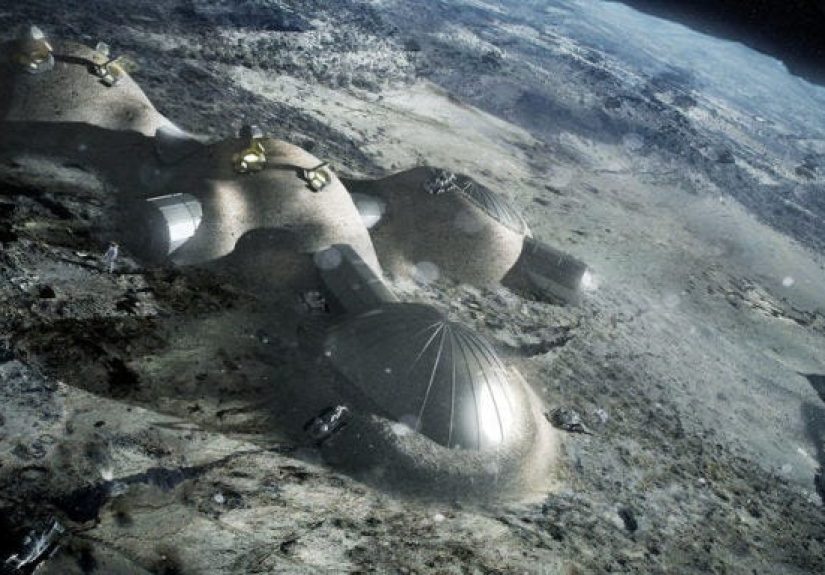
Europe’s Moon base vision also includes national contributions, and Italy has become one of the most visible players. Thales Alenia Space and the Italian Space Agency have worked on a Multi-Purpose Habitat concept intended to support a future human lunar outpost. The goal is to develop a habitat that can function on the lunar surface, support astronauts, and continue scientific operations even when crew members are not present.
That last point is important. A future Moon base will not always be full of astronauts sipping space coffee and debating who used the last clean wipe. It will need to operate robotically between crew visits. Instruments must gather data, systems must monitor themselves, and equipment must survive long periods without human hands nearby.
A surface habitat also has to deal with some of the Moon’s worst personality traits: abrasive dust, intense radiation, reduced gravity, and massive temperature shifts. Designing for those conditions requires more than scaling down an Earth building. It requires a new philosophy of architecture, one where comfort, maintenance, shielding, autonomy, and scientific function all have to fit inside strict mass limits.
The South Pole: The Moon’s Most Popular Neighborhood
Many lunar base plans focus on the Moon’s south polar region. It is not because the view is better, although the view would probably make every travel influencer faint into their helmet. The south pole is scientifically and operationally attractive because some areas receive long periods of sunlight, while nearby permanently shadowed regions may contain water ice.
Sunlight matters for solar power. Water ice matters because water can support astronauts, shield against radiation, and potentially be split into oxygen and hydrogen. That does not mean future crews will simply scoop up lunar snow cones. Extracting usable resources from frozen material in dark, brutally cold craters will be difficult. Still, the possibility of local resources changes the economics of a long-term lunar presence.
Living Off the Land, Carefully
In space policy language, this is often called in-situ resource utilization. In normal human language, it means “use what is already there, because shipping everything from Earth is wildly expensive.” A practical Moon base may eventually use local regolith for shielding, extract oxygen from lunar materials, or process ice for water and propellant.
Europe’s research into lunar construction, including ideas like using local material for 3D-printed structures, fits into this bigger picture. Early bases may begin with delivered modules, but long-term settlements will likely need to use lunar materials to expand, protect equipment, and reduce launch costs. No one wants to pay interplanetary shipping fees for bricks.
Why Europe’s Plan Is Coming Together Now
Several trends are converging. NASA’s Artemis program has reactivated global interest in crewed lunar exploration. Commercial lunar delivery is becoming more serious. Space agencies are planning more robotic missions. Private companies are exploring future lunar services. Meanwhile, Europe has moved from broad vision statements to actual contracts, industrial teams, hardware development, and mission planning.
That shift matters. Space exploration is full of beautiful PowerPoint slides that never become hardware. Europe’s current lunar strategy is different because pieces are now tied to real programs: Orion service modules are flying or being built, Argonaut is moving through industrial development, Moonlight is being shaped as lunar infrastructure, and habitat work is advancing through European and international partnerships.
A Moon Base Is Not One Project
The biggest misunderstanding about a Moon base is that it will arrive as a single object. It will not. A lunar base is more like an ecosystem. It needs transportation, landing zones, power, communications, navigation, shelters, rovers, science stations, maintenance tools, spare parts, radiation protection, emergency plans, and political agreements. Remove one of those pieces and the whole thing starts looking less like exploration and more like an expensive camping accident.
Europe’s strength is that it is contributing across that ecosystem. It may not own every piece, but it is building important ones. That gives Europe influence in how lunar exploration develops and helps ensure the Moon does not become a two-player race with everyone else watching from the cheap seats.
The Challenges: Money, Politics, Dust, and Reality
Of course, coming together does not mean guaranteed success. Space plans live in the dangerous neighborhood between engineering ambition and government budgets. Programs can be delayed, redesigned, reduced, or reorganized. International partnerships depend on changing administrations, economic conditions, launch availability, and the brutally honest calendar of technical testing.
Then there is lunar dust, the glitter of doom. Apollo astronauts learned that Moon dust sticks to everything, scratches surfaces, clogs mechanisms, and generally behaves like the universe’s most passive-aggressive powder. Any European habitat, lander, rover, or surface system will need to survive not only dramatic space hazards but also the small, annoying ones that ruin seals, joints, optics, and patience.
Power is another challenge. A base needs reliable electricity through long shadow periods and emergencies. Communications systems must work across difficult terrain. Landing systems must avoid blasting equipment with debris. Human crews need safe abort options. Robotic systems must perform when nobody is nearby to kick the machine and say, “Come on, buddy.”
What Success Could Look Like
If Europe’s lunar plan succeeds, the first results may not look like a science-fiction city. They may look modest: a cargo lander touching down with supplies, a navigation signal improving a rover’s route, a habitat module passing harsh environmental tests, an Orion mission safely powered by European hardware, or a surface experiment operating while astronauts are back on Earth.
But that is how real infrastructure begins. Airports did not start as global travel hubs with espresso kiosks and overpriced sandwiches. They started as runways. The same will be true on the Moon. The first European contributions may seem technical and scattered, but together they form the bones of a sustainable lunar presence.
Over time, a European-supported Moon base could help answer major scientific questions: How did the Earth-Moon system form? What is preserved in permanently shadowed craters? Can humans live safely beyond Earth for months at a time? Can lunar resources support deeper exploration? Can technologies tested on the Moon reduce the risk of going to Mars?
Experience-Based Reflections: What Europe’s Moon Base Plan Teaches Us
The most valuable lesson from Europe’s Moon base effort is that big dreams need boring systems. That may sound rude, but it is true. Everyone loves the dramatic moment when astronauts step onto the lunar surface. Fewer people get excited about data relay coverage, battery testing, thermal margins, cargo manifests, interface standards, and spare filters. Yet those are the things that decide whether the dream survives after the first applause fades.
Watching Europe’s plan come together feels like watching a team prepare for the most complicated camping trip in history. The tent must survive radiation. The car must be a rocket. The map must work on another world. The food delivery service requires a lunar lander. The Wi-Fi needs satellites around the Moon. And if someone forgets a wrench, the nearest hardware store is 240,000 miles away and closed on account of not existing.
There is also a practical lesson for anyone interested in technology, business, or innovation: successful systems are modular. Europe is not betting everything on one miracle machine. It is developing transportation through Argonaut, crew support through the European Service Module, deep-space living through I-Hab experience, surface habitation concepts through Italian industry, and communications through Moonlight. Each piece can support the others, and each creates value even if schedules shift.
That modular approach is useful far beyond space. Whether building software, cities, companies, or school projects that somehow become due tomorrow morning, the best strategy is often the same: create reliable building blocks, test them early, make them interoperable, and do not assume the final plan will survive first contact with reality. Reality has a big hammer and questionable manners.
Europe’s Moon base plan also shows why international cooperation matters. No single country has an easy path to sustained lunar presence. NASA brings launch systems, mission architecture, commercial partnerships, and decades of exploration experience. ESA brings proven engineering, industrial depth, and specialized systems. Japan, Canada, Italy, Germany, France, the United Kingdom, and other partners add critical capabilities. A Moon base is too complex to be a solo performance; it is more like an orchestra where every instrument must arrive on time, in tune, and pressure-rated for vacuum.
From a human perspective, the Moon base story is exciting because it changes the meaning of exploration. Apollo was about reaching the Moon. Artemis and Europe’s lunar strategy are about returning, learning, staying longer, and building systems that make the next journey easier. That is a different kind of bravery. It is less about one perfect footprint and more about creating a place where science can happen repeatedly.
And yes, it is still risky. Delays will happen. Budgets will wobble. Hardware will fail tests. Political priorities will change. Someone will probably rename something important right after everyone memorizes the acronym. But the direction is clear: Europe is no longer talking about the Moon as a distant symbol. It is treating the Moon as a destination that needs infrastructure.
That is why Europe’s bold plan feels significant. It is not bold because it promises a glowing lunar city next Tuesday. It is bold because it accepts the unglamorous truth: before humans can live on the Moon, someone has to build the delivery routes, power systems, communication networks, habitats, and operational habits that make living possible. Europe is helping build that foundation, one carefully engineered piece at a time.
Conclusion: Europe Is Building the Moon Base Before Our Eyes
Europe’s bold plan for a Moon base is coming together because it is no longer just a slogan. It is a network of programs and technologies: Argonaut for cargo, Moonlight for communications and navigation, the European Service Module for crewed transport, Lunar I-Hab for deep-space habitation knowledge, and surface habitat development for future outposts.
The final Moon base may not look exactly like today’s drawings. In space exploration, architecture evolves because rockets, budgets, politics, and physics all get a vote. But Europe’s role is becoming harder to ignore. It is helping build the systems that turn lunar exploration from occasional visits into sustained presence.
So when people ask whether a Moon base is really coming, the best answer may be: slowly, carefully, and with a surprising amount of European hardware. The Moon will not be colonized by speeches. It will be reached by service modules, cargo landers, antennas, habitats, rovers, batteries, software, and the stubborn patience of engineers who know that the future is usually assembled one bolt at a time.