Table of Contents >> Show >> Hide
- Who Was Andrew Thornton, the “Cocaine Bear” Drug Smuggler?
- The 1985 Flight That Turned Into American Folklore
- How the Bear Entered the Story
- Fact vs. Movie: What Really Happened?
- Why the Story Became So Famous Decades Later
- The Bluegrass Conspiracy Connection
- Why the Bear Is the Wrong Villain
- Andrew Thornton’s Legacy: Infamy, Not Glory
- Why This True Story Still Hooks Readers
- Experiences and Lessons Related to the Cocaine Bear Story
- Conclusion
Some true stories sound like they were rejected by Hollywood for being too ridiculous. Then Hollywood makes them anyway. The real story behind “Cocaine Bear” is one of those strange American legends that starts with a former narcotics officer, swerves into a Kentucky drug ring, drops a plane into the Appalachian night, and somehow ends with a black bear becoming a pop-culture mascot.
But behind the meme-friendly name and the outrageous 2023 horror-comedy is a much darker and more complicated story. The bear was real. The drugs were real. The dead smuggler was real. What was not real, at least according to the known evidence, was a rampaging bear tearing through the woods like a furry action villain with a sinus problem.
The true center of the story was Andrew Carter Thornton II, a man whose life looked, at first glance, like a résumé built by someone trying to impress a country club, a police department, and a thriller novelist at the same time. He came from privilege, served in the military, worked in law enforcement, became a lawyer, and later helped build a criminal career that crashedliterallyinto infamy.
Who Was Andrew Thornton, the “Cocaine Bear” Drug Smuggler?
Andrew Thornton was not the kind of criminal people imagine when they picture a shadowy drug smuggler. He was not a street-corner cliché or a cartoon villain stroking a cat in a gold-plated chair. He was a former Lexington, Kentucky, narcotics officer, a trained parachutist, a lawyer, and a man with enough establishment polish to make trouble look respectable from across the room.
That contradiction is what makes the Cocaine Bear true story so fascinating. Thornton had once worked on the law enforcement side of the drug trade. He knew how investigations operated, how police thought, and how smugglers got caught. Instead of staying on that side of the line, he crossed it. By the early 1980s, he was linked to a Kentucky-centered drug-smuggling network often associated with the broader “Bluegrass Conspiracy,” a phrase that sounds like a horse-racing documentary until the cocaine starts falling from the sky.
Thornton’s background made him unusually dangerous. He had training, confidence, contacts, and the kind of boldness that can be mistaken for genius right up until gravity files its complaint. His story is not just about one bizarre accident. It is about how access, ego, and money can turn a man with every advantage into the punchline of a national crime legend.
The 1985 Flight That Turned Into American Folklore
In September 1985, Thornton was involved in a smuggling flight carrying a large load of cocaine. The trip has been retold in many versions, but the main outline is consistent: a small aircraft, a heavy cargo, a dangerous plan, and a decision to get rid of part of the load while airborne.
Authorities later connected Thornton to cocaine dropped over northern Georgia, near the Chattahoochee National Forest region. The shipment was not a tiny bag tossed out like airport trash. Reports described a major quantity of cocaine scattered in the wilderness, the kind of haul that turned wooded hillsides into a law enforcement nightmare and, unfortunately, an accidental buffet for wildlife.
Thornton himself did not live to explain what went wrong. His body was found in Knoxville, Tennessee, after a failed parachute jump. Investigators discovered that he had been carrying cocaine and equipment when he died. His unmanned plane later crashed in North Carolina, which is the sort of detail that makes the story sound like three different crime movies got edited together by a caffeinated intern.
The facts are grim, but the absurdity is hard to ignore. A former narcotics officer became a drug smuggler, dumped part of a shipment into the mountains, parachuted out of a plane, and died before anyone could ask the obvious question: “Was this really the plan?”
How the Bear Entered the Story
Months after Thornton’s death, investigators searching the Georgia wilderness found a dead American black bear near ripped-open drug containers. The bear had apparently consumed cocaine from the dropped shipment. News reports from the time described a 175-pound black bear that died after ingesting the drug. That sad discovery transformed an already strange smuggling case into one of the most bizarre true-crime stories in modern American folklore.
The bear did not choose adventure. It did not sign up to become a cult icon, a movie monster, a tourist attraction, or a joke on T-shirts. It was a wild animal that encountered something dangerous humans had dumped into its habitat. The real Cocaine Bear story is funny only if viewed from a very safe distance and with the understanding that the animal was an innocent casualty.
That is the strange balance of this tale: it is ridiculous and tragic at the same time. On one hand, the phrase “Cocaine Bear” practically writes its own punchlines. On the other hand, the actual bear died because criminal activity spilled into the natural world. The comedy belongs to the myth. The consequences belong to reality.
Fact vs. Movie: What Really Happened?
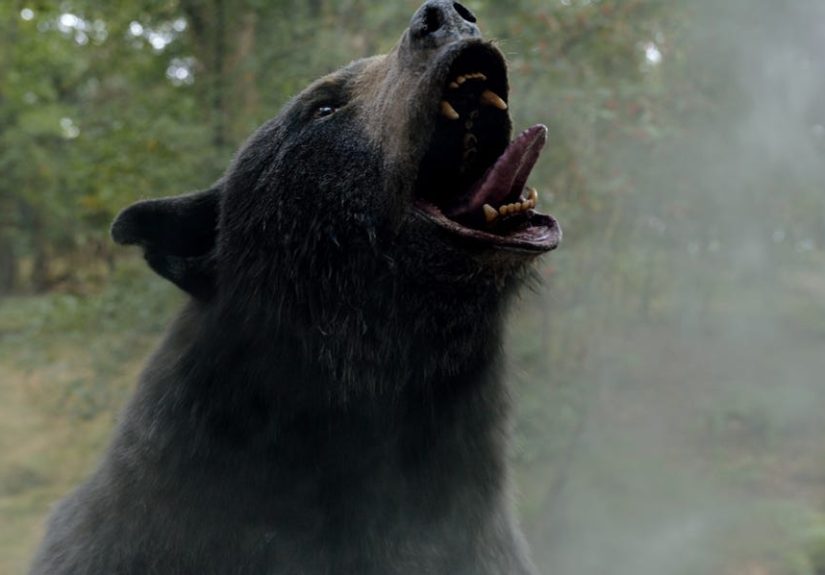
The 2023 film Cocaine Bear, directed by Elizabeth Banks, took the true incident and launched it into full creature-feature chaos. In the movie, a drug-fueled bear terrorizes people in the woods. It is loud, bloody, intentionally ridiculous, and about as subtle as a marching band falling down a staircase.
The real event was much quieter. There is no solid evidence that the bear attacked people, chased criminals, stalked hikers, or went on a rampage. The known story is simple: the bear found cocaine, ingested it, and died. Hollywood then asked, “What if the bear had survived long enough to become the worst park safety announcement ever?”
The Real Parts
The real parts include Andrew Thornton, the smuggling flight, the cocaine dropped over Georgia, the discovery of the bear, and the later transformation of the story into a pop-culture legend. Thornton’s Kentucky background and law enforcement past are also central to why the story has such staying power.
The Fictional Parts
The fictional parts include the bear’s murderous spree, the elaborate character confrontations, and most of the film’s action set pieces. The movie was not trying to be a courtroom exhibit. It was a horror-comedy using a real headline as a trampoline.
Why the Story Became So Famous Decades Later
For years, the Cocaine Bear story lived mostly as a strange newspaper clipping and a regional legend. Then the internet did what the internet does best: it found something weird, gave it a nickname, added memes, and refused to behave normally about it.
The bear became known as Pablo Escobear, a pun so obvious and so perfect that resisting it would require federal assistance. A taxidermied bear displayed in Lexington, Kentucky, became part roadside attraction, part dark comedy shrine, and part reminder that American history has a junk drawer full of stories too weird for textbooks.
The legend also arrived at exactly the right cultural moment. Audiences love true crime. They love animal stories. They love “based on a true story” movies, especially when the true story sounds like it was discovered on a gas station bathroom wall. Cocaine Bear had all three, plus a title that could sell tickets even if the poster were just two words and a paw print.
The Bluegrass Conspiracy Connection
Thornton’s story is often discussed alongside the “Bluegrass Conspiracy,” a term tied to investigations, allegations, and reporting about drug trafficking networks involving Kentucky figures in the late 20th century. The phrase has endured because it captures the unsettling idea that crime was not always operating from the margins. Sometimes it wore a suit, knew the right people, and understood which doors opened quietly.
Thornton’s transformation from narcotics officer to smuggler made him a symbol of that world. He was not merely breaking the law; he had once helped enforce it. That reversal gives the story its sharper edge. The bear may be the headline, but Thornton is the cautionary tale.
His downfall also shows how thrill-seeking can masquerade as control. Smuggling by air required planning, risk tolerance, and nerve. Thornton seemed to have plenty of all three. What he did not have, in the end, was enough control over the forces he had set in motion. The plane, the load, the jump, the wilderness, the investigationeach piece spun away from him until the whole operation became a national oddity.
Why the Bear Is the Wrong Villain
The phrase “Cocaine Bear” makes the animal sound like the star criminal. In reality, the bear was the victim of human recklessness. It did not smuggle anything, sell anything, or make bad decisions in loafers. It behaved like a bear encountering an unfamiliar object in its environment.
This matters because the funniest version of the story can easily crowd out the most important lesson. Drug trafficking does not only harm people directly involved in it. It can damage communities, landscapes, and animals that have no part in the choices being made. In this case, a criminal operation ended in a forest, and the forest paid part of the price.
That is why the real Cocaine Bear story works best when told with both humor and honesty. Laugh at the absurdity of the headline. Laugh at the fact that a taxidermied bear became a celebrity. Laugh at Hollywood turning a tragic footnote into a creature feature. But do not miss the point: the bear was not the monster. The human choices were.
Andrew Thornton’s Legacy: Infamy, Not Glory
Andrew Thornton is remembered today less as a mastermind than as the man whose failed smuggling operation accidentally created Cocaine Bear. That is not exactly the legacy most ambitious criminals have in mind. Nobody wants to spend eternity as the setup to a bear pun.
His story has the shape of a warning. Intelligence without judgment can become a liability. Privilege without humility can become a trap. Confidence without limits can become a parachute that does not save you. Thornton had talent and opportunity, but he used them in ways that ended disastrously.
The wildest part of the Cocaine Bear drug smuggler story is not that a bear ate cocaine. It is that a man who had worked in narcotics enforcement ended up creating the conditions for that to happen. The irony is so thick you could spread it on toast, though it would probably violate several federal guidelines.
Why This True Story Still Hooks Readers
The Cocaine Bear story survives because it has everything: crime, irony, wildlife, mystery, 1980s excess, regional character, and a title that sounds fake even after someone shows you the documents. It is a story built for campfire retellings, podcast episodes, movie trailers, and search engines.
But it also survives because it reveals something about how people process strange history. We turn uncomfortable events into legends because legends are easier to hold. A dead bear becomes Pablo Escobear. A failed smuggling operation becomes a movie premise. A grim investigation becomes a roadside attraction. The facts remain, but the packaging gets shinier.
That does not mean the legend is useless. Sometimes a bizarre story opens the door to a serious conversation. This one can lead readers to think about corruption, drug trafficking, media exaggeration, wildlife protection, and how quickly real events can become entertainment.
Experiences and Lessons Related to the Cocaine Bear Story
Experiencing the Cocaine Bear story today is less about crime-scene curiosity and more about media literacy. A reader might first encounter the tale through the movie trailer, where the bear is presented like a furry disaster with claws. Then, after a little digging, the real account emerges: no confirmed rampage, no heroic bear battle, no cartoonish criminal showdown in the forest. That shift from movie madness to historical reality is a useful reminder that “inspired by true events” can mean anything from “nearly documentary” to “we kept the bear and threw out the rest.”
For travelers, the story also creates a strange kind of regional tourism. Lexington, Kentucky, has embraced the legend with a wink, especially through the Pablo Escobear attraction. Visiting a place connected to such a bizarre tale can feel funny at first, but it also makes the past feel oddly physical. A story that once sounded like an internet joke suddenly has geography: Kentucky law enforcement, Georgia forests, Tennessee neighborhoods, and a North Carolina crash site all connected by one reckless chain of events.
For writers, bloggers, and true-crime fans, the Cocaine Bear drug smuggler story is a master class in tone. Tell it too seriously and you miss the absurdity. Tell it only as a joke and you erase the real harm. The best approach sits somewhere in the middle: amused, careful, and aware that every viral legend began as something that happened to real people, real places, and in this case, a real animal.
The story also encourages a healthier skepticism toward sensational headlines. When a headline promises a drug-crazed bear, the human brain naturally clicks faster than a raccoon stealing cat food. But the better question is always, “What actually happened?” In this case, the answer is still wild, just not in the same way the movie suggests.
Finally, the Cocaine Bear legend offers a memorable lesson about consequences. Bad decisions rarely stay neatly contained. Thornton’s choices did not affect only him. They pulled in investigators, communities, wildlife, journalists, filmmakers, and decades of public fascination. That is why the story still works: it is funny enough to remember, strange enough to share, and serious enough to mean something.
Conclusion
The wild true story behind the “Cocaine Bear” drug smuggler is not just a tale about a bear, a plane, and a failed criminal scheme. It is a uniquely American collision of privilege, corruption, wilderness, media mythmaking, and dark humor. Andrew Thornton’s life had the ingredients of success, but his choices turned him into a cautionary figure in one of the strangest crime stories of the 1980s.
The bear became famous, the smuggler became infamous, and the legend became almost impossible to summarize without sounding like you are making it up. Yet beneath the jokes is a simple truth: reality does not need much help being weird. Sometimes it only needs a forest, a bad decision, and a bear in the wrong place at the worst possible time.
Note: This article is written for informational and historical purposes, based on publicly reported accounts of the 1985 Cocaine Bear case. It does not glamorize drug trafficking or drug use.