Table of Contents >> Show >> Hide
- Who Is Karlo Ferdon?
- Why Wordless One-Panel Comics Work So Well
- The Beauty of Minimalist Comics
- What Makes the “30 New Pics” So Fun?
- Why Visual Humor Travels Better Than Words
- The Role of Everyday Absurdity
- How Ferdon Builds a Punchline Without Words
- Why Readers Keep Coming Back
- What Artists and Writers Can Learn From These Comics
- Why These Comics Are Perfect for the Internet
- The Quiet Genius of Saying Nothing
- Experience: Spending Time With Wordless One-Panel Comics
- Conclusion
Some jokes walk into a room wearing a tuxedo, carrying a microphone, and demanding applause. Karlo Ferdon’s jokes quietly open the door, rearrange the furniture, turn a banana into a philosopher, and leave before anyone can ask what just happened.
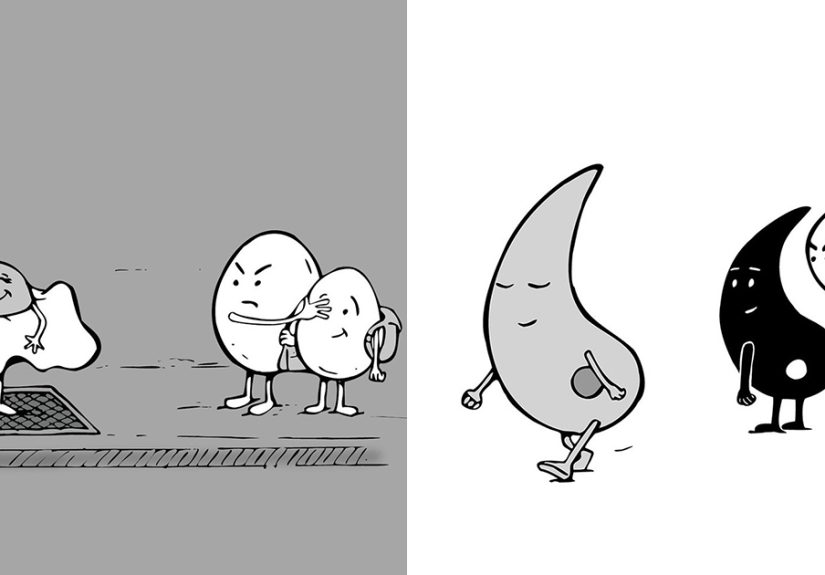
That is the strange magic behind the Chilean cartoonist’s humorous one-panel comics. They do not need captions, speech bubbles, or even a dramatic “Meanwhile…” floating in the corner. Instead, Ferdon uses clean visual storytelling, expressive characters, absurd everyday situations, and a perfectly timed twist to make readers laugh without using a single word. In a world where everyone seems to be typing, posting, replying, commenting, and adding “just one more thought,” his comics feel almost rebellious. They are silent, simple, and somehow louder than a group chat at midnight.
The title “This Artist Makes Humorous One-Panel Comics Without Using A Single Word (30 New Pics)” points to a fresh batch of Ferdon’s minimalist cartoons, the kind that can be enjoyed in a few seconds but remembered for much longer. His drawings are usually built around ordinary things: people, animals, food, objects, work routines, household habits, technology, and tiny social awkwardness. Then he adds one unexpected detail that flips the meaning. Suddenly, a harmless scene becomes a joke, a visual pun, or a small philosophical wink wearing clown shoes.
What makes these wordless comics so appealing is not only that they are funny. It is that they invite the reader to participate. There is no caption telling you exactly what to think. You have to look, connect the pieces, and discover the punchline yourself. When the joke lands, it feels personallike you solved a tiny visual riddle and the prize is a smile.
Who Is Karlo Ferdon?
Karlo Ferdon is a Chilean cartoonist, illustrator, graphic designer, and humor creator known for minimalist comics that often avoid dialogue entirely. His public profiles describe him as a cartoonist and creator of Don Serapio, and he has also been associated with Chilean humor projects such as Revista Plumazo. Across online platforms, his work has reached international readers because it does something the internet loves: it communicates quickly, visually, and across language barriers.
Ferdon has shared in interviews that he enjoyed copying cartoons and comics from a young age and later began creating his own stories. That childhood connection matters. His comics often feel playful rather than over-engineered. They do not look like jokes that were assembled in a laboratory by people wearing clipboards. They feel like the work of someone who has spent years noticing how ridiculous daily life already is, then giving it one gentle push into absurdity.
He has also mentioned classic and Latin American comic influences, including well-known names such as Peanuts, Calvin and Hobbes, Mampato, Condorito, Themo Lobos, Eduardo de la Barra, and Fernando Krahn. That blend of global and regional inspiration helps explain why his style feels both familiar and fresh. There is a classic newspaper-cartoon spirit in his timing, but the jokes are shaped for modern readers who scroll fast and expect a punchline before their coffee gets cold.
Why Wordless One-Panel Comics Work So Well
Wordless one-panel comics are deceptively difficult. A comic strip with several panels can build a scene step by step. A caption can explain context. Dialogue can reveal a character’s thoughts. Ferdon removes all of that safety equipment and still jumps off the diving board.
In a single-panel comic, everything has to happen at once. The setup, the conflict, the character reaction, and the punchline must fit inside one image. The reader’s eye needs to understand the scene immediately, but not so immediately that the joke becomes flat. There has to be a small delaya half-second of “Wait… oh!” That moment is where visual humor comes alive.
Ferdon’s best silent comics work because they follow a clear rhythm. First, the reader recognizes something ordinary. Then the image introduces something that should not belong there. Finally, the brain resolves the contradiction and turns it into humor. This is why his work often feels like a visual version of a clever pun. The difference is that instead of playing with words, he plays with expectations.
The Setup Is Familiar
Many of Ferdon’s comics begin with a situation almost anyone can understand: a person doing chores, an animal behaving like a human, a household object gaining a personality, a superhero facing an embarrassingly normal problem, or a piece of food suddenly dealing with existential pressure. The familiarity matters because it gives the reader a stable starting point. You know the world you are looking atuntil you do not.
The Twist Is Absurd
Once the scene feels recognizable, Ferdon bends reality. An object might behave like a person. A person might be trapped by the logic of an object. Nature might imitate modern life. A tiny visual detail might completely change the meaning of the scene. The humor comes from that collision between ordinary life and impossible logic.
The Silence Makes the Joke Sharper
Because there are no words, the joke has no padding. There is no caption overexplaining the gag. There is no character shouting, “This is awkward!” The image must earn the laugh on its own. That silence gives the work a clean, confident quality. It trusts the reader, and readers usually enjoy being trusted.
The Beauty of Minimalist Comics
Minimalist comics are not lazy drawings. In fact, minimalism often demands more discipline than highly detailed illustration. When an artist draws less, every line becomes more important. A small eyebrow angle can change the mood. A character’s posture can carry the entire joke. A single prop can explain the setting, the conflict, and the punchline.
Ferdon’s minimalist approach gives his comics a strong visual identity. The drawings are clean enough to read quickly but expressive enough to reward a closer look. He often strips scenes down to the essentials: character, object, situation, twist. That economy is one reason his humorous one-panel comics work so well on social media. They do not require readers to zoom in, read a wall of text, or understand a long backstory. The joke is right there, waiting patiently like a cat beside an unattended sandwich.
Minimalism also makes the humor feel universal. The fewer unnecessary details in the frame, the easier it is for readers from different backgrounds to understand the basic situation. A tired worker, a confused animal, a jealous object, a dramatic household itemthese are not complicated cultural codes. They are small visual dramas that almost anyone can decode.
What Makes the “30 New Pics” So Fun?
A collection of 30 new pics gives readers enough variety to see Ferdon’s range. One comic may lean into animal humor. Another may turn a mundane object into a character. Another may use surreal logic, dark humor, or a strange little twist that feels like it escaped from a dream and forgot to put on shoes.
The pleasure of browsing a batch of Ferdon’s work is that every image functions like its own miniature world. You do not need to read previous episodes. You do not need to know character names. You do not need a lore guide, a fan wiki, or three hours of free time. Each panel stands alone. That is a major advantage of one-panel humor: it gives readers instant entry.
At the same time, the comics feel connected by a recognizable artistic personality. Ferdon returns again and again to absurdity, everyday life, visual puns, gentle weirdness, and the idea that humor can be found almost anywhere if you tilt reality at the right angle. A chair is not just a chair. A dog is not just a dog. A slice of bread may be moments away from a life crisis. The ordinary world becomes funnier because Ferdon treats it as if every object has a secret emotional life.
Why Visual Humor Travels Better Than Words
One of the biggest strengths of wordless comics is their ability to cross language barriers. A written joke can be brilliant in English and completely collapse when translated. Puns are especially fragile. Move them into another language and they sometimes arrive looking confused, carrying one shoe, and asking where the punchline went.
Visual humor is different. A surprised face, an impossible situation, a clever contrast, or an unexpected transformation can be understood without translation. That does not mean every reader will interpret the joke in exactly the same way, but it does mean the comic has a wider doorway. Anyone who can read the image can enter.
This is especially important online, where art travels instantly across countries and cultures. A silent comic can be shared by someone in the United States, enjoyed by someone in Chile, reposted by someone in Japan, and understood by someone in Germanyall without anyone arguing over subtitles. That global friendliness is part of why Ferdon’s work has gained attention beyond Spanish-speaking audiences.
The Role of Everyday Absurdity
Ferdon’s humor often begins with the ordinary. That is what makes the absurd twist effective. If everything in a comic is already strange, nothing feels surprising. But when the setting is familiar, one impossible detail can become hilarious.
Think about how daily life already contains quiet absurdity. We apologize to furniture after bumping into it. We talk to pets in full sentences. We trust tiny glowing rectangles to organize our lives. We buy bananas green, ignore them while they ripen, and then act personally betrayed when they turn brown. Ferdon’s comics seem to understand this hidden silliness. He does not have to invent a completely alien universe; he just reveals that our own world has been wearing a fake mustache the whole time.
By personifying objects, animals, and foods, he turns common situations into playful little dramas. The result is humor that feels light but clever. It is not trying to lecture readers. It is not begging for attention. It simply points at life and says, silently, “Look again. This is weirder than you thought.”
How Ferdon Builds a Punchline Without Words
Creating a wordless punchline requires careful visual planning. The artist has to decide where the reader will look first, what information they will notice second, and how the final detail will change the meaning of the scene. This is not random doodling. It is choreography.
In many silent comics, the reader’s eye follows a simple path: character, action, object, contradiction. Ferdon often uses that structure beautifully. A character’s expression tells us how to feel. The object reveals what is happening. The contradiction makes the joke. Because the panel is uncluttered, the reader can move through that sequence quickly.
Facial expression is especially important. Without dialogue, a raised eyebrow can become a full sentence. A blank stare can say, “I did not sign up for this.” A tiny smile can turn a scene from sad to mischievous. Ferdon’s characters often react just enough to guide the reader without stealing attention from the gag itself.
Body language also does heavy lifting. A slumped posture suggests defeat. A stiff stance suggests shock. A dramatic pose can make a tiny problem feel epic. That contrast between big emotion and small situation is a classic source of cartoon comedy.
Why Readers Keep Coming Back
People return to Ferdon’s humorous one-panel comics because they are easy to enjoy but not empty. They offer quick laughs, yet many of them contain a small idea about modern life, human behavior, fear, ambition, laziness, pride, love, technology, or the ridiculous dignity of animals. The best jokes do not only make us laugh; they make us recognize something.
Another reason readers love these comics is their re-readability. A wordless panel can reveal new details the second time. Maybe the first glance delivers the punchline. The second glance shows the clever staging. The third glance makes you appreciate how little was needed to make the joke work. That is the cartoon equivalent of finding extra fries at the bottom of the bag.
There is also comfort in Ferdon’s tone. Even when the humor gets surreal or slightly dark, it rarely feels mean-spirited. The jokes tend to focus on situations rather than cruelty. They laugh at the absurdity of existence, not simply at someone’s pain. That makes the comics feel welcoming, the kind of humor you can share with a friend without needing a legal disclaimer.
What Artists and Writers Can Learn From These Comics
Ferdon’s work offers useful lessons for anyone interested in visual storytelling, content creation, illustration, or humor writing.
1. Simplicity Can Be Powerful
A strong idea does not always need elaborate decoration. If the concept is clear and the twist is smart, a simple drawing can do more than a crowded image.
2. The Reader Enjoys Solving the Joke
Wordless comics succeed when they let the audience connect the dots. Explaining too much can weaken humor. Trusting the reader creates a more satisfying laugh.
3. Ordinary Objects Are Full of Comedy
You do not always need dragons, explosions, or dramatic villains. A toaster, a pencil, a dog, a chair, or a slice of pizza can become hilarious when seen from the right angle.
4. Timing Exists Even in a Still Image
Even though one-panel comics do not move, they still have timing. The artist controls timing through composition, eye flow, expressions, and the placement of the final visual clue.
5. Universal Humor Often Starts Small
The more specific and human a situation feels, the more widely it can resonate. Everyone understands confusion, surprise, boredom, embarrassment, and the suspicious emotional power of snacks.
Why These Comics Are Perfect for the Internet
The internet rewards speed, clarity, and shareability. Ferdon’s comics fit that environment perfectly. A reader can understand one in seconds, react instantly, and send it to someone else with a message like, “This is us,” or “Why is this toaster more emotionally stable than I am?”
Because the comics are wordless, they also avoid one of the biggest problems in online humor: translation. They can be shared across platforms without losing their basic meaning. That makes them ideal for international audiences, visual culture pages, humor blogs, art communities, and social media feeds where attention is limited but appetite for clever content is endless.
Yet the internet-friendly format should not be mistaken for shallowness. A good one-panel comic is hard to make. It requires concept, design, timing, and restraint. Ferdon’s work proves that a small image can carry a full comedic idea if every element is doing its job.
The Quiet Genius of Saying Nothing
There is something refreshing about a comic that refuses to explain itself out loud. In a noisy digital world, Ferdon’s silent humor feels like a pause button. It gives the reader a clean image, a strange situation, and just enough space to think.
That quietness is not emptiness. It is confidence. The artist trusts the drawing. He trusts the reader. He trusts that humor does not always need a setup line, a punchline, and three exclamation points. Sometimes all it needs is a perfectly arranged image and one impossible idea standing in the corner, trying to look innocent.
This is why “This Artist Makes Humorous One-Panel Comics Without Using A Single Word (30 New Pics)” is more than a catchy title. It describes a style of comedy that feels timeless. Before written language, people communicated through images. Long after social media trends vanish, people will still understand a funny face, an unexpected contrast, and the delightful moment when a drawing says everything without saying anything.
Experience: Spending Time With Wordless One-Panel Comics
Looking through a collection of Ferdon’s wordless one-panel comics is a surprisingly active experience. At first, it feels simple. You scroll, you look, you laugh. But after a few panels, you realize your brain is doing more work than expected. Each comic asks you to become a detective for about three seconds. You scan the characters, inspect the object, identify the odd detail, and wait for your mind to click into place. When it does, the laugh feels earned. It is not handed to you like a pre-chewed joke. You discover it.
That discovery is part of the fun. A captioned cartoon can be hilarious, of course, but it often guides the reader directly to the punchline. Ferdon’s silent panels give you more room to wander. Sometimes the meaning lands instantly. Other times, you stare for a moment, tilt your head, and then suddenly understand why the situation is funny. That small delay can make the joke even better. It feels like opening a tiny comedy safe.
There is also a pleasant calmness in viewing comics without words. You are not reading paragraphs or processing dialogue. You are observing. The experience is closer to watching a clever mime, except the mime is a drawing and thankfully cannot trap you in an imaginary box. The silence slows the viewer down just enough to notice expression, posture, spacing, and visual contrast. It reminds you that communication is not limited to language. A cartoon character can look tired, proud, shocked, guilty, or completely defeated without speaking at all.
For readers who spend all day surrounded by textemails, headlines, captions, notifications, comments, messageswordless comics offer a refreshing break. They are quick, but they do not feel frantic. They are funny, but not loud. They can be enjoyed during a coffee break, before bed, or during those mysterious five minutes when you walked into a room and forgot why you were there. Instead of demanding attention, they reward attention.
Another memorable part of the experience is how shareable the comics feel. Because there are no words, you can send one to almost anyone. You do not have to explain a cultural reference or translate a joke. The image does the work. A friend may interpret the scene slightly differently, but that can make it even better. Silent comics create conversation precisely because they leave space for interpretation.
Ferdon’s one-panel humor also has a way of making ordinary life look suspiciously comic. After viewing enough of his work, you may start seeing your own surroundings differently. A chair may seem like it has opinions. A banana may look dramatic. A dog may appear to be conducting serious business. That is the mark of effective cartooning: it changes how you look at the real world after the page is closed.
In the end, the experience of reading these 30 new pics is less like consuming content and more like playing a tiny visual game. Each panel says, “Can you catch the joke?” Most of the time, you can. And when you do, the reward is a clean, clever laughthe kind that arrives without a single word and still says plenty.
Conclusion
Karlo Ferdon’s humorous one-panel comics prove that silence can be hilarious when the visual idea is strong enough. His work blends minimalist drawing, everyday absurdity, expressive characters, and clever visual timing into cartoons that travel easily across languages and cultures. The 30 new pics highlighted in this theme continue what fans enjoy most about his style: quick setups, unexpected twists, and jokes that invite the reader to participate.
In an online world overflowing with captions, comments, and overexplained punchlines, Ferdon’s comics stand out by saying nothing at all. They remind us that a single image can carry a story, a joke, and a little wink at the strange comedy of daily life. No dialogue needed. No speech bubbles required. Just a smart drawing, a quiet setup, and one perfectly ridiculous idea doing all the talking.
Note: This article is written for clean web publishing in HTML body format and synthesizes public information about Karlo Ferdon, wordless comics, one-panel cartooning, visual storytelling, and humor theory without inserting source links in the content.