Table of Contents >> Show >> Hide
- Why Ramen Is Usually Eaten with Chopsticks
- How to Eat Ramen with Chopsticks: 10 Steps
- Step 1: Sit Close to the Bowl
- Step 2: Hold the Chopsticks Near the Top
- Step 3: Practice Opening and Closing the Tips
- Step 4: Lift a Small Bundle of Noodles
- Step 5: Use the Ramen Spoon as Backup
- Step 6: Slurp the Noodles While They Are Hot
- Step 7: Alternate Between Noodles, Broth, and Toppings
- Step 8: Eat at a Steady Pace
- Step 9: Follow Basic Chopstick Etiquette
- Step 10: Finish Your Way, Without Stress
- Common Mistakes When Eating Ramen with Chopsticks
- Helpful Tips for Beginners
- Best Ramen Toppings to Pick Up with Chopsticks
- How to Eat Different Types of Ramen with Chopsticks
- Personal Experience: What Eating Ramen with Chopsticks Teaches You
- Conclusion
Learning how to eat ramen with chopsticks is one of those life skills that looks simple until a hot noodle slaps your chin like it has a personal grudge. The good news? You do not need to be a chopstick wizard, a culinary monk, or the kind of person who owns twelve kinds of soy sauce to enjoy a bowl of ramen properly. You only need a comfortable grip, a little patience, and permission to make a tiny bit of noise.
Ramen is not just “noodles in soup.” It is a full bowl experience: springy noodles, savory broth, soft toppings, aromatic oil, and that dramatic moment when you lift a bundle of noodles and feel like the main character in a food documentary. Whether you are eating shoyu ramen at a restaurant, spicy miso ramen at home, or instant ramen upgraded with an egg and green onions, chopsticks help you control the noodles, pick up toppings, and enjoy each bite with better texture.
This guide breaks down how to eat ramen with chopsticks in 10 practical steps, including beginner-friendly chopstick technique, ramen etiquette, slurping tips, and common mistakes to avoid. No judgment, no noodle shaming, and no requirement to look elegant on the first try. Ramen rewards enthusiasm more than perfection.
Why Ramen Is Usually Eaten with Chopsticks
Ramen noodles are long, slippery, and designed to be lifted rather than scooped. Chopsticks let you grab a small portion, separate noodles from the bowl, and guide them into your mouth while they are still hot and springy. A ramen spoon, often called a soup spoon or Asian soup spoon, helps with broth and small toppings, but the chopsticks are the main tool for the noodles.
The texture matters. Good ramen noodles are chewy and elastic, often made with alkaline water, which helps create their signature bounce. If you attack them with a fork like pasta, you can still eat them, of course, but chopsticks make it easier to lift, cool, and enjoy the noodles in the way ramen shops generally intend.
How to Eat Ramen with Chopsticks: 10 Steps
Step 1: Sit Close to the Bowl
Before you even pick up the chopsticks, move the ramen bowl close enough so you are not performing a noodle rescue mission from across the table. Ramen is hot, saucy, and occasionally mischievous. The farther the noodles travel, the higher the chance of broth droplets decorating your shirt like abstract art.
Lean slightly over the bowl in a relaxed way. This is not rude; it is practical. You want the noodles to move from bowl to mouth with a short, confident path. Think of it as reducing commute time for noodles. They have places to be.
Step 2: Hold the Chopsticks Near the Top
For better control, hold your chopsticks about one-third of the way down from the thicker end. If you grip too close to the tips, your hand may block your view and your noodles may wobble. If you hold them too far back, you may feel like you are operating construction equipment.
The bottom chopstick should rest steady between the base of your thumb and your ring finger. The top chopstick moves like a pencil, controlled by your thumb, index finger, and middle finger. The secret is that only the top chopstick really moves. The bottom one stays mostly still, acting like the quiet friend who keeps the whole group from making bad decisions.
Step 3: Practice Opening and Closing the Tips
Before diving into the ramen, test the chopsticks by opening and closing the tips a few times. The ends should meet neatly. If they cross wildly, adjust your grip. If they point in different directions like they just had an argument, reset and try again.
Do not squeeze too hard. A tense grip makes the chopsticks harder to use and can launch noodles back into the bowl. Ramen should not become a tiny catapult demonstration. Keep your hand relaxed, your wrist loose, and your movements small.
Step 4: Lift a Small Bundle of Noodles
Beginners often make the heroic mistake of grabbing half the bowl at once. It looks dramatic for three seconds, then turns into noodle traffic. Instead, pick up a small bundle of noodles, about the size of one comfortable bite.
Use the chopstick tips to pinch and lift from the center of the bowl. Give the noodles a gentle shake over the broth to release extra soup. This keeps the bite flavorful without sending broth flying. If the noodles are tangled, do not wrestle them. Lift a little, let them fall, and grab a smaller section. Ramen is not a rope-climbing contest.
Step 5: Use the Ramen Spoon as Backup
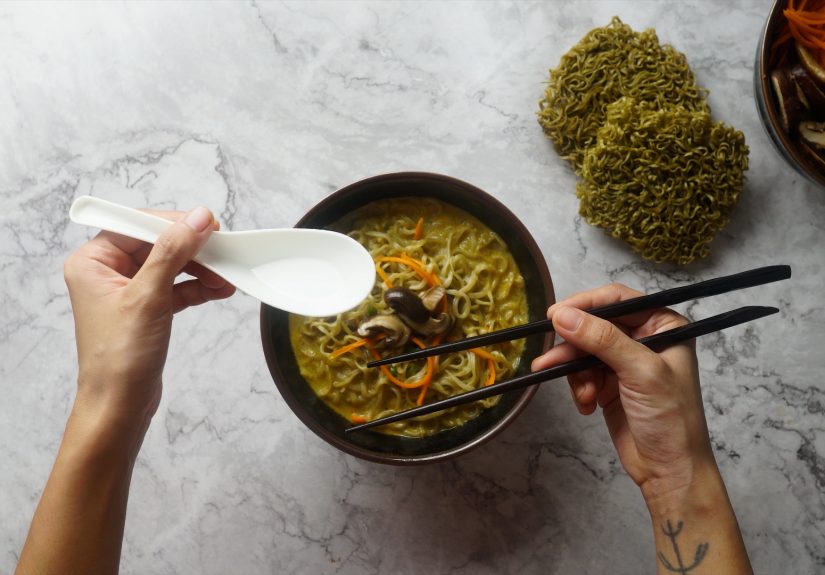
If a noodle bundle feels slippery, place your ramen spoon under it for support. This is especially helpful for beginners, kids, or anyone wearing a white shirt and living dangerously. The chopsticks guide the noodles, while the spoon catches broth and small toppings.
You can also build a balanced bite by placing noodles in the spoon, adding a small amount of broth, and topping it with scallion, corn, bamboo shoots, or a piece of chashu. This method is tidy, flavorful, and excellent for people who want the ramen experience without the “noodle slap” subplot.
Step 6: Slurp the Noodles While They Are Hot
In many ramen settings, slurping noodles is acceptable and even expected. Slurping helps cool the noodles slightly as they enter your mouth, brings in aroma, and makes the bite feel more complete. It does not need to sound like a leaf blower. A controlled slurp is enough.
The move is simple: lift a small bundle, bring it close to your mouth, and gently inhale as you eat the noodles. You can bite off the noodles if the bundle is too long. Do not panic if you are not a natural slurper. Some people slurp like professionals; others sound like they are negotiating with a tiny vacuum cleaner. Both groups still get dinner.
Step 7: Alternate Between Noodles, Broth, and Toppings
Ramen is best enjoyed as a rhythm: noodles, broth, topping, repeat. Start with a sip of broth to understand the flavor. Is it salty and clear like shoyu? Rich and creamy like tonkotsu? Deep and nutty like miso? Then move to the noodles while they are still firm.
Use chopsticks for larger toppings such as chashu pork, soft-boiled egg, mushrooms, nori, spinach, or bamboo shoots. Use the spoon for broth, corn, minced garlic, chili oil, or smaller bits that like to hide at the bottom. This back-and-forth keeps every bite interesting and prevents the noodles from sitting too long and becoming soft.
Step 8: Eat at a Steady Pace
Ramen waits for no one. Once the noodles sit in hot broth, they continue absorbing liquid and softening. That does not mean you need to inhale the bowl like you are late for a train, but ramen is generally more enjoyable when eaten while fresh and hot.
Put your phone down after the photo. Yes, the ramen is beautiful. Yes, the egg deserves its close-up. But after a quick picture, start eating. Your noodles have a short golden window where they are springy, warm, and perfectly coated in broth. Do not let social media steal your best bite.
Step 9: Follow Basic Chopstick Etiquette
Good ramen manners are simple. Do not stick your chopsticks upright in the bowl. Do not point with them. Do not wave them around while talking. Do not spear noodles or toppings unless you are in a true emergency, such as “that egg is escaping and I have emotionally bonded with it.”
When you pause, place the chopsticks on a chopstick rest if one is provided. If you are using disposable chopsticks, you can rest them on the wrapper. Avoid leaving them jammed into the food or crossed messily on the table. The goal is not to perform formal dining theater; it is to show basic respect for the food, the table, and the people eating with you.
Step 10: Finish Your Way, Without Stress
Do you have to drink all the broth? Not necessarily. Some ramen broths are rich, salty, or heavy. It is perfectly fine to enjoy the noodles and toppings and leave some broth behind. If the broth is amazing and you want every last sip, use the spoon or lift the bowl carefully if that feels appropriate in the setting.
The final step is simple: enjoy the bowl. Ramen is casual comfort food with deep craft behind it. You can respect the technique without becoming stiff about it. If you drop a noodle, laugh. If you need a fork, ask for one. If you improve each time, congratulationsyou are now training in the delicious martial art of noodle management.
Common Mistakes When Eating Ramen with Chopsticks
Grabbing Too Many Noodles
A giant noodle bundle looks impressive until it becomes impossible to eat. Smaller bites are easier to control, easier to cool, and less likely to splash broth.
Holding the Bowl Too Far Away
Keep the bowl close. Ramen is not a long-distance sport. Shorter noodle travel means cleaner eating and fewer surprise stains.
Using Chopsticks Like Scissors
Do not saw, stab, or aggressively separate noodles. Lift gently, shake lightly, and let the noodles loosen naturally.
Waiting Too Long to Start
Ramen noodles soften as they sit in broth. Take photos quickly, then eat while the texture is still lively.
Helpful Tips for Beginners
If you are new to chopsticks, practice with dry foods before tackling ramen. Try picking up pieces of cooked pasta, baby carrots, popcorn, or marshmallows. Once your fingers understand the motion, noodles become much less intimidating.
Disposable wooden chopsticks can be easier for beginners because they have a little texture. Smooth lacquered chopsticks look elegant but may feel slippery, especially with oily broth. If you are eating at home, start with wooden or bamboo chopsticks until your grip improves.
Also, avoid overthinking the “perfect” chopstick hold. A standard grip helps, but comfort matters. If your chopsticks open and close cleanly, you can lift noodles without dropping them, and nobody at the table looks alarmed, you are doing fine.
Best Ramen Toppings to Pick Up with Chopsticks
Some toppings are chopstick-friendly. Chashu pork, nori sheets, narutomaki, mushrooms, bamboo shoots, and soft-boiled eggs can usually be picked up with chopsticks. For the egg, be gentle. A jammy ramen egg is a treasure, not a stress ball.
Other toppings work better with a spoon. Corn, chopped scallions, sesame seeds, minced garlic, and tiny bits of ground meat can be hard to chase with chopsticks. Use the spoon and save yourself the awkward table battle. Nobody wins a fight against one floating corn kernel.
How to Eat Different Types of Ramen with Chopsticks
Shoyu Ramen
Shoyu ramen usually has a soy sauce-based broth that is clear, savory, and aromatic. Lift small noodle bundles and sip broth between bites to enjoy the balance.
Miso Ramen
Miso ramen is often richer and may include corn, butter, bean sprouts, or ground meat. Use chopsticks for noodles and larger toppings, then use the spoon to capture the flavorful bits at the bottom.
Tonkotsu Ramen
Tonkotsu ramen has a creamy pork bone broth and often thinner noodles. These noodles can be easier to lift in small bundles, but they may cling together. Shake gently before slurping.
Spicy Ramen
With spicy ramen, avoid lifting a huge bundle too quickly. Chili oil travels. Your shirt may not be ready for that relationship. Start small and keep the spoon nearby.
Personal Experience: What Eating Ramen with Chopsticks Teaches You
The first time many people try to eat ramen with chopsticks, they discover an important truth: noodles have ambition. They do not simply sit there waiting politely. They slide, twist, splash, and occasionally leap back into the bowl like they have unfinished business. That is part of the fun.
One of the best experiences with ramen is learning that skill comes quickly when you stop trying to look perfect. At first, you may hold the chopsticks too tightly. Your hand may cramp. You may lift six noodles and arrive at your mouth with only two. This is normal. The goal is not to impress the ramen shop. The goal is to enjoy the ramen while slowly getting better.
A useful trick is to begin with toppings before going for the noodles. Pick up a slice of pork, a mushroom, or a piece of seaweed. These foods are easier to grip than slippery noodles, and they help your fingers understand the pressure needed. After that, try lifting a small noodle bundle. The first clean bite feels strangely satisfying, like unlocking a tiny achievement badge that says, “Congratulations, you are now less afraid of soup.”
Another lesson is that ramen teaches pacing. If you eat too slowly, the noodles soften. If you eat too quickly, you may burn your mouth or miss the details of the broth. The sweet spot is steady and relaxed. Take a sip of broth, lift some noodles, enjoy a topping, and repeat. It becomes a rhythm. After a while, you stop thinking about the chopsticks and start noticing the flavor: the garlic in the oil, the sweetness of corn, the richness of the egg yolk, the chew of the noodles.
Eating ramen with chopsticks also makes you more aware of balance. A good bite is not just noodles. It might be noodles with a little broth, a few scallions, and a bite of pork. Or noodles with chili oil and half a spoonful of miso broth. The chopsticks help you choose what goes into each bite, which makes the bowl feel more personal. You are not just eating soup; you are composing tiny noodle scenes.
There is also a social comfort to ramen. In many restaurants, ramen is not treated like a quiet, formal meal. People lean over bowls, slurp, sip, and focus on the food. That atmosphere can be freeing, especially if you are nervous about using chopsticks in public. Most people are too busy enjoying their own bowls to judge yours. And if a noodle falls? It has happened before. It will happen again. The ramen community survives.
At home, ramen is even more forgiving. You can practice with instant noodles, upgrade the bowl with an egg or vegetables, and test different chopsticks. Wooden chopsticks may give you more grip. Longer chopsticks may feel elegant but harder to control. A deep spoon can help you catch noodles and broth together. After a few bowls, you will naturally learn what works for you.
The biggest experience-based tip is this: make the bowl easy to eat before you begin. Loosen the noodles gently. Move large toppings to the side. Keep napkins nearby. Wear something that does not treat every broth splash as a tragedy. Then take small bites and relax. Confidence with chopsticks is built one noodle at a time.
Eventually, eating ramen with chopsticks becomes less about technique and more about enjoyment. You lift, slurp, sip, and smile. You notice how the noodles carry broth. You appreciate why the spoon matters. You understand why people get passionate about ramen shops, noodle firmness, and broth styles. And perhaps most importantly, you realize that a messy first attempt is not failure. It is simply the entrance fee to a better bowl next time.
Conclusion
Learning how to eat ramen with chopsticks is easier when you break it into small steps: hold the chopsticks correctly, lift modest noodle bundles, support tricky bites with a spoon, slurp confidently, and follow simple ramen etiquette. The more you practice, the more natural it feels.
Ramen is meant to be enjoyed while hot, flavorful, and fresh. Do not let fear of chopsticks ruin a great bowl. Start small, laugh at the occasional noodle mishap, and remember that every ramen expert was once a beginner facing a slippery noodle with hope in their heart.
Note: This article synthesizes practical ramen dining guidance from reputable culinary, travel, and Japanese culture references, written in original language for web publication.