Table of Contents >> Show >> Hide
- The Blue Origin Flight That Launched a Thousand Memes
- Why Caitlin Reilly’s Roast Went Viral
- Katy Perry Became the Main Character, Again
- Lauren Sánchez and the “Girlboss in Orbit” Problem
- Was the Backlash Sexist, Fair, or Both?
- Why the Internet Chose Comedy Over Celebration
- The Role of Other Celebrity Reactions
- What Caitlin Reilly’s Parody Says About Modern Fame
- Commercial Space Tourism Meets Pop-Culture Accountability
- Experience-Based Reflection: What This Viral Moment Teaches Content Creators, Brands, and Public Figures
- Conclusion
The internet loves a spectacle, but it loves a perfectly timed roast even more. That is exactly why comedian Caitlin Reilly’s viral parody of the Blue Origin space flight featuring Katy Perry, Lauren Sánchez, Gayle King, Aisha Bowe, Amanda Nguyen, and Kerianne Flynn took off almost as fast as the rocket itself. The mission was promoted as a historic all-female trip to the edge of space. The online reaction, however, quickly became a pop-culture meteor shower of jokes, side-eyes, think pieces, and celebrity commentary.
The phrase “Caitlin never misses” began circulating because Reilly’s comedy landed in the exact emotional zone many viewers were already occupying: not anti-woman, not anti-science, but deeply allergic to glossy celebrity branding dressed up as world-saving symbolism. Her sketch mocked the breathless “yaaas queen” tone surrounding the launch, turning the entire media rollout into a satire of performative empowerment, luxury PR, and the modern internet’s favorite sport: asking, “Are we supposed to clap?”
The Blue Origin Flight That Launched a Thousand Memes
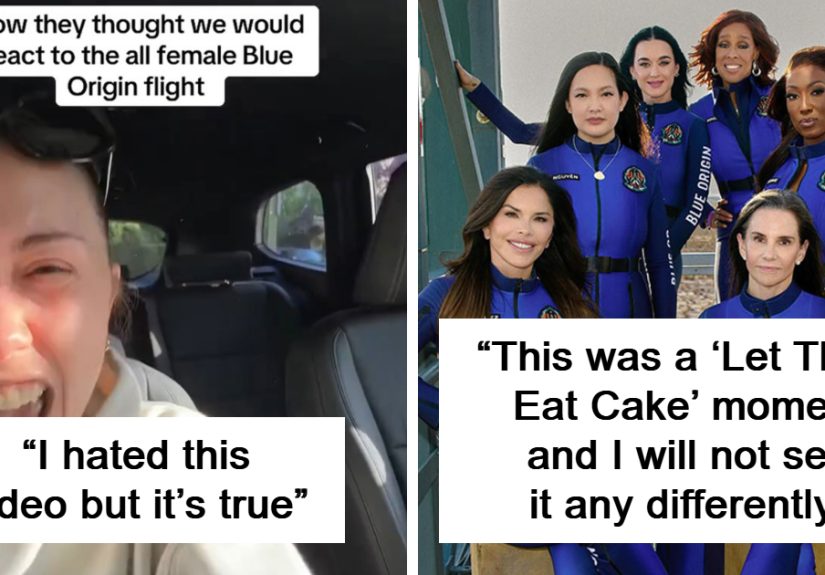
On April 14, 2025, Blue Origin completed its NS-31 mission, sending six women on a brief suborbital flight aboard New Shepard. The crew included pop star Katy Perry, journalist and pilot Lauren Sánchez, CBS host Gayle King, former NASA rocket scientist Aisha Bowe, civil rights advocate Amanda Nguyen, and film producer Kerianne Flynn. Blue Origin framed the mission as a milestone for representation, inspiration, and the future of commercial space travel.
The trip lasted roughly 10 to 11 minutes, reaching the edge of space and offering the passengers several minutes of weightlessness before returning safely to West Texas. By technical and historical standards, the mission had significance: it was widely described as the first all-female spaceflight since Soviet cosmonaut Valentina Tereshkova’s solo mission in 1963. That is not nothing. In fact, it is quite something.
But online culture rarely lets a “quite something” remain simple. The public did not just see a spaceflight. It saw celebrities in custom flight suits, a billionaire-backed space tourism company, glamorous pre-launch media coverage, and emotional statements about empowerment at a time when many people were worried about rent, groceries, climate change, and economic stress. Suddenly, the conversation shifted from “women in space” to “wait, what exactly are we celebrating?”
Why Caitlin Reilly’s Roast Went Viral
Caitlin Reilly is known for sharp character comedy that captures a very specific kind of social absurdity. In her parody, she exaggerated the imagined public reaction to the all-female Blue Origin flight, poking fun at the idea that everyone was supposed to treat the event as a civilization-level breakthrough. Her caption, centered on “how they thought we would react,” became the engine of the joke.
The humor worked because it did not need a complicated setup. Viewers already understood the target: corporate feminism with a luxury filter. Reilly’s performance suggested that the public was being asked to respond with overwhelming emotion to a privately funded celebrity space trip. The sketch did not deny that the women involved had accomplishments. Instead, it mocked the packaging the carefully lit, brand-friendly, inspirational language that made the mission feel less like science and more like a very expensive motivational poster.
That distinction matters. Aisha Bowe’s aerospace background and Amanda Nguyen’s advocacy work gave the crew genuine depth beyond celebrity headlines. Gayle King’s long media career and Lauren Sánchez’s role in organizing the mission also added context. Still, the online conversation focused heavily on Katy Perry and Sánchez because they represented the flashiest parts of the story: fame, wealth, glamour, and proximity to Jeff Bezos.
Katy Perry Became the Main Character, Again
Katy Perry has lived through multiple internet eras: the candy-colored pop domination era, the “purposeful pop” era, the meme era, and now the “why is she in space?” era. During the flight, Perry reportedly sang “What a Wonderful World” and brought a daisy as a tribute to her daughter, Daisy. These details were sweet on paper, but online audiences can be brutally resistant to sincerity when the surrounding optics feel off.
After landing, Perry kissed the ground, a gesture that might have seemed emotional in another context. In this context, it became meme fuel. Critics argued that the moment felt overly theatrical for a short suborbital trip. Fans defended her by saying she was simply overwhelmed. Both things can be true: she may have felt genuine awe, and the internet may still have found the scene unintentionally funny.
Reilly’s joke about Perry’s next album being “about space” worked because it played into a familiar pop-star pattern: every big life event becomes branding, every symbol becomes merch-adjacent, and every dramatic moment can be read as album-cycle material. That may be unfair to Perry as a person, but it is extremely recognizable as a celebrity culture joke.
Lauren Sánchez and the “Girlboss in Orbit” Problem
Lauren Sánchez was central to the mission’s public image. As a journalist, pilot, author, and Jeff Bezos’ fiancée at the time, she helped bring the crew together and spoke about inspiring future generations. Supporters saw her as a woman using access and influence to spotlight female achievement. Critics saw something else: a billionaire-adjacent space trip wrapped in empowerment language.
The phrase “girlboss” has changed dramatically over the last decade. It once suggested ambition, independence, and women breaking barriers. Now, it is often used sarcastically when empowerment messaging appears to serve branding more than structural change. That is why the Blue Origin flight became such a perfect target. It had real symbolism, but it also had enough luxury aesthetics to make the symbolism feel, to some viewers, like a designer handbag floating in zero gravity.
Sánchez and Gayle King defended the mission by emphasizing inspiration, representation, and the hard work of Blue Origin employees. That defense is understandable. Spaceflight is not casual, even when the passengers are famous. Engineers, technicians, mission planners, and safety teams make these launches possible. The problem was never that people worked hard. The problem was that the public was not convinced the celebrity framing deserved the emotional response it seemed to request.
Was the Backlash Sexist, Fair, or Both?
One of the most complicated parts of the debate is whether the criticism carried a sexist double standard. Gayle King argued that people do not usually call men’s spaceflights “rides” with the same dismissive tone. That point deserves attention. Women in public life are often mocked more aggressively for their clothes, emotions, voices, and facial expressions than men are for similar behavior.
At the same time, not every criticism of the mission was rooted in sexism. Many critics objected to commercial space tourism itself, celebrity excess, environmental concerns, economic inequality, and the way the flight was promoted as a feminist milestone. People were not only asking, “Why women?” They were asking, “Why this version of progress?”
The fairest reading is that the backlash contained multiple layers. Some jokes were lazy pile-ons aimed mostly at Katy Perry because she was the easiest target. Some criticism was thoughtful and focused on the gap between symbolic representation and material change. Some reactions were simple meme culture: fast, funny, and not always careful. Caitlin Reilly’s parody succeeded because it turned that messy collective feeling into a character, a voice, and a punchline.
Why the Internet Chose Comedy Over Celebration
The Blue Origin flight arrived in an era when audiences are skeptical of celebrity activism. People have seen too many campaigns where empowerment language is used to sell products, soften reputations, or transform private luxury into public virtue. So when a space tourism mission was presented as inspirational, many viewers responded with a raised eyebrow so strong it practically needed its own launchpad.
Comedy thrives in that gap between what a brand wants people to feel and what people actually feel. Reilly’s roast did not create the backlash; it organized it. Her video gave viewers permission to laugh at the awkwardness of the messaging without writing a 2,000-word essay about commercial spaceflight, feminism, capitalism, and celebrity culture. Conveniently, that is what articles like this are for.
The strongest jokes often reveal a truth people were already thinking but had not yet packaged into words. In this case, the truth was simple: a short celebrity space trip may be technically impressive and emotionally meaningful to the participants, but it is not automatically immune from public criticism. The higher the inspirational music swells, the more tempting it becomes for a comedian to turn it down.
The Role of Other Celebrity Reactions
Caitlin Reilly was not the only public figure to criticize or mock the mission. Several celebrities and commentators questioned the value of the flight, while others defended the crew. Emily Ratajkowski, Olivia Munn, Olivia Wilde, Amy Schumer, Lily Allen, and even Wendy’s entered the broader conversation in different ways. Wendy’s drew attention with a pointed joke about Perry, while Kesha appeared to wink at the fast-food chain’s jab by posing with one of its cups.
Lily Allen later apologized for singling out Katy Perry, saying her criticism had become unnecessarily personal. That apology highlighted an important shift in the discourse: it is possible to criticize the mission without turning one woman into the internet’s punching bag. Perry herself later addressed the online negativity, describing the internet as a place where people often dump unresolved pain and saying she was trying to respond with grace.
That response did not erase the jokes, but it added humanity to the story. Viral culture often flattens people into symbols: Katy became “space pop star,” Sánchez became “billionaire-adjacent organizer,” and the mission became “girlboss rocket.” Real people are more complicated than the memes about them. Still, memes are powerful because they simplify complicated feelings into something instantly shareable.
What Caitlin Reilly’s Parody Says About Modern Fame
Reilly’s roast worked because modern fame is not just about what celebrities do. It is about how their actions are framed, circulated, defended, mocked, remixed, and reinterpreted. A celebrity can go to space for 10 minutes, but the internet can keep the discourse in orbit for weeks.
The joke was not merely “Katy Perry went to space.” The joke was “Katy Perry went to space, and someone expected us to experience this as a major emotional breakthrough for womankind.” That is a much sharper target. It points to the machinery around celebrity moments: publicists, headlines, sponsorship-friendly language, social media captions, and the never-ending attempt to turn every event into a cultural milestone.
The public is not always cynical because it hates inspiration. Often, it is cynical because it has seen inspiration used as packaging. When people sense that a message is more polished than meaningful, comedians become translators. They take the polished message, scratch the surface, and show the awkward material underneath.
Commercial Space Tourism Meets Pop-Culture Accountability
Blue Origin’s mission sits within a larger trend: private companies turning space travel into a frontier for wealthy civilians, celebrities, entrepreneurs, and cultural figures. Supporters argue that these flights help normalize access to space, fund innovation, and inspire new generations. Critics argue that space tourism remains an elite luxury with questionable public benefit.
Both views can exist at the same time. Private spaceflight may eventually contribute to broader technological progress. It can also look tone-deaf when promoted through celebrity spectacle. The NS-31 mission became controversial because it placed those two realities side by side. On one side: engineering achievement, representation, and personal courage. On the other: wealth, image management, environmental anxiety, and public fatigue.
Caitlin Reilly’s video became the comedic headline because it captured the emotional mismatch. The mission wanted awe. The internet gave it jokes. The brand wanted inspiration. The audience asked for receipts. The flight went up and came down safely, but the discourse stayed airborne.
Experience-Based Reflection: What This Viral Moment Teaches Content Creators, Brands, and Public Figures
Anyone who works around online content, social media, or public relations can learn from this moment. The biggest lesson is that audiences are not passive anymore. You cannot simply hand people a narrative and expect them to applaud on cue. If a campaign says, “This is empowering,” viewers will immediately ask, “For whom, exactly?” If a celebrity moment says, “This is historic,” people will ask, “Is it historic in substance or just historic in headline language?”
From a content strategy perspective, Caitlin Reilly’s parody shows why emotional timing beats production value. Blue Origin had the rocket, the visuals, the celebrity names, the custom suits, and the official language. Reilly had a camera, a character, and a brutally accurate read of public mood. In the attention economy, that can be enough to win the conversation.
For brands, the experience is a reminder that empowerment messaging must be handled carefully. Audiences can support women in STEM and still reject a campaign that feels overly self-congratulatory. They can admire Aisha Bowe’s background and Amanda Nguyen’s advocacy while still finding the celebrity-heavy rollout awkward. Public reaction is rarely one-dimensional, and treating criticism as simple negativity can make people feel even more unheard.
For celebrities, the lesson is even sharper: sincerity does not always protect you from satire. Katy Perry may have genuinely felt moved by the experience. Lauren Sánchez may have genuinely wanted to inspire girls. Gayle King may have genuinely believed the mission had historic value. But once a public moment is released into the internet, it becomes raw material. People will edit it, joke about it, argue over it, and attach it to broader frustrations.
This is also a useful reminder for writers and publishers. The best articles about viral moments should not simply repeat the joke. They should explain why the joke worked. In this case, the humor landed because the public was already tired of expensive celebrity gestures being framed as collective progress. Reilly did not need to convince people that the optics were strange. She only needed to dramatize what many viewers were already muttering in group chats.
The experience also shows why internet criticism can become excessive. Once a target is chosen, especially a famous woman like Katy Perry, jokes can shift from cultural critique to personal pile-on. That is where the conversation becomes less useful. It is fair to question the mission’s messaging. It is fair to laugh at awkward PR. It is less fair to reduce an entire person to one memeable moment. The smartest commentary keeps the target where it belongs: on the system, the framing, and the public performance of virtue.
Ultimately, the “Caitlin never misses” reaction was not just praise for one comedian. It was a signal that audiences want sharper, more honest cultural commentary. They do not want every celebrity event wrapped in inspirational language. They want context. They want self-awareness. And, when the moment calls for it, they want someone funny enough to say what everyone else is thinking before the rocket smoke clears.
Conclusion
Caitlin Reilly’s roast of Katy Perry, Lauren Sánchez, and the Blue Origin space flight became viral because it captured the exact tension at the center of the moment. The mission was historic, but it was also highly polished. It promoted female representation, but it arrived through the machinery of celebrity wealth. It inspired some viewers, but it made others roll their eyes so hard they nearly entered orbit.
That is why the parody worked. It did not simply mock six women for going to space. It mocked the expectation that the public should automatically treat a short celebrity space tourism mission as a grand feminist victory. In a media world full of branding, Caitlin Reilly’s comedy felt like a pressure valve: sharp, funny, and uncomfortably accurate.
The larger story is not just about Katy Perry, Lauren Sánchez, or Blue Origin. It is about how audiences now respond to fame, wealth, activism, and spectacle. People still want inspiration. They just want it to feel earned. And when it does not, comedians like Caitlin Reilly are ready with the punchline.