Table of Contents >> Show >> Hide
- What Happened in the Magpie Tracking Study?
- The “One Weird Trick”: Teamwork With a Beak
- Why Scientists Think This May Be Rescue Behavior
- Australian Magpies Are Smarter Than Their Yard-Bird Reputation
- Why Researchers Wanted to Track Magpies in the First Place
- The Ethics of Bird Tracking: Tiny Devices, Big Questions
- What This Story Teaches Us About Animal Intelligence
- Why the Internet Fell in Love With the Escape Artist Magpies
- Specific Examples of Magpie-Like Problem Solving
- How Future Tracking Devices Might Change
- Experience-Based Reflections: What the Magpie Escape Teaches Birdwatchers, Pet Owners, and Curious Humans
- Conclusion
- SEO Tags
Scientists love a neat experiment. Nature, on the other hand, prefers slapstick comedy with feathers. In a now-famous pilot study, researchers placed tiny backpack-like tracking devices on Australian magpies to learn more about their movements, social lives, and daily routines. The plan sounded elegant: fit the birds with lightweight GPS trackers, let them go about their business, collect the data, and celebrate a win for conservation technology.
The magpies had a different agenda.
Within minutes to hours, the birds began helping one another remove the devices. Not by filing a formal complaint. Not by politely requesting a refund. They used their beaks, patience, and teamwork to find the weak point in the harness and snap it free. In other words, Australian magpies turned a wildlife-tracking study into a tiny jailbreak movie.
This strange and charming incident is more than a funny bird story. It offers a fascinating look at animal intelligence, social cooperation, bird behavior, and the unexpected challenges of conservation science. It also reminds us that when humans invent clever technology, animals sometimes respond with a cleverness of their own.
What Happened in the Magpie Tracking Study?
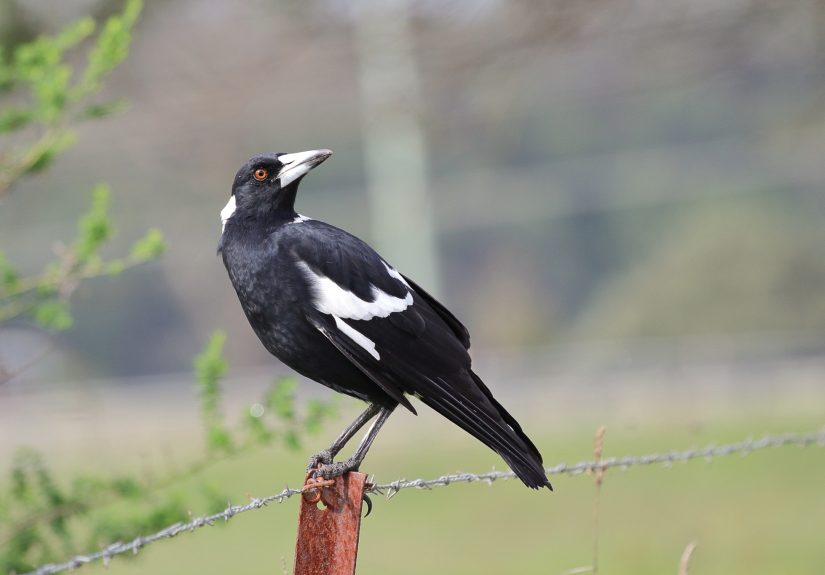
The study focused on Australian magpies, known scientifically as Gymnorhina tibicen. These birds are common across much of Australia and are famous for their black-and-white plumage, flute-like song, territorial confidence, and occasional springtime swooping behavior. They are not closely related to the Eurasian magpie, despite the shared name, but they have earned a similar reputation for being brainy, bold, and very interested in whatever humans are doing.
Researchers wanted to test a new GPS tracking system designed for medium-sized birds. Traditional tracking devices can be too heavy, too short-lived, or too difficult to retrieve. The new design was meant to solve several problems at once. The tracker was tiny, weighing less than a gram, and it was attached with a special backpack-style harness. The system was designed so the birds could return to a feeding station where the device could be wirelessly charged, data could be downloaded, and the harness could eventually be released with a magnet.
On paper, it was brilliant. The harness was strong, reusable, and designed with only one real weak point. According to the research team, it should have required either a magnet or a good pair of scissors to remove. Since magpies do not usually carry scissorsat least not yetthe researchers expected the devices to stay in place long enough to collect useful information.
Five magpies were fitted with the trackers. Then the birds immediately began rewriting the research plan.
The “One Weird Trick”: Teamwork With a Beak
The trick was not magic. It was cooperation. Shortly after the last tracker was fitted, researchers saw an adult female magpie without a tracker approach a younger bird wearing one. She began working at the harness with her bill. The tracked bird did not panic or flee. Instead, it appeared to tolerate the attention, almost as if it understood help was arriving.
The helping bird pecked and pulled until the device was loosened. Other trackers disappeared soon afterward. Within hours, most had been removed. By the third day, even the dominant male’s tracker had been dismantled. For a device built to survive field conditions, that is the bird equivalent of a five-star escape-room performance.
Researchers did not directly observe every removal, so they could not say with total certainty whether one talented “locksmith” magpie did all the work or whether several birds learned the method. Still, the key observation was clear: at least one magpie helped another remove a device, and the behavior appeared targeted rather than random.
The birds seemed to identify the harness as a problem, focus on the vulnerable section, and use social cooperation to solve it. That combinationproblem recognition, physical manipulation, and helping another individualis exactly why this story became so irresistible to scientists and animal lovers alike.
Why Scientists Think This May Be Rescue Behavior
In animal behavior, “rescue behavior” usually means one animal helps another escape a dangerous, uncomfortable, or restrictive situation without receiving an obvious immediate reward. It has been documented in some species, including certain mammals and birds, but it is not something researchers expect to see every day.
The magpie case is especially interesting because the helper was not removing its own device. It was working on another bird’s harness. That suggests the action was not merely self-grooming or irritation. It looked more like a group member noticing that another bird had a problem and stepping in with a beak-shaped solution.
Of course, scientists are careful people. They do not usually say, “This bird is a tiny hero with a feather cape.” The safer interpretation is that the behavior demonstrated cooperation and a moderate level of problem-solving. The magpies may have perceived the tracker as a foreign object, a parasite-like nuisance, or simply something that did not belong on a group member. Whatever the motivation, the result was extraordinary.
The behavior also fits what researchers already know about Australian magpies. These birds live in social groups, defend territories together, communicate with complex calls, and may cooperate in raising young. Their everyday lives require them to remember individuals, negotiate group relationships, recognize threats, and respond flexibly to changing conditions. In short, they are not feathered decorations. They are thinking, watching, socially aware animals.
Australian Magpies Are Smarter Than Their Yard-Bird Reputation
To many Australians, magpies are familiar neighbors. They patrol lawns, sing from rooftops, stroll across sports fields, and occasionally turn cyclists into unwilling participants in low-budget action scenes during breeding season. Because they are so common, it is easy to underestimate them.
But common does not mean simple. Australian magpies have complex vocal abilities and can produce rich, musical caroling calls. They often sing in pairs or groups, and some individuals can mimic other bird species, animals, and even human-made sounds. Their social lives are equally complex. Groups may contain dominant breeding birds, juveniles, and helpers, with relationships shaped by age, sex, rank, territory, and experience.
Research has also linked social living in Australian magpies with cognitive performance. Birds in larger groups may face more social challenges, and those challenges can favor better problem-solving skills. Imagine living in a family group where everyone has opinions, territory must be defended, food must be found, and the neighbors are also birds with opinions. A good brain is useful.
That background makes the tracking-device escape less shocking, though still delightful. Magpies already had the ingredients: social awareness, physical dexterity, patience, and a reason to care about what was happening to another group member. The tracker simply created a new puzzle.
Why Researchers Wanted to Track Magpies in the First Place
The study was not designed to annoy birds. It had a practical conservation purpose. Tracking devices help researchers understand how animals move through landscapes, where they feed, how they use urban spaces, and how they respond to environmental stress.
For Australian magpies, this information matters because they are highly adapted to human-shaped environments. They live in parks, suburbs, farmland, and open areas with scattered trees. As cities grow hotter and habitats change, researchers want to know how birds cope. Do they travel farther for food? Do they avoid certain areas? Do juveniles behave differently from adults? Do dominant birds control the best spaces? GPS data can help answer those questions.
Modern conservation technology can be powerful. Camera traps, acoustic sensors, satellite tags, drones, GPS loggers, and bio-loggers have transformed how scientists study wildlife. These tools can reveal hidden patterns that human observers would miss. But technology must be designed around the animal, not just the research question.
The magpie study is a perfect reminder that field testing matters. A device can work beautifully in the lab, pass durability tests, and still fail when placed on a socially intelligent animal with a sharp beak and helpful friends.
The Ethics of Bird Tracking: Tiny Devices, Big Questions
Wildlife tracking always involves a balance. Researchers need data to protect animals and habitats, but the devices must not harm the individuals carrying them. For birds, weight is a major concern. Devices are generally designed to be only a small percentage of the bird’s body mass, and the lightest suitable option is usually preferred.
Weight is not the only issue. Shape, attachment style, harness material, fit, duration, and species behavior all matter. A tracker that works well for one bird may be unsuitable for another. A seabird, a raptor, a hummingbird, and a magpie all have different bodies, lifestyles, and levels of tolerance for wearing human-made equipment.
That is why pilot studies are essential. They reveal unexpected problems before larger studies begin. In this case, the unexpected problem was not that the device was too heavy or obviously harmful. It was that the birds treated the harness as removableand then proved they were right.
The research still produced valuable knowledge. It showed that social species may respond to tracking equipment in ways that individual-focused testing does not predict. If one bird can remove another’s device, researchers must consider group behavior when designing future trackers. The magpies did not ruin the science. They improved it by exposing a blind spot.
What This Story Teaches Us About Animal Intelligence
The tracking-device escape is funny because it reverses expectations. Humans appear as the clever inventors; birds appear as the test subjects. Then the birds calmly inspect the invention and say, in effect, “No, thank you.”
But the deeper lesson is about intelligence in the wild. Animal intelligence is not about performing circus tricks or solving puzzles humans find impressive. It is about meeting real challenges in real environments. For a magpie, intelligence might mean remembering a friendly human face, recognizing a predator, coordinating with group members, finding food underground, learning local calls, or identifying the weak point in a suspicious new backpack.
The “one weird trick” was not a gimmick. It was applied cognition. The birds observed, manipulated, cooperated, and adapted. That is the kind of intelligence evolution often rewards: practical, social, and flexible.
Why the Internet Fell in Love With the Escape Artist Magpies
The story spread quickly because it has everything the internet enjoys: smart animals, scientists being politely defeated, and a headline that sounds like clickbait but is somehow true. The phrase “one weird trick” usually belongs to dubious ads about belly fat or miracle cleaning hacks. Here, the weird trick was real: get a friend with a beak.
People also connected with the birds because the behavior feels oddly relatable. Nobody likes wearing uncomfortable equipment. Many people have had the experience of helping a friend with a stuck zipper, tangled necklace, backpack strap, or piece of tape that somehow becomes a life crisis. The magpies gave us the bird version of, “Hold still, I’ve got this.”
There is also something satisfying about animals refusing to behave like passive subjects. The magpies were not aggressive. They were not chaotic. They simply solved a problem from their own point of view. Humans called it a tracking device. The birds called it removable.
Specific Examples of Magpie-Like Problem Solving
Australian magpies are not the only birds known for clever behavior. Crows, ravens, parrots, jays, cockatoos, and some songbirds have demonstrated impressive learning and problem-solving abilities. Birds can use tools, remember faces, plan routes, copy behaviors, and adjust strategies based on experience.
What makes the magpie tracker case special is the social dimension. The bird was not simply solving its own puzzle. It helped another bird. That distinction matters because cooperation requires more than curiosity. The helper had to approach the tracked bird, tolerate close contact, focus on the harness, and persist long enough to remove it.
The tracked bird also had a role. It had to allow the helper to work near its body. For a wild animal, that level of tolerance is not trivial. It suggests trust or at least a stable social relationship. In a species that lives in tight groups, those relationships can be powerful tools for survival.
How Future Tracking Devices Might Change
After the magpie jailbreak, researchers have several design lessons to consider. Future devices for highly social birds may need smoother surfaces, protected weak points, different attachment methods, faster data collection, or release systems that cannot be activated by a determined bill. Scientists may also need to observe group responses before assuming a harness is secure.
Another option is to rethink whether backpack-style trackers are always the best method. Depending on the research goal, scientists may use leg bands, temporary adhesive tags, camera monitoring, acoustic recording, automated feeding stations, or other non-invasive tools. The best method depends on the question being asked and the welfare of the animals involved.
The bigger point is that good conservation science must remain humble. Animals are not gadgets with feathers attached. They are active participants in the study environment. Sometimes they cooperate. Sometimes they hide. Sometimes they remove your expensive equipment with surgical precision and leave you staring at the grass.
Experience-Based Reflections: What the Magpie Escape Teaches Birdwatchers, Pet Owners, and Curious Humans
Stories like this are useful because they turn abstract science into something people can feel. Anyone who has watched birds closely knows they are not background noise. Spend enough time in a yard, park, campus, or city street, and birds begin to look less like “wildlife” in the generic sense and more like neighbors with schedules, preferences, grudges, and favorite perches.
Many birdwatchers have had the experience of being recognized by local birds. You step outside at the same time each morning, and a familiar bird appears before you even reach the path. It may not know your name, but it knows your pattern. If you refill a birdbath, drop crumbs by accident, garden in the same corner, or walk a dog along the same route, birds often notice. Magpies, in particular, are famous for paying attention. They watch faces, movements, routines, and threats. That habit of observation is exactly the kind of skill that could help them notice something strange on a group member’s back.
The magpie tracker story also offers a practical lesson for anyone who works around animals: comfort and trust matter. Whether fitting a dog with a harness, placing a collar on a cat, banding a bird, or introducing a new object into an animal’s environment, humans often focus on the equipment. Animals focus on how it feels and whether it interferes with normal behavior. A device that seems lightweight and harmless to a person may feel irritating, suspicious, or socially meaningful to the animal wearing it.
There is also a teamwork lesson hidden in the comedy. The helping magpie did not need a lecture, spreadsheet, or motivational poster. It saw a problem and acted. The tracked bird accepted assistance. Together they did what neither may have done as efficiently alone. Human teams could learn from that: sometimes cooperation is not dramatic. It is simply noticing, moving closer, and helping remove whatever is weighing someone down.
For families, teachers, and science communicators, this story is a wonderful doorway into bigger conversations. Children who hear about magpies removing trackers often start asking excellent questions. How do birds think? Do animals help their friends? How do scientists study wildlife without hurting it? What happens when an experiment fails? Those questions are more valuable than a perfect data set because they invite curiosity. They show science as a living process, not a cold list of facts.
Finally, the story encourages patience when observing nature. The most interesting behavior often appears when we stop rushing. A bird tugging at a strap may look like a small moment. Watch longer, and it becomes cooperation. Watch carefully, and it becomes evidence. Watch with humility, and it becomes a reminder that the world is full of minds unlike our own, solving problems in ways we might never predict.
Conclusion
The tale of magpies helping each other escape tracking devices is funny, clever, and scientifically meaningful all at once. Researchers hoped to study movement patterns, but the birds delivered an unexpected lesson in cooperation. By identifying the weak point in a harness and helping group members remove it, Australian magpies demonstrated the kind of flexible problem-solving that makes animal behavior so endlessly fascinating.
This does not mean magpies are plotting against science from secret treetop headquartersalthough, frankly, we should not rule out a committee. It means animals are active, intelligent participants in their environments. They notice. They learn. They help. And sometimes, they turn a carefully designed GPS study into one of the best bird stories on the internet.