Table of Contents >> Show >> Hide
- Why This Corn Chowder With Bacon Recipe Works
- Ingredients for Creamy Corn Chowder With Bacon
- Best Corn to Use for Bacon Corn Chowder
- Step-by-Step Instructions
- Recipe Timing and Yield
- Tips for the Best Corn Chowder With Bacon
- Fresh, Frozen, or Canned Corn: Which Is Best?
- How to Make Corn Chowder Thicker
- How to Make It Lighter
- Delicious Variations
- What to Serve With Corn Chowder With Bacon
- How to Store and Reheat Leftovers
- Can You Freeze Corn Chowder?
- Common Mistakes to Avoid
- Experience Notes: What Cooking Corn Chowder With Bacon Teaches You
- Conclusion
Corn chowder with bacon is the kind of comfort food that walks into the kitchen wearing a flannel shirt and carrying a wooden spoon. It is creamy, smoky, sweet, hearty, and just rustic enough to make you feel like you did something impressiveeven if the most dramatic moment was successfully not burning the bacon. This recipe brings together tender potatoes, sweet corn, crisp bacon, aromatic vegetables, and a silky broth for a bowl that tastes like summer cornfields met a cozy fall sweater.
The beauty of a great corn chowder with bacon recipe is balance. Corn brings natural sweetness, bacon adds savory depth, potatoes give body, and cream ties everything together like the friend who somehow organizes the group dinner. Whether you use fresh corn in peak season, frozen corn from the freezer, or canned corn in a weeknight emergency, this chowder can still deliver big flavor with a little technique and a lot of common sense.
Why This Corn Chowder With Bacon Recipe Works
A good chowder should be thick but not gluey, creamy but not heavy, and flavorful enough that nobody reaches for hot sauce out of boredom. This version uses bacon fat to sauté the vegetables, which builds a smoky foundation before the broth ever enters the pot. Then potatoes simmer until tender, corn adds sweetness, and a small amount of flour helps create a spoon-coating texture without turning the soup into wallpaper paste.
Many classic chowder recipes rely on the same core technique: start with fat, soften aromatics, add a thickener, simmer the vegetables, and finish with dairy. Here, bacon does double duty. It provides the cooking fat and becomes a crisp topping at the end. That means every spoonful gets a creamy base, while every bite with bacon on top gets that crunchy, salty “yes, I made the right dinner choice” moment.
Ingredients for Creamy Corn Chowder With Bacon
Main Ingredients
- 6 slices thick-cut bacon, chopped
- 1 medium yellow onion, diced
- 2 celery ribs, diced
- 1 medium carrot, diced
- 3 cloves garlic, minced
- 3 tablespoons all-purpose flour
- 4 cups low-sodium chicken broth, or vegetable broth
- 3 cups corn kernels, fresh, frozen, or drained canned corn
- 1 pound Yukon Gold potatoes, diced into small cubes
- 1 cup half-and-half, or heavy cream for a richer chowder
- 1 teaspoon smoked paprika
- 1/2 teaspoon dried thyme, or 1 teaspoon fresh thyme
- Salt and black pepper, to taste
- 2 tablespoons chopped fresh parsley or chives, for garnish
Optional Flavor Boosters
- 1 bay leaf for a deeper soup base
- 1/2 cup diced red bell pepper for color and mild sweetness
- 1/4 teaspoon cayenne pepper for gentle heat
- 1/2 cup shredded cheddar cheese for a richer finish
- Fresh corn cobs, simmered in the broth for extra corn flavor
Best Corn to Use for Bacon Corn Chowder
Fresh corn is wonderful when it is in season because the kernels are juicy, sweet, and full of natural starch. If you are using fresh corn, cut the kernels off the cob and scrape the back of the knife along the cob to collect the milky corn juices. That little step makes the chowder taste more like corn and less like “vegetables happened near cream.”
Frozen corn is the best year-round option. It is picked and frozen at peak ripeness, and it goes straight into the pot without much fuss. Canned corn also works, especially when you want a fast pantry meal, but drain it well and taste before adding extra salt. Cream-style corn can be used to replace part of the kernels if you want a sweeter, thicker chowder.
Step-by-Step Instructions
Step 1: Cook the Bacon
Place the chopped bacon in a large Dutch oven or heavy soup pot over medium heat. Cook for 7 to 9 minutes, stirring occasionally, until the bacon is crisp and the fat has rendered. Use a slotted spoon to transfer the bacon to a paper towel-lined plate. Leave about 2 tablespoons of bacon fat in the pot. If there is extra, spoon it out and save it for eggs, roasted potatoes, or future heroic kitchen behavior.
Step 2: Sauté the Vegetables
Add the onion, celery, and carrot to the bacon fat. Cook for 5 to 6 minutes, stirring often, until the vegetables soften and the onion turns translucent. Add the garlic and cook for 30 seconds, just until fragrant. Do not let the garlic brown too much; bitter garlic can crash a soup party faster than a smoke alarm.
Step 3: Add Flour for Thickness
Sprinkle the flour over the vegetables and stir well. Cook for about 1 to 2 minutes. This step helps remove the raw flour taste and creates a light roux that thickens the chowder. The mixture may look a little pasty, but that is exactly what you want. Chowder magic is not always glamorous at first.
Step 4: Pour in the Broth
Slowly pour in the chicken broth while stirring to prevent lumps. Scrape the bottom of the pot to release the browned bits left from the bacon and vegetables. Those little browned bits are flavor treasure. Add the potatoes, corn, smoked paprika, thyme, bay leaf if using, and a pinch of salt and pepper.
Step 5: Simmer Until Tender
Bring the chowder to a gentle boil, then reduce the heat to medium-low. Simmer uncovered for 15 to 20 minutes, or until the potatoes are fork-tender. Stir occasionally so nothing sticks to the bottom. If using fresh corn cobs, add them during this simmering stage and remove them before blending or serving.
Step 6: Blend Part of the Chowder
For a naturally creamy texture, blend about 2 cups of the soup and return it to the pot. You can use an immersion blender directly in the pot and pulse just a few times, or transfer a portion to a countertop blender. Do not blend the whole pot unless you want corn chowder baby food, which is probably not the dinner goal.
Step 7: Finish With Cream
Reduce the heat to low and stir in the half-and-half or heavy cream. Warm gently for 3 to 5 minutes, but do not boil after adding the dairy. Boiling can cause the chowder to separate or become grainy. Taste and adjust the seasoning with more salt, pepper, or smoked paprika as needed.
Step 8: Serve With Crispy Bacon
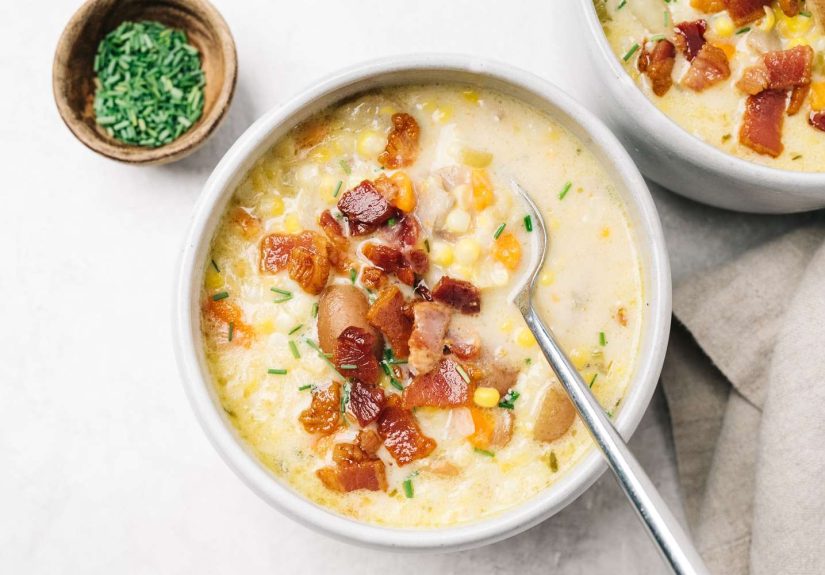
Ladle the corn chowder into bowls and top with the reserved crispy bacon. Add fresh parsley, chives, cracked black pepper, or shredded cheddar if desired. Serve hot with crusty bread, biscuits, cornbread, or a simple green salad.
Recipe Timing and Yield
- Prep time: 15 minutes
- Cook time: 35 minutes
- Total time: 50 minutes
- Servings: 6 bowls
- Skill level: Easy to moderate
Tips for the Best Corn Chowder With Bacon
Use Yukon Gold Potatoes
Yukon Gold potatoes are ideal because they become tender and creamy without falling apart too quickly. Russet potatoes can work, but they release more starch and may make the chowder thicker. Red potatoes hold their shape well, though they create a slightly less creamy texture.
Do Not Rush the Bacon
Bacon should be cooked over medium heat, not blasted over high heat. Slow rendering gives you crisp pieces and flavorful fat for the vegetables. If the bacon burns, the whole chowder can taste smoky in the wrong way, like a campfire that made bad decisions.
Season in Layers
Bacon and broth can both be salty, so season carefully. Add a small amount of salt early, then taste again after the soup has simmered and the cream has been added. This prevents the chowder from crossing the line between “perfectly seasoned” and “accidentally oceanic.”
Blend for Body, Not Disappearance
Blending part of the chowder gives it a thick, creamy base while still leaving plenty of corn and potato pieces. Texture is part of the charm. A proper bacon corn chowder should feel hearty, not like a smoothie wearing a soup costume.
Fresh, Frozen, or Canned Corn: Which Is Best?
Fresh corn gives the brightest flavor, especially in summer. It also lets you simmer the cobs in the broth, which adds a deeper corn essence. Frozen corn is the most convenient and reliable choice because it tastes sweet even outside corn season. Canned corn is the fastest option and works well when you need dinner with minimal chopping.
For the best flavor, avoid overcooking the corn. Corn kernels only need enough time to warm through and soften slightly. If simmered too long, they can lose their fresh snap and become dull. Add frozen corn directly to the pot, and add canned corn after the potatoes have started to soften.
How to Make Corn Chowder Thicker
If your chowder is thinner than you like, simmer it uncovered for a few extra minutes before adding the cream. You can also mash some of the potatoes against the side of the pot or blend a larger portion of the soup. Another option is to stir 1 tablespoon of cornstarch with 2 tablespoons of cold water, then add the slurry to the simmering chowder.
Avoid adding too much flour late in the process because it can clump and taste raw. The best thickening happens early, when flour is cooked with the vegetables and bacon fat. That creates a smoother texture and a more polished flavor.
How to Make It Lighter
Corn chowder with bacon can be rich, but it does not have to be a full dairy parade. Use half-and-half instead of heavy cream, or replace part of the dairy with whole milk. You can also reduce the bacon to 4 slices and add smoked paprika for extra smoky flavor. For a lighter texture, skip the cheese and use more blended corn and potatoes for natural creaminess.
If you want a vegetable-forward version, add diced bell pepper, zucchini, or extra celery. The chowder will still taste comforting, but it will feel a little brighter and fresher. Balance is the secret: enough bacon to make the soup exciting, enough vegetables to convince yourself you are making excellent life choices.
Delicious Variations
Spicy Corn Chowder With Bacon
Add diced jalapeño with the onion, or stir in cayenne pepper near the end. A few dashes of hot sauce at serving time also work beautifully. The heat balances the sweetness of the corn and the richness of the cream.
Cheddar Bacon Corn Chowder
Stir in 1/2 to 1 cup of shredded sharp cheddar after the heat has been reduced to low. Add the cheese slowly and stir until melted. Sharp cheddar brings a tangy flavor that pairs well with bacon and potatoes.
Chicken Corn Chowder With Bacon
Add 2 cups of cooked shredded chicken during the last 10 minutes of simmering. This turns the chowder into a heartier main dish and is a smart way to use leftover roasted chicken.
Seafood Corn Chowder
Add cooked shrimp, crab, or chopped clams near the end of cooking. Seafood pairs beautifully with sweet corn and smoky bacon, but add it gently so it does not overcook.
What to Serve With Corn Chowder With Bacon
This creamy corn chowder is filling enough to stand alone, but the right side dish can make it feel like a complete meal. Crusty sourdough bread is perfect for dipping. Cornbread doubles down on the corn flavor in the best possible way. A crisp green salad with lemon vinaigrette helps cut through the richness.
For a casual dinner, serve the chowder with grilled cheese sandwiches, garlic toast, or buttermilk biscuits. For a lighter lunch, pair it with sliced tomatoes, cucumber salad, or roasted vegetables. If you are serving guests, offer toppings in small bowls: bacon, chives, cheddar, sour cream, hot sauce, and oyster crackers.
How to Store and Reheat Leftovers
Let the chowder cool slightly, then transfer it to shallow airtight containers and refrigerate within 2 hours. Stored properly, corn chowder with bacon is best enjoyed within 3 to 4 days. Reheat it gently on the stovetop over medium-low heat, stirring often. If the soup thickens in the refrigerator, add a splash of broth or milk to loosen it.
For food safety, leftovers should be reheated until hot throughout, ideally to 165°F. Avoid boiling the chowder aggressively after reheating because dairy-based soups can separate. Slow and steady wins the chowder race.
Can You Freeze Corn Chowder?
You can freeze corn chowder, but dairy-based soups may change texture after thawing. For the best results, freeze the chowder before adding the cream. When ready to serve, thaw it overnight in the refrigerator, warm it gently, and stir in the dairy at the end.
If freezing finished chowder, use an airtight freezer-safe container and leave a little room for expansion. Thaw slowly and whisk gently while reheating. The texture may not be exactly the same as fresh, but the flavor will still be cozy and satisfying.
Common Mistakes to Avoid
Adding Cream Too Early
Cream should go in near the end. If it boils for too long, the chowder can separate or taste heavy. Simmer the vegetables first, then finish with dairy on low heat.
Cutting Potatoes Too Large
Large potato chunks take longer to cook and can make the soup awkward to eat. Small, even cubes cook faster and give every spoonful better balance.
Skipping the Aromatics
Onion, celery, carrot, and garlic may seem basic, but they create the savory base that keeps the chowder from tasting flat. Corn and cream need that support.
Forgetting the Acid
If the chowder tastes rich but slightly dull, add a tiny splash of apple cider vinegar or a squeeze of lemon juice. Acid wakes up the flavors without making the soup taste sour.
Experience Notes: What Cooking Corn Chowder With Bacon Teaches You
Making corn chowder with bacon is one of those kitchen experiences that feels simple on paper but teaches a surprising number of cooking lessons. The first lesson is patience. Bacon needs time to render properly, and if you rush it, you get chewy pieces and uneven fat. But when you let it cook slowly, it rewards you with crisp bits and a smoky base that makes the whole pot taste deeper. It is a small reminder that not every recipe gets better by turning the heat to “volcano.”
The second lesson is how much flavor comes from layering. At first, you have bacon. Then vegetables cook in the bacon fat. Then flour thickens the base. Then broth pulls up the browned bits. Then potatoes and corn simmer together. None of these steps is complicated, but each one adds something useful. By the time cream enters the pot, the soup already has structure. The dairy is not carrying the whole recipe; it is finishing it.
Another experience worth noting is how flexible this chowder can be. I have made versions with fresh summer corn, and the flavor is bright and sweet, almost sunny. I have also made it with frozen corn on a cold evening when the refrigerator looked like it had given up on me, and the result was still excellent. Canned corn works too, especially when paired with good broth and enough aromatics. This is not a fussy recipe that demands perfection. It is more like a friendly neighbor who says, “Use what you have, but please season it.”
Texture is where personal preference enters the chat. Some people love a very thick chowder that can almost hold a spoon upright. Others prefer a looser, soupier bowl. Blending part of the chowder gives you control. Blend a little for a chunky, brothy style. Blend more for a creamy, restaurant-style finish. The best part is that you can adjust as you go, which makes the recipe forgiving for beginners and satisfying for experienced cooks.
This dish also makes you appreciate toppings. The reserved bacon is not just decoration; it brings contrast. A bowl of creamy soup needs crunch, salt, and freshness. Chives, parsley, black pepper, shredded cheddar, or a few oyster crackers can change the mood of the entire bowl. It is like dressing up a comfortable sweater with the right scarfstill cozy, just more intentional.
Corn chowder with bacon is also a great recipe for feeding people. It is familiar enough for picky eaters, hearty enough for hungry guests, and easy enough to make without turning dinner into a kitchen marathon. It reheats well, stretches nicely with bread or salad, and feels special even though the ingredients are everyday staples. That is the real charm: it tastes like comfort, but it does not require culinary gymnastics.
If you are cooking it for the first time, trust the process. Let the bacon crisp. Let the vegetables soften. Let the potatoes become tender before adding cream. Taste before serving. Add herbs at the end. And most importantly, make enough for leftovers, because corn chowder has a sneaky habit of becoming tomorrow’s lunch before anyone has officially approved that plan.
Conclusion
Corn chowder with bacon is a classic comfort food for a reason. It combines sweet corn, smoky bacon, creamy broth, and tender potatoes in a bowl that feels both practical and special. With the right technique, you can make it thick without being heavy, rich without being overwhelming, and flavorful without relying on complicated ingredients.
This recipe is flexible enough for weeknights and satisfying enough for weekend gatherings. Use fresh corn when it is in season, frozen corn when convenience matters, and crispy bacon alwaysbecause some rules exist for the good of humanity. Serve it hot, top it generously, and keep a little extra in the fridge for the next day. Future you will be very grateful.
Note: This article is based on widely used American corn chowder techniques, including bacon rendering, roux-based thickening, partial blending for texture, dairy finishing, and standard leftover safety practices.