Table of Contents >> Show >> Hide
- 1. The Machine Stops by E. M. Forster: The Original Remote-Life Nightmare
- 2. Nineteen Eighty-Four by George Orwell: Surveillance Before Smart Devices
- 3. The Shockwave Rider by John Brunner: Computer Worms, Data Power, and Networked Identity
- 4. Neuromancer by William Gibson: Cyberspace Gets Its Neon Name
- 5. Do Androids Dream of Electric Sheep? by Philip K. Dick: AI, Empathy, and the Question of Being Real
- 6. Snow Crash by Neal Stephenson: The Metaverse Before the Pitch Decks
- 7. The Diamond Age by Neal Stephenson: Personalized AI Learning Before the App Store
- Why These Books Still Matter in the Age of Apps, AI, and Algorithms
- Experience Reflections: Reading These Books While Living Inside Their Predictions
- Conclusion
Long before we were arguing with smart speakers, doomscrolling at midnight, or pretending our “quick email check” would not become a 47-minute digital swamp walk, science fiction writers were already sketching the blueprint. Some did it with glowing screens. Some did it with artificial minds. Some did it with virtual worlds so convincing that today’s tech founders appear to have treated the novels less like fiction and more like product roadmaps.
The best science fiction books about technology do not simply predict gadgets. They predict behavior. They ask what happens when communication becomes instant, identity becomes editable, attention becomes profitable, and machines become intimate enough to know our habits better than our friends do. That is why these novels still feel uncomfortably fresh. They did not guess every detail correctlynobody predicted we would use pocket supercomputers mainly to watch raccoons steal cat foodbut they understood the emotional architecture of digital life.
Below are seven visionary books that foresaw our digital lives, from cyberspace and the metaverse to surveillance culture, AI companions, remote work, data leaks, and personalized learning. Science fiction? Silicon Valley? At this point, the border is wearing a fake mustache.
1. The Machine Stops by E. M. Forster: The Original Remote-Life Nightmare
Published in 1909, E. M. Forster’s The Machine Stops is one of the eeriest early visions of internet-age living. The story imagines people living alone in small underground rooms, communicating through a vast technological system called the Machine. It supplies food, entertainment, lectures, comfort, and social connection. In other words, it is part video call platform, part social network, part delivery app, part algorithmic parent, and part terrible landlord.
What makes Forster’s story so prophetic is not just the presence of screen-mediated communication. It is the cultural mood. People in the story prefer secondhand experience to direct experience. They trade ideas through the Machine, but rarely touch the physical world. Travel feels unnecessary. Face-to-face contact becomes strange, almost vulgar. Forster saw that a technology built to connect people could also make isolation feel convenient.
Modern readers can see echoes of remote work, online classes, virtual conferences, livestreams, and social media communities. The Machine is not exactly the internet, but it has the same seductive promise: stay where you are, press a button, and the world comes to you. Forster’s warning is simple and brutalwhen a society forgets how to live without its systems, convenience becomes fragility.
2. Nineteen Eighty-Four by George Orwell: Surveillance Before Smart Devices
George Orwell’s Nineteen Eighty-Four, published in 1949, remains one of the most famous dystopian novels ever written. Its most recognizable technological symbol is the telescreen, a device that broadcasts propaganda and watches citizens at the same time. The book was primarily a warning about totalitarian power, but its surveillance imagery has become impossible to ignore in the age of cameras, microphones, location tracking, facial recognition, and behavioral data.
Orwell did not predict smartphones or cloud storage, but he understood something deeper: information control is power. Today, surveillance is not limited to governments. Companies track clicks, purchases, searches, pauses, routes, and preferences. Apps can know when we wake up, where we shop, what we watch, and which ads make us hesitate. The modern telescreen is not one device mounted on a wall. It is a network of devices we voluntarily carry, charge, update, and occasionally apologize to when voice recognition misunderstands us.
The novel’s lasting relevance lies in its vocabulary of anxiety: watched behavior, manipulated language, rewritten records, and the pressure to perform loyalty. In digital life, the concern is not that every phone equals Big Brother. The sharper point is that constant data collection changes how people act. When everything can be recorded, ranked, searched, or resurfaced, privacy becomes not a default condition but a feature you have to fight for.
3. The Shockwave Rider by John Brunner: Computer Worms, Data Power, and Networked Identity
John Brunner’s 1975 novel The Shockwave Rider is a remarkably sharp anticipation of network society. It features a future shaped by massive computer systems, identity manipulation, institutional control, and self-replicating programs. The book is especially famous for popularizing the idea of a computer “worm,” a program that can spread through a network.
That alone would earn it a place on any list of science fiction books that predicted technology. But Brunner went further. He imagined a society where personal identity is deeply entangled with databases. The protagonist survives by altering records and moving through systems that define who people are. Today, that feels less like far-future drama and more like a customer service nightmare: your password fails, your account is flagged, your digital identity wobbles, and suddenly you are proving to a chatbot that you are yourself.
The novel also anticipates modern concerns about cybersecurity, data transparency, digital bureaucracy, and information asymmetry. Who controls the network? Who gets hidden? Who gets exposed? Who can rewrite the records? In the 1970s, these questions were speculative. In the 2020s, they are part of everyday life, from data breaches and ransomware to identity theft and algorithmic scoring. Brunner’s future is messy, paranoid, and hyperconnectedwhich is to say, not exactly relaxing, but impressively on target.
4. Neuromancer by William Gibson: Cyberspace Gets Its Neon Name
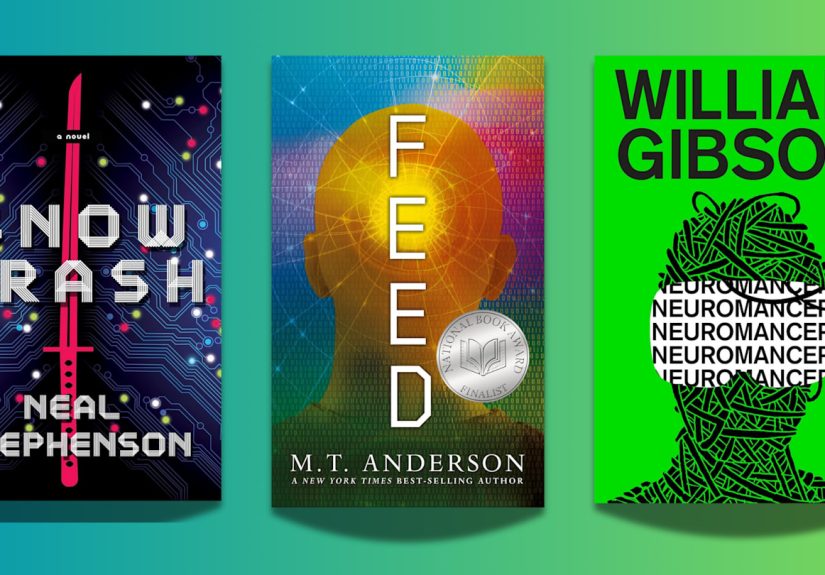
William Gibson’s Neuromancer, published in 1984, did not merely predict digital life; it gave it a mood board. The novel helped define cyberpunk with its hackers, artificial intelligences, corporate power, body modifications, and “cyberspace,” a term that became central to how people imagined networked computing.
Gibson’s cyberspace is not the clean, friendly internet of shopping carts and password reset emails. It is dangerous, glamorous, corporate, criminal, and alive with hidden structures. That vision has aged surprisingly well. The real internet is not a single glowing city of data, but it does have layers: public pages, private platforms, encrypted channels, financial systems, black markets, social networks, cloud infrastructure, and invisible code shaping visible life.
Neuromancer foresaw a world where hackers were cultural figures, corporations rivaled governments in influence, and artificial intelligence pushed at the edges of human control. It also captured the psychological feel of being online: disembodied, accelerated, overstimulated, and always one click away from either discovery or disaster. Gibson did not need a modern laptop to understand the future. He looked at arcade games, global finance, media saturation, and urban decayand assembled a digital mythology Silicon Valley is still trying to decorate with better office furniture.
5. Do Androids Dream of Electric Sheep? by Philip K. Dick: AI, Empathy, and the Question of Being Real
Philip K. Dick’s 1968 novel Do Androids Dream of Electric Sheep? is often discussed through its film adaptation, Blade Runner, but the book itself remains a powerful meditation on artificial life and empathy. Its androids are not just machines; they are disturbingly close to human. The central question is not whether they can calculate, but whether they can feelor whether humans can reliably tell the difference.
That question has become urgent in the age of conversational AI, synthetic voices, virtual influencers, deepfakes, and emotionally responsive software. When a chatbot sounds warm, when an AI-generated image looks authentic, when a digital assistant remembers your preferences, the old categories begin to wobble. Is the interaction meaningful because something conscious is happening on the other side, or because humans are excellent at projecting life onto patterns?
Dick’s genius was recognizing that the technology question would become an empathy question. Our digital lives are full of simulations: simulated friendship, simulated expertise, simulated faces, simulated intimacy, simulated authority. The danger is not simply that machines will become human. It is that humans may become too careless about what counts as human. In a world of automated replies and generated personalities, Dick’s androids still whisper the same uncomfortable question: how do we know what is real when the imitation gets good?
6. Snow Crash by Neal Stephenson: The Metaverse Before the Pitch Decks
Neal Stephenson’s Snow Crash, published in 1992, introduced the word “metaverse” to a wide audience. In the novel, people enter a shared virtual environment as avatars, moving through a digital world shaped by status, design, identity, and access. Decades later, the term would be adopted by technology companies, game developers, virtual reality advocates, and executives who suddenly discovered black turtlenecks and destiny.
What Snow Crash understood is that virtual spaces are never only technical spaces. They are social spaces. People care how their avatars look. They care where they can go, who can enter, what they own, and how status is displayed. That is true in online games, social platforms, VR rooms, livestream communities, and digital marketplaces. The metaverse is not just about headsets. It is about identity, performance, property, and belonging.
The novel also satirizes privatized power, franchised culture, information overload, and the strange collision of ancient language with futuristic media. That mix now feels oddly normal. We live in a world where memes move markets, avatars host concerts, digital skins sell for real money, and corporate platforms become social territories. Stephenson’s metaverse was cooler, darker, and more chaotic than most corporate demosbut it understood the core temptation: why settle for one reality when you can log into another?
7. The Diamond Age by Neal Stephenson: Personalized AI Learning Before the App Store
Stephenson appears again with The Diamond Age, published in 1995, because apparently one major digital prophecy was not enough. This novel centers partly on the Young Lady’s Illustrated Primer, an interactive book designed to educate and guide a child through a personalized learning journey. It responds to the reader, adapts to context, tells stories, teaches skills, and becomes a kind of technological mentor.
That sounds remarkably close to today’s dreams of AI tutors, adaptive learning platforms, interactive educational apps, and personalized digital assistants. The Primer is not just a tablet. It is a narrative engine, teacher, coach, and companion. It understands that learning is emotional as well as informational. Good education is not only about delivering facts; it is about timing, trust, curiosity, and the right story at the right moment.
Modern edtech has not fully achieved the Primer’s magic, but it is moving in that direction. AI tools can now explain math problems, generate practice questions, translate concepts, adapt tone, and respond to individual confusion. The promise is enormous: more accessible tutoring, flexible learning, and support for students who might otherwise be overlooked. The risk is equally real: unequal access, overreliance on automated systems, privacy concerns, and the loss of human mentorship. The Diamond Age foresaw both the wonder and the unease of teaching through intelligent machines.
Why These Books Still Matter in the Age of Apps, AI, and Algorithms
The most impressive thing about these seven books is not that they predicted specific inventions. Prediction is a flashy word, but it can be misleading. Science fiction writers are not fortune tellers sitting beside a crystal ball labeled “beta version.” Their real talent is pattern recognition. They notice where society is already leaning, then exaggerate the angle until we can see the future shape of the fall.
The Machine Stops saw the loneliness inside convenience. Nineteen Eighty-Four saw the politics of observation. The Shockwave Rider saw networks as systems of power and identity. Neuromancer saw cyberspace as a psychological and economic landscape. Do Androids Dream of Electric Sheep? saw artificial intelligence as a crisis of empathy. Snow Crash saw virtual worlds as status-driven societies. The Diamond Age saw personalized technology as both teacher and gatekeeper.
Together, they remind us that digital life is never only about devices. It is about habits, incentives, institutions, emotions, and control. A smartphone is hardware, but a notification is behavior design. A search engine is software, but ranking is power. A chatbot is code, but trust is human. A social platform is infrastructure, but belonging is psychological. That is why these books remain useful: they help us ask better questions before the next shiny thing arrives wearing the usual costume of progress.
Experience Reflections: Reading These Books While Living Inside Their Predictions
Reading these books today creates a strange double vision. On one page, you are in a fictional future; on the next, you glance at your phone and realize the future has been quietly charging on your nightstand. The experience is both thrilling and mildly insulting. The authors warned us, and we still clicked “Agree” without reading the terms.
The first experience these books sharpen is the feeling of technological dependence. Forster’s Machine seems exaggerated until your internet drops during a work deadline, your navigation app stops loading in an unfamiliar neighborhood, or your cloud document refuses to sync. Suddenly, civilization feels less like marble columns and more like a spinning loading icon. The book makes everyday convenience feel visible again. It asks: which skills have we outsourced, and what happens when the system pauses?
Orwell’s Nineteen Eighty-Four changes how you notice cameras and data permissions. After reading it, a harmless app request can feel oddly dramatic. Why does a flashlight need location access? Why does a photo filter want contacts? Why is my refrigerator trying to join the conversation? The novel does not mean every modern technology is sinister, but it trains readers to ask who benefits from visibility. That question is essential in a digital economy built on attention and data.
Neuromancer and Snow Crash make online identity feel theatrical. Anyone who has selected a profile picture, curated a bio, chosen a username, decorated a game avatar, or deleted a post after “thinking better of it” understands that digital selfhood is partly performance. These novels understood that people would not enter virtual spaces as neutral users. They would enter as characters, brands, tribes, rebels, collectors, fans, experts, lurkers, and occasionally people whose profile photos are suspiciously twelve years old.
Do Androids Dream of Electric Sheep? becomes more unsettling after interacting with advanced AI tools. The book makes you pause when software responds with warmth or humor. The emotional reflex is real, even when you know the system is not human. That reflex matters. It can help people feel supported, but it can also make them vulnerable to manipulation, misinformation, or misplaced trust. Dick’s novel encourages a balanced response: wonder without naivety.
The Shockwave Rider feels especially relevant whenever identity becomes administrative. A locked account, a mistaken fraud alert, a corrupted record, or a leaked password can remind us that modern identity is not just personal. It is infrastructural. You are you, yesbut you are also your logins, documents, accounts, metadata, and recoverable credentials. Brunner understood the fear of becoming trapped inside systems that describe you incorrectly.
The Diamond Age offers the most hopeful experience. It suggests that technology can teach, guide, and open doors when designed with care. Anyone who has learned a language through an app, watched a tutorial to repair something, used AI to understand a difficult topic, or found a niche community of learners online has felt a small piece of that promise. The best digital tools do not replace curiosity. They feed it.
The lesson from all seven books is not “technology is bad.” That would be too simple, and also difficult to tweet from a smart device. The lesson is that technology magnifies human values. If a system is built for control, it scales control. If it is built for extraction, it scales extraction. If it is built for learning, access, creativity, and dignity, it can scale those too. Science fiction gives us a rehearsal space. It lets us test the emotional consequences of inventions before they become normal.
That is why these books are still worth reading, not as museum pieces, but as user manuals for the present. They help us recognize when Silicon Valley is reinventing an old dream, repeating an old mistake, or accidentally building a machine a novelist already warned us about. The future may arrive through code, venture capital, and product launches, but long before that, it often arrives as a paperback.
Conclusion
The line between science fiction and Silicon Valley has never been perfectly clean. Great speculative novels do more than imagine gadgets; they explore how technology changes power, identity, memory, education, privacy, and human connection. These seven books foresaw digital lives because they understood people. They knew we would want convenience, status, speed, comfort, knowledge, escape, and connectionand that every desire could become a doorway for both progress and trouble.
For readers, entrepreneurs, educators, and anyone who spends too much time negotiating with screens, these books offer more than entertainment. They are warnings, invitations, and mirrors. The next time a tech company announces a revolutionary platform, immersive world, AI companion, or personalized learning system, it may be worth asking: is this newor did a novelist already debug the dream decades ago?