Table of Contents >> Show >> Hide
- What Is Rosacea, Really?
- So, Are Facials Good for Rosacea?
- What Kind of Facial Is Best for Rosacea?
- Facials and Treatments People With Rosacea Should Avoid
- What to Ask Before Booking a Facial for Rosacea
- How to Prepare Your Skin Before a Rosacea Facial
- What Should Happen During a Rosacea-Safe Facial?
- Aftercare: What to Do After a Facial
- When to See a Dermatologist Instead of Booking a Facial
- Expert Verdict: The Best Facial Is the One Your Skin Can Forgive
- Real-Life Experiences: What People Often Learn From Rosacea Facials
- Conclusion
Rosacea is the skin condition that seems to have a flair for dramatic timing. Big meeting tomorrow? Hello, tomato cheeks. Dinner date tonight? Surprise flush. Trying a “glow facial” because everyone online looks like a glazed donut? Your face may respond like it just read a strongly worded email.
So, are facials good for rosacea? The expert answer is: they can be, but only when they are gentle, customized, and performed by someone who understands rosacea-prone skin. A facial is not a cure for rosacea, and it should never replace medical rosacea treatment. However, the right kind of facial may help calm dryness, support the skin barrier, reduce the look of irritation, and teach you which products your skin actually tolerates.
The wrong facial, however, can trigger redness, burning, swelling, bumps, or several days of “why did I do that?” regret. The difference often comes down to heat, friction, ingredients, and technique.
What Is Rosacea, Really?
Rosacea is a chronic inflammatory skin condition that usually affects the center of the face, especially the cheeks, nose, chin, and forehead. It can cause flushing, persistent redness, visible blood vessels, acne-like bumps, burning, stinging, dryness, and skin sensitivity. Some people also develop ocular rosacea, which affects the eyes with redness, burning, tearing, gritty sensations, or swollen eyelids.
One important point: rosacea is not “just sensitive skin,” and it is not regular acne. It is a medical skin condition that often cycles through flare-ups and calmer periods. Triggers vary from person to person, but common ones include sun exposure, heat, wind, hot drinks, alcohol, spicy foods, stress, harsh skin care products, hot showers, and intense exercise.
Because rosacea skin often has a weakened or reactive skin barrier, it may sting from products that other people use without a second thought. That is why a facial for rosacea needs to be less “deep-cleaning boot camp” and more “peace treaty with your face.”
So, Are Facials Good for Rosacea?
Yes, some facials may be good for rosacea-prone skin, but only if they are designed to calm and protectnot peel, steam, scrub, or shock the skin. A rosacea-safe facial should focus on gentle cleansing, hydration, barrier support, cooling comfort, and non-irritating products.
Think of it this way: a good rosacea facial should leave your skin feeling quieter, not “activated.” A little temporary pinkness after touch may happen for some people, but burning, swelling, tightness, or angry redness is not the goal. If the facial feels spicy, your skin is not being “detoxed.” It is likely being irritated. Skin does not need a dramatic breakup scene to improve.
What Kind of Facial Is Best for Rosacea?
The best facial for rosacea is usually a gentle, hydrating, calming facial performed by a licensed esthetician or dermatology professional who has experience with sensitive and rosacea-prone skin.
1. A Barrier-Repair Facial
This type of facial focuses on restoring comfort and hydration. It may include a mild non-soap cleanser, a fragrance-free hydrating serum, a ceramide-rich moisturizer, and a soothing mask. Ingredients such as ceramides, glycerin, hyaluronic acid, niacinamide, and panthenol may be helpful for many people, although every rosacea face has its own opinions.
2. A Cooling Calming Facial
A cooling facial may use room-temperature or mildly cool products to reduce the sensation of heat. This can be helpful for people whose rosacea flares with warmth. The key word is mildly. Ice-cold extremes can also irritate some people, so the treatment should feel comfortable, not like a face-first trip into a snowbank.
3. A Gentle LED Facial
Some clinics offer light-emitting diode therapy, often called LED therapy, as part of a calming facial. Red LED light is sometimes used to support the appearance of calmer skin. It should not be confused with laser or intense pulsed light treatment, which are medical or cosmetic procedures used for visible blood vessels and persistent redness. LED should be gentle and non-heating.
4. A Dermatology-Guided Facial
For people with frequent flare-ups, bumps, pustules, or very reactive skin, the safest option may be a facial in a dermatology office or medical spa supervised by a qualified clinician. This is especially useful if you use prescription rosacea medications such as metronidazole, azelaic acid, ivermectin, brimonidine, oxymetazoline, or oral doxycycline.
Facials and Treatments People With Rosacea Should Avoid
Many popular facial treatments are not ideal for rosacea because they rely on heat, abrasion, strong acids, fragrance, or aggressive extractions. These may disrupt the skin barrier and make redness or burning worse.
Avoid Steam
Steam is a classic facial step, but for rosacea it can be a classic mistake. Heat can dilate blood vessels and trigger flushing. If your skin already flushes after hot drinks, saunas, or warm rooms, facial steam is probably not your friend.
Avoid Harsh Scrubs and Exfoliating Brushes
Rosacea-prone skin usually does not appreciate physical exfoliation. Scrubs, rough washcloths, rotating brushes, and gritty polishes can create friction and worsen irritation. Your face is not a dirty frying pan. It does not need scouring.
Avoid Strong Chemical Peels
Peels containing strong acids may be too irritating for many people with rosacea. Glycolic acid, lactic acid, salicylic acid, and high-strength resurfacing treatments should only be considered with professional guidance, and often avoided during active flare-ups.
Avoid Aggressive Extractions
Extractions may be tempting if you have bumps, but rosacea bumps are not the same as clogged-pore acne. Squeezing, pressing, and poking can increase inflammation and prolong redness.
Avoid Fragrance and “Tingly” Products
Fragrance, menthol, eucalyptus oil, peppermint, witch hazel, alcohol-based toners, camphor, and astringents are common troublemakers for rosacea-prone skin. A product that tingles is not necessarily working. Sometimes it is simply annoying your skin in a fancy bottle.
What to Ask Before Booking a Facial for Rosacea
Before scheduling, call the spa or clinic and ask direct questions. A professional who understands rosacea will not be offended. In fact, they should appreciate that you are trying to avoid a flare.
- Do you have experience treating rosacea-prone or highly sensitive skin?
- Can the facial be done without steam, hot towels, scrubs, or extractions?
- Are the products fragrance-free and made for sensitive skin?
- Can you patch test products before applying them to my whole face?
- Will you stop immediately if I feel burning or stinging?
- Do you recommend coming in when my skin is calm rather than during a flare?
If the answer is, “Don’t worry, redness means it’s working,” politely rundo not walkto a different provider.
How to Prepare Your Skin Before a Rosacea Facial
Preparation matters. Try to book the appointment when your rosacea is relatively calm. Avoid scheduling a facial right before a wedding, presentation, photoshoot, first date, passport photo, or any event where you cannot risk a surprise flare.
For several days beforehand, keep your routine simple: gentle cleanser, moisturizer, and broad-spectrum sunscreen. Avoid trying new active ingredients, at-home peels, retinoids, exfoliating acids, or scrubs right before your appointment unless your dermatologist specifically says otherwise.
Tell your esthetician about your rosacea diagnosis, current medications, known triggers, allergies, and previous reactions to skin care products. If you have eye symptoms, painful bumps, swelling, or worsening redness, check with a dermatologist before booking a cosmetic facial.
What Should Happen During a Rosacea-Safe Facial?
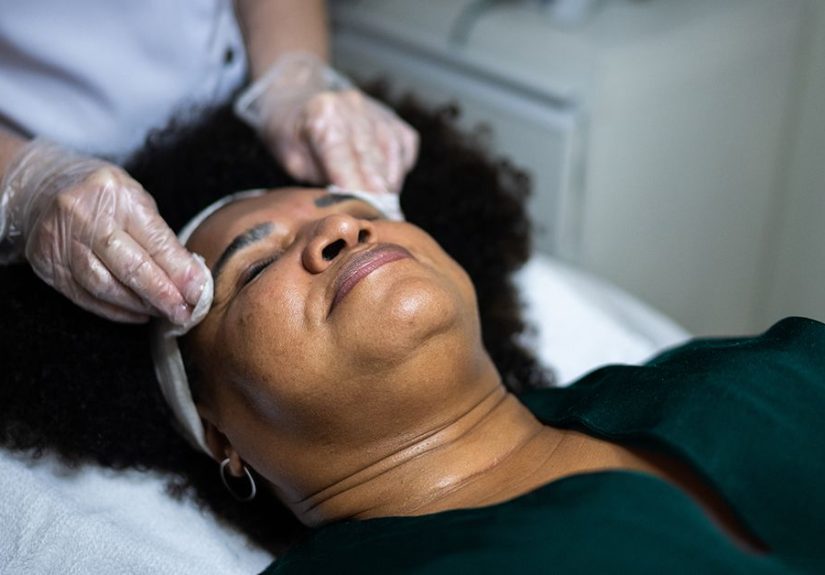
A good rosacea facial should be slow, gentle, and boring in the best possible way. The cleanser should be mild. The water should be lukewarm. The hands should be light. The products should be simple. The goal is not to chase every pore into submission; it is to help the skin barrier behave like a calm adult.
The provider may use a fragrance-free cleanser, a soothing mask, a hydrating serum, a barrier-support moisturizer, and mineral sunscreen at the end. Massage, if included, should be extremely light and brief. Some people tolerate gentle lymphatic-style touch, while others flare from any rubbing at all. Your comfort should control the session.
Aftercare: What to Do After a Facial
After a facial, treat your skin like it just returned from a very quiet vacation. Do not immediately introduce new products. Do not exfoliate. Do not use a retinoid, acid toner, scrub, or strong vitamin C serum the same night unless your dermatologist has already cleared it for your skin.
Use a gentle cleanser, moisturizer, and mineral sunscreen. Avoid hot showers, saunas, heavy exercise, spicy food, alcohol, and prolonged sun exposure for at least 24 to 48 hours if those are your personal triggers. If your skin feels warm, a cool compress may help, but avoid ice directly on the skin.
When to See a Dermatologist Instead of Booking a Facial
Facials can support comfort and appearance, but they do not replace rosacea treatment. See a dermatologist if you have persistent redness, acne-like bumps, visible blood vessels, thickened skin, burning, painful flushing, or symptoms around the eyes. Eye symptoms deserve special attention because untreated ocular rosacea can become serious.
A dermatologist can help determine whether your symptoms are truly rosacea or another condition such as acne, seborrheic dermatitis, contact dermatitis, lupus-related rash, or perioral dermatitis. They may recommend prescription topicals, oral medications, trigger management, or laser and light-based procedures depending on your symptoms.
Expert Verdict: The Best Facial Is the One Your Skin Can Forgive
Facials are not automatically good or bad for rosacea. They are tools. A soft blanket is a tool; so is sandpaper. Please do not put the sandpaper one on your cheeks.
If the facial is gentle, fragrance-free, non-heating, non-abrasive, and customized for sensitive skin, it may help rosacea-prone skin feel more hydrated and comfortable. If it includes steam, scrubs, strong peels, heavy massage, extractions, or irritating ingredients, it may make symptoms worse.
The smartest approach is to think of facials as supportive care, not magic. Rosacea management usually works best with a steady routine: identify triggers, protect your skin from the sun, cleanse gently, moisturize consistently, avoid known irritants, and work with a dermatologist when symptoms persist.
Real-Life Experiences: What People Often Learn From Rosacea Facials
One common experience among people with rosacea is that the first facial teaches them what their skin does not like. Many walk in expecting glow and walk out realizing that steam, fragrance, and enthusiastic rubbing are basically a three-act tragedy for their cheeks. The lesson is not that all facials are terrible. The lesson is that rosacea skin needs a slower, more thoughtful approach.
For example, someone with mild facial redness may book a standard spa facial that includes steam, a citrus-scented exfoliating scrub, extractions around the nose, and a “refreshing” menthol mask. During the appointment, the skin feels hot and prickly. By evening, the cheeks are bright red, the nose feels swollen, and the person wonders whether their face has filed a complaint. This experience is frustrating, but it also reveals valuable trigger information: heat, fragrance, friction, and cooling agents like menthol may all be problematic.
Another person may have a very different experience after choosing a rosacea-aware provider. Before the appointment, they explain that their skin burns easily and flares after hot showers. The esthetician skips steam, avoids exfoliation, uses a fragrance-free cleanser, applies a calming hydrating mask, and finishes with a mineral sunscreen. The facial is not dramatic. There is no “your pores are screaming” moment. But the next day, the skin feels softer, less tight, and easier to moisturize. That is a quiet win.
Many people also learn that less is more. A rosacea-friendly facial can be helpful not because it adds ten fancy steps, but because it removes the chaos. In daily life, people often layer cleanser, toner, serum, acne spot treatment, exfoliant, anti-aging cream, oil, mask, and sunscreen, then wonder why their skin is sending smoke signals. A good professional may help simplify the routine down to the basics: gentle cleanse, moisturize, protect from sun, and use prescriptions correctly.
Some people discover that timing matters. A facial during an active flare can be risky, even when the provider is careful. Skin that is already burning, swollen, or covered in inflamed bumps may not tolerate much handling. Waiting until the flare calms can make the appointment safer and more useful. Others learn to avoid facials right before important events. Even a gentle session can cause temporary pinkness, especially for reactive skin.
People with rosacea also often become better self-advocates. They learn to say, “No steam, please.” They ask to see ingredient lists. They request patch testing. They stop treatments when something burns. This is not being difficult; it is being informed. A trustworthy provider will respect those boundaries.
The best experience is usually not the facial that promises to “erase redness overnight.” It is the one that helps the person understand their skin better, avoid unnecessary irritation, and build confidence with a calmer routine. Rosacea may be chronic, but with the right care, it does not get to run the whole show.
Conclusion
Facials can be good for rosacea when they are gentle, customized, and focused on hydration and barrier support. They can be a problem when they involve heat, harsh exfoliation, strong peels, fragrance, aggressive extractions, or irritating “tingly” products. The safest plan is to choose an experienced provider, avoid known triggers, patch test when possible, and keep your dermatologist involved if symptoms are persistent, painful, or affecting your eyes.
Note: This article is for general educational purposes only and is not a substitute for professional medical advice, diagnosis, or treatment. Anyone with worsening rosacea, eye symptoms, pain, swelling, or frequent flare-ups should consult a qualified healthcare professional or board-certified dermatologist.