Table of Contents >> Show >> Hide
- 1. The Observable Universe Is About 92–94 Billion Light-Years Across
- 2. Looking Into Space Means Looking Back in Time
- 3. The Oldest Light We Can See Is a Cosmic Baby Picture
- 4. Most of the Universe Is Invisible Stuff We Barely Understand
- 5. Black Holes Are Not Empty Holes
- 6. A Teaspoon of Neutron Star Matter Would Be Absurdly Heavy
- 7. Venus Has a Day Longer Than Its Year
- 8. Saturn Is Less Dense Than Water
- 9. The Moon Is Slowly Moving Away From Earth
- 10. Some Planets Wander Through Space Without Stars
- 11. Space Weather Can Mess With Earth
- Why These Space Facts Matter
- Experiences That Make Space Feel Real
- Conclusion: Space Is Weird, Wonderful, and Not Done Surprising Us
Space is the ultimate overachiever. It is bigger than our brains want it to be, older than every history book combined, and stranger than a raccoon operating a vending machine at 3 a.m. Every time scientists think they have placed the universe into a neat little folder labeled “mostly understood,” the cosmos casually opens another drawer full of black holes, rogue planets, invisible matter, ancient light, and storms larger than Earth.
These mind-warping facts about space are not science-fiction decorations. They are based on real astronomy, planetary science, and cosmology. The universe is not just “out there”; it is a living laboratory where gravity bends light, planets wander without stars, and the oldest visible glow in existence still whispers from every direction. Ready to politely question reality? Let’s begin.
1. The Observable Universe Is About 92–94 Billion Light-Years Across
The universe is about 13.8 billion years old, so it sounds logical to assume we can see only 13.8 billion light-years in any direction. Nice try, common sense. Unfortunately, the universe does not run on “sounds logical.” While light has been traveling toward us for nearly the entire age of the cosmos, space itself has also been expanding. That means the regions that released the oldest light we can detect are now much farther away than 13.8 billion light-years.
The observable universe is estimated to be roughly 92 to 94 billion light-years across. And that is only the part we can observe from Earth. The entire universe may be far larger, and scientists do not yet know whether it is finite or infinite. In other words, the cosmic map we have is not the full menu. It is more like peeking through a keyhole into a cathedral and saying, “Yep, probably just one room.”
2. Looking Into Space Means Looking Back in Time
Telescopes are not just giant space binoculars; they are time machines with better optics. Light takes time to travel, so when we observe a star 1,000 light-years away, we see it as it was 1,000 years ago. When powerful telescopes study distant galaxies, they are not seeing those galaxies as they look today. They are seeing ancient versions of them, sometimes from billions of years in the past.
This is why deep-space astronomy is so valuable. Observing distant galaxies allows scientists to study how the universe grew from a hot, dense beginning into the galaxy-filled structure we see now. The James Webb Space Telescope and Hubble Space Telescope help astronomers explore different chapters of cosmic history. It is the universe’s baby album, awkward teenage phase, and mysterious adulthood all stacked on top of one another in light.
3. The Oldest Light We Can See Is a Cosmic Baby Picture
The cosmic microwave background, often called the CMB, is the oldest light humans can observe. It formed when the universe was about 380,000 years old. Before that moment, the cosmos was so hot and dense that light could not travel freely. Space was more like glowing fog than a transparent sky.
When the universe cooled enough for atoms to form, light finally escaped and began traveling across space. Today, that ancient radiation has been stretched by cosmic expansion into a faint microwave glow. It is extremely cold now, only a few degrees above absolute zero, but it carries information about the early universe’s structure. Tiny temperature variations in the CMB eventually grew into galaxies, galaxy clusters, and everything from nebulae to people arguing about whether Pluto should count as a planet.
4. Most of the Universe Is Invisible Stuff We Barely Understand
Everything familiarstars, planets, comets, coffee mugs, astronauts, and your favorite socksbelongs to ordinary matter. Shockingly, ordinary matter makes up only a small slice of the universe’s total mass-energy content. The rest is dominated by dark matter and dark energy.
Dark matter does not shine, reflect, or absorb light in the usual way, but scientists infer its presence because of gravity. Galaxies spin as if extra unseen mass is holding them together. Dark energy is even more mysterious. It is the name given to whatever is causing the expansion of the universe to accelerate. So, not only is the universe expanding, but it is expanding faster over time because of something scientists have not fully identified. That is not a plot twist. That is the plot.
5. Black Holes Are Not Empty Holes
A black hole is not a cosmic drainpipe leading to “space basement.” It is a region where matter has been compressed so tightly that gravity becomes overwhelming. The boundary around a black hole is called the event horizon. Once something crosses that boundary, not even light can escape.
Black holes can form when massive stars collapse, but they also exist in gigantic versions called supermassive black holes. These monsters sit at the centers of many galaxies, including the Milky Way. A black hole does not suck in the universe like a vacuum cleaner. If the Sun were magically replaced by a black hole of the same mass, Earth would continue orbiting as usual, although the lack of sunlight would make the situation deeply unpopular.
6. A Teaspoon of Neutron Star Matter Would Be Absurdly Heavy
When a massive star explodes as a supernova, its collapsed core can become a neutron star. These objects are only about the size of a city, yet they can contain more mass than the Sun. That makes neutron stars among the densest objects astronomers can observe directly.
NASA has compared a tiny amount of neutron star material to the weight of Mount Everest or billions of tons, depending on the estimate and explanation used. The point is simple: neutron stars take “heavy” to a level that breaks everyday imagination. If you could scoop neutron star matter with a teaspoonplease do not bring kitchen utensils to a collapsed stellar coreit would weigh far more than any mountain, building, or stadium on Earth. Matter there is crushed to densities close to atomic nuclei. The universe apparently looked at normal matter and said, “Let’s compress the file.”
7. Venus Has a Day Longer Than Its Year
Venus is Earth’s neighbor, but it is not Earth’s twin in the friendly sitcom sense. It rotates extremely slowly, taking about 243 Earth days to spin once. Yet it orbits the Sun in about 225 Earth days. That means a day on Venus is longer than a Venusian year.
Even weirder, Venus rotates in the opposite direction from most planets in the solar system. If you could stand safely on Venuswhich you absolutely could not, because the surface is hot enough to ruin both spacecraft and weekend plansthe Sun would appear to rise in the west and set in the east. Venus is a reminder that planets do not care about our tidy expectations. They spin, tilt, bake, freeze, and occasionally behave like they filled out the solar system paperwork backward.
8. Saturn Is Less Dense Than Water
Saturn is huge, gorgeous, and famous for its rings, but one of its strangest features is its low average density. Saturn is the only planet in our solar system with an average density lower than water. In a simplified science-class thought experiment, Saturn could float if you had a bathtub big enough. You do not have that bathtub. Nobody has that bathtub. The plumbing alone would be a nightmare.
The “floating Saturn” idea is really a lesson about density, not home improvement. Saturn is mostly hydrogen and helium, so its average density is surprisingly low despite its massive size. However, real planets are not solid bath toys. Saturn’s gravity, internal structure, and gas layers make the scenario physically messy. Still, as a memorable comparison, it works beautifully: the ringed giant is enormous but strangely light for its volume.
9. The Moon Is Slowly Moving Away From Earth
The Moon is not leaving dramatically with a suitcase and emotional background music, but it is gradually drifting away from Earth. Measurements show that the Moon moves roughly about an inch to 1.5 inches farther from Earth each year. This happens because of gravitational interactions between Earth and the Moon, especially tidal effects.
The Moon’s slow retreat also affects Earth’s rotation over long timescales. Days on early Earth were shorter than they are now. Over millions and billions of years, the Earth-Moon relationship has changed, and it will continue changing. The good news: the Moon is not going to disappear from the sky anytime soon. The less comforting news: even the most familiar object in the night sky is quietly changing its address.
10. Some Planets Wander Through Space Without Stars
Not every planet has a sunrise. Rogue planets, also called free-floating planets, drift through space without orbiting a star. Some may have formed around stars and later been kicked out by gravitational interactions with larger planets. Others may have formed more like tiny starless systems from collapsing gas and dust.
Scientists think the Milky Way may contain enormous numbers of these lonely worlds. Some estimates suggest rogue planets could be extremely common, possibly outnumbering stars. They are hard to detect because planets do not shine like stars; astronomers often find them through subtle effects such as gravitational microlensing. A rogue planet is the cosmic version of leaving the group chat and wandering through interstellar darkness for billions of years.
11. Space Weather Can Mess With Earth
The Sun looks calm from a distance, but up close it is a magnetic powerhouse throwing energetic particles and radiation into space. Solar flares, coronal mass ejections, and solar wind can create what scientists call space weather. When strong solar activity reaches Earth, it can trigger auroras, disturb radio communication, affect satellite operations, and influence power systems.
NOAA tracks space weather with scales for geomagnetic storms, solar radiation storms, and radio blackouts. This matters because modern life depends on satellites, navigation systems, communication networks, and electrical grids. The same solar activity that paints the sky with breathtaking northern lights can also make engineers stare nervously at monitoring screens. Space is beautiful, yes, but it occasionally knocks on Earth’s technological door wearing magnetic boots.
Why These Space Facts Matter
Mind-warping space facts are fun because they make the brain do gymnastics. But they are more than trivia. They help us understand where Earth fits into the larger cosmic story. Learning that the observable universe is tens of billions of light-years across can make daily problems feel smaller. Learning that dark matter and dark energy dominate the cosmos reminds us that science is not a finished book; it is an active investigation. Learning that the Moon is drifting away shows that even stable-looking systems evolve.
Space also teaches humility. Humans have walked on the Moon, photographed black holes, landed spacecraft on Mars, and detected planets around distant stars. That is astonishing. At the same time, we still do not know what most of the universe is made of. We can calculate the age of ancient light, but we cannot fully explain the force accelerating cosmic expansion. We can observe galaxies billions of light-years away, but we are still learning about the oceans and atmospheres of worlds in our own solar system.
Experiences That Make Space Feel Real
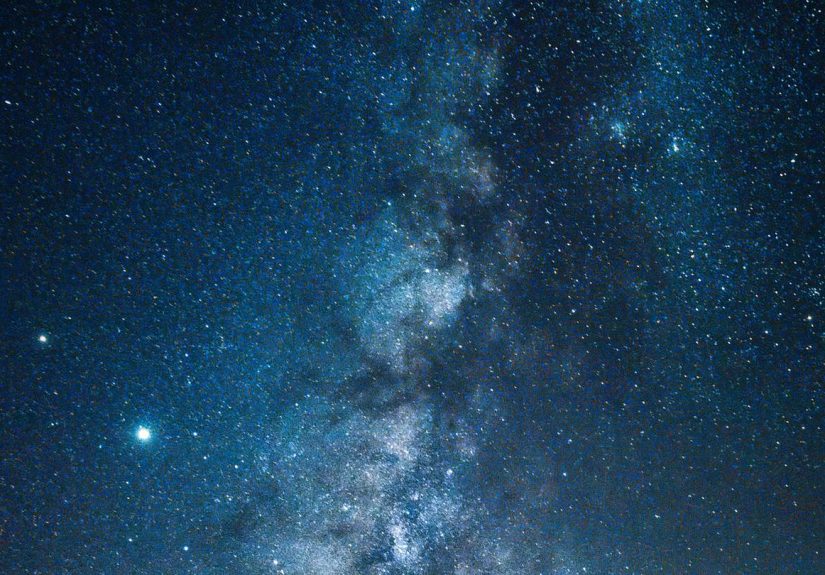
The best way to appreciate these facts about space is not just to read them, but to experience them in small, memorable ways. You do not need a billion-dollar telescope or a spacesuit with suspiciously complicated buttons. Start with the night sky. Find a dark place away from city lights, let your eyes adjust, and look up for at least twenty minutes. At first, you may see only a few stars. Then more appear. Then the sky begins to look less like a ceiling and more like a depthless ocean.
Try spotting Venus when it is bright near sunrise or sunset. It looks like a brilliant point of light, calm and elegant. Then remember that this “evening star” has crushing atmospheric pressure, extreme heat, and a day longer than its year. That tiny light suddenly becomes a whole world with alien weather and backwards sunrises. Astronomy often works that way: a dot becomes a place, and a place becomes a story.
The Moon offers another easy experience. Watch it over several nights and notice how it changes phase and position. It feels permanent, but it is slowly moving away from Earth. Thinking about that while looking at the Moon can make time feel enormous. Human lives are brief, civilizations are young, and the Earth-Moon system has been performing its gravitational dance for billions of years.
Planetarium shows are another excellent way to feel the scale of space. A good planetarium can take you from Earth orbit to the edge of the observable universe in minutes. Your body stays in a chair, possibly holding popcorn, while your mind gets launched across cosmic history. It is one thing to read that looking into space means looking back in time. It is another to see galaxies fade into earlier and earlier versions of the universe above your head.
You can also follow space weather forecasts. When solar activity is high, auroras may appear farther from the poles than usual. Even if you cannot see them from your location, tracking solar storms connects Earth to the Sun in a surprisingly personal way. The star that warms your skin also shakes magnetic fields, feeds auroras, and reminds satellite operators that the solar system is not empty.
Finally, try the simplest experience of all: choose one space fact and explain it to someone else. Tell a friend that Saturn is less dense than water, that rogue planets wander without stars, or that the oldest light in the universe is still detectable today. Watch their face. There is usually a pause, a blink, and then the universal human response: “Wait, what?” That moment is the real magic. Space expands the universe outside us and the imagination inside us at the same time.
Conclusion: Space Is Weird, Wonderful, and Not Done Surprising Us
The universe is not merely large; it is creatively large. It stretches our language, bends our intuition, and turns ordinary words like “day,” “matter,” “weather,” and “distance” into cosmic puzzles. From black holes and neutron stars to rogue planets and ancient microwave light, these 11 mind-warping facts about space reveal a universe that is stranger than fiction and far better documented.
That is the beauty of astronomy. The facts are real, but they still feel impossible. Every discovery gives us a clearer view of the cosmos while opening new questions. Space does not make us smaller in a depressing way. It makes curiosity bigger. And honestly, in a universe where a planet can have a day longer than its year, curiosity is the only reasonable response.
Note: This article is written in original, web-ready HTML body format for publication, with no embedded source links or unnecessary citation placeholders.