Table of Contents >> Show >> Hide
- Why Smoke Detectors Matter More Than You Think
- How Bob Vila Tests the Best Smoke Detectors
- Types of Smoke Detectors (and Why It Matters)
- Key Features to Look For in the Best Smoke Detectors
- Bob Vila’s Top Smoke Detectors: What Stood Out
- X-Sense SC07 Wireless Smoke & Carbon Monoxide Alarm – Best Overall
- First Alert SMI100 Precision Detection Smoke Alarm – Best Bang for the Buck
- Kidde Smart Smoke & Carbon Monoxide Detector – Best Smart Alarm
- X-Sense Interconnected Wireless Smoke & CO Detector – Best for Whole-Home Coverage
- First Alert SMCO210V Smoke & CO Alarm – Best Voice Alarm
- SimpliSafe Wireless Smoke Detector – Great for Security System Users
- X-Sense XP0A-iR Smart Smoke & CO Detector – Also Consider
- Where to Install and How to Maintain Your Smoke Detectors
- How to Choose the Best Smoke Detector for Your Home
- Real-World Experiences with the Best Smoke Detectors
- Conclusion: Upgrade So Your Alarms Are as Smart as Your Home
If you’re like most homeowners, you only think about your smoke detectors twice a year: once when they chirp at 3 a.m., and once when you’re waving a kitchen towel under one because you got a little ambitious with the broiler. But those unobtrusive white pucks are one of the most important safety devices in your homearguably more important than the fancy smart door lock or the massive TV.
That’s why hands-on testing from trusted sources like Bob Vila is so valuable. Bob Vila’s team recently researched more than 20 popular smoke alarms and put 15 of them through real-world tests to find the best options for different homes, budgets, and tech comfort levels. Their top picks line up closely with recommendations from other major reviewers and safety organizations, making this a great starting point if you’re upgrading old detectors or finishing a renovation.
Below, we’ll break down how smoke detectors work, the types you can choose from, what Bob Vila’s tests found, and how to pick the right alarm for your homewithout needing an electrical engineering degree or a firefighter on speed dial.
Why Smoke Detectors Matter More Than You Think
House fires move fastmuch faster than the dramatic slow-motion scenes in movies. Thick, toxic smoke can fill a hallway in just a couple of minutes, especially in modern homes packed with synthetic materials. Working smoke detectors buy you the most precious resource in an emergency: time to get out.
National fire data show a harsh reality: a large share of home fire deaths happen in houses with no smoke alarms at all, and another significant chunk occur where detectors are present but not working. Common culprits include dead batteries, disconnected units after nuisance alarms in the kitchen, or alarms that simply aged out and stopped functioning reliably.
Most manufacturers and safety experts recommend replacing smoke detectors every 10 years and combo smoke/CO alarms about every 7 years because the sensors degrade over time, even if the device still looks fine and the test button “beep” seems normal. If you can’t remember when you installed yours, peek at the manufacture date on the backif it’s older than your phone, it might be time to upgrade.
How Bob Vila Tests the Best Smoke Detectors
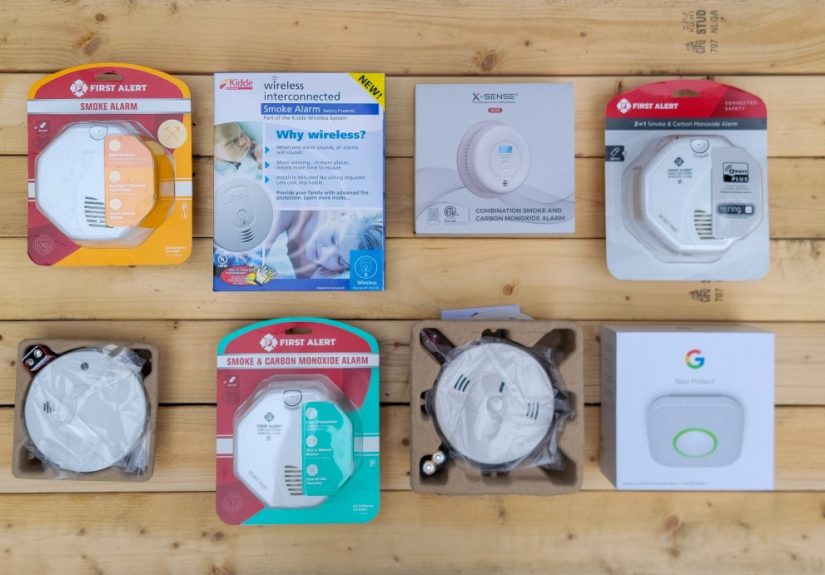
Bob Vila’s reviewers didn’t just unbox a few alarms and call it a day. They started by researching more than 20 models from major brands like X-Sense, Kidde, First Alert, and SimpliSafe, then narrowed the field down to 15 detectors for hands-on testing.
According to their review, each alarm was evaluated on:
- Detection speed: How quickly the alarm responded when exposed to synthetic test smoke or real-world smoke (like a blown-out candle).
- Ease of installation: Whether a typical homeowner could install it with basic tools, and how clear the instructions were.
- Alarm loudness & clarity: Could the alarm be heard from other floors? Were voice alerts understandable?
- Smart and interconnected features: For Wi-Fi and app-enabled models, how smoothly did setup and notifications work?
- Value for money: Did the alarm’s performance and features justify its price compared to other tested models?
Based on this process, their favorite overall model was the X-Sense SC07 Wireless Smoke & Carbon Monoxide Alarm, a combo detector with a sleek design and a digital display that shows carbon monoxide levels in parts per million.
Types of Smoke Detectors (and Why It Matters)
All smoke detectors are not created equal. Different technologies “see” different kinds of fires sooner, which is why fire safety organizations increasingly recommend using more than one typeor a dual-sensor unitfor the best protection.
Photoelectric Smoke Detectors
Photoelectric alarms use a light beam and sensor to detect changes caused by smoke particles. They tend to respond faster to smoldering firesthink a cigarette dropped on a couch cushion, or wiring issues that slowly heat materials before bursting into flame.
They’re also less likely to nuisance-trip from a little steam or cooking smoke, which makes them a popular choice near kitchens and bathrooms. Many of Bob Vila’s top picks for modern homes, including the X-Sense SC07 and several Kidde models, rely on photoelectric sensors for smoke detection.
Ionization Smoke Detectors
Ionization alarms use a small internal radioactive element to ionize air; when smoke enters the chamber, it disrupts the flow of ions and triggers the alarm. These detectors tend to respond faster to fast-flaming fires, like a kitchen grease fire or a Christmas tree that suddenly ignites.
Budget-friendly ionization-only models like the First Alert SMI100 Precision Detection Smoke Alarm still show up on “best” lists because they’re affordable, loud, and easy to installideal when you need to cover multiple rooms without blowing up your budget.
Dual-Sensor and Combination Smoke/CO Detectors
Many experts now recommend either pairing photoelectric and ionization alarms or using a dual-sensor alarm that incorporates both technologies in one device. That way, you’re covered whether a fire smolders quietly or erupts quickly. National and state fire agencies often explicitly advise using both technologies for best protection.
On top of that, combination smoke and carbon monoxide detectors (like several of Bob Vila’s top picks) bring another layer of safety, especially in homes with gas appliances, attached garages, or fireplaces.
Smart and Interconnected Smoke Detectors
Smart alarms connect to Wi-Fi or a hub and can send alerts to your phone if there’s an issueor if someone hits “silence” and then forgets there was ever an alarm. Interconnected alarms, whether wired or wireless, ensure that when one unit detects danger, all of them sound at once. That’s a big deal in larger homes or houses with multiple levels.
Products like Kidde’s Smart Smoke & Carbon Monoxide Detector, the X-Sense Interconnected Wireless Smoke & CO Detector, and smart systems like SimpliSafe’s wireless smoke detector combine smart notifications with strong test performance in Bob Vila’s review, making them a great fit for tech-forward households.
Key Features to Look For in the Best Smoke Detectors
Beyond sensor type, here are the features that separate “it checks the box” from “this is genuinely one of the best smoke detectors for my home.”
1. Compliance with UL 217 and Current Standards
Look for smoke alarms tested to the latest editions of UL 217 (the key standard for residential smoke alarms). Recent updates add tougher performance requirements and improved testing for real-world fire scenarios and nuisance alarms, particularly around cooking.
2. Long-Life or Sealed Batteries
Many of the best modern detectors feature sealed 10-year lithium batteries. That means no more “oh no, where did we put the 9-volt?” moments. Models like First Alert’s SMCO210V and several X-Sense alarms offer long-life, sealed power so you can install once and mostly forget themuntil a test day reminder pops up on your calendar.
3. Smart Alerts and Interconnectivity
If you travel often, have a second home, or just like peace of mind, look for smart alarms that send phone notifications and work with an app. Interconnected alarmseither wireless packs like the X-Sense system or hardwired, daisy-chained unitsensure everyone hears the alarm, not just the person closest to the detector.
4. Ease of Installation and Everyday Use
Bob Vila’s tests paid close attention to how homeowners actually live: alarms that are easy to mount, easy to program (especially for location-based voice alerts), and easy to silence quickly when you burn toast scored higher. Clunky test buttons or confusing interfaces got dinged.
5. Reduced Nuisance Alarms
Newer UL 217 standards and improved photoelectric designs are helping reduce the dreaded “I was just making bacon” alarm. If your current alarm is constantly going off during normal cooking, that’s not something you have to accept foreverupgrading to a better-designed alarm or moving it slightly farther from the kitchen can make a big difference.
Bob Vila’s Top Smoke Detectors: What Stood Out
Here’s a quick look at the stars of Bob Vila’s “best smoke detectors” tests and what each one does best.
X-Sense SC07 Wireless Smoke & Carbon Monoxide Alarm – Best Overall
This model combines a photoelectric smoke sensor with an electrochemical CO sensor and adds a large digital display that shows carbon monoxide levels and battery status. In testing, it triggered within about 10 seconds during smoke testsvery fastand the reviewers liked its sleek, modern look that doesn’t scream “utility box” on the ceiling.
It’s an especially good pick for bedrooms, hallways outside sleeping areas, and any space where CO is also a concern, such as near a gas furnace or water heater (following manufacturer placement instructions, of course).
First Alert SMI100 Precision Detection Smoke Alarm – Best Bang for the Buck
An ionization-only alarm, the SMI100 is all about affordable coverage. It’s compact, loud, and easy to install, though it trails pricier models slightly in response speed. Because it doesn’t detect CO, you’ll want separate CO alarms in appropriate locations. For budget-conscious homeowners who need multiple alarms at once, this is a strong value choice.
Kidde Smart Smoke & Carbon Monoxide Detector – Best Smart Alarm
Kidde’s smart detector works with your home’s Wi-Fi and the Kidde app, sending alerts to your phone and offering clear voice alerts alongside a loud siren. It also monitors air quality and supports interconnectivity with compatible Kidde alarms. During tests, it responded in roughly 10 seconds to smoke and was considered worth the higher price for users who wanted robust smart-home integration.
X-Sense Interconnected Wireless Smoke & CO Detector – Best for Whole-Home Coverage
This three-pack arrives pre-interconnected, so when one detects smoke or CO, they all sound offno Wi-Fi or app required. Each unit includes a digital display and a 10-year sealed battery. In Bob Vila’s testing, the alarms were simple to mount and quick to synchronize, though one concern was that they didn’t respond to canned synthetic smoke but did react to real smoke from a blown-out candle.
First Alert SMCO210V Smoke & CO Alarm – Best Voice Alarm
This model stands out for its loud siren and clear voice alerts that call out both the type of danger (smoke or CO) and the programmed location (“hallway,” “bedroom,” etc.). It uses dual sensors and a sealed 10-year battery. Reviewers appreciated its performance, though they noted that the test/silence button is stiff and takes a deliberate push to activate.
SimpliSafe Wireless Smoke Detector – Great for Security System Users
The SimpliSafe wireless alarm can work on its own or connect to a SimpliSafe base station and monitoring plan. When integrated, an alarm can trigger professional monitoring and dispatch emergency serviceseven when you’re not home. It uses a photoelectric sensor, is easy to silence, and fits seamlessly into SimpliSafe ecosystems, though testers wished it were slightly louder.
X-Sense XP0A-iR Smart Smoke & CO Detector – Also Consider
Another smart X-Sense option, the XP0A-iR combines photoelectric smoke detection with CO monitoring and app connectivity. It’s a good alternative if you like the X-Sense ecosystem and want app alerts and remote monitoring features without installing a full security system.
Where to Install and How to Maintain Your Smoke Detectors
Even the best smoke detectors won’t help if they’re in the wrong place or not maintained. Fire safety guidelines generally recommend:
- Install alarms inside every bedroom and outside each sleeping area.
- Place alarms on every level of your home, including the basement.
- Mount alarms on the ceiling or high on walls, at least a few inches from corners and away from supply vents.
- Keep alarms at least 10 feet from cooking appliances when possible to reduce nuisance alarms.
For maintenance, aim to:
- Test each alarm monthly using the test button.
- Gently vacuum or dust alarms a couple of times a year to remove cobwebs and dust.
- Replace any nonsealed batteries at least once a year or whenever you hear a low-battery chirp.
- Replace the entire smoke alarm every 10 years (and combo smoke/CO alarms about every 7).
Many homeowners tie battery checks to daylight saving time changes, which is also when outlets like Bob Vila and other home safety experts remind people to take a few minutes to check alarms throughout the house.
How to Choose the Best Smoke Detector for Your Home
Still not sure which alarm belongs in your cart? Here’s a quick matchmaking guide based on typical scenarios.
Small Apartment or Condo
If you live in a one-bedroom apartment, you may need fewer alarms, but you still want robust smoke and CO protection. A couple of combination units like the X-Sense SC07 or a smart alarm like Kidde’s combo detector can cover key areas while keeping installation simple.
Older Home Without Existing Hardwiring
If your house doesn’t have hardwired detector circuits, battery-powered or wireless interconnected units are your best bet. The X-Sense interconnected three-pack is especially handy because it doesn’t require an electrician or Wi-Fi network to function across multiple floors.
Tech-Loving Smart Home
If you’re already using smart speakers, security cameras, or smart locks, adding smart smoke detectors is a natural next step. Look for alarms from brands like Kidde, X-Sense, or Nest that offer app alerts, event history, and voice integration. Smart alarms shine for frequent travelers and second-home owners who want remote peace of mind.
Large, Multistory Homes
Here, interconnected alarms are non-negotiable. When a detector in the basement goes off, you want people on the top floor to wake up. A mix of interconnected smoke/CO combo units in hallways and bedrooms, supported by smart notifications, gives you layers of protection.
Tight Budget, Big Safety Upgrade
If money is tight but your alarms are ancient, start with the essentials: an affordable ionization model like the First Alert SMI100 in key locations, plus at least one CO alarm near fuel-burning appliances. You can add smart or dual-sensor devices in stages as your budget allows.
Real-World Experiences with the Best Smoke Detectors
Reviews and lab tests are incredibly useful, but smoke detectors ultimately prove themselves in everyday lifewhen you’re half-awake, cooking dinner, or away on a weekend trip. Here are some real-world style scenarios that reflect how modern alarms, like the ones tested by Bob Vila, can make a difference.
The 2 a.m. Chirp That Wasn’t Just a Battery
Imagine a family living in a 20-year-old house where the original alarms are still on the ceiling. They’ve gotten used to the occasional chirp and assume it’s just the battery. One night, the hallway unit starts chirping again, and this time someone flips it over and notices the manufacture date: 2006. That’s almost twice the recommended lifespan for a smoke detector.
They decide to replace all the alarms at once with a set of X-Sense SC07 combos and a few interconnected wireless detectors for the stairwell and basement. The installation isn’t glamorousjust a step stool, a drill, and some patiencebut the family ends the weekend knowing every alarm is up to current standards and that they have CO protection in the right spots. A month later, when the gas water heater develops a minor issue, the CO portion of an alarm catches it early, prompting a service call before anyone feels sick.
The Cook Who Was Tired of “False” Alarms
In another home, a serious home cook had a different problem: a basic ionization alarm mounted too close to the kitchen. Every time they seared a steak or roasted vegetables at high heat, the alarm would go off, sending everyone into frantic towel-waving mode. Eventually, someone popped the battery out “just for tonight” and then forgot to put it back. Not ideal.
After reading about photoelectric sensors and nuisance alarms, they replaced the old unit with a newer, photoelectric-based detector positioned farther from the stove and installed another alarm down the hallway for backup. The new setup still reacts when something really goes wronglike seriously burnt foodbut no longer shrieks every time the oven hits 450°F. That small change keeps the alarms armed instead of sidelined.
Interconnected Alarms in a Multistory Home
Consider a three-story townhouse with a finished basement and bedrooms on the top floor. Before interconnected alarms, a small fire starting in the laundry area downstairs might not be heard clearly by someone sleeping two floors up. After upgrading to a wireless interconnected three-pack similar to the X-Sense system, a test shows that when the basement alarm is triggered, all three units scream in unison.
One evening, a dryer vent clog causes a smoky situation. The basement alarm detects it quickly and sets off all three units. The upstairs sleeper wakes up immediately, everyone evacuates, and the problem is resolved with a service call instead of a disaster. That’s the difference between “I hope I’d wake up in time” and “I know I’d wake up in time.”
Smart Alerts While You’re Away
Finally, picture a couple who travel frequently for work. They’ve installed a smart smoke and CO detector like the Kidde smart model in the main hallway and integrated a SimpliSafe or similar wireless smoke detector into their security ecosystem. When they’re out of town, the app quietly monitors for any alarms.
During one trip, they get a notification on their phone: “Smoke detected – kitchen.” They check the security cameras and see a neighborwho is cat-sittingalready dealing with a smoking pan on the stove. The situation is under control, but the couple’s heart rate drops once they confirm it’s just overcooked food, not a full-blown fire. If the neighbor hadn’t been there, a monitored system could have dispatched the fire department automatically.
These scenarios highlight what all the specs, standards, and testing really boil down to: giving you time, information, and confidence when something goes wrong. Whether you’re upgrading to the latest smart detector, choosing a budget-friendly ionization model, or building a whole-home interconnected setup, the best smoke detectorslike the ones tested by Bob Vilaare ultimately about making sure everyone gets out safely.
Conclusion: Upgrade So Your Alarms Are as Smart as Your Home
You don’t have to become a fire safety expert to choose the best smoke detectors for your home. Start with the basics: make sure every level and bedroom has coverage, use both photoelectric and ionization technology (either through multiple units or dual-sensor alarms), and choose UL 217–compliant models from reputable brands. Then layer on features that fit your lifestyleinterconnected alarms for multi-level homes, smart alerts for frequent travelers, and combo smoke/CO units where needed.
If your alarms are older than 10 years or you can’t remember when you installed them, take a cue from Bob Vila’s testing and today’s safety data: upgrading isn’t just a gadget purchase, it’s a home safety essential. A couple of hours with a screwdriver and a step stool is a small price to pay for a faster warning when you need it most.