Table of Contents >> Show >> Hide
- Before You Start: A 60-Second Coin Checkup
- Way #1: Identify Exactly What You Have (and What It’s Made Of)
- Step 1: Read the date and mint mark (the tiny letter with big opinions)
- Step 2: Identify the exact type (because designs change, and collectors notice)
- Step 3: Check composition and “melt value” (the floor price for some coins)
- Step 4: Look for varieties and errors (without spiraling into conspiracy mode)
- Way #2: Grade the Condition (Because “Pretty Shiny” Isn’t a Grade)
- Way #3: Verify Rarity and Real Market Demand (Not Just “Someone Listed It for $999”)
- Putting It All Together: A Quick Value “Recipe”
- Real-Life Coin Value Experiences (What People Learn After a Few Mistakes)
Somewhere in America, a mason jar full of change is quietly auditioning for a second career. Maybe it’s on your desk.
Maybe it’s in your car’s cupholder. Maybe it’s the legendary “miscellaneous” drawer that also contains three rubber
bands, a mysterious key, and at least one battery that’s definitely dead.
The fun part: some coins really are worth more than what’s stamped on their faces. The not-so-fun part: most aren’t,
and the internet is full of listings that scream “RARE!!!” like that automatically adds zeros. So how do you tell
the differencewithout turning your kitchen table into a full-time coin lab?
Here’s a practical (and surprisingly satisfying) way to estimate a coin’s worth. We’ll focus on three big levers that
drive value: what the coin is, what shape it’s in, and what the market actually pays.
By the end, you’ll be able to spot the “maybe!” coins fast, avoid the classic beginner mistakes, and know when it’s time
to get a pro involved.
Before You Start: A 60-Second Coin Checkup
- Handle it by the edges (fingerprints are not collectible, sadly).
- Use good light and, if possible, a basic magnifier (5x–10x is plenty).
- Write down the date, mint mark, and anything unusual you notice.
- Do not “improve” it with polishing, baking soda, vinegar, or the classic T-shirt rub. That’s how value evaporates.
- Separate “bullion-ish” coins (coins valued mainly for metal) from “collector” coins (valued for rarity + condition).
Now let’s get to the three ways that actually work.
Way #1: Identify Exactly What You Have (and What It’s Made Of)
Coin value starts with a simple truth: you can’t price what you can’t identify. “It’s a quarter” is a good start.
“It’s a 1964 quarter from Denver with normal design features” is where value begins to show its face.
Step 1: Read the date and mint mark (the tiny letter with big opinions)
On U.S. coins, the mint mark is usually a small letter like P, D, S, or W.
Two coins that look identical can have wildly different values if one was made at a mint with a lower output, or if a
certain mint/date combo is a “key date” collectors hunt.
Pro tip: don’t assume older always means valuable. Many older coins were made by the millions. What matters is the
specific combination of series + date + mint mark + variety.
Step 2: Identify the exact type (because designs change, and collectors notice)
Within the same denomination, designs and subtypes can changesometimes subtly. For example, a Lincoln cent might be
Wheat reverse or Memorial reverse, and that difference matters for how collectors search and price. The same goes for
many U.S. series where the design, motto placement, or finish changes across years.
If you’re not sure, use a reputable reference such as a major U.S. coin guidebook or a well-established coin database
that organizes coins by type and year. The goal isn’t to memorize everythingit’s to land on the correct “bucket” so your
next steps aren’t comparing apples to manhole covers.
Step 3: Check composition and “melt value” (the floor price for some coins)
Some coins have value partly (or mostly) because of metal content. A classic U.S. example: many circulating coins dated
1964 and earlier in certain denominations were struck in 90% silver, and some later issues had reduced silver content.
That means even heavily worn examples can be worth more than face value when silver prices are high.
If your coin might be metal-driven, you can estimate a rough baseline with this idea:
- Metal value ≈ (coin’s fine metal weight) × (current spot price)
- Then adjust for premiums, condition, and demand (because markets love drama).
You don’t need to be perfect here. Melt value is best used as a “sanity check.” If your coin’s metal value is clearly
higher than face value, it’s worth a closer look. If it’s not, you’re probably dealing with collector value (or a regular coin).
Step 4: Look for varieties and errors (without spiraling into conspiracy mode)
Coin varieties and mint errors can add serious valuebut “serious” is reserved for the errors that are clearly
recognized, scarce, and in demand. True doubled dies, significant off-center strikes, wrong planchet errors, and certain
die varieties are examples that collectors pursue.
The smart move is to compare your coin to high-quality reference images from established grading services or recognized
coin databases. If the “error” can only be seen if you squint, tilt the coin at exactly 37 degrees, and whisper positive
affirmations… it’s probably just normal wear or damage.
Way #2: Grade the Condition (Because “Pretty Shiny” Isn’t a Grade)
Condition is the multiplier. Two identical coins can differ in value by 10x (or 100x) because of grade. And this is where
beginners accidentally torch value by cleaning, scratching, or “helpfully” buffing a coin until it looks like a tiny hubcap.
Understand the 1–70 grading scale in plain English
Most U.S. coin grading today uses the Sheldon scale, which runs from 1 to 70.
Lower numbers represent heavily worn coins; higher numbers represent coins with little to no wear. Coins that were never
circulated and retain mint surfaces live in the “Mint State” territory at the upper end of the scale.
You don’t need to become a grading wizard overnight. You just need to get close enough to place your coin in a realistic
condition range (for example, “circulated with moderate wear” versus “uncirculated with strong luster”).
The five big things graders look at
Professional graders evaluate multiple elements that shape a coin’s appearance and desirability. In everyday collector
terms, here’s what to watch:
- Wear: Are the high points flattened? Do details disappear where fingers and pockets did their thing?
- Surface preservation: Look for scratches, hits, rim dings, and scuffs (especially on the face of the coin).
- Luster: Original “cartwheel” shine on uncirculated coins can be a big value driver.
- Strike: Some coins are weakly struck by nature; others should show sharp detail.
- Eye appeal: Toning, color, and overall look matter because collectors are humans, not robots (most days).
Common value killers: cleaning, harsh polishing, and “DIY restoration”
If there’s one coin rule that deserves to be tattooed on the inside of every change jar lid, it’s this:
cleaning a coin usually lowers its value.
Why? Cleaning can strip original surfaces, leave hairline scratches, and create an unnatural brightness that experienced
collectors spot quickly. Many cleaned coins end up labeled as “problem” coins in the market, and that can mean lower
demand and lower prices.
If a coin is truly grimy and you’re only trying to remove loose dirt (not “make it shiny”), the gentlest approachlike
mild soap and watercan be acceptable for non-valuable coins. But for anything you suspect might be valuable, the safest
move is to leave it alone and let a professional conservation service handle it if needed.
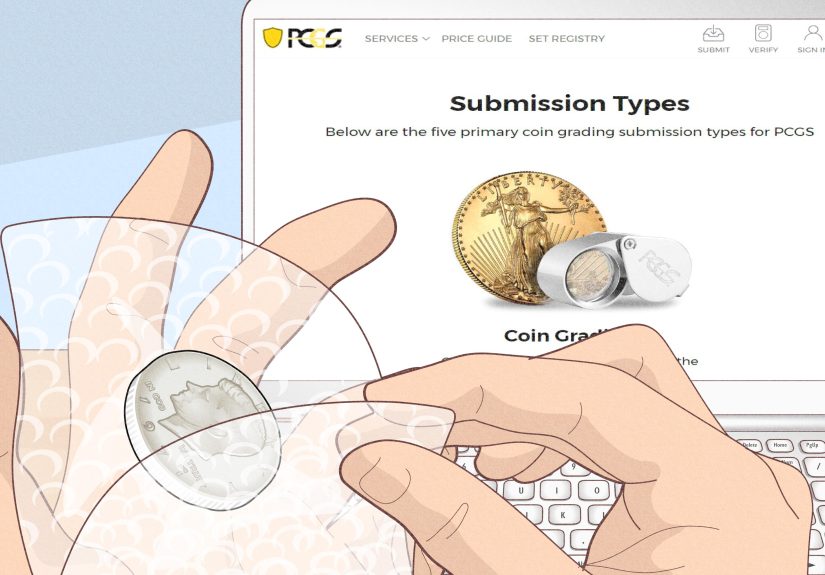
When professional grading is worth it (and when it’s not)
Third-party grading can dramatically change liquidity (how easily you can sell) and confidence (how much buyers trust what
they’re seeing). It can be especially useful when:
- The coin appears rare or high-grade and the price difference between grades is large.
- Counterfeits are common for the type you have.
- You plan to sell online or at auction, where buyer trust matters a lot.
But grading costs money, and not every coin deserves the red-carpet treatment. If your coin is common and circulated,
grading fees can exceed the coin’s value. A good rule: if you wouldn’t be at least mildly annoyed paying the grading fee
even if the coin comes back “meh,” don’t submit it.
Way #3: Verify Rarity and Real Market Demand (Not Just “Someone Listed It for $999”)
The market is where dreams either become cash… or become an unsold listing with “PRICE FIRM” and zero watchers.
To estimate coin value realistically, you need two things: how scarce your coin is in the grade you believe it is, and what
people actually pay for that coin.
Mintage vs. survival vs. certified population
Mintage numbers tell you how many coins were originally struck. But they don’t tell you how many survive today, how many
survive in high grade, or how many are available for sale.
That’s why collectors use tools like:
- Population reports: how many examples have been certified at each grade level.
- Rarity scales / estimates: attempts to translate survival and availability into practical scarcity.
A coin with a big original mintage can still be rare in top condition if most were heavily used. On the flip side, a coin with
a low mintage might not be expensive if collector demand is low. Scarcity mattersbut scarcity + demand is where value lives.
Compare prices the smart way: guides vs. auction results
Price guides are helpful for ballpark estimates, but they’re not a magic “your coin is worth this” certificate.
Here’s a sane workflow:
- Start with a respected guide for a range (retail estimates, typical market prices, etc.).
- Check dealer-focused pricing to understand the wholesale reality.
- Confirm with auction prices realized for coins that match your date/mint and grade as closely as possible.
Auctions are especially valuable for rarer coins because they show what competitive buyers actually paid, not what someone
hopes to get. When using auction comps, look for:
- Same date/mint mark (and variety if applicable)
- Same grading service and similar grade
- Similar eye appeal (toning, spots, marks)
- Recent sales (markets change)
Pick your selling lane and subtract fees (future you will thank you)
The “value” of a coin depends on how you plan to sell it:
- Local coin shop: fastest, but you’re likely getting a wholesale offer.
- Online marketplace: bigger audience, but fees, shipping, returns, and buyer questions add friction.
- Auction house: great for higher-end pieces, but seller fees and timelines apply.
- Coin shows: competitive offers if you know what you have and bring comparable pricing data.
A “$500 coin” isn’t really $500 if it costs $40 to grade, $20 to ship/insure, and 13% in selling fees. Always estimate your
net, not just the headline price.
Watch for counterfeits and too-good-to-be-true coins
Counterfeits are real, and they’re not limited to ancient gold doubloons in pirate movies. Many commonly collected U.S.
coins have been counterfeited, and fakes can be convincing in photos.
If a coin is expensive enough to hurt if you’re wrong, use safeguards:
- Compare weight/diameter/thickness to official specifications where possible.
- Use reputable sellers and documented provenance when available.
- Prefer certified coins for types that are heavily counterfeited.
- Learn the “diagnostics” that specialists use for common fakes in that series.
Putting It All Together: A Quick Value “Recipe”
Here’s a simple way to combine the three methods into one repeatable process:
- Identify the coin precisely: series, date, mint mark, type, and any recognized variety.
- Estimate the grade range: circulated vs. uncirculated, then narrow it based on wear and surfaces.
- Check metal value (if relevant): treat it as a floor, not the final answer.
- Validate scarcity: mintage + survival + population in your grade range.
- Confirm with real sales: auction results and credible market pricing, adjusted for fees.
Do that, and you’ll avoid the two most common traps: overpricing based on random listings, and underpricing a coin that’s
quietly special.
Real-Life Coin Value Experiences (What People Learn After a Few Mistakes)
Coin collecting has a funny way of teaching the same lessons again and againusually right after someone says,
“Don’t worry, I watched a video.” If you hang around coin clubs, shops, or even the calmer corners of the internet, you’ll
hear stories that sound different on the surface but share the same moral underneath.
One of the most common experiences starts like this: someone finds a dark, old coin and decides it should look “better.”
They polish it until it gleams. For about five minutes, it feels like a victoryuntil they learn that collectors often pay
more for originality than shine. The freshly polished coin may now have hairline scratches and an unnatural brightness
that gets flagged as a problem. That lesson stings because it’s so avoidable: the coin didn’t need to look new; it needed
to look real.
Another classic experience is the “silver edge” moment. People sort through quarters or half dollars and notice that some
coins show a different color on the edge compared with modern clad coins. Suddenly, the jar becomes a treasure hunt.
Sometimes it’s just normal wear or lighting. Other times, it’s a genuinely different composition issueand even if it’s
worn, that metal content can give it value above face. The practical takeaway: identification and composition checks can
be a quick win, especially when you’re sorting large amounts of change.
Then there’s the experience of discovering that grade isn’t a vibe. A coin can look fantastic to a beginner and still
be “average” to a serious collector, especially if it has small scratches, cleaning, rim damage, or weak luster.
That’s why many collectors develop a habit of comparing coins to professional photos and graded examples. Over time,
your eye gets sharper. You start noticing where wear shows first, how luster behaves in the light, and why two coins that
look “basically the same” can price very differently.
Market reality is another rite of passage. Someone finds a coin online listed for $1,000 and assumes they’ve struck gold.
Later they learn an uncomfortable truth: asking prices are wishes; sold prices are evidence. Once collectors start checking
prices realized and credible market guides, they get calmerand far more accurate. That’s when the hobby becomes less about
hype and more about pattern recognition: which dates are truly scarce, which grades are genuinely tough, and which “rare”
coins are actually common… just enthusiastically described.
Finally, many collectors recall the first time they encountered a convincing counterfeit or an “error” that turned out to be
damage. It’s a humbling moment, but it’s also useful. You learn to verify measurements, compare to official specifications,
and rely on diagnostics rather than gut feelings. For higher-value coins, you learn that certification isn’t just a plastic
holderit’s a way to reduce risk and make selling easier later.
Taken together, these experiences point to the same big idea: coin value is rarely a single clue. It’s a stack of evidence.
Identify it precisely. Grade it honestly. Confirm it with the market. And keep your cleaning supplies far, far away from your
potentially valuable coins.