Table of Contents >> Show >> Hide
- Quick Snapshot: What You’re Getting With ‘Profusion’
- Meet the Plant: Why Callicarpa bodinieri ‘Profusion’ Is Special
- Where to Plant It for the Best Berry “Wow”
- Care and Feeding: How to Keep ‘Profusion’ Happy
- Pruning ‘Profusion’ Without Sacrificing the Berry Show
- Wildlife Value and Seasonal Drama
- Landscape Design Ideas That Make ‘Profusion’ Look Expensive
- Common Problems (and How to Fix Them)
- FAQ: Quick Answers About Callicarpa bodinieri ‘Profusion’
- Conclusion: Your Shortcut to a Purple Fall Show
- of Garden Experience: Living With ‘Profusion’ Through the Seasons
- SEO Tags
If shrubs had a social calendar, Callicarpa bodinieri ‘Profusion’ would be the friend who’s quiet all summer,
then shows up in fall wearing a full set of purple pearls and steals the spotlight. This beautyberry doesn’t just
“add seasonal interest.” It throws a seasonal parade.
In this guide, you’ll get the practical, real-world care detailssun, soil, watering, pruning, and troubleshootingplus
design ideas that make those electric violet berries look like they were styled by a magazine editor with a caffeine habit.
Quick Snapshot: What You’re Getting With ‘Profusion’
| Common name | Beautyberry (Bodinier’s beautyberry) |
|---|---|
| What it’s famous for | Dense clusters of vivid violet-purple berries in fall, often lingering after leaves drop |
| Mature size | Typically a medium-to-large deciduous shrub; often around 6–10 feet tall, depending on site and pruning |
| Light | Full sun to partial shade (best berry production with more sun) |
| Soil & water | Average garden soil with decent drainage; likes consistent moisture, especially while establishing |
| Pruning timing | Late winter to early spring (flowers and fruit form on new growth) |
Meet the Plant: Why Callicarpa bodinieri ‘Profusion’ Is Special
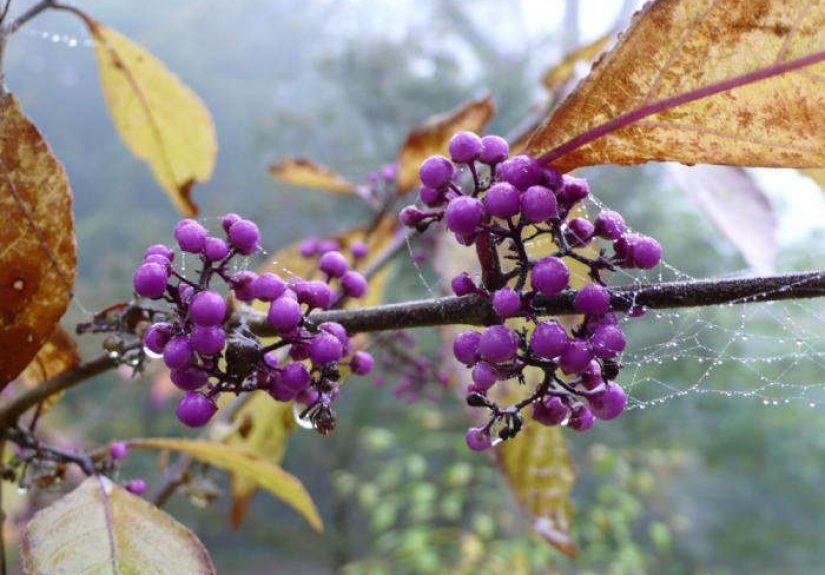
Beautyberries are a whole genre of shrubs, but ‘Profusion’ is one of the forms gardeners reach for when they want the
berry show to be the main event. It produces clusters of small fruits that ripen into that impossible violet colorlike
someone Photoshopped your hedge in the best way.
The flowers are charming but not flashysmall, lilac-to-pinkish blooms that appear along the stems in summerfollowed
by berries that mature later and become the headline in fall. The foliage plays supporting roles, too: new leaves can
emerge with bronzy tones, shift to green through summer, then take on warmer hues as the season turns.
Translation: it’s a plant with a slow-burn storyline. You won’t post it to social media in June. You will absolutely
post it in October.
Where to Plant It for the Best Berry “Wow”
Light: Sun = More Berries, Shade = More Chill
‘Profusion’ will tolerate partial shade, but if you want the berry display to look like it’s auditioning for a holiday
catalog, give it more sun. Full sun to part sun tends to produce heavier fruiting, while deeper shade can reduce the show.
Soil: Don’t Overthink ItDo Improve It
This shrub is not a diva about soil texture, as long as drainage is reasonable. What it appreciates most is a soil that
doesn’t swing wildly between swamp and dust. If your soil is sandy, add organic matter to hold moisture. If it’s heavy clay,
loosen the planting area and incorporate compost to improve structure.
Spacing: Give It Room to Arch
Beautyberry has an upright-to-arching habit. It looks best when it can make those graceful curves without being forced into
a tight box. Plant it where it can spread a bit and still breatheyour future self with the pruning shears will say thank you.
Plant in a Small Group if You Can
While you may still get fruit from a single plant, planting in a small grouping can improve pollination and lead to better berry set.
If you have space, two or three shrubs (even mixed beautyberry types) can turn “nice” into “whoa.”
Care and Feeding: How to Keep ‘Profusion’ Happy
Watering: Especially Important the First Year
After planting, water deeply and consistently through the establishment phase. Once roots are settled, beautyberries can handle
short dry spells better, but they perform bestespecially in berry productionwhen they aren’t stressed by drought.
Aim for even moisture, not constant sogginess.
- New plant: Deep watering 1–2 times per week (adjust for heat, rainfall, and soil type).
- Established plant: Water during extended dry periods, especially in summer.
Mulch: The Unsung Hero of Better Berries
A 2–3 inch layer of mulch helps keep moisture steady, moderates soil temperature, and reduces competition from weeds.
Keep mulch pulled back from direct contact with the stems to avoid moisture-related issues.
Fertilizing: Light Touch, Not a Buffet
If your soil is reasonably fertile, you often won’t need much fertilizer. Too much nitrogen can push leafy growth at the expense of flowers
and fruit. If growth looks weak, a modest spring feeding with a balanced, slow-release fertilizer (or compost top-dressing) is plenty.
Pruning ‘Profusion’ Without Sacrificing the Berry Show
Here’s the good news: beautyberry is extremely forgiving. Here’s the better news: it also rewards smart pruning with more vigorous new growth
and a fuller, denser look.
The key detail is timing. Beautyberries flower and fruit on new growth, so late winter to early spring pruning (while the plant is dormant)
works beautifully.
Option A: The “Bold Haircut” (Hard Prune)
If you like a compact plant and don’t mind looking at sticks for a little while, you can cut stems back hard in late winter/early spring.
Many gardeners cut beautyberries down to a low framework or near the ground to encourage strong new canes.
- Why it works: Strong new shoots = lots of flowering wood = lots of berries later.
- Best for: Shrubs that are leggy, overgrown, or you want to keep smaller.
Option B: The “Selective Refresh” (Thinning/Renewal Prune)
Prefer a more natural, taller arching form? Remove a portion of the oldest stems at the base each year (or remove about a third over a three-year cycle).
This rejuvenates the plant without a total reset.
- Why it works: You keep the graceful shape and reduce twiggy congestion.
- Best for: Maintaining a mature shrub as a landscape feature.
Pruning Mistakes That Can Reduce Berries
- Pruning too late in spring: You may remove the season’s new flowering growth as it’s gearing up.
- Shearing like a hedge: You’ll get a dense outer shell and a sad, shaded interior.
- Never pruning: You can end up with lots of older, less productive wood and a rangier look.
Wildlife Value and Seasonal Drama
Beautyberry earns its name in the human world, but it’s also part of the late-season buffet for wildlife. The shrubs can attract pollinators during bloom
and birds later when berries are present. In many gardens, the fruit is most appreciated visually at first, then gradually disappears as the season progresses.
A fun landscape trick: place ‘Profusion’ where it’s backlit by morning or afternoon sun. The berries can look like tiny ornaments floating along the stems.
It’s the closest you’ll get to “plant jewelry” without an Etsy shop.
Landscape Design Ideas That Make ‘Profusion’ Look Expensive
Use It as a Fall Focal Point
Because the berry color is so saturated, a single shrub can act as a seasonal focal pointespecially near paths, patios, or a window you actually look out of.
Plant it where you’ll see it in fall, not tucked behind the garage where only spiders can admire it.
Pair It With Plants That “Get Out of the Way”
The berries read best against calmer backdrops. Think evergreens, dark mulch, stone, or plants with simple winter silhouettes. Ornamental grasses, conifers,
and broadleaf evergreens can make that purple pop like neon (but classy neon).
Try a Woodland Edge Planting
In partial shade, ‘Profusion’ can be a great bridge between woodland plantings and sunnier borders. Let it mingle with ferns and shade perennials,
while still catching enough light to fruit.
Mass Planting for Maximum “Profusion”
If you have the space, plant a small drift. Multiple shrubs loaded with berries read as a design statement, not a single quirky shrub doing stand-up comedy solo.
Common Problems (and How to Fix Them)
“Why Don’t I Have Berries?”
- Too much shade: Move it (or prune overhead canopy) for more sun.
- Pruned at the wrong time: Do your main pruning in late winter/early spring.
- Not enough pollination: Consider planting in a small grouping to improve berry set.
- Drought stress: Water during dry stretches, especially midsummer when flower/fruit development ramps up.
- Patience: Some shrubs take a season to settle in before putting on their best show.
Leaf Spot or General “Summer Funk”
Beautyberries are often pretty tough, but they can experience leaf spot and other minor issues in humid or crowded conditions.
Improve airflow by thinning stems, avoid overhead watering late in the day, and clean up leaf litter if disease pressure is persistent.
Leggy Growth
Legginess is usually a light issue (too much shade) or a “no-pruning-ever” issue. Hard prune in late winter for a reset,
or use renewal pruning to keep a steady supply of young, productive stems.
FAQ: Quick Answers About Callicarpa bodinieri ‘Profusion’
Is it low maintenance?
Once established, yesespecially if you accept that it looks like a normal green shrub for part of the year and then becomes a fall superstar.
A little pruning and sensible watering during drought are the main asks.
Does it work in smaller gardens?
It can, but you’ll want to commit to pruning. If you want berries without the larger footprint, consider pairing ‘Profusion’ with a pruning plan:
either a yearly hard cutback or a disciplined renewal prune to keep it in bounds.
Do the berries last all winter?
Often they persist after the leaves drop and can remain into early winter, but timing varies with weather, site exposure, and wildlife.
Some years you’ll still see berries in colder months; other years they vanish faster (either eaten or knocked off by weather).
Conclusion: Your Shortcut to a Purple Fall Show
If you want a shrub that reliably delivers fall drama without requiring a weekly therapy session and a spreadsheet, Callicarpa bodinieri ‘Profusion’
is a strong pick. Give it sun for the best fruiting, steady moisture while it establishes, and a late-winter prune that fits your stylebold reset or selective refresh.
Then step back in autumn and enjoy the moment when your garden suddenly looks like it’s hosting a tiny purple lantern festival.
of Garden Experience: Living With ‘Profusion’ Through the Seasons
Gardeners who plant ‘Profusion’ often have the same first-year reaction: “It’s… nice?” The leaves are pleasant, the habit is fine, and it behaves politely.
That’s the setup. The payoff usually starts once the shrub is rooted in and pushing stronger new growth.
In spring, the shrub wakes up without much fuss. New growth can show a bronzy cast, and the structure matters more than people expect: a plant that was
pruned well in late winter tends to break with fresh, vigorous stems rather than a tangle of tired twigs. Many gardeners discover they like ‘Profusion’ most
when it’s allowed to keep an open, arching shapeless “meatball shrub,” more “fountain of stems.” If you’re going for that look, selective thinning feels
surprisingly satisfying: remove a few older canes at the base, and suddenly the whole plant looks refreshed.
Summer is when patience gets tested. The flowers are small, and from ten feet away the shrub reads as green texture. But here’s the behind-the-scenes
magic: this is the season when watering and light pay dividends. In hot spells, gardeners who water deeply (instead of spritzing the surface) often see better
vigor and less leaf stress. And if the plant is in a brighter spotespecially morning sunits growth is usually sturdier and fruit set tends to be heavier.
Then fall arrives, and ‘Profusion’ finally cashes the checks it’s been writing all year. Berries color up in clusters along the stems, and the effect is
instantly decorativeeven more so once some leaves begin to drop and the fruit becomes visually “uncovered.” One common experience: the shrub looks most
dramatic right after a leaf drop event, when the purple clusters hover along bare-ish branches like ornaments. If there’s an evergreen behind it, the contrast
can look almost staged.
In early winter, gardeners notice two things. First, berry persistence varies. In sheltered sites, some clusters can hang on longer; in exposed sites,
wind and weather may thin the show. Second, the shrub’s silhouette becomes part of the appeal. Those arching stems, especially after a good pruning plan,
can look elegant against frost or light snow. Many people end up placing ‘Profusion’ where it can be seen from insidenear a kitchen window or along the walk
because it’s one of the few shrubs that truly earns attention when most of the garden is napping.
The most consistent “aha” moment? Gardeners who embrace pruning stop worrying about “ruining” the plant and start treating it like a renewable resource.
Cut it back at the right time, and it responds with fresh growth andmore often than notan even better berry performance. ‘Profusion’ doesn’t ask for perfection.
It just wants a decent site, a drink when it’s thirsty, and permission to be its delightfully extra self in autumn.