Table of Contents >> Show >> Hide
- What Is Russia’s Single-Engine Stealth Fighter Supposed to Be?
- Design and Stealth: What the Shape Tells Us
- Performance Claims: The Numbers Everyone Repeats (and How to Read Them)
- Sensors and Avionics: Where Fifth-Gen Lives or Dies
- The Engine Question: Single-Engine = Lower Cost, Higher Pressure
- Timeline Reality Check: Where the Su-75 Stands in 2026
- Export Strategy: The Whole Pitch Depends on Buyers
- How the Su-75 Compares to Other Fighters (Without the Hype Fog)
- What to Watch Next: Signals That the Program Is Moving (or Stalling)
- Experiences: What It’s Like Following the Su-75 “Checkmate” Story in Real Time (About )
- Conclusion
Russia’s “new” single-engine stealth fighter isn’t exactly new-new. It first popped into the public eye as a full-size mockup in 2021, wearing the flashy nickname “Checkmate” like it was walking a red carpet. Since then, the aircraftcommonly referred to as the Sukhoi Su-75 (and sometimes marketed as a “Light Tactical Aircraft”)has lived in that modern defense-industry limbo: half engineering program, half export pitch, and 100% a magnet for hot takes.
So what do we actually know (and what’s still mostly brochure poetry)? Let’s break down the Su-75’s single-engine stealth-fighter concept, the design choices Russia is signaling, the performance claims being circulated, and the very real hurdles standing between “cool rendering” and “combat-ready squadron.”
What Is Russia’s Single-Engine Stealth Fighter Supposed to Be?
At its core, the Su-75 “Checkmate” is pitched as a fifth-generation-leaning fighter with stealth shaping, internal weapons bays, modern sensors, and lower operating costsbuilt to attract foreign buyers who want something “stealthy enough” without paying top-shelf prices.
The marketing message is simple: a single-engine jet that aims to play in the same broad conversation as aircraft like the F-35, but with a smaller price tag and (in theory) simpler maintenance. That’s a bold promise in any year. It’s even bolder in a world where fighter development timelines tend to stretch like taffy.
“Light Tactical” vs. “Actually Kind of Medium”
Russia has frequently described the Su-75 as a “light tactical” fighter. Analysts have pointed out that it looks closer to a medium-weight design in size and ambitionmore like “leaner than a heavyweight twin-engine jet,” rather than “tiny, cheap, and endlessly produced.”
Design and Stealth: What the Shape Tells Us
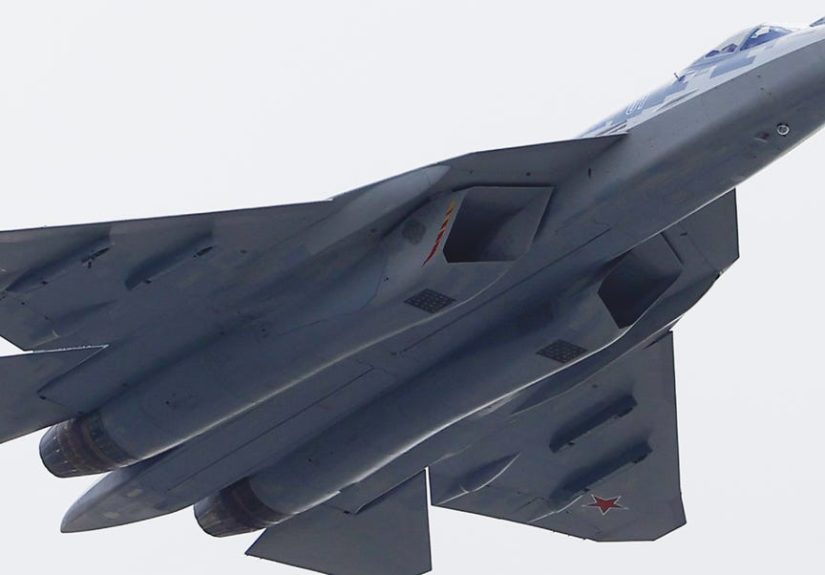
Even without a flying prototype in public view, the design language is pretty clear. The Su-75’s overall layout suggests an aircraft optimized to reduce detectionespecially from the frontwhile still keeping performance and cost in the conversation.
Stealth Is a Package, Not a Paint Job
A stealth aircraft isn’t just “pointy and expensive.” It’s the combination of shaping, materials, coatings, manufacturing precision, heat management, and sensor tactics. The Su-75’s publicized visuals emphasize shaping: faceted surfaces, careful edge alignment, and features intended to smooth airflow and reduce radar reflections.
But here’s the catch: shaping is the part you can show on a poster. The hard partslow-observable materials, consistent build quality, and a mature supply chaindon’t photograph as well.
The Intake: A Big Clue With a Very Specific Job
One of the most discussed features is the Su-75’s intake design. Recent reporting describes a diverterless supersonic inlet (DSI) style approachsimilar in concept to what helped make modern stealthy single-engine designs more feasible. In plain English: it’s meant to manage airflow efficiently while reducing radar “hot spots” and eliminating some complex intake hardware that can add weight and maintenance demands.
Design tweaks shown over timelike changes to the intake divider and refinements in the aircraft’s edges and control surfacessignal ongoing iteration. That’s normal in development. It’s also a reminder that the “final” Su-75 is still a moving target.
Performance Claims: The Numbers Everyone Repeats (and How to Read Them)
Public-facing specs for in-development fighters can be a little like dating profiles: technically true in spirit, aggressively optimistic in practice, and missing the part where you see how it behaves in real life.
Speed, Weight, and Payload (Claimed)
Published specifications tied to recent show materials have described a maximum takeoff weight around 26,000 kg (about 57,000 lbs), a top speed often stated around Mach 1.8–2, and payload claims around 7,400 kg (about 16,300 lbs), with a mix of external hardpoints and internal bays.
Those figuresif achieved with meaningful stealth and a modern sensor suitewould put the Su-75 in an interesting niche. The key phrase is: if achieved.
Range and “How Far It Really Goes”
Range numbers are often presented in the most flattering way possible (think “best-case ferry range” with ideal conditions). Combat radiushow far it can go, fight, and come back with reservesis typically smaller and more relevant. Until flight testing happens and operational configurations are known, range is mostly educated guessing dressed up in numbers.
Sensors and Avionics: Where Fifth-Gen Lives or Dies
Stealth gets the headlines, but sensors win the day. Russia’s messaging around the Su-75 emphasizes a modern sensor suiteoften described as including an AESA radar and an infrared search-and-track (IRST) capability. That’s consistent with what you’d expect for a contemporary fighter intended to detect threats, manage targeting, and operate in heavy electronic warfare conditions.
The “fifth-gen” leap is less about having a radar and more about how the aircraft fuses information from sensors, shares it, and presents it to the pilot. That takes software maturity, testing time, and a robust electronics ecosystemprecisely the areas where sanctions, import restrictions, and supply challenges can create painful bottlenecks.
The Engine Question: Single-Engine = Lower Cost, Higher Pressure
Single-engine fighters can be excellentefficient, cheaper to operate, and simpler to maintain. But the engine has to deliver reliable thrust, good fuel efficiency, and long service life. In a stealth design, the engine also affects heat management, signature control, and internal layout.
Russia has floated thrust-class figures in the broad 32,000–36,000 lbf neighborhood for the Su-75’s powerplant class. Whether that’s a mature, mass-producible engine in the right configurationand whether it can be built consistently at scaleis one of the make-or-break questions for the program.
Timeline Reality Check: Where the Su-75 Stands in 2026
As of early 2026, reporting reflects Russian officials continuing to say the program is progressing and that flight testing could begin in 2026. That’s a meaningful milestoneif it happensbecause a flying prototype changes everything: you can start validating aerodynamics, engine integration, and basic performance.
Still, it’s important to separate three different finish lines:
- Prototype flight: proves it can fly.
- Flight test program: proves it can fly safely and meet performance targets.
- Operational fielding: proves it can be produced, maintained, trained on, and supported in real units.
Many aircraft clear the first finish line and then spend years (or a decade) wrestling with the second and third.
Export Strategy: The Whole Pitch Depends on Buyers
One of the most consistent themes across analysis is that the Su-75’s business case leans heavily on export interest. The logic: foreign orders help fund development and production, which then lowers unit cost, which then attracts more buyers. It’s a classic flywheelwhen it works.
The tricky part is that buyers of advanced fighters also buy into the ecosystem: training, logistics, weapons compatibility, financing, upgrades, and long-term support. The moment sanctions risk enters that ecosystempayments, parts, avionics supply, even insurancedeal-making becomes much harder.
The Price Claim: “$25–30 Million” and the Fine Print
Russia has publicly floated very aggressive cost estimates (often repeated as roughly $25–30 million). That number is attention-grabbingand it’s clearly designed to be. But sticker price is only part of a fighter’s real cost. Buyers care about life-cycle expenses: spares, reliability, engine overhaul intervals, and whether upgrades arrive on schedule. A “cheap” fighter with expensive problems is just expensive with extra steps.
How the Su-75 Compares to Other Fighters (Without the Hype Fog)
The Su-75 is marketed in the lane of “affordable stealth” with modern sensors. That lane is crowded with:
- Proven platforms with upgrades: non-stealth fighters that are widely supported and continuously modernized.
- Established stealth programs: aircraft with mature production and logistics pipelines.
- Emerging competitors: nations developing newer designs, often with large industrial partnerships.
Russia’s advantageif it can deliverwould be offering a stealth-shaped fighter at a lower entry cost with a “good enough” sensor package. Its disadvantage is trust and infrastructure: buyers need confidence the program will exist, parts will arrive, and upgrades will keep coming five, ten, and fifteen years down the line.
What to Watch Next: Signals That the Program Is Moving (or Stalling)
If you want to track whether the Su-75 is becoming a real aircraft program rather than a traveling mockup, watch for these signs:
- A publicly verified first flight (not just “soon,” but a real date and test program progression).
- Evidence of prototype fleet growth (multiple test aircraft, not just one).
- Concrete engine and avionics disclosures with repeatable manufacturing evidence.
- Export announcements with financing and support details (training, spares, sustainment).
- Production facility readiness (tooling, supply chain, workforce stability).
In other words: fewer cinematic renders, more boring paperwork. In aerospace, boring is beautiful.
Experiences: What It’s Like Following the Su-75 “Checkmate” Story in Real Time (About )
Following the Su-75 story feels a lot like watching a movie trailer on repeat while the movie itself keeps getting delayed. The trailer is greatdramatic lighting, confident slogans, slick angles that make the jet look like it was designed by a stealthy origami master. And then the release date slides. Again. And again. If you’ve ever refreshed a page hoping for a “confirmed first flight” headline, you already understand the vibe.
There’s also a very specific rhythm to the coverage. Big reveal moments happen at air shows, where the program gets reintroduced to the world with new talking points: improved renderings, updated models, a refined intake, a sharper canopy edge, and a fresh promise about timelines. Aviation enthusiasts dissect every pixel like it’s the Zapruder film, zooming in to compare control surfaces and intake geometry. Analysts, meanwhile, read between the lines: if the visuals keep changing, that could mean healthy iterationor it could mean the program is still searching for a stable configuration.
One “experience” that stands out for many people who track defense tech is how quickly a jet can turn into a symbol. For some, the Su-75 becomes proof that Russia is still pushing ambitious aerospace concepts. For others, it becomes shorthand for “marketing first, manufacturing later.” The truth is usually less dramatic than either camp wants: defense aerospace is brutally hard, and the gap between a mockup and an operational jet is filled with test data, supplier contracts, software bugs, and the kind of engineering meetings that could put espresso out of business.
The export angle adds another layer. When you watch a program like this, you start noticing how often the conversation returns to buyers. It’s not just “can it fly?” but “who will fund it?” and “who will accept the political and logistical risk?” This is where the news about sanctions and technology restrictions tends to hit differently. It’s one thing to read a headline about supply-chain pressure; it’s another to realize that modern fighters are basically flying data centers with afterburners, and data centers don’t thrive when components get scarce.
And yesthere’s also the human element of it all: the way people latch onto the nickname “Checkmate,” the memes, the jokes about whether the jet is playing chess or just moving the same pawn forward one square every year. Humor becomes part of the experience because it’s the only sane reaction when an aircraft can simultaneously be “almost ready” and “not yet flown” for multiple calendar cycles.
If the Su-75 does achieve a verified first flight and enters a real test campaign, the tone will change overnight. The story will shift from “what it claims” to “what it demonstrates.” Until then, the experience of following it is a mix of genuine curiosity, cautious skepticism, and a quiet respect for how difficult it is to turn a stealth-fighter pitch into a sustained industrial reality.
Conclusion
Russia’s Su-75 “Checkmate” is best understood as an ambitious attempt to sell a single-engine stealth-leaning fighter into a competitive, politically complicated market. The design cuesinternal bays, modern inlet shaping, and sensor ambitionssignal that Russia wants to be seen as offering a next-gen product at an accessible price. But the program’s real test is not the brochure. It’s flight testing, production capacity, supply-chain resilience, and the ability to support customers for decades.
If you’re watching for the turning point, it’s simple: don’t wait for another render. Wait for verified flight activity, expanding prototype fleets, and concrete sustainment plans. That’s when “Checkmate” stops being a nickname and starts being an aircraft.