Table of Contents >> Show >> Hide
- Quick Primer: What “The Man Who Fell to Earth” Actually Is
- How These Rankings Work (So You Don’t Throw Popcorn at Your Screen)
- Overall Ranking: Best “Man Who Fell to Earth” Experience (Start Here)
- Deep-Dive Opinions: The 1976 Film (Nicolas Roeg + David Bowie)
- Deep-Dive Opinions: The 1963 Novel (Walter Tevis)
- Deep-Dive Opinions: The 2022 TV Series (Ejiofor + Harris)
- Ranking the Key Ingredients (Because That’s the Fun Part)
- So… Which One Should You Choose?
- How to Get the Best Viewing/Reading Experience
- Experiences Related to “The Man Who Fell to Earth Rankings And Opinions” (Extra )
- Conclusion: My Final Take
Some sci-fi stories land, make a crater, and then politely leave. The Man Who Fell to Earth lands, gets distracted by capitalism,
television, and human messiness, and then sticks around in pop culture like glitter in a carpet. It began as a 1963 novel by Walter Tevis,
became a hypnotic 1976 film starring David Bowie, and later resurfaced as a 2022 TV continuation with Chiwetel Ejiofor and Naomie Harris.
Different decade, same core question: what happens when an outsider arrives with a mission… and Earth insists on “making it complicated”?
This guide is an opinionated (but fair) ranking of the story’s major versions, plus a breakdown of what each one does best: performances,
themes, craft, and rewatchability. Consider it your friendly map through a beautiful, confusing, surprisingly emotional sci-fi universe.
Spoiler level is light-to-moderate: we’ll discuss themes and memorable beats without turning this into a plot-by-plot teardown.
Quick Primer: What “The Man Who Fell to Earth” Actually Is
At its simplest, the premise is classic: an alien arrives on Earth trying to save a dying home world. The twist is that the story isn’t
mainly about laser battles or space fleets. It’s about assimilation, exploitation, addiction,
and the way a mission can rot when it collides with human systemsmoney, power, media, and the slow drip of everyday compromises.
-
The novel (1963): Walter Tevis introduces Thomas Jerome Newton, an extraterrestrial who tries to build a future on Earth
while protecting his true purpose. The book is lean, sharp, and quietly devastating. -
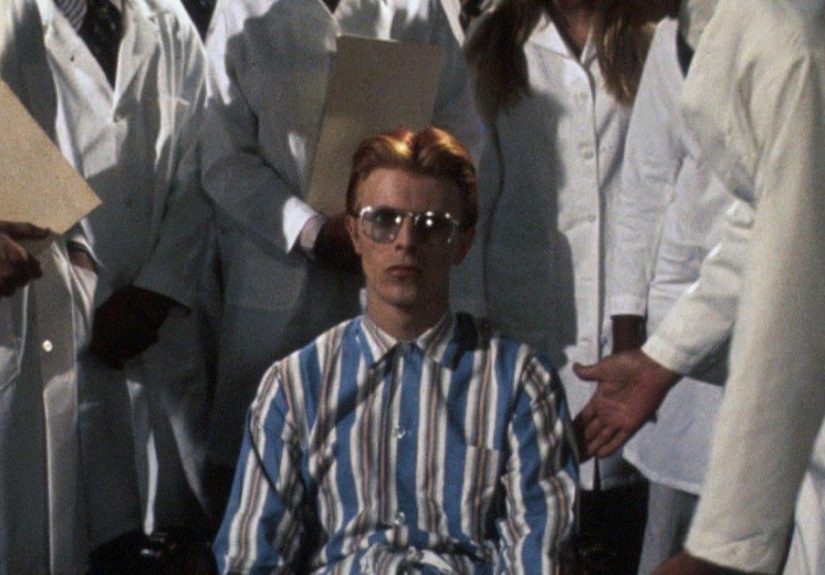
The film (1976): Director Nicolas Roeg turns the story into a dreamlike, visually daring experience starring David Bowie as Newton.
It’s iconic, disorienting, and emotionally bruising in a very 1970s way (complimentary). -
The TV series (2022): A Showtime-era continuation reframes the story through modern anxietiestechnology, climate,
disinformationanchored by Ejiofor as Faraday and Harris as Justin Falls, with Bill Nighy connected to Newton’s legacy.
How These Rankings Work (So You Don’t Throw Popcorn at Your Screen)
Rankings and opinions are only fun if the rules are clear. Here’s what I used to judge each version:
- Story punch: Does it hit emotionally and conceptually, or does it just vibe?
- Craft: Writing, directing, pacing, imagery, performances.
- Cultural impact: How much it shaped the conversation (and how long it stuck around).
- Rewatch/ reread value: Does it get better when you return to it?
- “Earth relevance”: Does it speak to the world we live in right now?
Overall Ranking: Best “Man Who Fell to Earth” Experience (Start Here)
-
#1 The 1976 Film: The Definitive Mood (and the Icon)
If you want the version people mean when they call this story a cult classic, it’s the Roeg film. It’s not always “clear,” but it’s
consistently feltlike a poem you don’t fully translate, yet somehow understand in your bones. -
#2 The 1963 Novel: The Cleanest Story and the Sharpest Tragedy
The book is the most straightforward path into the story’s heart: an outsider’s mission, the seductive trap of “fitting in,” and the
slow collapse of purpose. It’s also the best choice if you hate “Wait… what just happened?” as a storytelling technique. -
#3 The 2022 TV Series: Ambitious, Relevant, Uneven (Still Worth a Try)
The series swings bigsometimes it connects beautifully, sometimes it overreaches. But it earns points for updating the moral pressure
points (environmental collapse, tech power, public manipulation) and for two leads who bring real warmth to a cold premise.
Deep-Dive Opinions: The 1976 Film (Nicolas Roeg + David Bowie)
Why It Works: A Sci-Fi Story Told Like a Fever Dream
Roeg doesn’t direct like he’s guiding you down a hallway. He directs like he’s handing you a box of photographs and saying,
“You’ll get it. Eventually. Probably.” The film’s structure can feel fragmentedjumping through time and moodyet that fragmentation
matches the central idea: Newton is never fully “here,” even when he’s standing in the room.
Bowie’s performance is the film’s gravity. He plays Newton with an eerie calmelegant, remote, almost translucent. It’s not just “good casting.”
It’s casting that becomes meaning: the star persona, the alienation, the sense of being watched and misunderstood.
Best Things the Film Does (Ranked)
- Atmosphere: The film feels lonely even when it’s loudan impressive trick.
- Visual storytelling: You can pause almost anywhere and get an image that looks like an album cover… because it basically is.
- Corporate satire: Watching genius get converted into “product” has rarely been so bleakly stylish.
- Theme delivery: It doesn’t preach; it lets discomfort do the talking.
- Rewatch depth: The first viewing is confusion; the second is “Oh, that’s what you were doing.” The third is emotional damage.
The Fair Critique: It Can Feel Cold, Confusing, and Long
Even admirers admit the film can be a tough hang. Some viewers bounce off the pacing or the deliberately jagged narrative. There’s also a real
historical footnote that matters for modern audiences: different cuts exist, and a shorter theatrical version in the U.S. contributed to the
“Wait, did I miss a whole chapter?” feeling. If you can, seek out a more complete version.
Still, here’s my take: the confusion isn’t a bug; it’s a featurewith the fine print that not everyone enjoys features.
If you like your stories neat, this movie will not neatly fold itself and sit politely in your mental drawer.
Deep-Dive Opinions: The 1963 Novel (Walter Tevis)
What the Book Nails: The Tragedy Is Clearer (and Somehow Sadder)
Tevis writes Newton’s mission with a kind of tragic efficiency. The novel’s emotional engine isn’t “alien technology.”
It’s the slow erosion of hopehow an outsider can be both brilliant and helpless against a world that measures everything
in money, leverage, and obedience.
The book also reads like an early warning about media influence and cultural absorption. Newton learns Earth through television and
tries to “become acceptable” using the very tools that will later trap him. It’s a story about trying to save others while
accidentally losing yourselfone compromise at a time.
Book vs. Film: The Biggest Difference in One Sentence
The novel is a tragedy you can trace; the film is a tragedy you can feel.
The book makes the chain of events easier to follow. The film makes the chain harder to ignore.
Deep-Dive Opinions: The 2022 TV Series (Ejiofor + Harris)
What the Series Adds: Hope, Urgency, and a Modern Lens
The series doesn’t merely re-stage the original premise; it shifts the emotional temperature. Where the film often feels like a warning,
the show tries to be a warning and a plea: maybe people can still choose better.
That shift matters because modern audiences are already living inside multiple overlapping crisesclimate, trust, tech power,
and the feeling that reality is being edited in real time.
Ejiofor’s Faraday brings an open-hearted, sometimes even comedic innocence that makes the character’s learning curve enjoyable to watch.
Naomie Harris plays Justin Falls with grounded intelligence and griefthe kind of character who’s exhausted by life but still capable of
lighting up when she remembers why science (and hope) mattered to her.
What Works Best (Ranked)
- Lead performances: Ejiofor anchors the show even when the plot gets wobbly.
- Relevance: The environmental and tech themes feel current rather than retrofitted.
- Character pairing: The story is strongest when it stays close to Faraday and Justin.
- World-building: The desert setting and corporate intrigue echo the original while moving forward.
Where It Stumbles: Pacing and “Too Many Shows at Once”
The most common complaint is structural: the series can feel like multiple tones fighting for the steering wheel.
Some episodes lean into mystery, others into corporate thriller, others into quirky fish-out-of-water comedy.
When it clicks, it’s compelling. When it doesn’t, you feel the gears.
Ranking the Key Ingredients (Because That’s the Fun Part)
Best Lead Performance
- David Bowie (1976): The most iconic “alien among humans” performance in this story’s history.
- Chiwetel Ejiofor (2022): The most emotionally accessible and human (ironically) lead interpretation.
- The novel’s Newton (1963): The most fully explained internal tragedyless “performance,” more slow heartbreak.
Best Use of Theme
- Novel: Clean moral trajectory; devastating consequences.
- Film: Theme via imagery and atmosphere; the mood does the meaning-making.
- Series: Theme via modern issues; sometimes blunt, often timely.
Most Rewatch/ Reread Value
- Film: New details pop out every timeediting, symbolism, visual echoes.
- Novel: Fast reread, sharper on the second pass.
- Series: Best as a focused binge if you enjoy character-driven sci-fi.
So… Which One Should You Choose?
- If you love arthouse cinema or “beautifully weird” storytelling: start with the 1976 film.
- If you want the clearest narrative and the cleanest tragedy: start with the 1963 novel.
- If you want modern relevance and character warmth: try the 2022 series (and give it a few episodes to settle).
How to Get the Best Viewing/Reading Experience
A small but meaningful tip: don’t treat The Man Who Fell to Earth like a puzzle you must “solve.”
Treat it like a mood you explore. The story is less about plot mechanics and more about emotional consequences:
what temptation does, what power does, what loneliness does. If you go in expecting a tidy sci-fi adventure,
you’ll feel betrayed. If you go in expecting a human story wearing a sci-fi coat, you’ll have a better time.
Pair it with the right vibe: late-night watch, low distractions, and the willingness to sit with uncomfortable ideas.
This is not “fold laundry sci-fi.” This is “stare at the ceiling afterward” sci-fi.
Experiences Related to “The Man Who Fell to Earth Rankings And Opinions” (Extra )
Ask five people about The Man Who Fell to Earth and you’ll get six opinionsbecause one of the most consistent experiences
across the novel, film, and series is how strongly it reflects the viewer’s mood back at them. Some nights it feels like a cautionary tale
about greed and distraction. Other nights it plays like a lonely immigrant story. On certain rewatches, it’s basically a horror film about
“normal life” slowly winning through boredom, comfort, and compromise.
The first-time film experience is often a mix of fascination and mild panic. You’ll have moments of “This shot is gorgeous”
immediately followed by “Wait, are we in the past? the future? a memory? a commercial?” That confusion can be frustrating, but it can also be
part of the charm. Many fans describe the film like a dream they can’t fully retell, even though they remember exactly how it made them feel.
If you watch it with friends, the post-movie conversation becomes half the entertainment: everyone compares notes, argues about what mattered,
and suddenly you’re ranking scenes like you’re running a tiny film festival in your living room.
The reading experience is different: the novel gives you traction. You can see the steps of Newton’s plan and the way human
systems close around him. Readers often come away less dazzled but more saddened. It’s the kind of book where you can feel the exact moment
the mission begins to slipnot with a single dramatic disaster, but with a series of “small yeses” that add up to a life going off course.
That’s why rankings can get heated: some people prefer the film’s hypnotic artistry, while others prefer the book’s clean emotional logic.
You’re not just ranking formatsyou’re ranking how you like to be hurt.
The series experience tends to be the most personal for modern audiences, because it pulls the story toward problems people
talk about at school, at work, and online: climate anxiety, the power of corporations, the chaos of media ecosystems, and the sense that the
future is arriving faster than we can emotionally process. Viewers who connect with the show often say they stayed for the relationship between
Faraday and Justintwo isolated people trying to build something meaningful in a world that keeps demanding shortcuts.
One of the best “ranking experiences” is to do a mini-marathon: read a few chapters of the book, watch the film, then sample the first two
episodes of the series. You’ll notice how each version emphasizes a different fear. The novel fears systems. The film fears
temptation. The series fears timethat we’re running out of it, and we may not be brave enough to change.
By the end, your opinions won’t just be about entertainment. They’ll be about which warning feels most true to your life right now.
Conclusion: My Final Take
If you want the single most iconic expression of The Man Who Fell to Earth, the 1976 film is still the top pickstrange, stylish,
and quietly brutal in the way it shows a mission dissolving into distraction. If you want the cleanest emotional trajectory, read the 1963 novel.
And if you want a modern continuation that tries to wrestle the story into today’s crises, the 2022 series is a worthy (if imperfect) attempt.
Ultimately, the best ranking is the one that matches your taste: do you want your sci-fi to be a straight road, a haunted maze, or a long
conversation with the present day? The Man Who Fell to Earth has a version for eachand all of them ask the same unsettling question:
if salvation showed up at our door, would we recognize it… or would we hand it a remote and say, “Cool, can it also stream?”