Table of Contents >> Show >> Hide
- Why Pork Roast Loves Bold Flavor
- 8 Pork Roast Recipes Worth Putting on Repeat
- 1. Herb-and-Garlic Pork Loin with a Savory Wet Rub
- 2. Honey-Lime Glazed Pork Roast with Roasted Peppers
- 3. Apple, Bacon, Rosemary, and Pecan Stuffed Pork Loin
- 4. Apricot-Shallot Stuffed Pork Roast
- 5. Mushroom-Stuffed Pork Roast with White Wine Shallot Sauce
- 6. Maple-Orange Chili Glazed Pork Roast
- 7. Brown Sugar Spice-Rubbed Pork Loin
- 8. Orange-Rosemary Pork Shoulder with a Glossy Citrus Sauce
- How to Choose the Right Cut for These Recipes
- Tips for Better Pork Roast Every Time
- Conclusion
- Real-Life Experience: What These Pork Roast Recipes Teach You in an Actual Kitchen
Pork roast has a funny reputation. People either treat it like a weeknight hero or like a kitchen landmine that will somehow turn into dry, beige disappointment if you blink too hard. The good news? Pork roast is much friendlier than its reputation suggests. With the right filling, sauce, or rub, it becomes one of the most versatile centerpieces you can put on a table.
This guide rounds up eight original pork roast recipe ideas inspired by the flavor patterns that show up again and again in top American cooking sources: sweet-and-savory glazes, herb-packed rubs, bold mustard finishes, and stuffings that turn a simple roast into something worthy of a holiday platter. Some are cozy enough for Sunday dinner. Others are dramatic enough to make your guests suspicious that you secretly went to culinary school. You did not. You just bought pork and made good choices.
One important note before the fun begins: whole pork roasts are at their best when cooked until juicy, not until they resemble an old shoe. Use a thermometer, pull the roast when it reaches a safe internal temperature, and let it rest before slicing. That rest time is not optional. It is the difference between “wow, this is tender” and “why is there a pork flood on my cutting board?”
Why Pork Roast Loves Bold Flavor
Pork is naturally mild, which is exactly why it plays so well with strong seasonings. It can handle earthy herbs, sweet fruit preserves, smoky spices, citrus, garlic, mustard, and rich pan sauces without getting overwhelmed. In practical terms, that means you can steer a pork roast in a lot of different directions depending on the occasion.
Want a cozy cold-weather dinner? Go with apples, bacon, rosemary, and Dijon. Need something brighter? Orange, honey, lime, or apricot will wake the whole thing up. Feeding a holiday crowd? Stuffed loin with mushrooms, greens, rice, or dried fruit looks impressive and tastes even better. Pork roast is basically the white button-down shirt of the dinner world: simple at first glance, but surprisingly stylish with the right accessories.
8 Pork Roast Recipes Worth Putting on Repeat
1. Herb-and-Garlic Pork Loin with a Savory Wet Rub
This is the roast for people who want maximum reward with minimum drama. A wet rub made with garlic, oregano, Dijon mustard, olive oil, salt, and black pepper creates a deeply savory crust without needing a long ingredient list. It is bright, fragrant, and dependable, which is a solid personality profile for dinner.
Use a boneless pork loin roast and rub the mixture all over the meat. Roast until just cooked through, then let it rest before slicing. The flavor is clean and classic, which makes it ideal when you want the pork to pair well with almost anything, from roasted potatoes to green beans to buttery rice.
Best for: easy family dinners, meal prep, and anyone who believes garlic should always be measured with the heart.
2. Honey-Lime Glazed Pork Roast with Roasted Peppers
If plain roast pork feels a little too sensible for your mood, a honey-lime glaze fixes that quickly. The honey brings shine and caramelization, while lime adds just enough tang to keep the sweetness from taking over. The result is glossy, lively, and impossible to describe as boring.
This recipe style works especially well with pork loin because the glaze gives the outside a sticky-sweet finish while the interior stays tender. Add bell peppers to the roasting pan for color and a subtle sweetness that echoes the glaze. It is the kind of dinner that looks cheerful before you even taste it.
Best for: weeknights that need a little sparkle and dinners where you want a sweet-savory balance without going full dessert-meets-meat.
3. Apple, Bacon, Rosemary, and Pecan Stuffed Pork Loin
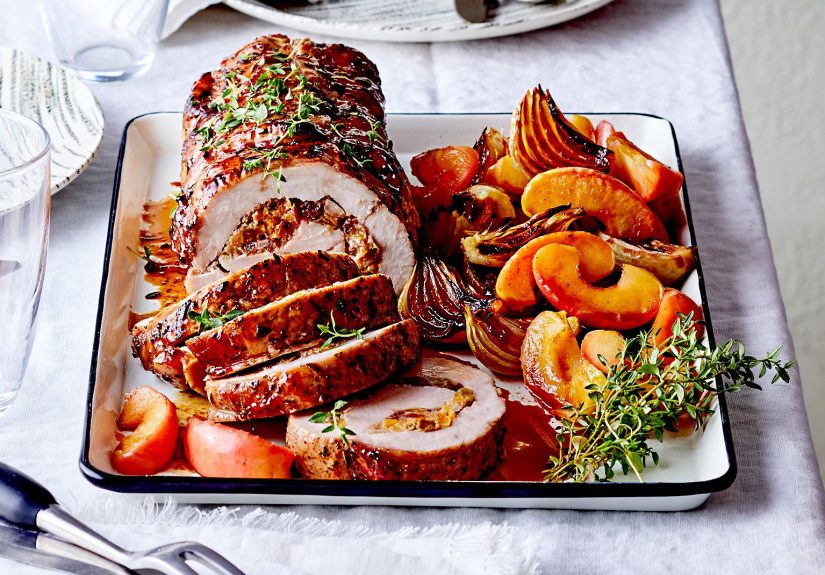
This is a classic flavor combination for a reason. Apples bring gentle sweetness, bacon adds smoky richness, rosemary keeps everything woodsy and aromatic, and pecans contribute crunch and warmth. Rolled inside a butterflied pork loin, the filling turns each slice into the kind of thing people point at before asking for seconds.
A brush of Dijon or stone-ground mustard on the outside gives the roast a sharp edge that cuts through the richness. Serve it with mashed potatoes, roasted carrots, or a bitter green salad for contrast. This one lands squarely in “holiday worthy but still approachable” territory.
Best for: fall dinners, entertaining, and pretending your dining room is much fancier than it actually is.
4. Apricot-Shallot Stuffed Pork Roast
For a slightly more elegant direction, go with an apricot and shallot stuffing. Dried apricots bring concentrated sweetness and a pleasant chew, while shallots add mellow onion flavor without the sharpness of regular onions. Together, they create a filling that feels refined but not fussy.
This style works beautifully for a roast you want to serve at a dinner party because the flavor leans sophisticated without becoming strange. A little white wine, stock, or pan juices can be turned into a quick sauce for the plate. The sweet-and-savory contrast makes every bite interesting, which is really what great roast pork is all about.
Best for: special occasions, date nights at home, and anyone who likes their dinner to feel just a tiny bit fancy.
5. Mushroom-Stuffed Pork Roast with White Wine Shallot Sauce
Mushrooms and pork are a dream team. Mushrooms bring deep, savory flavor and a little earthiness that makes pork taste richer and more robust. Stuff them into a roast with herbs and aromatics, then finish the dish with a white wine shallot sauce, and suddenly dinner feels restaurant-level in the best way.
The key here is balance. Mushrooms can be intense, so keep the seasoning thoughtful: garlic, thyme, parsley, black pepper, and a touch of butter are all excellent choices. The shallot sauce lifts the whole dish so it does not feel too heavy. It is luxurious without becoming sleepy.
Best for: holiday tables, Sunday suppers, and mushroom lovers who have never once said, “No thanks, that’s enough mushrooms.”
6. Maple-Orange Chili Glazed Pork Roast
This version brings together maple syrup, orange juice, a little vinegar, and chili for a glaze that tastes layered instead of simply sweet. The maple adds depth, the orange adds brightness, and the chili offers a gentle kick that keeps the glaze from becoming syrupy in a one-note way.
This profile works especially well when you want a roast that feels festive but not overly heavy. Brussels sprouts, sweet potatoes, or roasted onions make natural side dishes because they soak up the extra glaze beautifully. It is a cheerful, shiny, crowd-friendly roast that practically begs for a big serving platter.
Best for: holiday dinners, cozy gatherings, and people who enjoy a little heat hiding under a sweet finish.
7. Brown Sugar Spice-Rubbed Pork Loin
Sometimes the answer is not stuffing or sauce. Sometimes the answer is a boldly seasoned dry rub that creates its own crust in the oven. A good pork rub usually leans on brown sugar, black pepper, garlic powder, mustard powder, paprika, onion powder, ginger, thyme, and a little cayenne or red pepper for spark.
As the roast cooks, the sugar helps build caramelization while the spices create a flavorful outer layer that tastes sweet, savory, smoky, and just a bit warm. Slice it thin and serve it with pan juices, mustard, or even a simple salad. It is also excellent for leftovers, sandwiches, and midnight refrigerator negotiations.
Best for: busy cooks, make-ahead meals, and anyone who loves a roast with a great crust.
8. Orange-Rosemary Pork Shoulder with a Glossy Citrus Sauce
Pork shoulder is the roast you choose when you want richness, tenderness, and the kind of aroma that makes people drift into the kitchen “just to see what’s going on.” A citrus-forward glaze built around orange, rosemary, and a touch of sweetness transforms slow-roasted shoulder into a showpiece.
Because pork shoulder has more fat and connective tissue than loin, it rewards slower cooking and comes out deeply flavorful. The citrus cuts through the richness, and rosemary keeps the flavor grounded. This is the sort of roast that tastes even better with crusty bread nearby to catch every drop of sauce.
Best for: feeding a crowd, leftovers that improve overnight, and anyone who believes dinner should smell amazing from three rooms away.
How to Choose the Right Cut for These Recipes
Not all pork roasts behave the same way, and choosing the right cut makes a major difference. Pork loin is leaner, neater, and ideal for rubs, glazes, and stuffed presentations where clean slices matter. Pork shoulder is richer and more forgiving, which makes it a smart choice for slower roasting and bolder sauces. Rib roasts and crown roasts are dramatic centerpiece options when presentation matters as much as flavor.
If you want tidy slices for a beautiful platter, choose loin. If you want succulent, pull-apart texture and deeper pork flavor, choose shoulder. If you want your guests to say, “Whoa,” before anyone has even sat down, choose a rib roast or crown roast and accept your compliments graciously.
Tips for Better Pork Roast Every Time
- Use a thermometer: guessing leads to dry pork and unnecessary regret.
- Salt in advance when possible: even a short rest with seasoning improves flavor.
- Do not skip the resting time: juices need a moment to settle back into the meat.
- Balance rich pork with acid: mustard, citrus, vinegar, or fruit keeps flavors lively.
- Think about texture: crunchy nuts, soft fruit, crisped bacon, and silky sauces make a roast feel more complete.
Conclusion
The beauty of pork roast recipes is that they can be as simple or as showy as you want. A quick herb rub can save a weeknight. A stuffed loin can anchor a holiday dinner. A glossy glaze can make an ordinary roast look like it belongs on the cover of a food magazine. The trick is not to overcomplicate it. Start with a good cut, match it with flavors that make sense, cook it carefully, and let the roast do the heavy lifting.
If you are building a pork roast lineup for the season, think in categories. Keep one reliable herb-and-garlic roast for easy dinners. Add one fruit-forward glaze for when you want something brighter. Choose one stuffed roast for entertaining. And never underestimate the power of a killer spice rub, because sometimes the best sauce is confidence and a sharp carving knife.
Real-Life Experience: What These Pork Roast Recipes Teach You in an Actual Kitchen
After making pork roast in more forms than any normal person probably needs, a few truths become very clear. First, pork is far more forgiving than its old reputation suggests. The real secret is not magic, luck, or a celebrity chef whispering into your Dutch oven. It is timing, temperature, and flavor balance. Once you stop overcooking pork, everything changes. The meat stays juicy, the slices look prettier, and suddenly people start using words like “tender” and “amazing,” which is always nice when you are the one doing the dishes later.
Another thing you learn quickly is that fillings, sauces, and rubs are not just decorative extras. They solve real kitchen problems. A stuffing adds moisture and excitement to a lean roast. A glaze gives the outside color and character, especially when a plain roast might otherwise look a little too modest on the platter. A rub builds a crust that makes every slice taste seasoned all the way through, even when the ingredient list is fairly simple. In other words, flavor add-ons are not showing off. They are strategy.
There is also the issue of confidence. The first time you butterfly a pork loin, it can feel like performing minor surgery with kitchen twine standing by as emotional support. But after you do it once, you realize it is mostly about patience, not perfection. If the roast looks a little uneven, tie it up and keep moving. Once it is roasted and sliced, people notice the flavor long before they notice your geometry.
Experience also teaches you that side dishes matter. Pork roast loves company that can either absorb juices or provide contrast. Mashed potatoes, rice pilaf, crusty bread, roasted vegetables, bitter greens, and crisp salads all earn their place. A rich stuffed pork loin with bacon and nuts practically begs for something fresh and sharp on the side. A sweet glaze wants a savory vegetable nearby to keep the plate balanced. It is less about rules and more about avoiding a dinner that tastes like one long note.
Then there are leftovers, which may be the most underrated part of the whole pork roast story. A good roast becomes sandwiches, grain bowls, salads, tacos, fried rice, or next-day pasta add-ins with almost no effort. A shoulder roast in particular seems to wake up the next day with even more personality. That makes pork roast one of the smartest meals for anyone who wants dinner tonight and a head start on tomorrow.
Most of all, cooking these kinds of pork roast recipes teaches you to relax a little. Not every roast needs to be a grand event. Sometimes it is just garlic, mustard, herbs, and a decent pan. Sometimes it is a stuffed centerpiece with enough flair to make people take pictures before eating. Both versions count. Both are useful. And both remind you that a well-cooked pork roast is one of the easiest ways to make dinner feel generous, comforting, and just a little bit special.