Table of Contents >> Show >> Hide
- What Happened: The Comment, the Clapback, and the Timing
- Why This Hit a Nerve: Grief, Legacy, and the “Too Soon” Problem
- Two Rock Legends, Two Very Different Ideas of “Seriousness”
- What the Music World Actually Owes Ozzy
- When Feuds Go Viral: Why This Escalated Fast
- A Smarter Way to Talk About Artists After They’re Gone
- Experiences That Feel Familiar to Fans: Grief, Gatekeeping, and Growing Up With Rock Legends (Bonus Section)
- Conclusion
Rock history has no shortage of feuds, but this one landed with a special kind of thud: the kind you hear when someone
drops a hot take into a room full of people still holding funeral programs.
In the weeks after Ozzy Osbournethe Black Sabbath frontman who helped invent heavy metal and later became a pop-culture
weather systemall but disappeared from earth, Roger Waters made a blunt comment that framed Ozzy’s public presence as
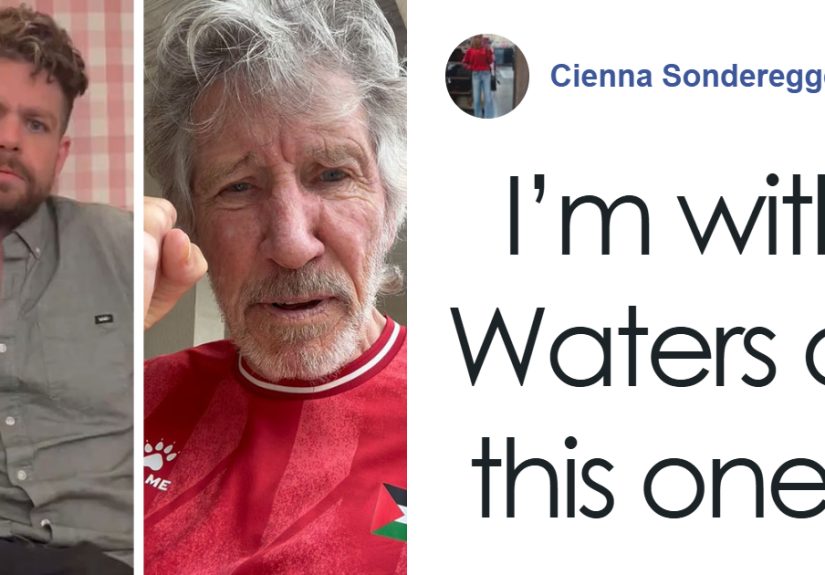
“idiocy and nonsense.” Ozzy’s son Jack Osbourne responded in the most time-honored rock tradition available in 2025:
a social post that essentially said, “Absolutely not, sir.”
What followed wasn’t just celebrity drama. It was a clash between two different ideas of what rock is “supposed” to be:
political art vs. chaotic spectacle, album-era seriousness vs. reality-TV mass appeal, and the messy question of how we talk
about complicated icons right after they’re gone.
What Happened: The Comment, the Clapback, and the Timing
Roger Waters’ “idiocy and nonsense” remark
Waters’ comments surfaced from an interview in which he was criticizing modern media prioritiesarguing that serious issues get pushed aside
in favor of celebrity coverage. Ozzy’s death became part of that argument, and Waters described Ozzy’s long presence on TV using the phrase
“idiocy and nonsense,” while also dismissing Black Sabbath with “I don’t care about Black Sabbath, I never did,” and joking about infamous
onstage lore in a way that many fans felt was both inaccurate and unnecessarily snide.
Even if Waters’ larger point was “the media chases shiny objects,” the delivery landed like he was scolding mourners for caring about an artist
whose work mattered to them. It’s the rhetorical equivalent of showing up to a wake and yelling, “Actually, the playlist is historically overrated.”
True or not, read the room.
Jack Osbourne’s response: grief with a guardrail
Jack Osbourne fired back publicly, calling Waters “pathetic” and “out of touch,” and accusing him of seeking attention through controversy.
The message was sharp, emotional, and clearly fueled by the timing: this wasn’t an abstract debate about art. It was a son defending his father
while the loss was still fresh.
Importantly, Jack’s response wasn’t framed as a polite request for a warmer tone. It was the kind of “back off” you expect when someone kicks dust
into a family’s grief. Whether you think public figures “should ignore it” or “shouldn’t post,” the emotional logic is easy to follow:
if you feel like someone disrespected your dad, you don’t draft a memoyou react.
Why This Hit a Nerve: Grief, Legacy, and the “Too Soon” Problem
When a major artist dies, two things happen at once: fans create a public memorial, and the media creates a public narrative.
Those narratives often flatten people into either saints or punchlines. Ozzy’s life had enough chapters to fill a librarymusical innovation,
personal struggles, outrageous stories, reinventionsand people were still sorting through it.
So when Waters reduced Ozzy’s cultural footprint to “idiocy and nonsense,” it didn’t read like a critique of media incentives.
It read like a verdict on Ozzy’s entire existencedelivered right after his death, when people were celebrating a legacy that stretched from
early Sabbath records to solo hits to an entire generation of metal culture.
There’s also a “scale” issue here. Ozzy was not just famous; he was foundational. If you grew up on metal, Sabbath is the family tree.
If you didn’t, Ozzy still probably existed in your world via headlines, interviews, documentaries, and a reality show that turned rock stardom into
a living-room sitcom. Either way, reducing him to “nonsense” felt like dismissing millions of people’s emotional history as a mass delusion.
Two Rock Legends, Two Very Different Ideas of “Seriousness”
Roger Waters: the album as argument
Waters built much of his public identity on the belief that music should confront powerwar, propaganda, consumerism, authoritarianism, and media framing.
When he talks, he often talks like he’s still writing liner notes for a concept album: the world is a system, and your job is to notice the machine.
In that worldview, celebrity obsession can look like a sedative.
The trouble is, moral arguments delivered with contempt tend to turn into performance. Audiences stop hearing “think critically” and start hearing
“I’m smarter than you.” And once the tone becomes scolding, the actual point gets lost in the splash zone.
Ozzy Osbourne: the stage as myth (and sometimes a sitcom)
Ozzy’s legacy is complicated in a different way. Musically, he helped shape a genre. Culturally, he became a symbolsometimes a scary one,
sometimes a lovable one, sometimes a headline magnet. For many fans, that mix is the whole point: the music is heavy, the persona is theatrical,
and the human underneath is flawed, funny, resilient, and weirdly relatable.
If Waters is “the artist as essayist,” Ozzy was “the artist as living legend.” One side sees spectacle as distraction. The other sees spectacle as a
languagean exaggerated mask that lets the music hit harder.
What the Music World Actually Owes Ozzy
Strip away the feud and you get to the core question: what does Ozzy’s career mean in practical terms? A lotespecially if you measure influence
by what happened after the early records hit.
Black Sabbath: the blueprint
In the early days, Black Sabbath didn’t just write songs; they defined a sound palette: down-tuned heaviness, ominous riffs, and a darker emotional
atmosphere that contrasted sharply with the brighter rock radio of the time. That template fed entire subgenresdoom, stoner, thrash, and beyond.
And while music debates love to argue about who “invented” what, the real point is simpler: countless bands built careers in the house Sabbath helped frame.
If you’ve ever heard a slow, crushing riff that feels like weather rolling in, you’ve heard an echo of that origin story.
Ozzy solo: hitmaking plus a talent pipeline
Ozzy’s solo career proved he wasn’t just “the voice from Sabbath.” Songs like “Crazy Train” became multi-generational touchstones, and his work
introduced fans to musicians who helped shape guitar culture. In other words, the Ozzy universe didn’t just produce recordsit produced careers.
He also helped turn metal into a touring ecosystem. Festivals and tours that centered heavy music gave fans a place to belong and gave bands a ladder to climb.
That matters culturally: scenes don’t survive on albums alone; they survive on community, shows, and infrastructure.
When Feuds Go Viral: Why This Escalated Fast
Social media turns mourning into a comment section
In earlier decades, a remark like Waters’ might have lived in a magazine interview until someone clipped it and passed it around. Now it hits the internet
like a pinballscreenshots, reposts, reaction videos, hot takes, and the unavoidable algorithmic incentive to be louder than the last person.
That environment rewards extremes: “legend speaks truth” vs. “monster disrespects the dead.” Nuance gets demoted because nuance doesn’t trend.
Meanwhile, families are watching the same posts as everyone elseexcept for them, it’s personal.
Legacy debates are rarely just about music
For fans, Ozzy can represent adolescence, rebellion, surviving hard years, or simply feeling seen by a genre that welcomes outsiders.
So when someone dismisses Ozzy as “nonsense,” it can feel like they’re insulting the people who found meaning there.
On the flip side, Waters fans may hear his comment as a complaint about media spectacle, not a denial of musical influence.
That’s the mismatch: one side hears a philosophical critique; the other hears a personal insultbecause grief changes the volume on everything.
A Smarter Way to Talk About Artists After They’re Gone
It’s possible to hold two thoughts at once:
- The media often sensationalizes celebrity death coverage and squeezes out deeper reporting.
- Ozzy Osbourne mattered enormously to music history and to millions of people emotionally.
Where Waters lost people was the swipe that sounded like moral superiority. When you want to critique media priorities, you don’t have to belittle the
person who diedor the fans who are grieving. You can say “the coverage machine is broken” without implying “your hero was a joke.”
Likewise, when fans defend Ozzy, the strongest argument is often the simplest: the music’s influence is measurable. It shows up in riffs, bands, scenes,
and decades of cultural output. You don’t have to pretend Ozzy was perfect or uncontroversial. You can honor the impact while still recognizing complexity.
Experiences That Feel Familiar to Fans: Grief, Gatekeeping, and Growing Up With Rock Legends (Bonus Section)
Even if you never met Ozzy Osbourne or Roger Waters, moments like this can feel strangely personal, because music rarely stays “just music.”
For many fans, the first Black Sabbath track they heard didn’t arrive as a neutral piece of audio; it arrived as a signal. It said,
“There’s a place for your darker moods, your loud emotions, your big questions, and your refusal to be tidy.” People remember where they were when
they first heard a riff that made the world feel bigger. They remember the friend who handed them an album like it was contraband. They remember the
first time a song made them laugh at their own misery because the chorus hit like a flashlight in a basement.
That’s why celebrity spatsespecially right after a deathcan trigger such intense reactions. The “experience” isn’t about two famous men arguing.
It’s about the way fans carry these artists through life. Someone might associate Ozzy with long car rides with an older sibling, with learning guitar
in a bedroom that doubled as an emotional bunker, or with the relief of finding a community where being weird wasn’t a crime. Another person might
associate Pink Floyd and Roger Waters with late-night headphones, big philosophical questions, and the thrill of realizing songs can be political without
becoming boring. When a feud pits those worlds against each other, it can feel like someone is mocking a piece of your own story.
There’s also the experience of gatekeeping, which shows up in almost every music scene eventually. Metal fans have dealt with the
“that’s not real metal” crowd forever; classic rock fans have their own version of “you don’t get it because you weren’t there.” When Waters dismisses
Ozzy’s cultural presence as “nonsense,” it can land like elite gatekeeping: the suggestion that one kind of rock is “serious art” and another is “clown stuff.”
Fans who’ve had their taste mocked in real lifeat school, online, at workrecognize that tone instantly. It doesn’t matter if the speaker intended it as a
media critique; the emotional muscle memory kicks in anyway.
And then there’s the experience of grieving in public, which is a very modern problem. When an icon dies, people don’t just feel sad; they watch everyone
else process it in real time. Some post tributes. Some share clips. Some argue. Some can’t resist turning it into content. In that atmosphere, a harsh
comment can feel like someone lighting fireworks in a library. Families, meanwhile, are living a private loss under stadium lights. So when Jack Osbourne
responds with visible anger, many people understand it as an instinct: protect the memory, protect the moment, protect the humanity of someone who can’t
answer back.
Finally, there’s the experience of growing up and realizing legacies are messy. Ozzy could be both an innovative musician and a tabloid
magnet. Waters can be both an artist with real convictions and someone whose delivery turns people off. Fans learn to hold contradictions because adulthood
forces it: you can admire the work while acknowledging flaws, and you can critique a statement without rewriting someone’s entire career as garbage.
That’s the healthiest takeaway from this whole episode. The best music doesn’t demand blind loyaltyit invites deep listening, honest debate, and a little
humility. Preferably before anyone starts tossing the word “nonsense” like it’s a mic drop.
Conclusion
The Waters–Osbourne clash wasn’t just gossip; it was a snapshot of how culture argues nowfast, public, and emotionally loaded. Roger Waters tried to make
a point about media distraction, but the phrasing and timing made it sound like a cheap shot at a newly deceased icon. Jack Osbourne’s response was raw,
protective, and deeply human in the context of grief.
Meanwhile, Ozzy’s legacy doesn’t need defending with anger aloneit stands on measurable influence: genre-defining records, enduring songs, and a cultural
presence that helped millions feel less alone in their weirdness. You can debate taste all day, but history is stubborn: some artists don’t just entertain;
they reshape the map.