Table of Contents >> Show >> Hide
- Why Smoker Cleaning Matters (Beyond “Because It’s Gross”)
- Meet the Three Messy Villains: Grease, Ash, and Creosote
- Tools and Supplies: What You Actually Need (Not a Hardware Store Parade)
- The “After Every Cook” Routine (10–15 Minutes, Maximum Impact)
- Deep Cleaning Schedule: How Often Should You Go Full Detective Mode?
- Deep Clean, By Smoker Type (Because They’re Not All Messy in the Same Way)
- Rust Prevention: The Small Habits That Save Your Smoker
- Maintenance Beyond Cleaning: The “Keeps It Cooking Right” Checklist
- Troubleshooting: When Your Smoker Sends a Distress Signal
- Food-Safety Bonus Round: Cleaning Your Smoker Is Only Half the Story
- Real-World Experiences: Lessons Backyard Pitmasters Learn the Hard Way (500+ Words)
- SEO Tags
A barbecue smoker is basically a delicious, metal (or ceramic) ecosystem: heat, smoke, fat, salt, sugar, and time
all living together in harmony… until they don’t. Then you get sticky doors, funky smoke, temperature tantrums, and
that mysterious “Why does my brisket taste like a campfire argued with an ashtray?” vibe.
The good news: smoker maintenance doesn’t have to be a full weekend project with a headlamp and a regretful stare
into the grease tray. With a simple routineplus the occasional deep cleanyou’ll get better airflow, more stable
temps, cleaner smoke flavor, fewer flare-ups, and a smoker that lasts longer than your current obsession with
“one more rack of ribs.”
Why Smoker Cleaning Matters (Beyond “Because It’s Gross”)
1) Flavor: Clean smoke tastes better
Smoke residue is normal. Thick, flaky buildup and rancid grease is not. When old grease bakes onto surfaces, it can
produce bitter, harsh smokeespecially on long cooks. A little maintenance keeps the “good smoke” rolling and helps
prevent that acrid, mouth-coating aftertaste.
2) Performance: Airflow and heat control depend on it
Ash and soot restrict airflow. Grease can block channels. Pellet grills can get temperature swings when ash piles up
in or around the burn area. Ceramic cookers can struggle to breathe if the ash is choking the fire grate. Clean paths
for air, ash, and grease mean more predictable cooks.
3) Safety: Grease fires are not a “fun surprise feature”
Grease buildup and pooled drippings increase the risk of flare-ups. Even if your smoker is mostly “low and slow,”
grease can ignite during hotter finishes (hello, chicken skin) or if a hot spot develops. Keeping grease management
parts clean is a simple way to avoid drama.
Meet the Three Messy Villains: Grease, Ash, and Creosote
Grease: Sticky, flammable, and great at finding corners
Grease collects in drip trays, grease channels, buckets, and the “mystery ledge” you didn’t know existed until you
bumped it and invented new vocabulary. It also attracts soot, which turns it into a tar-like paste that is no one’s
friend.
Ash: The humidity magnet that invites rust to dinner
Ash holds moisture and can speed rust on steel cookers if left sitting in the firebox or bottom of the smoker. The
quickest rust-prevention move you can make is simply removing cold ash regularly.
Creosote/soot: Normal in thin layers, nasty in thick layers
A light soot “seasoning” inside many smokers is common. But heavy, flaky buildupespecially on lids and near vents
can drop onto food, restrict airflow, and contribute to bitter smoke. The goal is not a shiny, sterile interior. The
goal is “clean enough to cook clean.”
Tools and Supplies: What You Actually Need (Not a Hardware Store Parade)
The practical kit
- Heat-resistant gloves (because “it was only warm” is a liar)
- Plastic scraper/putty knife for baked-on grease (metal can scratch coatings)
- Nylon brush for grates when cool, plus a small detail brush/toothbrush for vents and seams
- Shop vac/wet-dry vac (dedicated to ash if possible)
- Disposable towels or shop towels for wipe-downs
- Dish soap + warm water for removable racks, pans, and drip components
- Food-safe degreaser (optional, but helpful for deep cleans)
- Foil or drip tray liners (optional, but your future self will send you a thank-you note)
A quick safety note about grill brushes
Traditional wire-bristle grill brushes can shed bristles that may stick to grates and end up in food. While incidents
are not everyday-common, the consequences can be serious. Consider bristle-free options (steam tools, coil brushes,
scrapers, grill stones used properly) and always inspect and wipe grates before cooking.
The “After Every Cook” Routine (10–15 Minutes, Maximum Impact)
Step 1: Let the cooker cool safely
Shut down according to your smoker type. For pellet grills, follow the shutdown cycle so pellets in the fire area
burn out properly. For charcoal/wood, close vents to choke the fire, then wait until everything is fully cool before
ash removal.
Step 2: While grates are still warm (not blazing), scrape and wipe
Warm grates release gunk more easily. Give them a good scrub/scrape, then do a quick wipe with a damp paper towel
held in tongs. If you oil grates lightly, do it after cleaning to reduce sticking on the next cookjust don’t overdo
it and start a flare-up festival.
Step 3: Empty grease responsibly
Once cool: empty the grease bucket/cup, clear the grease channel, and wipe any obvious pools. If your smoker uses a
grease chute or tube, make sure it’s not blocked. Grease clogs are how small messes become big problems.
Step 4: Remove cold ash (charcoal, wood, kamado, many pellets)
Ash should be fully cold. Sweep/scoop/vac it out and dispose of it in a non-combustible container. Ash can hold heat
longer than you think, and nobody wants a trash can “surprise.”
Step 5: Quick interior check
Look at the lid and main chamber. If you see thick flakes ready to fall onto food, knock them down with a scraper or
brush and vacuum the debris. You’re aiming for “no falling ceiling,” not “brand-new showroom sparkle.”
Deep Cleaning Schedule: How Often Should You Go Full Detective Mode?
Frequency depends on what you cook and how often you cook. A simple rule:
clean small, often; deep clean occasionally.
- Heavy use (weekly): light clean every cook; deeper clean monthly
- Moderate use (1–2x/month): light clean every cook; deeper clean every 2–3 months
- Seasonal use: deep clean before storage and again when you bring it back out
Deep Clean, By Smoker Type (Because They’re Not All Messy in the Same Way)
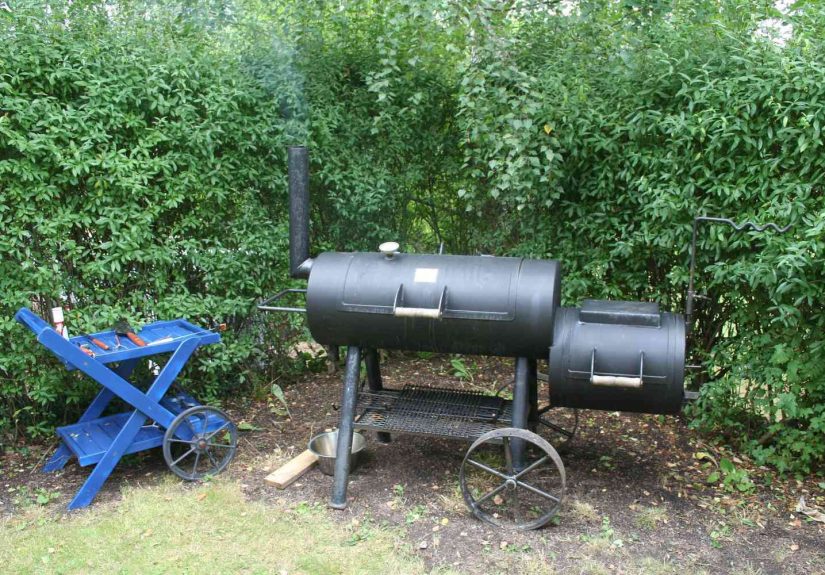
Offset smokers & stick-burners
Offsets are incredible at turning wood into flavor… and also at distributing grease in places you didn’t know existed.
For offsets:
- Remove grates and scrub with warm, soapy water; rinse and dry thoroughly.
- Scrape the cook chamber floor and lid to remove thick grease/soot buildup. Vacuum debris.
- Clean the firebox by removing ash and knocking down heavy soot. Keep vents and air intakes clear.
- Check the chimney and scrape any significant buildup near the opening where grease can collect.
- Optional: foil strategysome pitmasters line certain surfaces with foil (carefully, without blocking airflow)
to simplify cleanup. Just remove and replace before it becomes a greasy science experiment.
Pellet smokers
Pellet grills are easier day-to-day, but they are sensitive to ash in key areas and to pellet moisture. A solid deep
clean looks like this:
- Unplug the unit (seriouslythis is the easiest safety win in the world).
- Remove grates, drip tray, heat deflector; scrape heavy grease and wipe down.
- Vacuum ash from the bottom of the barrel and around the fire pot/burn area (once fully cool).
- Clean grease channels and the grease chute/tube so drippings flow where they’re supposed to.
- Pellet care: if you live in a humid climate or store outdoors, don’t leave pellets sitting for weeks.
Damp pellets can swell and contribute to auger jams or inconsistent burns.
Many manufacturers explicitly recommend vacuuming ash and sawdust buildup and wiping down grease components as part
routine maintenance. It’s not glamorous, but it prevents the classic pellet-grill problems: temperature swings,
lazy ignition, and “why is my smoker acting like a moody teenager?”
Electric smokers
Electric smokers tend to accumulate greasy residue on racks, drip trays, and water pans, and they often have areas
you should not soak or spray (controls, heating elements, wiring). A smart deep clean:
- Unplug and let everything cool completely.
- Remove racks, drip pan, water bowl and wash with mild dish soap and warm water; rinse and dry.
- Wipe the interior with a damp cloth; scrape only heavy deposits. Avoid saturating the smoker.
- Clear the wood chip tray/loader of ash so it feeds properly and doesn’t clog.
- Keep moisture in checkif you store it closed up while damp, mold may RSVP.
Kamado & ceramic smokers (Big Green Egg, Kamado Joe-style)
Ceramic cookers are famously “low maintenance,” which is trueright up until airflow gets restricted by ash or the
gasket starts leaking like a bad secret. For ceramics:
- Remove ash frequently so the fire grate can breathe. Better airflow = steadier temps.
- Clean grates while warm and avoid harsh chemicals inside the cooker.
- Carbon clean (burn-off) when buildup is heavy: a high-heat run can burn off greasy residue. Afterward,
let it cool, then brush out ash and debris. - Inspect gasket and vents and replace/adjust as needed to maintain temperature control.
Rust Prevention: The Small Habits That Save Your Smoker
Remove ash and keep it dry
Ash attracts moisture and can accelerate rust. If you have a steel smoker, this matters a lotespecially if the
cooker sits outside or in a humid garage.
Seasoning: Not just for cast iron
Some smokers benefit from a light oil coating on grates and certain interior surfaces (follow your manufacturer’s
guidance). It can help reduce rust and make cleanup easier. The trick is “thin layer,” not “I dipped it like a
donut.”
Covers and storage
Covers protect from rain and sun, but trapped moisture is real. If you cover a smoker, make sure it’s cool and dry
first. If you store it for the season, do a deep clean, let everything dry completely, and crack vents slightly if
your model allows it to prevent stale moisture buildup.
Maintenance Beyond Cleaning: The “Keeps It Cooking Right” Checklist
Thermometers and probes
If your smoker uses built-in probes, wipe them gently and avoid aggressive scraping. For accuracy, do occasional
checks (ice water and boiling water tests for standalone thermometers; follow your device instructions). A clean,
accurate probe is the difference between “perfect ribs” and “why is this still tough?”
Gaskets, hinges, and seals
For kamados and some cabinets, gaskets wear out. If you notice smoke leaking where it didn’t beforeor temps getting
harder to controlinspect the gasket and replace when needed. Hinges and latches should move smoothly; if your manual
recommends lubrication, use what the manufacturer approves.
Airflow pathways
Vents, chimneys, grease channels, burn potsthese are the “organs” of your smoker. If any of them clog, the whole
system suffers. A quick brush/vacuum in the right places does more for performance than an hour of polishing the lid.
Troubleshooting: When Your Smoker Sends a Distress Signal
Problem: Smoke tastes bitter or harsh
Common causes include smoldering/dirty fire, too-low airflow, wet fuel, or heavy creosote/grease buildup. Fixes:
clean key airflow points, knock down thick lid/chamber flakes, empty ash, and make sure your fuel is dry. If you’re
running a pellet grill, vacuum the burn area and confirm the grease path is clear.
Problem: Temperature swings (especially on pellets)
Ash in the burn pot area, greasy deflectors, and damp pellets can contribute. A deep clean plus pellet management
(don’t store pellets in the hopper for long periods in humidity) often restores normal behavior.
Problem: Mold inside the smoker after storage
It happensespecially in humid climates or if the smoker was covered while still a little greasy/damp. The usual
playbook is: clean removable parts with soap and water, wipe the interior, then run a high-heat cook/burn-off to dry
and sanitize surfaces (following your smoker’s safe operating guidance). After that, keep it dry and ventilated when
stored.
Food-Safety Bonus Round: Cleaning Your Smoker Is Only Half the Story
A clean cooker helps, but food safety mostly lives in your habits:
- Start clean: wash hands, tools, and prep surfaces before and after handling raw meat.
- Don’t wash raw meat: it can spread bacteria around the sink and counters.
- Separate: use different plates/utensils for raw and cooked food.
- Use a thermometer: cook to safe internal temperatures.
- Chill leftovers fast: refrigerate within 2 hours (or 1 hour if it’s very hot outside).
Translation: the clean smoker is your stage; food-safe handling is your performance. You need both to get a standing
ovation (and avoid a very un-fun encore).
Real-World Experiences: Lessons Backyard Pitmasters Learn the Hard Way (500+ Words)
If you hang around enough barbecue folksneighbors, family, competition teams, or that one friend who names their
briskets like they’re racehorsesyou’ll notice a pattern: everyone starts out thinking they’ll clean “later,” and
then later becomes a whole situation.
One common story starts with chicken. Chicken is delicious and also basically a grease sprinkler with opinions. After
a couple of hot cooks, the drip tray is wearing a shiny coat of rendered fat, and the grease channel has a slow-moving
traffic jam. Then someone decides to crank the heat for “crispy skin.” Suddenly, the smoker is producing dramatic
smoke that is not the romantic kind. The fix is almost always the same: shut it down safely, let it cool completely,
then clean the grease path like it’s your job. After that experience, most people become loyal fans of liners, quick
post-cook wipe-downs, and emptying the grease bucket before it looks like a science fair volcano.
Another classic is the “mystery bitter brisket.” The cook did everything righttrimmed well, seasoned well, managed
the fire, spritzed like a professional. But the bark comes out with an edge that tastes like licking a fireplace.
When they open the lid, they finally notice thick, flaky buildup overhead. Those flakes don’t just sit there; they
can fall, smolder, and contribute harshness. The lesson is gentle but firm: a smoker interior doesn’t need to be
sterile, but it shouldn’t be shedding like an old ceiling. Knocking down heavy flakes every few cooks is the easiest
flavor upgrade you can make without changing a single ingredient.
Pellet grill owners often collect their own wisdom: the cooker works great… until it doesn’t. A few long sessions go
by, ash builds up around the burn area, and suddenly temperatures wander like a lost tourist. People naturally assume
electronics are failing, when the real issue is maintenance. The moment they vacuum the ash, scrape the deflector,
and clear grease channels, the grill starts behaving again. It’s a strangely satisfying fix: no replacement parts,
no panicjust a shop vac and a small amount of humility.
Ceramic cooker fans have a different experience: “My kamado is so easy!” (It is.) Then airflow gets sluggish because
ash is choking the fire grate. The cooker struggles to reach temp, and someone blames the charcoal, the weather, or
possibly the moon phase. After a simple ash cleanout, it roars back to life. That’s when the habit forms: clean ash
often, do a high-heat burn-off when buildup is heavy, and keep an eye on the gasket so temps stay locked in.
The biggest shared lesson across all smoker styles is this: the best maintenance is the one you’ll actually do. A
five-minute wipe and an ash dump after each cook saves you from a two-hour deep clean later. And when deep cleaning
day comes, it feels less like punishment and more like tuning a favorite instrumentbecause a well-maintained smoker
doesn’t just last longer. It cooks better, tastes better, and lets you focus on the fun part: making food that makes
people quiet for a minute because they’re too busy chewing.