Table of Contents >> Show >> Hide
- Start Here: The 5 Rules of a Table That Looks Expensive (Even When It’s Not)
- 42 Easter Centerpieces and Table Settings
- Fast Table-Setting Formulas (So You Don’t Overthink It)
- Practical Prep Timeline (Because Easter Comes Fast)
- Pet and Guest Safety Notes (Quick but Important)
- Wrap-Up: The Secret Ingredient Is “Intentional” (Not “Perfect”)
- of Real-World Easter Table Experience (The Stuff You Only Learn by Doing)
Easter tables are basically spring’s way of saying, “I survived winter and I’m ready to be dramatic about it.” Whether you’re hosting a full family feast, a cozy brunch, or a low-key dessert situation where everyone mysteriously “forgot” to bring a dish (we see you, Uncle Mark), the right centerpiece and table setting can make the whole spread look intentionaleven if you’re still in pajamas until 10 minutes before guests arrive.
This guide gives you 42 Easter centerpiece and table setting ideas that feel fresh, stylish, and doable. You’ll see everything from flower-forward classics to modern minimal moments, plus a few fun, whimsical ideas that say, “Yes, there are bunnies here, but we have standards.”
Start Here: The 5 Rules of a Table That Looks Expensive (Even When It’s Not)
1) Keep the centerpiece low enough for conversation
If people have to lean like they’re dodging a hedge maze to talk, your centerpiece has become an obstacle course. Aim for “gorgeous and low,” or go tall but narrow (think branches in a vase off to one side).
2) Choose one main color story, then add neutrals
Pick a palette (pastels, earthy greens, crisp white + yellow, soft pink + gold) and let neutral plates/linens calm it down. This makes the whole table feel curated instead of “craft aisle explosion.”
3) Repeat one element at least three times
Repetition reads as design: three bud vases, three egg cups, three little bowls of candy eggs. It’s the easiest shortcut to “I planned this” energy.
4) Mix textures, not just objects
A good spring table is a texture buffet: linen, ceramic, glass, wicker, wood, moss, fresh greenery. Texture is what makes simple setups look layered and intentional.
5) Safety and practicality still matter
If you have petsespecially catsavoid toxic flowers like true lilies and be mindful of pollen and vase water. Also: secure candles, keep food at safe temperatures, and don’t put anything fragile where kids will “help.”
42 Easter Centerpieces and Table Settings
Below are 42 ideas you can use as-is or mix together. Each one includes a centerpiece direction plus a table-setting cue, so you’re not staring at your plates like, “Now what?”
- Tulips in a simple pitcher. Pack tulips tightly for a lush look. Pair with white plates, pastel napkins, and clear glassware for a clean spring vibe.
- Daffodil “sunshine burst” vase. Bright yellow blooms instantly read Easter. Add woven placemats and lemon-colored napkin rings for cheerful cohesion.
- Ranunculus + greenery in bud vases. Scatter 5–9 bud vases down the center. Use mismatched vintage-style glasses for charm without clutter.
- Egg wreath centerpiece. A ring of decorative eggs around a candle cluster feels festive but polished. Keep plates neutral so the wreath gets the spotlight.
- Bunny in a bowl (the classy kind). A ceramic bunny tucked into moss with speckled eggs. Add linen napkins and a single sprig of rosemary at each place setting.
- Mini egg topiaries. Moss-covered spheres with faux eggs look high-effort (they’re not). Pair with simple chargers and one patterned salad plate for a “wow” moment.
- Branch “Easter tree” in a vase. Hang paper eggs or light ornaments from branches. Keep place settings minimalwhite plates, one pastel accent, done.
- Rope-wrapped vase with hanging ornaments. A textured vase makes even bare branches feel special. Add wood bead napkin rings to echo the natural texture.
- Perfume bottle bud-vase collection. Group small glass bottles with tiny blooms. Use a crisp runner and gold flatware to make it feel boutique-hotel fancy.
- Herb garden centerpiece. A row of small potted herbs (thyme, rosemary, mint). Tie napkins with twine and tuck in a matching herb sprig.
- Carrot bouquet centerpiece. Use carrots with leafy tops in a tall vase like florals. Pair with green napkins and white plates for a playful produce moment.
- Egg cups as place-setting decor. Put one dyed egg in each egg cup at every seat. Keep the centerpiece simplegreens + candlesbecause the place settings do the work.
- Pastel ombré napkins. Line folded napkins from light to deep tones across the table. Centerpiece: white flowers + greenery so the gradient pops.
- Milk glass + spring blooms. Use one larger milk-glass vase and a few smaller ones. Add a lace runner or embroidered linen for vintage sweetness.
- Blue-and-white spring table. Blue-and-white ceramics with white tulips feels timeless. Add pale yellow accents for Easter warmth.
- Wild “garden gathered” arrangement. Let stems be imperfect and airy. Pair with rustic wood chargers and relaxed, slightly wrinkled linen napkins (on purpose).
- Single statement bowl of eggs. A big ceramic bowl filled with speckled eggs is graphic and easy. Add a striped runner and modern flatware for a contemporary look.
- Chocolate bunny centerpiece (edible decor). Put a chocolate bunny on a cake stand with candy eggs. Use dessert plates at each seat and lean into a brunch-to-sweets theme.
- Citrus + flowers combo. Lemons tucked into greenery with white blooms feels fresh. Add a yellow taper candle and call it “spring in a sentence.”
- Monochrome pastel table. Choose one pastel (sage, blush, sky blue). Use that color in napkins + one floral type, then keep everything else neutral.
- Neutral + green “grown-up Easter.” White plates, natural linen, lots of greenery. Add subtle bunny details in place cards, not everywhere.
- Candle cluster centerpiece. Three to five candles of varied heights + greenery around them. Use simple place settings and let the glow do the decorating.
- Floating flowers in shallow bowls. Float blossoms (or petals) with a few tea lights. Works best with minimalist plates and polished glassware.
- Tiered tray centerpiece. A tiered stand with eggs, moss, and a few flowers. Match it with layered plates (dinner + salad) for a fuller tablescape.
- Vintage book stack + bud vase. Stack 2–3 neutral books, add a small vase and a candle. Pair with classic white dinnerware so it feels curated, not cluttered.
- Mini wreaths as place settings. Tiny grapevine wreaths hold napkins or place cards. Centerpiece: simple florals so the place settings shine.
- Painted eggs as napkin weights. Put one decorative egg on each folded napkin. Use a long greenery garland down the table to tie it together.
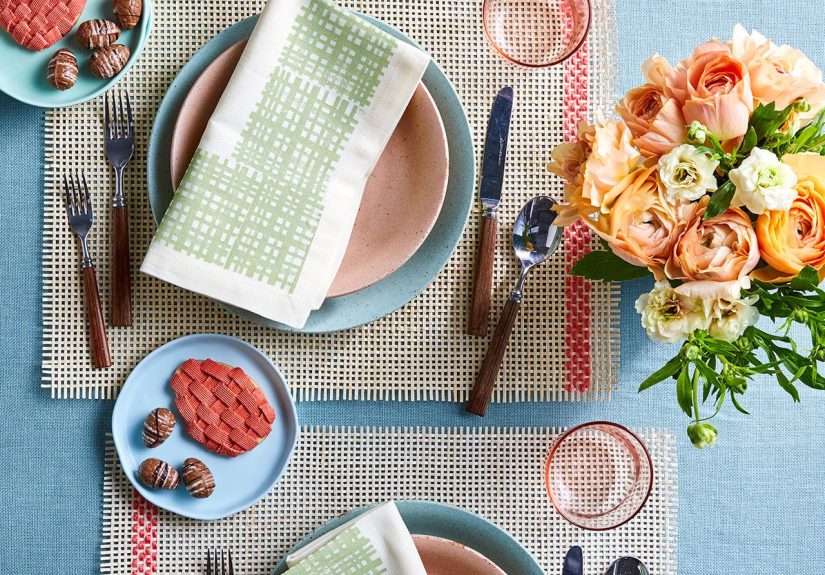
- Speckled “stoneware spring” theme. Speckled plates + matte vases. Add soft pink or butter-yellow blooms for gentle contrast.
- Wicker and white. Woven chargers + white plates + crisp napkins. Centerpiece: airy greenery and white flowers for a bright farmhouse feel.
- Pastel glassware pop. Use tinted goblets (or mix clear + one pastel color). Keep the centerpiece restrained: one low floral arrangement, minimal extras.
- Place card “egg nests.” A small nest (realistic faux is fine) with a name card tucked in. Centerpiece: natural branches or moss runner for woodland charm.
- Fresh moss runner. A strip of moss down the center, dotted with eggs and buds. Pair with simple white plates and soft linen napkins so it stays elegant.
- White hydrangea + greenery (classic crowd-pleaser). Big, full blooms read “special occasion.” Add metallic accents (gold flatware, brass candlesticks) for polish.
- Rainbow egg display. Arrange dyed eggs in color order in a long tray. Keep everything else neutral so it looks intentional, not chaotic.
- Minimalist single-stem look. One stem per bud vase, repeated down the table. Add a linen runner and clean, modern dishware for a Scandinavian spring vibe.
- Thrifted mismatched china party. Mix floral plates with a unifying color in napkins. Centerpiece: simple white flowers so the patterns don’t compete.
- Pastel check or gingham linens. Pattern in the tablecloth or runner instantly says spring. Centerpiece: solid-color florals so it doesn’t get busy.
- Paper egg garland down the center. Lay a garland like a runner and tuck in greenery. Use clean place settings so the garland reads “decor,” not “craft table.”
- Terracotta pots with blooms. Small terracotta pots with primrose or pansies. Add warm-toned napkins and wood chargers for earthy spring charm.
- Fruit-and-flower spring compote. Use a compote bowl with flowers and a few seasonal fruits. Pair with cloth napkins and simple place cards for an elevated brunch feel.
- Glam pastel + metallic accents. Soft pink napkins + gold candlesticks + white plates. Centerpiece: pale florals and a few reflective pieces for sparkle.
- “Collected objects” centerpiece tray. Gather a few pretty objects from shelves, add greenery and candles. This is budget-friendly and looks personallike your table has a personality.
- Kid-friendly centerpiece zone. Put decor in a tray so little hands don’t rearrange the whole table. Add washable placemats and sturdy cups to keep it cute and practical.
Fast Table-Setting Formulas (So You Don’t Overthink It)
The “Fresh and Classic” Formula
White plates + linen napkins + simple glassware + one floral centerpiece (tulips or daffodils). Add one small Easter detail (egg cup, bunny place card) and stop there. Restraint is a flex.
The “Modern Minimal” Formula
Neutral runner + bud vases + candles + a single color accent. Keep patterns to one place (napkins or salad plates), not everywhere.
The “Vintage Spring Brunch” Formula
Mismatched plates + soft florals + milk glass + a lace or embroidered linen. Add handwritten place cards for charm that costs basically nothing.
The “Outdoor Garden Party” Formula
Wicker chargers + sturdy plates + herbs in pots + citrus accents. Use heavier napkins (or tie them) so the wind doesn’t turn your table into confetti.
Practical Prep Timeline (Because Easter Comes Fast)
2–3 days before
- Pick your palette and commit.
- Wash linens, clean glassware, and gather vases/trays.
- If dyeing eggs, do it now (and let them dry fully).
1 day before
- Buy flowers and greenery (choose sturdy blooms if you’re arranging ahead).
- Pre-write place cards and test your layout on the table.
Day of
- Trim stems, refresh water, and arrange centerpieces last.
- Light candles only when guests arrive (and keep them supervised).
- Take a quick photo before the mealthis is your victory lap.
Pet and Guest Safety Notes (Quick but Important)
If you have cats, skip true lilies and daylilies entirelysmall exposures can be dangerous. Keep any questionable plants out of reach, and don’t let pets drink from vase water. If you’re unsure, choose safer blooms or go with greenery and candles instead.
Wrap-Up: The Secret Ingredient Is “Intentional” (Not “Perfect”)
The best Easter centerpieces and table settings aren’t the ones that look like a catalog. They’re the ones that feel like youwelcoming, seasonal, and just a little special. Pick one strong centerpiece idea, anchor it with a simple palette, and add a few thoughtful details. Your guests will remember the warmth, the food, and the feelingplus, yes, they will absolutely compliment the table.
of Real-World Easter Table Experience (The Stuff You Only Learn by Doing)
Here’s what tends to happen in real homes (with real humans) when you set an Easter table: the centerpiece is never the hard part. The hard part is the physics of hosting. Someone always shows up early. Someone always brings something that needs refrigeration right now. And at least one person will set a bag down directly on the prettiest part of your tablescape like it’s their sworn duty.
That’s why the most “successful” Easter tables usually share three behind-the-scenes habits. First: the centerpiece lives in a tray or on a runner that can take a gentle bump. A tray is like a seatbelt for your decorif you need to scoot things to fit a serving platter, you move one contained moment instead of rearranging thirty tiny objects while whispering, “This is fine,” through gritted teeth.
Second: hosts who enjoy their own party keep the place settings simple. It’s tempting to use the fancy salad plates, the special napkin fold, the place card with the perfect handwriting… and you can! But the best move is choosing one hero detail. Maybe it’s a dyed egg in an egg cup, or a sprig of rosemary tied to each napkin, or pastel glasses that feel like spring sunshine. When you pick one hero detail, you get the “wow” without spending the entire morning ironing your soul.
Third: height management is everything. On Pinterest, tall arrangements look glorious. In real life, tall arrangements can turn conversation into a game of peekaboo. If you love height, place it off-center or use airy branches that don’t form a visual wall. For family-style meals, low centerpieces are your best friend. The moment people can see each other easily, the table feels more relaxedand relaxed is what makes guests linger (in a good way).
Another practical lesson: spring flowers are amazing, but they’re also moody. If your house is warm or sunny, blooms can open fast. That’s great if you want the “full and fluffy” look, less great if your centerpiece starts dropping petals mid-brunch. A simple fix is using a mix of hardy greenery plus one or two feature blooms, or scattering bud vases so no single vase is carrying the emotional weight of the entire holiday.
Finally, the most underrated “experience” tip: build a table that matches your crowd. If kids will be there, use a centerpiece that can survive curiosity. If pets roam the house, choose pet-safe plants and skip anything that sheds pollen everywhere. If your friends are the type to help themselves to seconds (bless them), leave real estate for serving dishes. The best Easter table is the one that looks beautiful and works beautifullybecause the real point is gathering, not guarding your centerpiece like a museum exhibit.