Table of Contents >> Show >> Hide
- Who Are Michaelis Boyd Associates?
- Why Oxfordshire Suits the Michaelis Boyd Design Language
- The Oxfordshire Manor House: Pared-Down, Warm, and Human
- Materials: The Quiet Power of Oak, Stone, and Natural Texture
- Soho Farmhouse: Oxfordshire Hospitality with Countryside Swagger
- Little Farringdon: History Reworked for Modern Family Life
- The Michaelis Boyd Approach to Historic Renovation
- Biophilic Thinking and the Role of Nature
- What Makes the Oxfordshire Projects Feel So Calm?
- Design Ideas Homeowners Can Borrow
- The Experience: Visiting a Michaelis Boyd-Style Oxfordshire Project
- Conclusion
Some buildings introduce themselves with a trumpet. Others, like the best work by Michaelis Boyd Associates in Oxfordshire, prefer a quieter hello: a calm doorway, a wall of warm timber, a kitchen that looks as though it has been there forever, and a view that politely steals the entire scene. This is architecture with excellent manners. It does not shout over the landscape. It sits down, pours tea, and lets the Cotswolds do some of the talking.
Michaelis Boyd, the architecture and interior design practice founded by Alex Michaelis and Tim Boyd, has built a reputation for thoughtful spaces that balance comfort, craft, and environmental awareness. The firm is widely associated with elegant residential projects, hospitality spaces, private members’ clubs, and destination hotels, including several projects connected with the Soho House universe. But an architect visit to Oxfordshire reveals something especially important about the studio’s work: its ability to make old buildings feel alive without turning them into museum pieces.
The title “Architect Visit: Michaelis Boyd Associates in Oxfordshire” may sound like a simple tour, but the subject opens into a larger conversation about rural renovation, Georgian proportion, Cotswold restraint, modern family living, and the art of making luxury feel relaxed. In a world where some interiors appear to have been designed mainly for social media and fainting couches, Michaelis Boyd’s Oxfordshire projects offer a more durable lesson: the best design often looks effortless because every difficult decision has already been made.
Who Are Michaelis Boyd Associates?
Michaelis Boyd is a London- and New York-based architecture and interior design studio known for work across residential, hospitality, leisure, and commercial sectors. The practice was co-founded by Alex Michaelis and Tim Boyd in the 1990s and has since developed an international portfolio ranging from private homes to hotels, restaurants, resorts, and members’ clubs.
The studio’s signature is not one fixed visual trick. There is no “Michaelis Boyd chair” that appears in every room like a stylish house pet. Instead, the practice is known for a softer and more intelligent consistency: natural materials, strong spatial flow, generous light, restrained detailing, and a preference for buildings that respond to place rather than dominate it.
That approach is particularly powerful in Oxfordshire, where architecture carries a long memory. Stone walls, slate roofs, Georgian manor houses, barns, farmyards, walled gardens, and rolling fields all come with their own expectations. The challenge is not simply to add a new kitchen or restore a tired room. The challenge is to ask what the building wants to become next.
Why Oxfordshire Suits the Michaelis Boyd Design Language
Oxfordshire is not a blank canvas. It is more like a very opinionated old sketchbook. The county sits near the edge of the Cotswolds and is full of villages, historic estates, working farms, converted agricultural buildings, and grand but understated country houses. Any architect working here must negotiate history, planning restrictions, local materials, landscape views, and the daily needs of modern life.
This is where Michaelis Boyd Associates seems especially comfortable. Their projects often avoid the awkward “old front, shiny back” effect that can make a country house feel as though a spaceship accidentally reversed into it. Instead, their work tends to connect eras through texture, proportion, and atmosphere. A new intervention may be plainly contemporary, but it is rarely rude.
In Oxfordshire, that might mean introducing oak shelving and chunky worktops into a Georgian manor house kitchen. It might mean converting a group of inherited buildings into a family home that makes sense for twenty-first-century living. It might mean designing hospitality spaces that preserve the romance of farm life without making guests actually milk anything before breakfast.
The Oxfordshire Manor House: Pared-Down, Warm, and Human
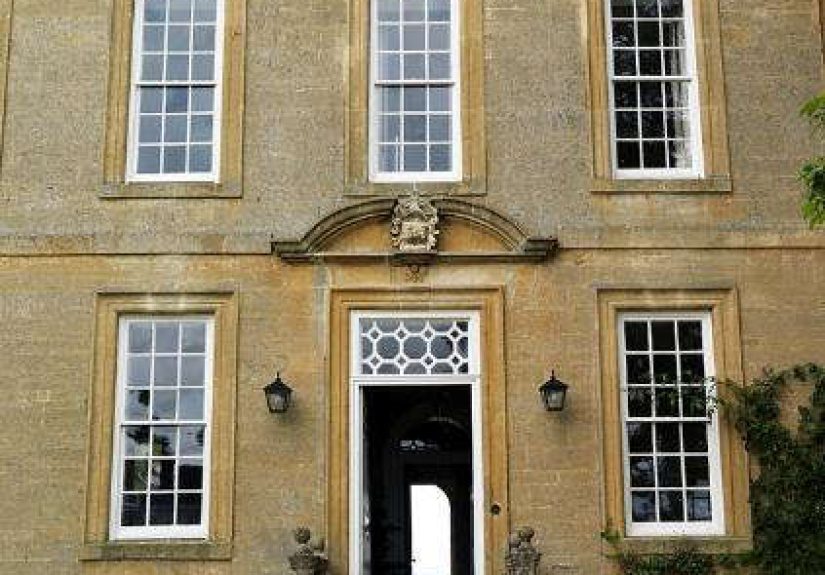
One of the most discussed Michaelis Boyd projects in Oxfordshire is a Georgian manor house that captures the studio’s restrained rural aesthetic. The house is notable not because it performs architectural acrobatics, but because it shows how a historic home can be brought into contemporary use without losing its soul.
The kitchen and dining area are especially revealing. Rather than installing a glossy, hyper-modern kitchen that would look more at home in a tech founder’s penthouse, the architects created a simple, theater-style space using solid oak shelving and worktops. The effect is warm, tactile, and grounded. It feels designed for cooking, conversation, and the small domestic rituals that make a large house feel personal.
Oak is doing more than looking pretty here, though it does that job very well. It connects the kitchen to the wider use of wood throughout the house. It also softens the formality of Georgian architecture. Georgian rooms can be beautifully proportioned, but they can also feel a little stern, as if they are silently judging your shoes. Natural timber brings in ease, touch, and a sense of everyday use.
A Kitchen That Works Like a Stage
The phrase “theater-style kitchen” is helpful because it suggests performance without pretension. In this kind of layout, cooking becomes visible and social. The kitchen is not hidden away like a backstage panic room. It becomes the center of activity, a place where food, people, and conversation overlap.
This matters in country houses because old floor plans often separated service spaces from formal living areas. Modern families usually live differently. They gather in kitchens, work at dining tables, supervise homework, host friends, and somehow always end up standing near the counter even when there are perfectly good chairs nearby. Michaelis Boyd’s solution respects the old house while admitting the truth: the kitchen is where life happens.
Materials: The Quiet Power of Oak, Stone, and Natural Texture
One reason Michaelis Boyd’s Oxfordshire work feels convincing is the careful use of materials. The studio often favors wood, stone, metal, plaster, glass, and other honest surfaces that age gracefully. This does not mean the interiors are rustic in a costume-drama way. You do not expect a sheep to wander through the pantry. The mood is cleaner, calmer, and more edited.
In the Oxfordshire manor house, the oak worktops and shelving create a sense of permanence. They are sturdy, tactile, and practical. They also avoid the chilly perfection of overly polished luxury. A good country interior should be able to survive muddy boots, family lunches, a dog with suspicious enthusiasm, and someone placing a hot mug in the wrong spot. Design has to be beautiful, but it also has to have a pulse.
The best rural architecture understands patina. A room should not look ruined when life touches it. It should look better. Michaelis Boyd’s approach often allows materials to carry memory: a wood surface darkening over time, stone grounding a threshold, glass opening a view, metal adding a crisp line. This is not decoration piled on top of architecture. It is architecture experienced through the hand as much as the eye.
Soho Farmhouse: Oxfordshire Hospitality with Countryside Swagger
Any discussion of Michaelis Boyd Associates in Oxfordshire should also mention Soho Farmhouse in Great Tew. Developed with Soho House, this countryside retreat helped define a modern version of rural hospitality: relaxed, design-conscious, and deeply tied to its setting. The project is arranged around original farm buildings and contemporary additions, with cabins, leisure spaces, dining areas, wellness facilities, and landscape-led experiences.
Soho Farmhouse works because it understands fantasy and function. Guests want the charm of the countryside, but they also want hot water, good food, strong coffee, spa facilities, and the comforting sense that someone else has already thought about towels. Michaelis Boyd’s contribution to the project helped shape an environment that feels layered rather than themed.
The architectural lesson is clear: rural luxury does not need chandeliers the size of meteorites. It can come from proportion, route, material, view, and the feeling of being gently removed from urban noise. At Soho Farmhouse, barns, cabins, water, paths, and social spaces come together as a village-like experience. It feels designed for wandering, which is a highly underrated architectural achievement.
What Designers Can Learn from Soho Farmhouse
The first lesson is that atmosphere is a design discipline. You cannot simply scatter blankets, add a wood burner, and call it “authentic countryside living.” The experience must be choreographed: arrival, threshold, view, lighting, circulation, privacy, and communal energy all matter.
The second lesson is that hospitality architecture has to work hard while looking relaxed. A guest should feel that everything is easy, even if the building team spent years solving drainage, circulation, conservation, acoustics, servicing, and planning challenges. Good architecture hides the headache so the visitor can enjoy the calm.
The third lesson is that rural projects should not erase their origins. Old farm buildings, barns, and agricultural forms carry emotional weight. When reused thoughtfully, they provide instant depth. New buildings can then join the conversation rather than pretending the conversation began five minutes ago.
Little Farringdon: History Reworked for Modern Family Life
Another Oxfordshire project associated with Michaelis Boyd is Little Farringdon, a Grade II listed country property with deep historical roots. The building’s long life, including centuries of remodeling, offered both opportunity and complexity. Projects like this are not simple renovations. They are negotiations with time.
Michaelis Boyd was appointed to transform a patchwork of existing buildings into a modern countryside family home. That phrase may sound tidy, but anyone who has worked with listed buildings knows it contains an entire opera of practical challenges. Old walls are rarely straight. Services need upgrading. Historic fabric must be respected. New spaces must meet current expectations. Somewhere in the process, someone will ask where to put the Wi-Fi router.
What makes this type of project compelling is the balance between continuity and invention. A country house should not be frozen in the year 1204, even if part of its story reaches that far back. Families need bathrooms, storage, kitchens, heating, lighting, privacy, and rooms that support actual living. Michaelis Boyd’s work often succeeds by making these modern needs feel like a natural continuation of the building’s life.
The Michaelis Boyd Approach to Historic Renovation
Historic renovation is not about choosing between preservation and modernity. The best projects do both. They protect what matters while making space for new use. In Oxfordshire, this means reading the building before drawing over it.
Michaelis Boyd’s approach can be understood through three recurring ideas: restraint, clarity, and warmth. Restraint keeps the design from overpowering the original architecture. Clarity ensures that new interventions are useful and legible. Warmth prevents the result from feeling like an academic exercise with excellent lighting but no place to put your coat.
This combination is why the firm’s rural work feels livable. Rooms are edited but not empty. Details are refined but not fussy. Materials are luxurious but not flashy. The architecture gives people permission to relax, which is a surprisingly rare skill.
Respecting the Past Without Worshiping It
A common mistake in country house renovation is treating history as untouchable. Another mistake is treating it as an obstacle to be defeated with glass boxes and confidence. Michaelis Boyd’s better projects suggest a middle path. The past is respected, but the present is allowed to breathe.
In practical terms, that might mean leaving old structure visible where it adds character, simplifying circulation where the plan has become confused, or adding a new element in a material that quietly relates to the existing palette. The goal is not to make the new work disappear. The goal is to make it belong.
Biophilic Thinking and the Role of Nature
Michaelis Boyd’s wider body of work often emphasizes a relationship with nature, whether through views, daylight, natural materials, planted roofs, or environmentally conscious systems. This matters in Oxfordshire because the landscape is not background scenery. It is part of the architecture.
A window in a rural house is not merely a hole in the wall. It is a frame for weather, season, and distance. A dining area that opens toward a garden changes the rhythm of the day. A stone floor near an entrance acknowledges mud, rain, and dogs with ambitious paws. Architecture becomes better when it admits that humans are not separate from the landscape, even when they are inside looking for the kettle.
In recent work connected with Alex Michaelis, sustainable rural living has also appeared through off-grid strategies, locally responsive forms, living roofs, solar power, heat-pump systems, and water-conscious design. These ideas reinforce the studio’s broader interest in architecture that treads lightly while still feeling generous.
What Makes the Oxfordshire Projects Feel So Calm?
Calm design is often misunderstood. It is not beige paint plus expensive silence. Real calm comes from decisions that reduce visual and practical friction. The room tells you where to sit. The kitchen tells you where to gather. The window tells you where to look. The materials feel coherent. The lighting does not behave like an interrogation.
In Michaelis Boyd’s Oxfordshire work, calm also comes from proportion. Georgian rooms, farm buildings, and old manor houses each have their own spatial logic. When new elements are introduced with sensitivity, the result feels inevitable. You do not notice the effort. You simply feel that the house has exhaled.
This is a valuable lesson for homeowners, designers, and architects. The most successful renovation is not always the one with the loudest before-and-after photo. Sometimes success is when a visitor says, “This feels right,” and cannot immediately explain why.
Design Ideas Homeowners Can Borrow
You do not need a Georgian manor house in Oxfordshire to learn from Michaelis Boyd Associates. You do not even need a manor-adjacent cottage, although nobody here would complain. Many of the firm’s design principles can be adapted to ordinary homes.
1. Use Natural Materials Where Hands Actually Touch
Put quality materials where they matter most: worktops, shelves, handles, dining surfaces, stair rails, and doors. These are the places people interact with daily. A beautiful timber shelf can do more for a room than three dramatic accessories and a vase that looks afraid of flowers.
2. Make the Kitchen Social
A kitchen does not need to be huge to feel generous. It needs good flow, useful storage, warm lighting, and a place where people can gather without blocking the cook. The theater-style kitchen idea works because it accepts cooking as part of domestic life, not a private emergency.
3. Let Old and New Be Honest
If your home has historic features, avoid forcing every new detail to imitate the past. A clean contemporary cabinet can sit beautifully beside old brick or timber if the proportions, colors, and materials are well judged. Harmony does not require disguise.
4. Design Around Light
Before choosing finishes, study how daylight moves through the house. Michaelis Boyd’s work often feels connected to place because light is treated as a design material. In a rural setting, this can mean framing a view. In a city apartment, it may mean keeping window walls uncluttered and using reflective surfaces carefully.
5. Avoid Over-Decorating
The Oxfordshire look is not about filling every corner. Give materials room to speak. A stone wall, oak table, or plaster surface can be more powerful when it is not competing with six lamps, four prints, and a decorative ladder that has never known responsibility.
The Experience: Visiting a Michaelis Boyd-Style Oxfordshire Project
Arriving at a Michaelis Boyd-style house in Oxfordshire is less like entering a show home and more like being quietly persuaded to slow down. The first impression is usually not one object, but a sequence: gravel underfoot, a low stone wall, a soft view across fields, a door that feels properly weighted, and an interior that does not rush to impress you. The house seems confident enough not to wave its arms.
Inside, the experience begins with texture. You notice timber before you notice decoration. Oak shelving, honest worktops, muted plaster, worn stone, and simple metal details create a kind of tactile map. Everything feels considered, but not precious. You can imagine someone actually cooking here, leaning against the counter, opening a drawer, or setting down a muddy basket of vegetables from the garden. The architecture supports life rather than posing for it.
The kitchen is often the emotional center. In a theater-style arrangement, the cook is not banished from the conversation. Friends gather nearby. Children drift in and out. Someone asks where the glasses are despite standing directly in front of them. The room absorbs all of this without losing its composure. That is the charm of a well-designed country kitchen: it can host both a carefully prepared dinner and a chaotic search for the missing corkscrew.
Moving through the house, the relationship between old and new becomes clearer. Historic spaces are not over-polished. They retain a sense of age, but the plan feels easier, lighter, and more useful. A new opening may pull daylight deeper into a room. A modern stair may sharpen circulation. A quiet extension may frame the garden without shouting, “Look at me, I am contemporary!” This restraint makes the visit feel natural rather than staged.
The landscape is always part of the experience. Oxfordshire’s countryside has a specific softness: rolling fields, hedgerows, stone villages, and skies that change the mood of a room by the hour. A well-placed window can turn a hallway into a pause. A dining space facing the garden can make breakfast feel like an event, even if the event is toast. Michaelis Boyd’s rural work often succeeds because it treats the view as part of the plan, not a bonus feature added at the end.
What stays with you after the visit is not extravagance. It is balance. The spaces feel generous but not loud, luxurious but not stiff, modern but not rootless. There is a sense that the architects listened before they designed. They listened to the building, the site, the materials, and the people who would eventually live there. That may sound simple, but in architecture, listening is often the difference between a renovation and a transformation.
Leaving the house, you understand why this kind of design has such lasting appeal. It offers comfort without clutter, sophistication without coldness, and heritage without nostalgia overload. It is the architectural equivalent of a perfectly tailored coat worn with muddy boots: elegant, practical, and very much alive.
Conclusion
“Architect Visit: Michaelis Boyd Associates in Oxfordshire” is more than a tour of beautiful rooms. It is a study in how architecture can respect history, serve modern life, and deepen its relationship with landscape. From the pared-down Georgian manor house with its warm oak kitchen to the broader lessons of Soho Farmhouse and Little Farringdon, Michaelis Boyd’s Oxfordshire work shows that rural design does not need to be nostalgic or flashy to be memorable.
The studio’s strength lies in making complexity feel calm. Historic buildings are renewed without being bullied. Natural materials are used with purpose. Kitchens become social stages. Views are framed, not wasted. Sustainability and biophilic thinking are treated as part of good design, not decorative marketing confetti.
For homeowners, designers, and architecture lovers, the takeaway is refreshingly practical: choose materials that age well, let buildings keep their character, design around light and use, and never underestimate the power of restraint. In Oxfordshire, Michaelis Boyd Associates proves that the quietest architecture can leave the longest echo.