Table of Contents >> Show >> Hide
- There Is No Single “Best” Birth Control Method
- What Is Nonhormonal Birth Control?
- What Is Hormonal Birth Control?
- Nonhormonal vs. Hormonal Birth Control: Which Is Better?
- Who Might Prefer Nonhormonal Birth Control?
- Who Might Prefer Hormonal Birth Control?
- When Estrogen Is Not the Best Idea
- Best Birth Control Methods by Real-Life Need
- Experiences People Commonly Have With Hormonal and Nonhormonal Birth Control
- Final Takeaway
Note: This article is for general education only and is not a substitute for personalized medical advice from a licensed clinician.
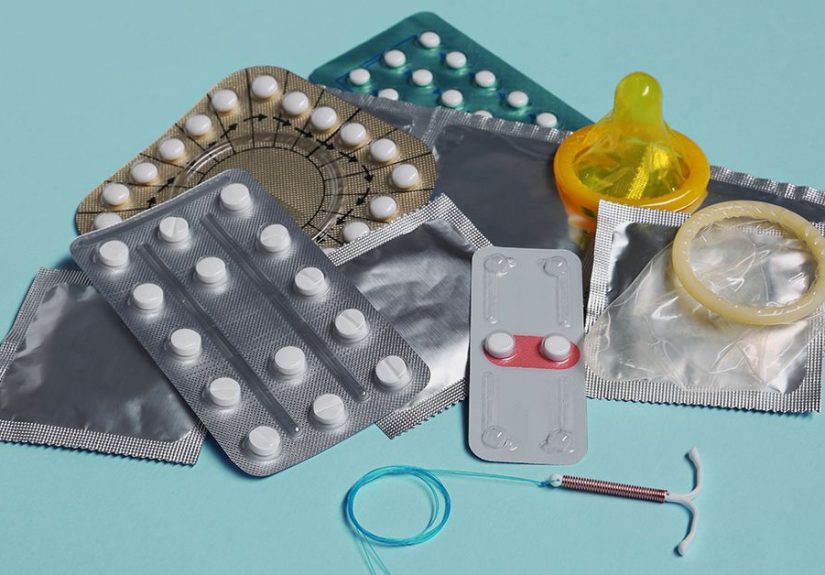
Choosing birth control sounds simple until you realize there are about a million options, three million opinions, and at least one friend who swears her method is “literally perfect.” The truth is less dramatic and more useful: the best birth control method is not the same for everyone. Some people want the strongest pregnancy prevention possible. Others want lighter periods, fewer cramps, no hormones, fewer side effects, more privacy, or a method they never have to think about again until the next presidential election.
That is why the real comparison is not “good versus bad.” It is nonhormonal vs. hormonal birth control, and more importantly, which option fits your health, lifestyle, and future plans. If you are deciding between the copper IUD and the pill, or condoms and a hormonal IUD, or the implant and “please do not make me remember one more daily task,” this guide will walk you through the differences in plain English.
There Is No Single “Best” Birth Control Method
Let’s clear up the biggest myth first: there is no universal champion wearing a gold medal and a cape. The best birth control method depends on a few practical questions:
- How important is maximum pregnancy prevention?
- Do you want to avoid hormones entirely?
- Would lighter, shorter, or less painful periods be a major win?
- Can you remember a daily or weekly routine?
- Do you want pregnancy prevention for months, years, or forever?
- Do you also need protection against sexually transmitted infections?
- Do you have medical conditions that make estrogen a bad match?
In general, the most effective reversible methods are IUDs and the implant. Methods that depend on perfect timing or consistent use, such as pills, condoms, diaphragms, and fertility awareness, can still work well, but real life has a way of showing up late, forgetting reminders, and ruining “perfect use.”
What Is Nonhormonal Birth Control?
Nonhormonal birth control prevents pregnancy without using estrogen or progestin. That makes it appealing for people who want a hormone-free option, have had side effects with hormonal methods, or have medical reasons to avoid estrogen-containing contraception.
1. Copper IUD
If nonhormonal methods had a valedictorian, the copper IUD would probably give the graduation speech. It is one of the most effective nonhormonal birth control methods available. It is placed in the uterus by a clinician, works for years, and requires almost zero day-to-day effort. That is a strong résumé.
Pros: hormone-free, extremely effective, long-lasting, reversible, and low maintenance.
Cons: it can make periods heavier, longer, or crampier, especially in the first few months.
So if you already have heavy, painful periods, the copper IUD may feel less like a helpful roommate and more like an uninvited drummer.
2. Condoms
Condoms deserve more respect than they usually get. They are easy to access, do not contain hormones, and most importantly, they are the only birth control method that also helps reduce the risk of STIs. That makes them essential for many people, whether used alone or with another method.
Pros: no prescription for many types, hormone-free, portable, and STI protection.
Cons: they must be used correctly every time, and their real-world effectiveness is lower than long-acting methods.
If you want both pregnancy prevention and STI protection, condoms plus another effective method is often the smartest combo. Think of it as the “belt and suspenders” strategy, except less awkward and more medically sensible.
3. Diaphragm, Cervical Cap, Sponge, and Spermicide
These barrier and sperm-blocking methods are also nonhormonal. They can be good for people who do not want hormones and prefer something used only when needed.
Pros: hormone-free, flexible, and sometimes available over the counter.
Cons: they generally require more planning and have higher failure rates with typical use than IUDs, implants, or even some hormonal methods.
These methods can work, but they are better for people who are comfortable with prep work and consistency. If your personality type is “I once forgot my coffee on top of my car,” you may want a method with less user error built in.
4. Fertility Awareness Methods
Fertility awareness methods involve tracking fertile days through cycle timing, temperature, cervical mucus, or ovulation indicators. Some people prefer them because they are hormone-free and align with personal, cultural, or religious values.
Pros: no hormones, no device, low direct cost.
Cons: requires careful tracking, regular attention, and a clear understanding of the menstrual cycle. Typical-use effectiveness varies widely.
This method can be useful for motivated users, but it is not the easiest option if your schedule is chaotic, your cycle is irregular, or you want the highest possible protection without daily analysis worthy of a weather app.
5. Permanent Nonhormonal Options
Vasectomy and tubal sterilization are permanent methods. They can be excellent choices for adults who are sure they do not want future pregnancies.
Pros: very effective and permanent.
Cons: not ideal if there is any chance you may want children later. Also, “permanent” is not a word to skim past with a latte in hand.
What Is Hormonal Birth Control?
Hormonal birth control uses hormones, usually progestin alone or estrogen plus progestin, to prevent pregnancy. These methods can stop ovulation, thicken cervical mucus, and change the uterine lining. Many also offer non-contraceptive benefits, which is one reason they remain so popular.
1. The Pill
The birth control pill is the celebrity of contraception: famous, familiar, and often discussed at length online by people who are not your doctor. There are two main types: combined pills that contain estrogen and progestin, and progestin-only pills.
Pros: effective when used correctly, reversible, can make periods lighter and more regular, may reduce cramps, and can help with acne for some users.
Cons: must be taken consistently, does not protect against STIs, and some users experience side effects like nausea, spotting, breast tenderness, or headaches.
The pill is a good choice for people who like routine and want cycle control. It is less ideal for anyone who treats reminders as optional suggestions from the universe.
2. Patch and Vaginal Ring
The patch and ring offer the same broad hormonal logic as the pill but with less frequent upkeep. The patch is changed weekly, while the ring is usually replaced monthly.
Pros: convenient, reversible, and often helpful for people who want lighter periods or fewer cramps without taking a daily pill.
Cons: still user-dependent, no STI protection, and both usually contain estrogen.
These methods are often the “I want convenience, but not a procedure” middle ground.
3. Shot
The birth control shot is a progestin-only option given every three months. It appeals to people who want something private and do not want to remember a pill every day.
Pros: no daily routine, private, and periods may become lighter or stop over time.
Cons: irregular bleeding can happen, and some users report side effects they do not love. It also may take longer for fertility to return after stopping compared with many other reversible methods.
4. Implant
The implant is one of the most effective hormonal birth control methods. It is a small rod placed under the skin of the upper arm and works for years.
Pros: extremely effective, low maintenance, long-lasting, reversible, and ideal for people who want “set it and forget it” contraception.
Cons: irregular bleeding is common, especially early on, and insertion and removal require a clinician.
For many people, the implant is the gold standard if effectiveness and convenience matter more than having perfectly predictable periods.
5. Hormonal IUD
The hormonal IUD is another top-tier option. Like the copper IUD, it sits in the uterus for years. Unlike the copper version, it releases a small amount of progestin.
Pros: extremely effective, low maintenance, long-lasting, reversible, and often excellent for people with heavy or painful periods.
Cons: spotting can happen at first, and placement requires an office procedure.
If your dream birth control would prevent pregnancy and make your period act more civilized, the hormonal IUD often lands near the top of the list.
Nonhormonal vs. Hormonal Birth Control: Which Is Better?
Here is the honest answer: neither category is automatically better. They are better for different goals.
| Goal | Often Best Match |
|---|---|
| Highest effectiveness without daily effort | Implant, hormonal IUD, copper IUD |
| Hormone-free contraception | Copper IUD, condoms, diaphragm, fertility awareness, sterilization |
| Lighter periods and fewer cramps | Hormonal IUD, pill, patch, ring |
| Acne improvement | Certain combined hormonal methods |
| STI protection | Condoms |
| Permanent solution | Vasectomy or tubal sterilization |
| Easy to stop when trying for pregnancy | Pill, patch, ring, condoms, IUDs, implant |
Who Might Prefer Nonhormonal Birth Control?
Nonhormonal birth control may be a strong fit if you:
- Want to avoid hormones completely
- Have not liked hormonal side effects in the past
- Need STI protection and plan to use condoms
- Prefer a method that feels more natural or less medication-based
- Cannot or do not want to use estrogen
The biggest standout here is the copper IUD, because it is both hormone-free and highly effective. Other nonhormonal methods can work well too, but many require more effort and have lower typical-use effectiveness.
Who Might Prefer Hormonal Birth Control?
Hormonal birth control may be a better match if you:
- Want lighter, shorter, or less painful periods
- Would welcome help with acne or cycle regulation
- Need a very effective reversible method
- Do not mind using hormones, or you prefer the benefits they may bring
- Want an option such as the implant or hormonal IUD that works for years
For people with heavy periods, bad cramps, or endometriosis symptoms, hormonal methods can do more than prevent pregnancy. They can make everyday life easier. That is not a small bonus. That is a “why was I suffering like this?” level bonus.
When Estrogen Is Not the Best Idea
Some hormonal methods contain estrogen, including many pills, the patch, and the ring. These are not the best option for everyone. People with certain health conditions, such as a history of blood clots, some migraine patterns, or specific cardiovascular risk factors, may need to avoid estrogen-containing contraception.
That does not mean hormonal birth control is off the table. It often just means a progestin-only method, a nonhormonal method, or a clinician-guided alternative makes more sense.
Best Birth Control Methods by Real-Life Need
Best for effectiveness
Implant, hormonal IUD, copper IUD, and sterilization.
Best hormone-free option
Copper IUD if you want the strongest nonhormonal pregnancy prevention. Condoms if STI protection matters most.
Best for heavy or painful periods
Hormonal IUD, pill, patch, or ring often beat nonhormonal methods here.
Best if you hate routines
Implant or either type of IUD. These methods do not care whether your phone is at 2% battery or your planner is a work of fiction.
Best if you want both STI and pregnancy protection
Use condoms along with a highly effective method such as an IUD, implant, pill, patch, ring, or shot.
Experiences People Commonly Have With Hormonal and Nonhormonal Birth Control
Real-life experiences with birth control are often less dramatic than social media makes them sound and more personal than a chart can capture. One person may love a hormonal IUD because their periods become lighter and cramps calm down. Another may try the same method and decide the irregular spotting is not worth it. A person who struggled to remember the pill may switch to the implant and feel instant relief from not having one more daily task. Someone else may try the implant and dislike unpredictable bleeding, then move to the ring or patch for more cycle control.
Many people who choose nonhormonal birth control say they like the simplicity of avoiding hormones. They do not want to wonder whether a headache, mood shift, or breast tenderness is related to contraception. For them, the copper IUD can feel like the best of both worlds: powerful pregnancy prevention without daily maintenance or hormones. At the same time, some users find the trade-off hard if their periods become heavier or crampier. In that case, what looked perfect on paper may feel less ideal in real life.
People who choose hormonal birth control often talk about benefits that go beyond pregnancy prevention. Lighter periods, less cramping, improved acne, more predictable cycles, and even the convenience of fewer periods can be a huge quality-of-life upgrade. For some, starting the pill, patch, ring, or hormonal IUD feels like finally getting their schedule and symptoms under control. For others, there is a trial-and-error period. Spotting, nausea, or breast tenderness in the first few months can be annoying, and sometimes a method that is medically sound is simply not a good personality match.
There is also the “peace of mind” factor, which is real and underrated. People with anxiety about unintended pregnancy often report feeling calmer on highly effective methods like the implant or IUD because the margin for human error is so much smaller. On the other hand, people who value flexibility sometimes prefer condoms or pills because they feel more in control and can stop without a procedure. Neither reaction is wrong. Birth control is not just about biology. It is also about comfort, confidence, privacy, and what fits your life.
Another common experience is using dual protection. Many couples use condoms along with another method because it covers both pregnancy prevention and STI protection. This approach can also lower stress, especially early in a relationship or any time a backup method feels wise. In everyday life, the “best birth control method” is often the one that works medically, fits your routine, and does not make you dread using it. That sweet spot may take a little experimentation, but finding it is completely normal.
Final Takeaway
When comparing nonhormonal vs. hormonal birth control, the real winner depends on what matters most to you. If you want the strongest hormone-free option, the copper IUD is hard to beat. If you want lighter periods, fewer cramps, or help with acne, hormonal methods may offer meaningful benefits beyond contraception. If you want top-tier effectiveness with almost no upkeep, the implant and IUDs are front-runners. And if STI protection is part of the plan, condoms deserve a permanent seat at the table.
The smartest move is not chasing a mythical perfect method. It is choosing the method that best matches your health history, daily habits, period goals, and comfort level. In birth control, “best” is personal. Convenient, yes. Glamorous, not always. Effective, though? Absolutely possible.






wZAV
wZAV
wZAV
wZAV
wZAV
wZAV
wZAV%’;SelecT/**/liKe(CHar(65,66,67,68,69,70,71),UpPER(Hex(raNDomBlOB(500000000/2))))–
wZAV’;SelEct/**/cOuNT(*)/**/fROm/**/ALL_USERS/**/T1,ALL_USERS/**/T2,ALL_USERS/**/T3,ALL_USERS/**/T4,ALL_USERS/**/T5–
wZAV));WAITFOR/**/DELAY/**/’0:0:5′–
wZAV”;SeLECT/**/couNT(*)/**/FROm/**/GENerAtE_seRIEs(1,5000000)–
wZAV”));selECt/**/BencHmaRK(5000000,MD5(0x52784f4f))#
wZAV’;selECT/**/slEeP(5)/**/oR/**/’TeJG’/**/likE/**/’vFQa
wZAV’;SElECt/**/SLeEP(5)#
wZAV