Table of Contents >> Show >> Hide
- The Bike That Made People Look Twice
- Why Transforming Bikes Make So Much Sense
- But Let’s Talk About the Trade-Offs
- Safety Is Not the Boring Part. It Is the Whole Ballgame.
- What This Trend Says About the Future of Cycling
- Experience: What It Feels Like When a Bicycle Changes Character Mid-Ride
- Final Thoughts
Note: This article is written for web publication. Source links are intentionally omitted, and stray citation artifacts have been removed for a clean copy.
Every so often, the bicycle world produces a machine that makes grown adults grin like they just found hidden candy in a jacket pocket. A bike that transforms mid-ride is exactly that kind of machine. It sounds like a cartoon pitch, a garage fever dream, or something a sleep-deprived engineer blurted out at 2 a.m. over cold pizza. And yet the idea is very real: a bicycle that changes its shape while you are still on it, altering its height, posture, and personality in motion.
That is what makes the phrase Bicycle Transforms Mid-Ride so irresistible. It is part spectacle, part engineering puzzle, and part glimpse into a future where bikes do not stay politely in one category. One moment, the machine behaves like a laid-back cruiser. The next, it rises into a tall bike and turns the rider into a rolling observation deck. Subtle? Not even slightly. Memorable? Absolutely.
But here is the thing: beneath the wonderful weirdness, transforming bicycle design raises serious questions about comfort, portability, safety, utility, and the future of urban mobility. In other words, this is not just bicycle cosplay for mechanically gifted chaos goblins. It is also a story about how bikes are evolving to fit more parts of real life.
The Bike That Made People Look Twice
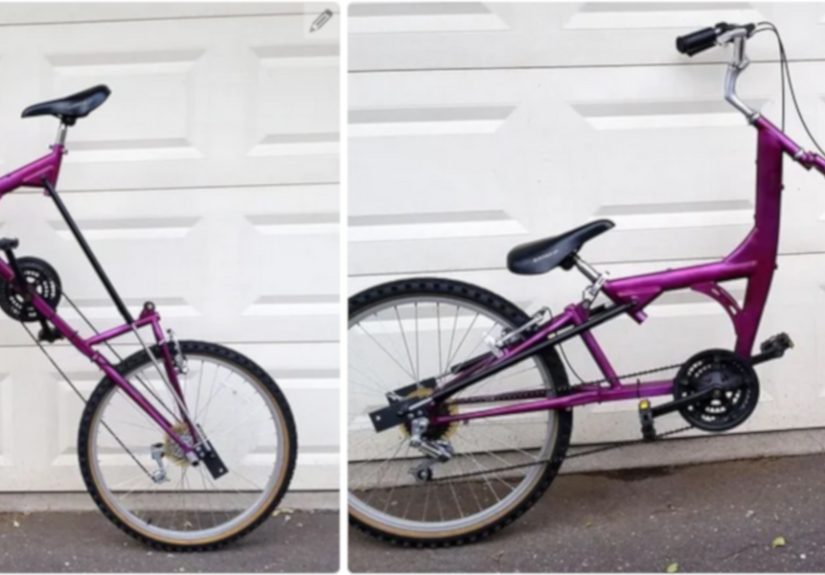
One of the most talked-about examples of a bike that literally changes form in motion came from a custom build covered by tech and maker media. The concept was gloriously odd and impressively clever: a modified full-suspension mountain bike used the pivoting action of its rear triangle and a gas cylinder to shift from a low, stretched-out machine into a tall bike while being ridden. That meant the bicycle did not just fold for storage or swap accessories in the garage. It actually changed its stance on command.
That kind of design matters because it turns a bicycle into a dynamic object rather than a static one. Most bikes are frozen decisions. You buy a road bike because you want speed, a commuter bike because you want practicality, or a folding bike because you live in an apartment the size of a generous closet. A transforming bicycle laughs at those tidy boxes. It says, “Why not be two things before lunch?”
Granted, the tall-bike transformation is not exactly aimed at the average Tuesday commute. You are probably not rolling into the office, rising six inches higher at a stoplight, and pretending that is normal behavior. But as a proof of concept, it is brilliant. It shows that frame geometry does not have to be fixed. The relationship between rider position, wheelbase feel, visibility, and handling can be made adjustable. Suddenly, a bicycle is not just a bike. It is a platform.
Why Transforming Bikes Make So Much Sense
At first glance, a transforming bicycle looks like a stunt. At second glance, it looks like a solution. The reason is simple: modern riders ask a lot from one bike. They want it to be fast enough for commuting, compact enough for small-space living, comfortable enough for errands, stylish enough to avoid looking like they borrowed it from a robot plumber, and maybe electric enough to survive hills without filing a complaint.
That is why folding bikes, compact e-bikes, and conversion systems have become so popular. They solve the very unglamorous but very real problem of living with a bicycle. A traditional full-size bike is wonderful until you need to carry it upstairs, park it in a studio apartment, wedge it into a train schedule, or keep it from becoming a magnet for thieves. Suddenly, the smartest bike is not the fastest one. It is the one that fits your life without becoming your second job.
Transforming bikes take that logic one step further. Instead of asking riders to own three separate bicycles, they try to build one machine that can adapt. Maybe it folds for the train. Maybe it extends for comfort. Maybe it changes rider posture. Maybe it adds electric assist through a conversion kit. Maybe it behaves like a commuter on weekdays and a fun machine on weekends. The dream is not just novelty. The dream is flexibility.
The Commuter Angle
For commuters, transformation is practically a love language. A bike that can shrink, roll, carry, or adapt between transit and street use is not just convenient. It is liberating. Folding-bike experts keep returning to the same point: portability is what makes many rides possible in the first place. If your bike can tuck under a desk, slide into an apartment corner, or hop onto public transit without becoming a social event, you ride more often.
That matters because the commuter ride is rarely one clean line from front door to office. It is usually a mash-up of sidewalks, elevators, trains, buses, coffee stops, weather mood swings, and at least one moment where you wonder whether your backpack secretly packed bricks. A transformable bicycle works best when it removes friction from those in-between moments. That is where smart design wins.
The E-Bike Angle
Electric assist also fits neatly into the transformation story. An e-bike changes the ride without changing the rider’s identity. You are still cycling, but you are cycling with a tailwind that never gets bored. For many people, that turns a bike from “nice in theory” into “actually useful on Monday.” Hills become less rude. Longer distances become realistic. Cargo becomes less dramatic. Commuting without arriving sweaty enough to water office plants becomes possible.
Even better, electric conversion kits show that transformation does not always mean a folding hinge or an acrobatic frame. Sometimes the transformation is mechanical and invisible. A familiar bike becomes a new machine with a motor, a battery, and different possibilities. That is still a mid-ride transformation in spirit. The bike starts behaving differently, and so does the rider.
But Let’s Talk About the Trade-Offs
Now for the part where engineering walks into the room carrying a clipboard. Every transformation comes with compromise. Hinges can add flex. Complex mechanisms can add weight. Compact wheels may make storage easier but can change ride feel. Added systems mean more maintenance, more points of failure, and more decisions. The bicycle, once the patron saint of elegant simplicity, starts flirting with complexity.
That does not make the idea bad. It just means transforming bicycles have to earn their drama. The best designs solve a real problem while staying reliable, controllable, and comfortable. The worst ones feel like someone stapled a gadget wishlist onto a frame and hoped charisma would do the rest.
A transforming bike has to answer a few tough questions:
Does it still ride well?
If the bike becomes compact but feels twitchy, sluggish, or awkward, riders will notice immediately. People can forgive a bike for being unusual. They rarely forgive it for feeling bad.
Is the mechanism intuitive?
A transforming feature should be elegant, not theatrical in the bad sense. If it takes a five-step choreography, a prayer, and the patience of a museum conservator, everyday riders will quickly lose interest.
Is it safe?
This is the big one. Any bicycle that changes shape, adds motor power, or shifts rider position must still respect the fundamentals: a proper fit, working brakes, strong visibility, predictable handling, and components that do not decide to become decorative halfway through a ride.
Safety Is Not the Boring Part. It Is the Whole Ballgame.
When a bicycle changes form, safety becomes even more important because the rider is adapting in real time. A different ride height changes balance. A different posture changes confidence. A different weight distribution changes braking and cornering. That is why any transformable or modified bicycle should be treated with the same seriousness as any performance machine.
Riders need a bike that fits, brakes that work, lights and reflectors that do their job, and a helmet and visibility gear that make them easier to see. If electric assist is involved, the battery and charging setup should be treated with respect instead of the classic human strategy of “it’ll probably be fine.” Clever design is wonderful. Safe design is mandatory.
The same rule applies to the city around the rider. Bikes work better when streets work better. Infrastructure, protected routes, and activity-friendly community design all make cycling more practical. A transforming bike may solve a storage problem or a comfort problem, but it cannot single-handedly fix a dangerous street. Even the coolest bicycle on Earth still prefers not being flattened by traffic. A sensible preference, really.
What This Trend Says About the Future of Cycling
The bicycle has always been more adaptable than people give it credit for. Over time, it has shifted from novelty to necessity, from sport tool to commuter staple, from fitness device to cargo hauler, from analog machine to electrified everyday transport. Today’s bike boom is not just about speed or style. It is about versatility.
That is why the most interesting bicycles right now often blur categories. Folding bikes act like transit companions. Cargo bikes act like family cars with better parking manners. E-bikes act like range extenders for ordinary people. Conversion kits let riders upgrade what they already own instead of starting from scratch. And experimental builds, like the bike that transforms mid-ride, push the edges of what frame design can do.
In a way, this is the natural next chapter for bicycle design. Cities are crowded. Homes are smaller. Commutes are mixed-mode. Riders want utility without losing joy. So bicycle makers and tinkerers keep chasing the same goal: a machine that can be more useful in more situations without losing the simple delight of pedaling.
That is the balancing act. A bicycle should not become so clever that it forgets to be a bicycle. The magic is not in making it complicated. The magic is in making it feel effortless.
Experience: What It Feels Like When a Bicycle Changes Character Mid-Ride
There is also an emotional side to this story, and it is one that spec sheets usually miss. Riding a bicycle that transforms mid-ride changes the way you think about movement itself. On a normal bike, the experience is stable and familiar. You learn its rhythm, its posture, its little habits. On a transforming bike, the ride gains a second act. Suddenly, the machine is not just carrying you; it is performing with you.
The first feeling is surprise. Even if you know the mechanism is coming, the moment the bike shifts height or posture feels mildly impossible. Your body notices before your brain catches up. The bars feel different. The road looks different. Your center of gravity sends a polite little memo that says, “Hello, we have moved.” It is a thrilling sensation, like stepping from a sedan into a balcony without getting out of your seat.
Then comes awareness. A low-slung position often feels playful and planted, almost like the bike is hugging the road. Raise the machine and everything changes. Visibility improves. The rider feels taller, more present, and slightly more theatrical. You are no longer just part of traffic; you are a small event passing through it. People stare. Kids point. Drivers do double takes. Other cyclists give that universal look of respect mixed with confusion, which is honestly one of the highest honors in bike culture.
There is also vulnerability in the experience. A transforming bicycle asks the rider to trust the machine in a deeper way. You are not only trusting the wheels, brakes, and frame. You are trusting movement within the frame itself. That creates a sharper sense of partnership. Every shift reminds you that design is not abstract. It is physical. It changes how your hips settle, how your arms relax, how confidently you take a corner, and how quickly you react at a stop.
For commuters, even less dramatic transformations can have that same effect. A folding bike that suddenly becomes trolley-sized at the station changes your mood. An e-bike conversion that turns a dreaded hill into a casual spin changes your relationship with distance. A compact utility bike that carries groceries without wobbling like a guilty shopping cart changes what feels possible on two wheels. The transformation may be mechanical, but the result is psychological. The city feels smaller. The ride feels easier. The bike feels less like equipment and more like an accomplice.
That is why people remember these bikes so vividly. They do not just move the body. They alter the script of the day. A strange machine can make a routine commute feel experimental, a boring errand feel cinematic, and a normal street feel newly designed. Even when the transformation is subtle, it can change the rider’s confidence, curiosity, and willingness to choose the bike again tomorrow.
And maybe that is the biggest lesson of all. A bicycle does not need to become a robot to transform mid-ride in a meaningful way. It only needs to change the rider’s sense of possibility. Sometimes that happens with a gas cylinder and a wild custom frame. Sometimes it happens with a hinge, a motor, a smarter geometry, or a clever storage trick. Either way, the best transforming bikes leave riders with the same thought: if this machine can adapt, maybe I can too.
Final Thoughts
Bicycle Transforms Mid-Ride is a headline that grabs attention because it sounds outrageous. It keeps attention because it points to something bigger than a one-off stunt. Transforming bicycles represent a real design direction: adaptable bikes for adaptable lives. Some versions are playful, some practical, and some are gloriously unhinged in the best possible way. But all of them ask the same question: why should a bike stay one thing when riders no longer live one-dimensional lives?
The future of cycling will probably not belong to a single perfect bicycle. It will belong to bikes that can do more, fit better, store smarter, ride safer, and make people genuinely excited to choose them. If one of those bikes rises up in the middle of a ride and makes everyone on the block say, “Wait, did that bicycle just transform?” well, that is just excellent marketing.