Table of Contents >> Show >> Hide
- What Is Star Wars: Galaxy’s Edge?
- Disney Did Not Build a Land. It Built a Spending Ecosystem.
- The Ticket Is Only the Beginning
- The Rides: Big Thrills, Bigger Strategy
- Savi’s Workshop: Where $250 Feels Like Destiny
- Droid Depot: The Cutest Budget Ambush on Batuu
- Oga’s Cantina: Come for the Vibes, Stay for the Bill
- Food on Batuu: Delicious, Weird, and Not Exactly Cheap
- Merchandise: The Dark Side Has Excellent Branding
- The Galactic Starcruiser Lesson: Immersion Has a Ceiling
- Why Galaxy’s Edge Still Works
- How to Visit Without Letting Darth Vader Audit Your Bank Account
- Extra Experience Section: What It Feels Like When Batuu Steals Your Budget
- Conclusion
There are two kinds of people who walk into Disney’s Star Wars: Galaxy’s Edge. The first says, “Wow, I finally get to live inside Star Wars.” The second says, “Wait, how did I just spend $300 before lunch?” Both are correct. Disney’s Star Wars land is a stunning, sand-colored love letter to the galaxy far, far away, and it is also a precision-engineered financial tractor beam aimed directly at your vacation budget.
Officially, Galaxy’s Edge is not “Tatooine,” “Endor,” or “that place where Luke dramatically stared at two suns while ignoring chores.” It is Batuu, a remote frontier planet anchored by Black Spire Outpost. The land exists at Disneyland Park in Anaheim, California, and Disney’s Hollywood Studios at Walt Disney World in Orlando, Florida. Since opening in 2019, it has become one of Disney’s most ambitious themed environments, blending rides, restaurants, shops, character encounters, mobile-app missions, collectibles, premium experiences, and enough merchandise to make a Jawa cry happy little scavenger tears.
The good news? It is genuinely impressive. The bad news? The more deeply you want to participate, the more your wallet starts sounding like Darth Vader breathing through a payment terminal.
What Is Star Wars: Galaxy’s Edge?
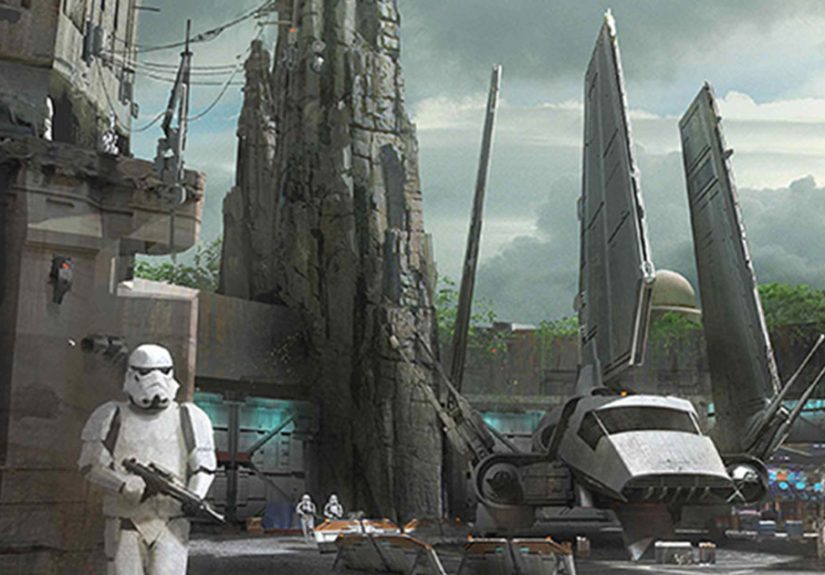
Star Wars: Galaxy’s Edge is Disney’s large-scale Star Wars-themed land, designed as an immersive village rather than a traditional theme park section. Instead of simply placing a few rides near a gift shop and calling it “space,” Disney built a lived-in outpost with alien marketplace stalls, Resistance hideouts, First Order patrols, weathered spacecraft, themed food, hidden details, and the full-size Millennium Falcon sitting there like it has been waiting for you since 1977.
The land opened first at Disneyland on May 31, 2019, followed by Disney’s Hollywood Studios on August 29, 2019. For Disney, this was not just another expansion. It was one of the company’s biggest bets: a themed world where guests could stop watching Star Wars and start participating in it. That ambition explains why Galaxy’s Edge feels so expensive, so detailed, and, yes, so dangerously good at separating visitors from their credits.
Disney Did Not Build a Land. It Built a Spending Ecosystem.
The brilliance of Galaxy’s Edge is that nearly everything feels like part of the story. Buying a soda? It comes in a weird orb-shaped bottle that looks like it rolled out of a droid repair shop. Shopping for souvenirs? You are not just buying toys; you are “collecting artifacts” from Dok-Ondar’s Den of Antiquities. Ordering a drink? You are not in a bar; you are in Oga’s Cantina, a noisy intergalactic watering hole with music, themed cocktails, and the feeling that somebody at the next table may be hiding from bounty hunters.
This is where the wallet force-choke begins. Traditional theme park spending is obvious: tickets, snacks, souvenirs. Galaxy’s Edge makes spending feel like gameplay. You do not simply buy a lightsaber. You enter Savi’s Workshop, join a secretive gathering, select a theme, choose parts, hear dramatic lore, and build a glowing symbol of Jedi destiny. You do not simply buy a toy robot. You visit Droid Depot, choose pieces from a conveyor belt, assemble your unit, activate it, and carry it around the land while it reacts to Batuu’s environment. Disney has transformed retail into ritual, and rituals are famously difficult to skip when your inner 10-year-old is screaming, “This is our moment.”
The Ticket Is Only the Beginning
Before you even smell the roasted ronto wraps, you need admission to either Disneyland Park or Disney’s Hollywood Studios. Disney uses date-based pricing, which means ticket costs can vary depending on the park, the day, the season, and demand. Peak holidays are usually more expensive, while lower-demand dates may be cheaper. In other words, the first financial lesson of Batuu is simple: the Force may be mysterious, but Disney’s calendar pricing is brutally clear.
Then come the optional upgrades. Want to visit multiple parks in one day? Park Hopper can add more cost. Want to reduce time in standby lines? Lightning Lane options may enter the conversation. Want photos, better dining, souvenirs, custom builds, snacks, drinks, apparel, MagicBand+ features, or themed collectibles? Congratulations, young Padawan. You have discovered the real Sith temple: add-ons.
The Rides: Big Thrills, Bigger Strategy
Millennium Falcon: Smugglers Run
Millennium Falcon: Smugglers Run is the fantasy that sells itself: you step into the cockpit of the most famous hunk of junk in the galaxy and help pilot a mission. Guests are assigned roles as pilots, gunners, or engineers. Pilots get the glory and the pressure. Gunners get the satisfying button-mashing. Engineers get the honorable duty of fixing everything the pilots destroy, which is basically the theme park equivalent of being the friend who plans the whole group trip.
Smugglers Run is interactive, repeatable, and clever. It also shows how Galaxy’s Edge rewards planning. Wait times can fluctuate, and at Walt Disney World the attraction may be included among Lightning Lane Multi Pass choices, depending on current policies and availability. That means guests have to decide whether to spend time, money, or strategy. Disney has turned queue management into a game of galactic chess, except all the pawns have mobile app notifications.
Star Wars: Rise of the Resistance
Rise of the Resistance is the headline attraction, and for good reason. It combines multiple ride systems, large-scale sets, trackless vehicles, audio-animatronics, projections, and cinematic staging. One minute you are being recruited by the Resistance. The next, you are captured by the First Order, standing beneath a room full of stormtroopers, and wondering whether this is the most elaborate line you have ever waited in.
It is widely considered one of Disney’s most technologically ambitious attractions. It is also often treated as a premium ride for Lightning Lane Single Pass access, meaning it may not be included in the same Lightning Lane bundle as other attractions. Translation: if Rise of the Resistance is a must-do, you should plan early, watch availability, and accept that your budget may need a small bacta tank afterward.
Savi’s Workshop: Where $250 Feels Like Destiny
Savi’s Workshop is the emotional trapdoor under every Star Wars fan’s budget. This is not a normal souvenir shop where you say, “Maybe I’ll get a magnet.” This is a theatrical lightsaber-building ceremony designed to make adults suddenly speak in reverent whispers about kyber crystals. At Disneyland, the experience is listed at $249.99 per lightsaber, plus tax, while Walt Disney World pricing has been reported higher in recent updates. Prices can change, but the basic truth remains: this is one of the most expensive individual experiences in Galaxy’s Edge.
Is it worth it? That depends on the guest. For a casual visitor, a premium lightsaber may be hard to justify. For a lifelong fan, the ceremony can feel like a childhood dream with a credit card reader. The builder chooses from themed hilt categories, selects components, inserts a kyber crystal, and watches the lightsaber activate in a darkened room. It is beautifully staged, surprisingly moving, and dangerous to anyone who thought they were “just browsing.”
And Disney knows exactly what it is doing. The included lightsaber is already expensive, but additional accessories, display stands, belt clips, and extra kyber crystals are nearby like tiny financial Sith apprentices. The base experience gets you the saber. The surrounding ecosystem whispers, “But what if it also looked perfect on your shelf?”
Droid Depot: The Cutest Budget Ambush on Batuu
Droid Depot is another premium build experience, usually costing around $119.99 plus tax for a custom droid. Guests select parts, assemble either an R-series, BB-series, or other available unit depending on current offerings, and activate their new companion. Compared with Savi’s Workshop, Droid Depot may seem like the “affordable” option. That is how Disney gets you. Calling a $120 robot affordable is theme park math at its finest.
Still, Droid Depot is a crowd-pleaser. Kids love it. Adults love it. People who claimed they did not need a droid suddenly name it, photograph it, and discuss its personality as if it might apply for college someday. The droids can interact with areas around Galaxy’s Edge, although guests are generally expected to carry them rather than drive them around the park. Naturally, backpacks, personality chips, decals, and add-ons can raise the final cost.
Oga’s Cantina: Come for the Vibes, Stay for the Bill
Oga’s Cantina is one of the strongest pieces of atmosphere in Galaxy’s Edge. It is loud, colorful, cramped in the best possible way, and packed with drinks that look like they were invented during a sabacc game gone wrong. The menu includes alcoholic and nonalcoholic beverages, snacks, and novelty options. Disney categorizes the lounge pricing in the moderate range, but a family visit can still add up quickly, especially when themed drinks and souvenir vessels start entering the chat.
Oga’s works because it feels like a place. It is not just a restaurant with Star Wars wallpaper. The music, lighting, staff interactions, drink names, and cantina layout create an experience. But again, this is the pattern: atmosphere justifies spending. You are not paying only for a drink. You are paying to sit inside the fantasy, even if the fantasy includes a reservation window, limited seating time, and a total that looks suspiciously like a speeder bike repair invoice.
Food on Batuu: Delicious, Weird, and Not Exactly Cheap
Galaxy’s Edge food is designed to look slightly alien while remaining safely edible for Earth stomachs. Ronto Roasters offers the famous Ronto Wrap, a pita-style meal with roasted pork, grilled sausage, slaw, and sauce. Docking Bay 7 Food and Cargo serves themed bowls, ribs, chicken, plant-based options, and seasonal dishes. The Milk Stand sells blue and green milk, frozen drinks inspired by the Star Wars films, though their taste has inspired many debates among fans.
Some visitors love blue milk. Some say green milk tastes like a spa day got trapped in a smoothie machine. Either way, the drinks are photogenic, and photogenic theme park food has its own gravitational pull. Galaxy’s Edge understands that modern visitors do not just eat snacks. They document them, rank them, post them, and later wonder why lunch cost more than groceries.
Merchandise: The Dark Side Has Excellent Branding
The shops in Galaxy’s Edge are among the land’s biggest strengths. Dok-Ondar’s Den of Antiquities is filled with legacy lightsabers, holocrons, kyber crystals, busts, statues, jewelry, and collectibles. The Market stalls sell creature toys, apparel, wooden figures, and Resistance or First Order gear. Droid Depot sells droid accessories. Black Spire Outfitters offers robes and costume-inspired pieces. This is not random merchandise; it is world-building with price tags.
The danger is that every item feels like it belongs in the story. A regular T-shirt says, “I visited a theme park.” A Batuu artifact says, “I survived a smuggling job, joined a resistance cell, and adopted a droid named Snacks.” Disney has mastered the souvenir as identity marker. People buy these items not only because they like Star Wars, but because they want proof that they lived inside it for a day.
The Galactic Starcruiser Lesson: Immersion Has a Ceiling
No discussion of Disney’s Star Wars spending machine is complete without mentioning Star Wars: Galactic Starcruiser, the immersive hotel experience at Walt Disney World that opened in 2022 and closed in 2023. It was not part of Galaxy’s Edge itself, but it connected directly to the land and represented Disney’s most extreme experiment in premium Star Wars immersion.
The concept was bold: a two-night role-playing adventure aboard the Halcyon starcruiser, complete with characters, missions, dining, entertainment, and a dedicated excursion to Galaxy’s Edge. The problem was the price. Packages for two guests began around several thousand dollars, and larger groups could pay significantly more. For some fans, it was unforgettable. For many others, it became a symbol of Disney pushing immersion past the point where ordinary families could realistically participate.
The closure of Galactic Starcruiser proved something important. Disney fans will pay for magic, but even magic has a breaking point. Galaxy’s Edge succeeds partly because guests can choose their level of spending. You can walk through Batuu, ride attractions, and enjoy the land without building a lightsaber or buying a droid. The Starcruiser had fewer escape hatches. It was all-in or nothing, and for many wallets, “nothing” won.
Why Galaxy’s Edge Still Works
It would be easy to call Galaxy’s Edge a cash grab and fly away in moral superiority like a very smug X-wing. But that would miss the point. The land works because it is not cheap-looking, lazy, or shallow. It is full of craftsmanship. The rockwork, sound design, vehicles, signage, costumes, props, food presentation, and spatial layout are all carefully built to sustain the illusion. The Millennium Falcon is breathtaking in person. Rise of the Resistance is a landmark attraction. The marketplace feels alive. The details reward wandering.
The frustration comes from the fact that the best parts of the experience often sit behind extra spending. The free immersion is strong. The paid immersion is stronger. That tension defines modern Disney parks. The company creates extraordinary environments, then sells deeper layers of access, convenience, personalization, and ownership. Galaxy’s Edge may be the clearest example: a free-to-explore world where the most personal memories often come with receipts.
How to Visit Without Letting Darth Vader Audit Your Bank Account
The smartest way to approach Galaxy’s Edge is to decide what kind of Star Wars fan you are before you arrive. If you want the rides and atmosphere, focus on timing, wait times, and dining reservations. If you want a custom lightsaber, build it into the budget before the trip so it feels intentional rather than impulsive. If you have kids, set expectations early about droids, plush creatures, and souvenir limits. “We will choose one special item” is much safer than “We will see what happens,” because what happens is usually expensive.
Use the official Disney app to monitor wait times, mobile order food, check entertainment, and manage Lightning Lane options if you choose to buy them. Make reservations for Savi’s Workshop, Droid Depot, and Oga’s Cantina when needed. Visit early or late for better atmosphere and potentially shorter waits. Take time to explore free details: scan crates with the Play Disney Parks app, watch character interactions, photograph the Falcon, explore the marketplace, and soak in the soundscape.
Most importantly, remember that you do not have to buy everything to enjoy Galaxy’s Edge. The land is designed to make every purchase feel urgent, but the best memories may come from walking through Black Spire Outpost at sunset, hearing ships rumble overhead, seeing stormtroopers march past, or watching a child stare at the Millennium Falcon like it just landed from another universe.
Extra Experience Section: What It Feels Like When Batuu Steals Your Budget
Imagine entering Galaxy’s Edge with a responsible plan. You are calm. You are mature. You are a financially stable adult who has already paid for tickets, hotel, transportation, and food. You tell yourself, “I am only here for the rides.” Then the tunnel opens, the music shifts, the rock spires rise around you, and the Millennium Falcon appears. Suddenly, your plan develops the structural integrity of a stormtrooper’s aim.
The first emotional hit is scale. Photos do not fully prepare you for the Falcon. It is huge, weathered, and parked casually like Han Solo just tossed the keys to Chewbacca and went looking for coffee. People stop talking when they see it. Parents lift kids onto shoulders. Grown adults whisper movie quotes. This is where Disney’s strategy becomes obvious: awe lowers financial defenses.
Next comes hunger. You smell Ronto Roasters before you fully understand what it is. The engine-like roaster, the droid turning meat, the warm bread, the smoky sausagesuddenly a wrap becomes part of the adventure. You could eat somewhere cheaper outside the land, sure. You could also leave a lightsaber duel halfway through to compare coupons. Technically possible, spiritually wrong.
Then you pass Droid Depot. A child is carrying a freshly built droid. It beeps. The child beeps back. The parent looks exhausted and proud, clutching the receipt of destiny. You think, “That’s cute, but I don’t need one.” Five minutes later, you are asking whether an R-series or BB-series unit better reflects your personality. This is how Batuu wins. It does not sell products; it sells relationships with products.
By midafternoon, you may find yourself near Savi’s Workshop. The cast members do not shout. They do not need to. The experience has a secretive quality, as if you have discovered something hidden. You see someone exit holding a long carrying case, walking with the unmistakable confidence of a person who now owns a glowing space sword. You check the price. You laugh. Then you check available times. That laugh becomes nervous.
Oga’s Cantina adds another layer. Inside, the room feels alive. Music pulses. Drinks bubble. The staff keeps the mood playful and brisk. You order something with a name that sounds like it was banned by the Senate. It arrives colorful, strange, and photo-ready. You take the picture. You sip. You understand why people do this. The drink is not just a drink; it is a timestamp on the fantasy.
The funniest part of Galaxy’s Edge is how quickly “expensive” becomes “well, compared to the lightsaber…” A snack seems reasonable after a droid. A T-shirt seems modest after Oga’s. A kyber crystal seems tiny after admission. Disney does not need Jedi mind tricks. It has price anchoring, emotional storytelling, and a gift shop located exactly where your willpower goes to die.
Still, the experience can be deeply satisfying if you spend intentionally. A family that chooses one premium build and treats it as the centerpiece of the day may walk away thrilled. A couple that skips the merchandise but enjoys the rides, food, and atmosphere can still feel immersed. A solo fan who saves for Savi’s Workshop may consider that lightsaber the highlight of the entire trip. Galaxy’s Edge is expensive, but it is not automatically wasteful. The difference is planning.
The best approach is to let Batuu impress you without letting it hypnotize you. Take the photos. Ride the Falcon. Escape the First Order. Try the weird milk if curiosity demands it. Build the saber if it truly matters. But know your limits before the land starts whispering in Aurebesh. Because Disney’s Star Wars land is here, and it is spectacular. It is also absolutely ready to force-choke your wallet if you wander in unprepared.
Conclusion
Disney’s Star Wars: Galaxy’s Edge is both a triumph of theme park design and a masterclass in premium vacation spending. It lets guests walk through Batuu, fly the Millennium Falcon, face the First Order, build lightsabers, assemble droids, drink in Oga’s Cantina, and shop like the fate of the Republic depends on limited-edition merchandise. The land is immersive, emotional, and often brilliant. It is also expensive in ways that can sneak up faster than a Sith Lord in a hallway scene.
The secret is not to avoid Galaxy’s Edge. The secret is to visit with eyes open and credits counted. Choose your must-do experiences, budget for the big-ticket items, and remember that the atmosphere itself is part of the value. You do not need to buy the whole galaxy to enjoy it. But if you leave with a custom lightsaber, a droid, a cantina receipt, and a suspiciously lighter bank account, do not say Batuu did not warn you.
Note: Prices, reservations, attraction access, Lightning Lane options, menus, and entertainment offerings can change by date, park, season, and availability. Always check the official Disney app or website before booking or visiting.