Table of Contents >> Show >> Hide
- Why Proper Insulin Needle Disposal Matters
- Step 1: Get the Right Sharps Disposal Container
- Step 2: Place Needles in the Container Immediately After Use
- Step 3: Do Not Throw Loose Needles in Trash, Recycling, or Toilets
- Step 4: Know When the Container Is Full
- Step 5: Choose a Local Disposal Option
- Step 6: Travel With a Mini Sharps Plan
- Step 7: Teach Everyone in the Home the Rule
- Common Mistakes to Avoid
- What About Insulin Pens, Lancets, and Needle Clippers?
- How to Store Sharps Safely at Home
- Experience-Based Tips: Making Insulin Needle Disposal Easier in Real Life
- Conclusion
- SEO Tags
Insulin needles are tiny, but they come with a very real job: helping people manage diabetes safely. Once they have done that job, however, they become “sharps,” which is the less adorable name for items that can puncture skin, such as insulin syringes, pen needles, lancets, and some auto-injector parts. Tossing them loosely into the trash is not just messy housekeeping; it can put family members, sanitation workers, janitors, hotel staff, pets, and curious children at risk of needle-stick injuries.
The good news? Safe insulin needle disposal is not complicated. It does not require a medical degree, a secret government badge, or a dramatic slow-motion walk to the pharmacy. What it does require is a puncture-resistant container, a little planning, and a quick check of your local sharps disposal rules. In many U.S. communities, you can use a pharmacy drop-off, household hazardous waste site, mail-back program, health department collection site, hospital collection program, or an approved home disposal method. The exact rules depend on where you live, so local guidance matters.
This guide explains easy ways to dispose of insulin needles in 7 practical steps, with plain-English examples and safety tips you can actually remember. Think of it as the “no loose needles, no drama” playbook.
Why Proper Insulin Needle Disposal Matters
Used insulin needles may look harmless because they are small, but they can still puncture skin. A loose needle in a trash bag can poke through plastic, fall out in a parking lot, injure a sanitation worker, or end up somewhere it absolutely does not belong, like a recycling facility. Recycling centers are built for bottles, cans, cardboard, and plasticsnot surprise medical sharps playing hide-and-seek.
Safe sharps disposal protects more than the person using insulin. It protects caregivers, children, pets, housekeepers, school staff, waste handlers, and the wider community. It also helps keep recyclable materials cleaner and safer. When used needles are placed in recycling bins, they can shut down sorting lines and create avoidable risks for workers.
The basic rule is simple: used insulin needles should go directly into a sharps disposal container immediately after use. Do not recap needles unless your healthcare provider has specifically shown you a safe method. Do not bend, break, or clip needles with scissors. Do not put them in soda cans, glass jars, paper bags, milk jugs, or thin plastic bottles. Insulin needles may be small, but they have no business freestyle swimming through your household trash.
Step 1: Get the Right Sharps Disposal Container
The easiest way to dispose of insulin needles safely is to start with the right container. An FDA-cleared sharps disposal container is the best option. These containers are usually red or bright-colored, made of puncture-resistant plastic, leak-resistant on the sides and bottom, and designed with a tight-fitting lid. You can often buy them at pharmacies, medical supply stores, some big-box retailers, through healthcare providers, or online.
If you cannot get an official sharps container right away, some community guidelines allow a heavy-duty household plastic container as a temporary alternative. A thick laundry detergent bottle is a common example because it is sturdy, has a screw-on cap, and is not easily punctured. If you use a household container, label it clearly with words such as “Sharps,” “Used Needles,” or “Do Not Recycle.” That label is not decoration; it is a warning sign for future humans.
What Makes a Good Sharps Container?
A safe container should be puncture-resistant, upright and stable, leak-resistant, and able to close tightly. It should be made of heavy-duty plastic and should not be easy for children to open. Avoid clear bottles if possible, and never use glass because it can break. Also avoid soda bottles, milk jugs, coffee cans, plastic bags, or cardboard boxes. These can crack, tear, leak, or invite disaster in the form of one very unhappy thumb.
Step 2: Place Needles in the Container Immediately After Use
Once you finish using an insulin syringe, pen needle, or lancet, place it directly into your sharps container. Do not leave it on the counter “just for a second.” That second has a sneaky way of turning into an afternoon, then into a household mystery titled, “Why Is There a Needle Near the Coffee Maker?”
Immediate disposal reduces the chance of accidental sticks. Keep the container close to where injections usually happen, but out of reach of children and pets. For example, if insulin is typically used at a bedroom desk or bathroom counter, keep the sharps container nearby in a secure spot. The goal is to make the safe choice the convenient choice.
Should You Recap Insulin Needles?
In general, avoid recapping used needles unless a healthcare professional has shown you a safe method or your specific device instructions require it. Recapping can increase the risk of accidentally sticking yourself. If you use insulin pens, follow the manufacturer’s instructions for removing the pen needle safely and placing it into the sharps container. Keep the pen itself separate from the used needle unless the instructions say otherwise.
Step 3: Do Not Throw Loose Needles in Trash, Recycling, or Toilets
This step deserves flashing lights, a marching band, and possibly a dramatic narrator: never throw loose insulin needles into household trash, recycling bins, toilets, public restroom trash cans, hotel trash, airplane seat pockets, or random outdoor bins. Loose sharps can injure people and create public health risks.
Recycling is especially important. Needles, syringes, pen needles, and lancets should not go into recycling containers. Even if the plastic looks recyclable, the used sharp is not. A recycling worker should never have to meet your insulin needle unexpectedly while sorting containers. That is not teamwork.
Flushing needles is also unsafe. Toilets are designed for human waste and toilet paper, not medical sharps. Flushed needles can create problems in plumbing, wastewater systems, and the environment. In other words, the toilet is not a magic portal for medical waste.
Step 4: Know When the Container Is Full
Most sharps containers have a fill line. When the contents reach that line, it is time to stop using the container. If your container does not have a fill line, a practical rule is to stop when it is about three-quarters full. Do not shake the container to “make more room.” Do not press needles down with your hand. Do not reopen a sealed container to rearrange anything. That is not organizing; that is flirting with a needle-stick injury.
Once full, close the lid securely. If local rules allow a household plastic container, tape the lid shut with heavy-duty tape and make sure the label is clear. Some communities require specific wording, such as “Do Not Recycle” or “Home Sharps.” Others may require an approved sharps container only. This is why checking local regulations is part of safe insulin needle disposal, not an optional side quest.
Step 5: Choose a Local Disposal Option
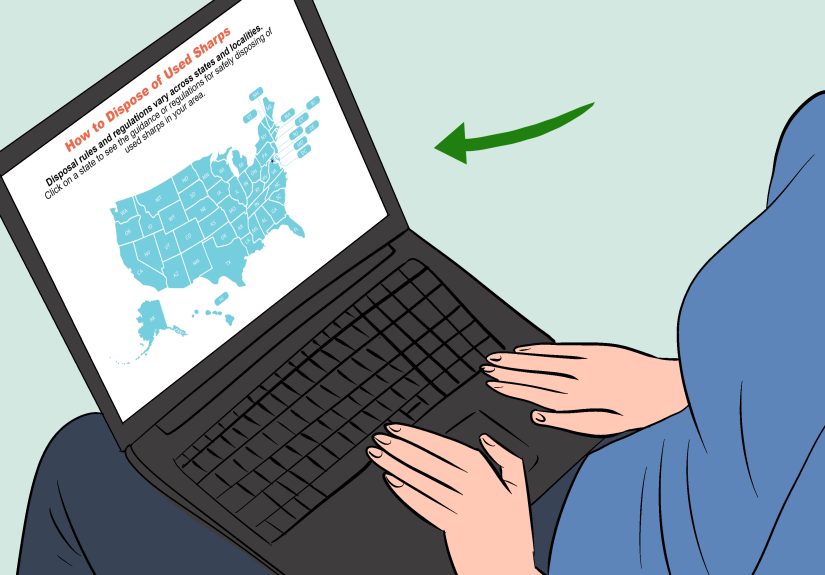
Sharps disposal options vary across the United States. Some areas allow a sealed, labeled sharps container to go into household trash. Other places prohibit sharps in regular trash and require drop-off, mail-back, or approved collection programs. California, for example, has strict rules for home-generated sharps waste, while some other states allow sealed household sharps containers in trash if local rules permit it.
Common safe disposal options include pharmacy collection programs, health department drop-off sites, household hazardous waste events, hospitals or nursing homes, fire stations in some communities, medical waste mail-back services, and local sharps kiosks. Some manufacturers and state stewardship programs also offer mail-back containers. If you travel often, mail-back programs can be especially convenient because they reduce the “Where do I put this now?” panic.
How to Find the Right Disposal Program
Start with your local waste department, public health department, pharmacy, diabetes clinic, or healthcare provider. You can also search for sharps disposal options by ZIP code using reputable safe-disposal directories. Before dropping off a container, confirm the location accepts home-generated sharps, check hours, and ask whether the container must be FDA-cleared or simply puncture-resistant and labeled.
Here is a specific example: in some New York communities, hospitals and nursing homes may accept household sharps, while local sanitation rules may also allow sealed containers in trash. In California, many counties direct residents toward approved collection sites or mail-back options. In Texas, household disposal guidance may allow sturdy, sealed, labeled containers in trash, depending on local rules. The main takeaway is not “one rule fits all.” The main takeaway is “check locally before tossing anything.”
Step 6: Travel With a Mini Sharps Plan
Traveling with insulin supplies is already enough of a packing puzzle. Add used needles, and suddenly your toiletry bag feels like it needs a safety manual. The solution is simple: pack a small travel sharps container before you leave home. These containers are designed for hotel rooms, road trips, school, work, and flights. They are usually compact, sturdy, and much safer than improvising with a napkin and optimism.
When traveling, never leave used needles in hotel trash cans, airplane bathrooms, public restroom bins, or rental cars. Housekeepers, flight crews, janitors, and other workers should not have to handle loose sharps. If your travel container fills up before you return home, ask a local pharmacy, clinic, or health department about disposal options. Some airports and public buildings may have sharps containers in restrooms, but do not count on it. Plan first; panic never packed a good suitcase.
Travel Tip for Insulin Pens
If you use insulin pens, bring enough pen needles for your trip and a safe way to store the used ones. Remove the used pen needle after each injection according to instructions, place it in your travel sharps container, and store unused supplies separately. Keep diabetes supplies with you rather than in checked luggage when flying, and follow current travel guidance for medications and medical devices.
Step 7: Teach Everyone in the Home the Rule
Safe insulin needle disposal works best when everyone in the household knows the basic rule: do not touch loose needles, and do not put sharps in the trash or recycling. Children should be taught to tell an adult if they see a needle. Pets should be kept away from injection supplies and sharps containers. Caregivers should know where the container is stored, when it is full, and how it will be disposed of.
If more than one person in the home uses injectable medication, consider assigning one sharps container area and one person to monitor fill level. A sticky note on the container can help track when it was started. This is not glamorous, but neither is finding a full sharps container during a busy Monday morning when everyone is late and the dog is barking at a sock.
For schools, workplaces, camps, or shared housing, ask about existing sharps policies. Some workplaces have sharps containers in restrooms or health offices. Schools may have nurse-managed disposal procedures for students who use insulin. Never assume a regular trash can is acceptable just because it is nearby.
Common Mistakes to Avoid
Using Weak Containers
Thin plastic bottles, paper bags, and cardboard boxes are not safe for used needles. They can be punctured or crushed, especially during waste collection. Use an FDA-cleared sharps container whenever possible.
Overfilling the Container
A stuffed sharps container is harder to close and more dangerous to handle. Stop at the fill line or around three-quarters full if there is no line.
Putting Sharps in Recycling
Used insulin needles are not recyclable. Even if the syringe has plastic parts, the sharp and any attached medical waste make it unsafe for recycling systems.
Assuming Every State Has the Same Rule
Sharps disposal rules vary widely. Local city or county rules may be stricter than state rules. Always check your local waste or health department guidance.
What About Insulin Pens, Lancets, and Needle Clippers?
Insulin pen needles should be treated like other sharps after use. Remove the needle safely, place it in the sharps container, and do not throw it loose into the trash. Lancets used for blood glucose testing also belong in a sharps container. They may be tiny, but tiny sharp things are still sharp things. A cactus needle is tiny too, and nobody invites it into the laundry.
Needle clipping devices may be useful for some people, but they must be designed specifically for medical needles. Do not use scissors, nail clippers, or household tools to cut needles. A proper needle clipper catches and contains the clipped needle. When the device is full, dispose of it according to local rules or manufacturer instructions.
How to Store Sharps Safely at Home
Store your sharps container upright in a stable location. Keep it away from children, pets, food preparation areas, and heavy traffic zones. A bathroom cabinet, bedroom shelf, or dedicated medical supply area may work if it is secure and easy to access after injections. The container should be close enough to use immediately but not so accessible that a toddler or curious cat can investigate it like buried treasure.
If you use insulin in multiple places, consider having more than one small sharps container. For example, one can stay at home and another can go in a diabetes travel kit. People who inject at work or school may benefit from a compact container that fits safely in a bag. The easier the system is, the more likely it is to become a habit.
Experience-Based Tips: Making Insulin Needle Disposal Easier in Real Life
In real life, safe insulin needle disposal is less about memorizing rules and more about building a routine that survives busy mornings, tired evenings, travel days, and the occasional “Where did I put that?” moment. Many people who use insulin find that the best system is the one that removes extra thinking. Keep the sharps container in the same place every time. Use it immediately after every injection. Check the fill line once a week. Replace it before it becomes full. Simple beats fancy.
A helpful habit is to pair sharps disposal with another part of diabetes care. For example, after using an insulin pen, remove the pen needle and place it directly into the container before putting the pen away. After using a lancet, drop it into the sharps container before logging a blood sugar result. This creates a “finish line” for the task. The injection or test is not complete until the sharp is safely stored.
Another practical tip is to keep backup containers available. Running out of sharps container space is when people start improvising, and improvising with needles is where safety gets wobbly. If you order diabetes supplies online or pick them up monthly, add sharps containers or mail-back supplies to the same routine. If your pharmacy offers disposal containers, ask when you refill insulin. If your community has a drop-off site, save the address and hours in your phone so you do not have to hunt for it later.
Families can make the system smoother by communicating clearly. A caregiver should not have to guess whether a container is full or whether it can go in the trash. Label the container. Tape the lid when it is ready for disposal. Keep a small note nearby with local instructions, such as “Take to pharmacy drop-off” or “Bring to county hazardous waste site.” This is especially useful for grandparents, babysitters, older siblings, roommates, or anyone helping with diabetes care.
For travel, the best experience-based advice is to pack your sharps plan before packing your snacks. A mini sharps container in a diabetes kit prevents awkward moments in hotel rooms, school bathrooms, airplanes, and cars. It also helps reduce anxiety because you know exactly where used needles will go. If you are traveling for several days, bring a container larger than you think you need. Diabetes supplies have a way of expanding like luggage on the return trip.
People who inject at work may want to ask whether the workplace has a sharps container in a restroom or health office. If not, carrying a personal travel container is usually the cleanest solution. The same idea applies to students. School nurses often have procedures for medication and sharps disposal, but students and caregivers should confirm the plan ahead of time. A clear plan is much better than a rushed plan during lunch period.
Finally, do not feel embarrassed about asking disposal questions. Pharmacists, diabetes educators, doctors, nurses, health departments, and waste agencies answer these questions all the time. Safe sharps disposal is part of responsible diabetes care, not a weird personal chore. The needle helped with health management; now it deserves a safe retirement. Preferably one that does not involve poking a sanitation worker through a trash bag.
Conclusion
Disposing of insulin needles safely is one of those small habits that makes a big difference. The 7-step process is straightforward: get the right sharps container, place used needles into it immediately, keep sharps out of trash and recycling unless local rules allow sealed containers, stop using the container when it reaches the fill line, choose an approved local disposal option, travel with a mini sharps plan, and teach everyone in the home the basic safety rule.
The most important message is simple: never leave used insulin needles loose. Use a puncture-resistant sharps container, keep it away from children and pets, and follow local disposal rules. With a little planning, insulin needle disposal becomes quick, safe, and boringin the best possible way. Because when it comes to used needles, boring is beautiful.
SEO Tags
Note: Disposal rules for insulin needles and other sharps vary by city, county, and state. Always check your local health department, waste agency, pharmacy, or healthcare provider for the disposal method approved in your area.