Table of Contents >> Show >> Hide
- What Rob Schneider Said About the Paris Olympics
- Why the Ceremony Became a Culture-War Firework
- The Adam Sandler Twist: Enter Little Nicky
- Rob Schneider and Adam Sandler’s Long Comedy Friendship
- Why the Internet Loves Calling Out Celebrity Contradictions
- The Difference Between Satire, Faith, and Selective Outrage
- Did Schneider’s Boycott Hurt the Olympics?
- Why This Story Works as Comedy
- Experience Notes: Watching an Olympics Controversy Become a Meme
- Conclusion: The Devil Is in the Callback
Note: In this article, “the Devil’s Son” refers to Adam Sandler’s fictional character in the 2000 comedy Little Nicky, not to Sandler as a real person. The headline is a satirical pop-culture framing of a real entertainment controversy.
Rob Schneider has never been shy about tossing a verbal grenade into the middle of the internet and then watching the notification bell turn into a smoke alarm. But his 2024 Olympics complaint gave pop-culture watchers a particularly chewy paradox: the comedian denounced a Paris opening ceremony segment as disrespectful to Christianity and “satanic,” while the internet immediately remembered that one of his closest Hollywood friends is Adam Sandler, who famously played the literal son of Satan in Little Nicky.
That is the sort of contradiction social media lives for. It has everything: a celebrity boycott, a drag-performance debate, religious symbolism, the Olympics, a beloved comedy friendship, and a movie where Hell apparently has better casting than most streaming platforms. Schneider’s criticism may have been sincere, but online reactions quickly turned it into a comedy roast with archival footage, movie stills, and the collective energy of people whispering, “Didn’t this guy do a lot of Adam Sandler movies?”
The controversy is not just about Rob Schneider or one Olympic scene. It is about how fast culture-war outrage travels, how old comedy roles become evidence in new arguments, and how the internet has developed a nearly supernatural ability to remember every movie cameo ever made. In Schneider’s case, the punchline wrote itself: if you are going to accuse the Olympics of celebrating Satan, people will probably bring up the time your buddy saved Hell.
What Rob Schneider Said About the Paris Olympics
After the 2024 Paris Olympics opening ceremony, Schneider posted that he could not watch an Olympics he believed disrespected Christianity and “openly celebrates Satan.” He wished the Games the same level of viewership as C-SPAN, a line that felt engineered in a lab for maximum talk-radio replay value.
The moment that sparked his reaction was a tableau during the opening ceremony that many viewers interpreted as a drag-inflected reference to Leonardo da Vinci’s The Last Supper. The scene included performers arranged around a long table, with drag artists, dancers, and French cultural references folded into a larger show built around Paris, fashion, art, music, and theatrical spectacle.
Olympic organizers later apologized to anyone offended, while also saying the intent was not to disrespect any religious group. Artistic director Thomas Jolly said the segment was meant to evoke a pagan feast connected to the gods of Olympus, not to attack Christianity. In other words, the ceremony’s creative team said it was aiming for Dionysus, not blasphemy. Unfortunately for everyone involved, the internet looked at the image, saw a long table, and immediately started yelling in twelve languages.
Why the Ceremony Became a Culture-War Firework
Opening ceremonies are basically national branding campaigns with fireworks and interpretive dance. They are designed to be big, symbolic, strange, and occasionally confusing. Paris went especially bold: athletes floated down the Seine, performers appeared across historic landmarks, and the show leaned into French art, fashion, secularism, theater, and provocation.
That ambition created plenty of room for interpretation. Supporters saw the ceremony as inclusive, playful, and proudly French. Critics saw it as mocking Christianity. The same image became, depending on the viewer, a celebration of queer visibility, a pagan art reference, a fashion tableau, a religious insult, or “the reason Uncle Gary is posting in all caps again.”
This is the modern online outrage machine at work. A still image travels faster than the full performance. A caption travels faster than context. By the time organizers explain the artistic intent, millions of people have already chosen a team, made a meme, and decided that everyone else is either humorless, godless, or both.
The Adam Sandler Twist: Enter Little Nicky
The reason Schneider’s Olympics complaint became especially meme-friendly is simple: Adam Sandler. Schneider and Sandler are not casual acquaintances who once shared a studio parking lot. They are longtime friends and collaborators whose careers have been braided together since their stand-up and Saturday Night Live days.
Sandler played Nicky in the 2000 comedy Little Nicky, a sweet but oddball son of Satan and an angel who is sent to Earth to stop his demonic brothers from causing chaos. The film is a full buffet of comic Hell imagery: Satan as a father figure, demons, supernatural battles, heavy-metal gags, and enough underworld jokes to make a Sunday school teacher slowly remove their glasses.
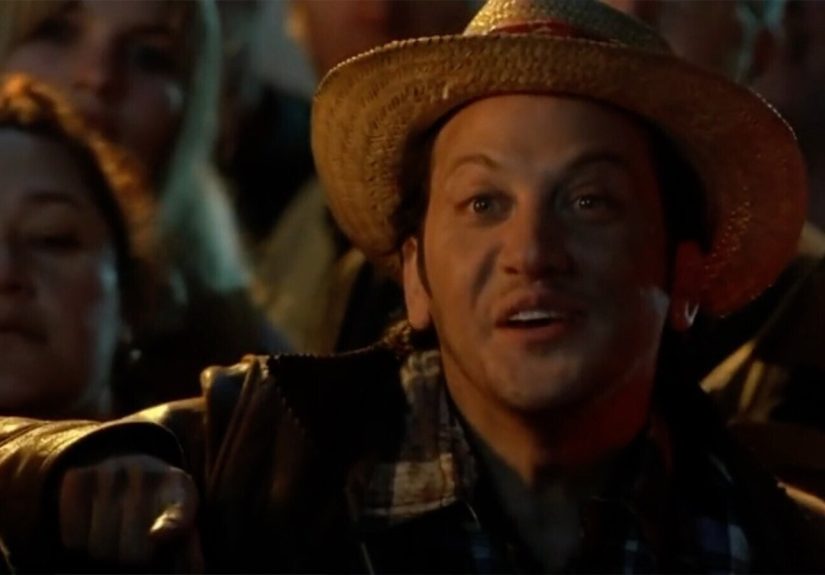
Schneider appears in the movie as a townie, continuing the Sandlerverse tradition of friends popping up in each other’s projects like comedy mushrooms after rain. So when Schneider condemned the Olympics as satanic, social media did what social media does best: it opened the archives and started pointing at Little Nicky like a courtroom exhibit labeled “Your Honor, may we approach the bench?”
Rob Schneider and Adam Sandler’s Long Comedy Friendship
Part of what makes the joke land is that Schneider and Sandler’s friendship is real and long-running. The two came out of the same comedy generation and became part of a loose crew associated with 1990s Saturday Night Live, alongside performers such as Chris Rock, David Spade, Norm Macdonald, and Chris Farley. That group helped define a particular brand of goofy, scrappy, aggressively unserious comedy.
Schneider has often praised Sandler’s loyalty. In interviews, he has described Sandler as the kind of friend who checks in regularly and keeps old collaborators close. Sandler’s movies, especially through Happy Madison productions, have famously operated like a traveling comedy family reunion. If you were in one Sandler movie, there was a decent chance you would appear in five more, usually wearing a weird hat or saying something that became a dorm-room quote.
That loyalty is part of Sandler’s appeal. His comedy world feels like a clubhouse. Schneider, Kevin James, David Spade, Allen Covert, Steve Buscemi, and others have moved through it for decades. The result is a filmography where friendship itself becomes part of the brand. Viewers do not just watch a Sandler comedy for the plot; they watch to see which familiar face wanders in next.
Why the Internet Loves Calling Out Celebrity Contradictions
The Schneider Olympics backlash went viral because it felt like a contradiction with a punchline attached. People are fascinated when a celebrity’s current moral stance appears to clash with their past creative work. It creates a satisfying “gotcha” structure: public figure says X, internet finds old clip suggesting Y, everyone argues for three days, then a raccoon video takes over the timeline.
Of course, the reality is more complicated. Acting in a comedy about Satan’s son does not mean someone endorses satanic imagery in real life. A performer can make a joke in 2000 and hold a different cultural or religious opinion in 2024. Comedy careers are full of exaggeration, costume, role-play, parody, and nonsense. That is the job. Nobody assumes an actor who plays a dentist is qualified to perform a root canal.
Still, public commentary invites public comparison. When a comedian with a long history of outrageous characters condemns a theatrical performance as spiritually offensive, audiences will naturally compare the standard he applies to others with the artistic choices he accepted in his own career. That does not automatically make him wrong, but it does make the conversation louder, funnier, and far more memeable.
The Difference Between Satire, Faith, and Selective Outrage
This controversy also exposes a tricky question: when does satire become disrespect? For religious viewers, sacred imagery is not just visual material. It carries deep emotional and spiritual meaning. If they believe an Olympic ceremony mocked Christian symbolism, their offense is not imaginary. It is rooted in how they understand the image and its cultural importance.
At the same time, artists often remix familiar compositions, myths, and symbols. Western art is filled with biblical poses, classical gods, banquet scenes, saints, sinners, halos, feasts, and dramatic table arrangements. A long table in a staged performance can evoke several references at once, especially when the show is moving quickly and being consumed through screenshots.
The Schneider case became funny because he is a comedian whose career depends on parody. Comedy regularly borrows from serious subjects and turns them sideways. That does not mean every parody is harmless, but it does mean comedians are especially vulnerable when they treat theatrical exaggeration as proof of moral collapse. The internet’s response was basically: “Sir, your résumé includes The Hot Chick and a cameo in a movie about Satan’s kid. Please proceed carefully.”
Did Schneider’s Boycott Hurt the Olympics?
If Schneider hoped the Paris Olympics would sink into C-SPAN-level obscurity, the numbers did not exactly cooperate. The opening ceremony drew a large U.S. audience, and NBCUniversal later reported strong overall viewership and streaming performance for the Paris Games. In other words, the boycott may have made headlines, but it did not stop millions of Americans from watching athletes flip, swim, run, fence, vault, and cry beautifully on television.
This is another familiar feature of online outrage: boycotts can become part of the marketing. A controversy tells people that something happened. Curiosity does the rest. Some viewers tune in because they support the event. Others tune in because they want to see what the fuss is about. A few tune in because they saw the word “Dionysus” trending and thought it was a new energy drink.
For the Olympics, the opening ceremony debate became one storyline among many. The Games quickly moved on to medals, records, comeback stories, viral athletes, and the usual emotional montage music that makes everyone briefly believe they could have been a gymnast if only they had stretched more in middle school.
Why This Story Works as Comedy
The headline works because it compresses a cultural argument into one absurd contrast: Rob Schneider decries satanic imagery while being publicly close with a star who once played the Devil’s son. It is not a legal argument. It is not a theology paper. It is a comedy premise wearing sneakers.
Good pop-culture comedy often depends on juxtaposition. A celebrity says something very serious. The audience remembers something very silly. The gap between the two becomes the joke. In this case, Schneider’s stern Olympics criticism collided with the memory of Sandler’s Little Nicky, a movie where the forces of Heaven and Hell are treated with the solemn dignity of a late-night pizza order.
That does not mean the religious debate is meaningless. It means the internet processed the debate through the only language it speaks fluently: references. One person saw blasphemy. Another saw Dionysus. A third saw Adam Sandler in a hoodie doing a weird voice. Welcome to modern media literacy, where every argument has a cinematic universe.
Experience Notes: Watching an Olympics Controversy Become a Meme
For readers, the experience of following this story felt less like reading a normal entertainment headline and more like watching a group chat escape into the wild. First came the screenshot from the opening ceremony. Then came the outrage posts. Then came the explanations. Then came the counter-explanations. By the time most people caught up, the debate had already split into five smaller debates: religion, drag, French secular culture, Olympic branding, and whether Rob Schneider had accidentally stepped on a rake labeled Little Nicky.
That is what makes this kind of controversy so exhausting and so irresistible. It moves at the speed of emotion. A viewer does not need to understand the entire ceremony to react to a single frame. A critic does not need to watch four hours of staging to build a post around one image. A fan does not need to write an essay to reply with a movie poster. The result is messy, funny, unfair, revealing, and extremely online.
For anyone who has watched celebrity controversies unfold over the past decade, Schneider’s Olympics moment follows a familiar pattern. A public figure makes a moral claim. The internet tests that claim against the person’s archive. Old roles, interviews, jokes, and friendships resurface. Some people argue the archive proves hypocrisy. Others argue that actors are allowed to act and comedians are allowed to joke. Both sides dig in, and the original event becomes almost secondary to the argument about the argument.
The most useful way to experience stories like this is with a little distance. It is possible to understand why some Christians felt offended by the ceremony. It is also possible to understand why queer performers and supporters saw the backlash as exaggerated or unfair. It is possible to laugh at the Little Nicky connection without pretending it settles the entire issue. Satire is not a court verdict. It is a spotlight. It points at the weirdest part of a public moment and says, “Look at this.”
From a publishing perspective, the lesson is clear: context matters, but contrast sells. The reason this story grabbed attention is not simply that Schneider criticized the Olympics. Many people did. It is that his criticism collided with a deeply recognizable comedy friendship and a movie premise so perfectly inconvenient that it felt scripted by the algorithm itself. In a world where every celebrity has decades of searchable content behind them, no hot take travels alone. It brings the whole résumé with it.
Conclusion: The Devil Is in the Callback
Rob Schneider’s Olympics controversy is a compact example of how modern celebrity discourse works. A serious religious objection becomes a viral entertainment story because the messenger has a comic past full of costumes, outrageous premises, and Adam Sandler cameos. The Paris ceremony may have intended a Dionysian celebration of festivity and inclusion, but many viewers saw something closer to a religious provocation. Schneider joined that criticism, and the internet responded with the one weapon it never forgets to bring: receipts.
The “BFFs with the Devil’s Son” angle is not really about accusing Schneider of believing in anything demonic. It is about the comedy of selective seriousness. When performers spend decades making absurd art, audiences may laugh when they suddenly draw hard lines around someone else’s theatrical symbolism. Fair or not, that is the price of having a searchable career in the age of instant commentary.
In the end, the Olympics survived, Sandler remained Sandler, Schneider remained Schneider, and the internet got another deliciously weird pop-culture loop to chew on. Somewhere in the distance, Little Nicky probably gained a few curious viewers. If that was Satan’s plan all along, it was strangely good for streaming nostalgia.