Table of Contents >> Show >> Hide
- Why Small Satellites Need More Power
- How 3D-Printed Solar Arrays Would Work
- The Launch Problem: Spacecraft Must Fit Before They Can Fly
- Why NASA and Industry Care About In-Space Manufacturing
- What Has Already Been Proven?
- The Benefits of 3D-Printing Solar Array Structures In Orbit
- The Hard Problems Nobody Should Ignore
- What This Could Mean for Future Small Satellites
- Could This Reduce Space Debris?
- Why This Technology Still Matters After OSAM-2
- Real-World Experience: What This Topic Feels Like From the Engineering Side
- Conclusion
Small satellites have a very relatable problem: they want to do big things, but they do not have much room in the suitcase. A CubeSat or small satellite may be asked to image Earth, relay communications, run scientific instruments, process data, maneuver in orbit, and phone home like a responsible spacecraft. Yet all of that takes power, and power usually means solar arrays. Big solar arrays are wonderful once they are open in space, but they are awkward guests during launch. They must be folded, packed, locked, tested, protected, and prayed over with the emotional intensity normally reserved for wedding cakes and vintage sports cars.
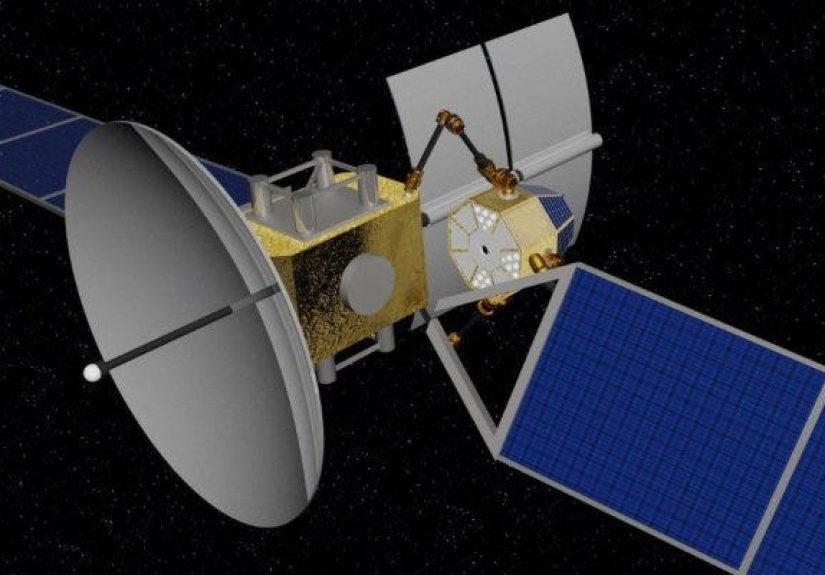
That is why the idea behind small satellites 3D-printing their own solar array support structures in space is so exciting. Instead of launching a fully built, bulky structure, a satellite could launch with compact raw material, tightly packed solar blankets, a robotic assembly system, and a space-ready 3D printer. Once in orbit, it could print lightweight beams, unfold solar blankets, and create a larger power system than would normally fit inside its launch envelope. In simple terms: send up the flat-pack furniture, then build the power plant after arriving.
The concept became widely known through Made In Space’s Archinaut program, later associated with Redwire and NASA’s OSAM-2, or On-Orbit Servicing, Assembly, and Manufacturing 2. The original NASA-backed demonstration was designed to show how a small spacecraft could manufacture structural beams in low Earth orbit and deploy a solar array while printing one of those beams. Although NASA later concluded the OSAM-2 project in 2023 and preserved its lessons for future missions, the core idea still matters: spacecraft do not always have to be limited by what can survive launch already assembled.
Why Small Satellites Need More Power
Small satellites have changed spaceflight because they are cheaper, faster to build, and easier to launch than traditional large spacecraft. CubeSats and SmallSats can hitch rides, fly in constellations, and test new technologies without requiring the budget of a small nation. NASA has described CubeSats as compact spacecraft that lower the cost of satellite development and open space research to universities, companies, and public agencies. That is the happy part.
The less happy part is that small satellites run into brutal physical limits. A satellite’s body can only hold so many batteries, antennas, instruments, propulsion systems, computers, radios, and thermal-control components. Solar panels compete for space with everything else. Body-mounted panels are simple, but they only generate power from the spacecraft’s available surface area. Deployable solar arrays can provide much more energy, but they also become one of the largest structures on the spacecraft. Once deployed, they affect pointing, vibration, maneuvering, and station keeping.
More power can completely change what a small satellite can do. A low-power satellite may be limited to modest sensors and short communication windows. A higher-power satellite can support sharper imaging, stronger radio transmission, electric propulsion, onboard data processing, synthetic aperture radar, laser communications, or more demanding scientific instruments. In other words, power is not just electricity. It is mission ambition wearing a solar-panel hat.
How 3D-Printed Solar Arrays Would Work
The phrase “3D-print solar arrays in space” can sound as if a spacecraft is printing solar cells from scratch like a cosmic inkjet making tiny wafers. That is not the practical near-term idea. The more realistic approach is to launch high-efficiency solar cell blankets or flexible solar panels in a compact form, then manufacture the support structure in orbit. The printed structure acts like the skeleton. The solar blanket acts like the skin. Robotics brings the pieces together.
In the Archinaut-style concept, the satellite carries feedstock material for an additive manufacturing system. After reaching orbit, the system prints long structural beams that do not need to survive launch loads in their final shape. A robotic arm helps position and assemble components while solar blankets unfurl along the newly made supports. The result is a power-generating structure larger than what could easily be packed, folded, and launched as a traditional array.
NASA’s original Archinaut One vision called for a small spacecraft to 3D-print two beams extending about 10 meters from the spacecraft, with solar arrays unfurling as the structure grew. Earlier NASA materials described the potential for arrays that could generate up to five times more power than traditional panels on similarly sized spacecraft. Redwire and Made In Space also discussed the possibility of giving satellites in the roughly 150- to 300-kilogram class multiple kilowatts of power, moving them closer to capabilities once reserved for much larger spacecraft.
The Launch Problem: Spacecraft Must Fit Before They Can Fly
Every spacecraft has to survive the least elegant part of spaceflight: launch. Rockets shake, vibrate, roar, accelerate, and generally behave like caffeinated skyscrapers. Hardware must be compact enough to fit inside a fairing and strong enough to endure launch loads. A large solar array therefore needs hinges, latches, booms, hold-down systems, motors, cables, deployment sensors, and extensive testing. The engineering is impressive, but the complexity adds mass, cost, risk, and many opportunities for a tiny mechanism to ruin everyone’s week.
In-space manufacturing changes the design logic. A structure made after launch does not have to be built to withstand launch in its fully deployed shape. It only needs to be printable, stable, useful, and controllable once in orbit. That sounds like a small distinction, but it is a major shift. Engineers can design for the space environment instead of designing every large structure around the punishment of getting to space.
This is often called escaping the “tyranny of launch.” The phrase is dramatic, but fair. Launch constraints shape nearly every spacecraft decision. If a satellite can manufacture some of its large structures after reaching orbit, designers gain freedom. Solar arrays, antennas, booms, reflectors, trusses, and sensor mounts could become larger, lighter, or more mission-specific.
Why NASA and Industry Care About In-Space Manufacturing
NASA’s broader interest falls under ISAM: in-space servicing, assembly, and manufacturing. ISAM includes repairing spacecraft, refueling them, moving them, upgrading them, assembling structures, and manufacturing hardware away from Earth. The long-term vision is a space economy where satellites are not always disposable machines. Instead of launching, operating, aging, failing, and becoming debris, future spacecraft could be serviced, expanded, or repurposed.
The United States has already treated ISAM as a strategic technology area. NASA created a consortium to coordinate government, industry, academia, and nonprofit research around these capabilities. The Government Accountability Office has also highlighted both the promise and the difficulty of ISAM, noting that satellite populations are growing rapidly and that robotic servicing, assembly, and manufacturing still face technical, market, and standards challenges.
Translation for normal humans: the idea is powerful, but it is not plug-and-play. Space robotics is hard. Autonomous assembly is hard. Qualification is hard. Customers are cautious. Regulations are still developing. And when something goes wrong in orbit, nobody can tap the machine, restart the Wi-Fi, and say, “Have you tried turning the satellite off and on again?”
What Has Already Been Proven?
Space-based 3D printing is no longer science fiction. NASA and Made In Space sent the first 3D printer to the International Space Station in 2014. That early printer produced test parts and even a ratchet wrench, proving that digital designs could be sent from Earth and manufactured more than 200 miles above the planet. Later systems improved the process, and research has expanded into plastics, recycling, ceramics, and metal printing experiments.
Ground testing for Archinaut and OSAM-2 also produced important results. NASA reported that teams tested printing hardware and printed structures in environments meant to mimic space pressure and temperature. Redwire demonstrated a flight-like beam against gravity conditions expected on orbit, and the mission passed a critical design review in 2022 before NASA concluded the project in 2023. Even without an orbital flight, those milestones gave engineers valuable data about printing long structures, robotic handling, thermal behavior, and mission design.
That matters because space technology often advances through partial wins. A project does not have to become a fully operational commercial product to teach the next project what to do better. In aerospace, a “lesson learned” can be worth a warehouse of shiny brochures.
The Benefits of 3D-Printing Solar Array Structures In Orbit
1. More Power for Smaller Spacecraft
The headline benefit is obvious: a small satellite could generate more electricity. More power means better payloads, longer duty cycles, stronger communications, and more flexibility in mission planning. A small Earth-observation satellite, for example, could run higher-resolution sensors or process more data onboard before sending it down. A communications satellite could support more powerful transmitters. A science mission could operate instruments longer instead of rationing power like it is sharing one phone charger at an airport.
2. Lower Launch Volume
Launch volume is precious. By launching compact raw material and folded solar blankets instead of fully built large structures, satellite designers can use the limited internal space more efficiently. This may be especially valuable for rideshare launches and small launch vehicles, where every centimeter has a job and no one gets a luxury closet.
3. Fewer Complex Deployment Mechanisms
Traditional deployable arrays require hinges, springs, motors, dampers, and lockout systems. These mechanisms are highly engineered, but they can become failure points. Printing structural support in orbit could reduce reliance on some prebuilt deployment hardware. That does not eliminate complexity; it changes the kind of complexity. Instead of trusting a folded structure to open perfectly, engineers must trust a printer and robotic system to manufacture and assemble accurately.
4. Mission-Specific Structures
In-space manufacturing could allow spacecraft to build structures shaped for their actual mission environment. A satellite might print longer booms, wider frames, or custom mounting structures depending on power needs, orbital conditions, and payload design. Over time, this could lead to more modular spacecraft architectures where the satellite bus is standardized but the in-orbit structure is customized.
The Hard Problems Nobody Should Ignore
The concept is brilliant, but space does not hand out participation trophies. A 3D-printed solar array system must survive radiation, vacuum, thermal cycling, charging effects, micrometeoroids, and mechanical stress. Printed materials must remain stable over years, not just during a cool demonstration video. A beam that looks perfect in early deployment still has to handle vibration, pointing disturbances, shadowing, and changes in temperature as the satellite moves in and out of sunlight.
Robotics is another challenge. When a robotic arm moves on a free-flying satellite, the whole spacecraft reacts. On Earth, a robot arm is usually bolted to something heavy. In orbit, the “floor” is basically a floating bus with attitude-control limits. Every movement can affect pointing, communications, and power generation. Engineers must plan trajectories carefully so the spacecraft does not wobble its way into an expensive headache.
Then comes verification. A traditional solar array can be built and tested extensively on Earth. An in-space-manufactured array must be tested through simulation, ground analogs, thermal-vacuum chambers, robotic test beds, and flight demonstrations. Customers will not trust it for expensive missions until it proves reliability. That is reasonable. Spacecraft operators are not famous for saying, “Sure, let’s wing it.”
What This Could Mean for Future Small Satellites
If the technology matures, small satellites could stop being “small” in capability. Imagine a compact satellite launched on a rideshare mission that prints its own solar supports, deploys a broad power blanket, and begins operating a payload that once required a much larger platform. This could benefit Earth observation, broadband communications, space weather monitoring, military surveillance, disaster response, and deep-space technology demonstrations.
Power-hungry instruments are the obvious winners. Synthetic aperture radar, for example, can observe Earth through clouds and darkness, but it demands substantial power. Electric propulsion can efficiently move spacecraft, but it also needs a strong electrical supply. Laser communications can move huge amounts of data, but high-performance systems can be energy intensive. More power opens the door to better payloads and more ambitious mission profiles.
The technology could also support space infrastructure. Future orbital platforms, servicing vehicles, tugs, depots, and assembly nodes may need large power systems. Printing support structures in space could become one tool in a larger toolbox that includes modular satellites, robotic servicing, autonomous docking, and on-orbit repair.
Could This Reduce Space Debris?
Indirectly, yes, though not automatically. More capable small satellites could replace some larger spacecraft, but more satellites also mean more traffic. The real debris benefit may come from the broader ISAM ecosystem. If satellites are designed to be serviced, upgraded, repaired, or moved, operators may extend mission life and reduce the number of dead spacecraft left behind. In-space manufacturing could support that future by making replacement structures, adapters, booms, or power upgrades available after launch.
However, every printed component must be controlled. A failed print cannot become a drifting noodle of orbital junk. Any serious system would need fault detection, safe modes, containment strategies, and end-of-life planning. Space sustainability is not optional. The orbital neighborhood is getting crowded, and nobody wants low Earth orbit to become a junk drawer with Wi-Fi.
Why This Technology Still Matters After OSAM-2
Some readers may wonder: if OSAM-2 was concluded, is the dream over? Not at all. Space development is rarely a straight elevator ride. It is more like climbing a ladder while someone shakes the ladder and asks for a cost review. OSAM-2 helped move the industry from concept art toward serious engineering. It clarified what is hard, what is promising, and what future missions may need to demonstrate more narrowly.
The next generation of in-space manufacturing may not look exactly like Archinaut. It may use different materials, smaller first demonstrations, simpler structures, or hybrid methods that combine prebuilt deployables with printed stiffeners. The important shift is that engineers are no longer asking only, “How large a structure can we fold into a rocket?” They are also asking, “What should we build once we are already in space?”
Real-World Experience: What This Topic Feels Like From the Engineering Side
Working with the idea of small satellites printing their own solar arrays is a lesson in humility. On paper, the concept looks beautifully simple: launch compact materials, print beams, unfold solar blankets, produce more power. In practice, every word in that sentence contains a swarm of engineering goblins. “Launch” means vibration testing, mass budgets, safety reviews, and launch-provider rules. “Compact materials” means storage stability, thermal behavior, feed mechanisms, and contamination control. “Print beams” means extrusion quality, curing, alignment, structural stiffness, and repeatability. “Unfold solar blankets” means delicate electrical connections, deployment timing, tension control, and mechanical reliability.
One of the most interesting experiences in studying this technology is realizing how connected every subsystem becomes. A larger solar array is not just a power upgrade. It changes the satellite’s balance, drag profile, thermal environment, pointing control, and mission operations. A longer boom may generate more power, but it also creates more flexible motion. That motion can interfere with imaging or communications if not controlled. Suddenly, the power system is having a conversation with the attitude-control system, the thermal team, the payload engineers, and the mission operators. Spacecraft design is basically a group project where every component has strong opinions.
Another useful experience comes from comparing this concept with student CubeSat projects. Many CubeSat teams quickly learn that power is the boss battle. The payload wants more energy. The radio wants more energy. The heater wants more energy. The battery wants to be charged. The orbit provides sunlight only part of the time. The team then discovers that adding solar area sounds easy until the mechanical design begins to grow hinges, panels, springs, and deployment constraints. A printable or partially manufactured structure in orbit would not magically remove all of those problems, but it could give designers a new way to think about them.
There is also a cultural experience here: space engineers are both wildly imaginative and deeply suspicious. They love bold ideas, but they also ask annoying and necessary questions. What happens if the print stops halfway? What if the beam warps? What if the robotic arm misses alignment? What if the solar blanket snags? What if sunlight heats one side faster than the other? What if the material outgasses near sensitive optics? This skepticism is not negativity. It is how expensive machines survive in places where repair trucks do not exist.
For writers, educators, and technology observers, this topic is especially rewarding because it captures the next phase of spaceflight. The early space age focused on reaching orbit. The modern commercial era made launch more frequent and satellites smaller. The next challenge is learning how to build, maintain, and upgrade things after launch. Small satellites that can 3D-print solar array structures are part of that larger story. They suggest a future where spacecraft are not frozen at the moment they leave Earth, but can grow into their missions after arrival.
The best way to understand the promise is to picture a small satellite opening itself like a mechanical flower, then using its own tools to build the stem that holds the petals. It is practical, poetic, and slightly ridiculous in the best possible engineering way. The future of satellite power may not be about cramming more hardware into a rocket. It may be about sending smarter hardware that can finish the job once it gets to space.
Conclusion
Small satellites could 3D-print their own solar array structures in space, and that possibility could reshape how engineers design future missions. The concept is not about printing every solar cell from raw dust. It is about launching compact materials, using robotic assembly, and manufacturing large support structures after reaching orbit. NASA’s OSAM-2 and Archinaut work showed both the promise and the complexity of this approach. The mission itself ended, but the idea remains powerful.
If in-space manufacturing matures, small satellites may gain access to power levels that make them far more capable. Better imaging, stronger communications, electric propulsion, advanced science instruments, and more flexible mission designs could all benefit. The challenges are serious: materials, robotics, controls, reliability, economics, and orbital safety. But the direction is clear. Spacecraft are slowly moving from machines that must be fully finished on Earth to systems that can be assembled, upgraded, and perhaps one day manufactured in orbit.
For now, the idea of a small satellite building its own solar array still sounds like science fiction with a hard hat. But many real space technologies start that way. Then engineers test them, break them, fix them, rename them, review them, and eventually make them look obvious. The next generation of satellites may not just unfold in space. They may build themselves a bigger future.