Table of Contents >> Show >> Hide
- Who Is Helena Fernandes, And Why Did Her Tattoos Catch Fire Online?
- Why People Love Tattoos That Look a Little “Bad”
- From “Trash Tattoos” to Ignorant Style: The Bigger Tattoo Conversation
- What These “32 New Pics” Really Represent
- Why This Trend Works So Well Online
- Style Is Subjective, But Safety Is Not
- What Helena Fernandes Gets Right About Modern Taste
- Extra Reflections and Experiences Related to This Tattoo Trend
- Conclusion
- SEO Tags
There are two kinds of tattoo reactions. The first is: “Wow, that line work is exquisite.” The second is: “Wait… is that little duck supposed to look like it lost an argument with a crayon?” Helena Fernandes has made a career out of triggering the second reaction, and somehow, that is exactly the point.
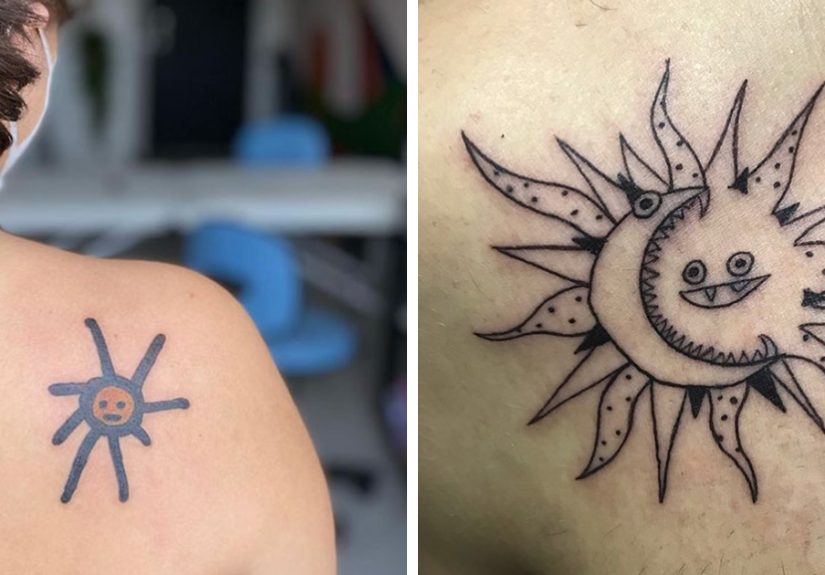
Her work has been described as messy, naive, childlike, goofy, and proudly “wrong.” In a tattoo culture that often worships precision, symmetry, hyper-detail, and enough realism to make a wolf look like it pays taxes, Fernandes represents the opposite impulse. Her appeal is not that she copies perfection. It is that she skips perfection, waves at it from across the street, and keeps walking.
That is why the viral fascination around her designs keeps returning. The headline may sound like internet bait, but the bigger story is real: people do not always want tattoos that look polished, expensive, or solemn. Sometimes they want a tattoo that feels funny, raw, impulsive, weirdly adorable, and unmistakably human. That is the sweet spot Fernandes seems to understand better than many technically stronger artists.
Who Is Helena Fernandes, And Why Did Her Tattoos Catch Fire Online?
Helena Fernandes rose to wider attention for a tattoo approach she openly framed as “trash tattoos,” a label that would sink most artists and somehow worked as brilliant branding for her. Instead of fighting criticism, she absorbed it, wore it like a party hat, and turned it into a signature.
The result was a style full of stick figures, offbeat doodles, awkward hearts, intentionally clumsy shapes, and quirky little images that look more like the best page in a notebook than the result of a sacred design consultation involving moon phases and twelve Pinterest boards. Her tattoos do not beg to be admired from ten feet away. They invite you to grin from two feet away.
That matters in the age of social media. Tattoo culture no longer lives only in traditional shops, portfolios, and word-of-mouth recommendations. It lives on feeds, mood boards, screenshot folders, and algorithm-fueled rabbit holes. Distinctive styles travel fast, and “beautifully imperfect” work travels especially fast because it is easy to recognize in one second flat. You do not need a caption to know you are looking at Fernandes’ universe. That kind of instant recognizability is gold online.
Why People Love Tattoos That Look a Little “Bad”
The word “bad” is doing a lot of work here. These tattoos are not beloved because clients accidentally got poor work. They are beloved because they reject a narrow definition of what good tattoo art is supposed to look like. That distinction is huge.
1. They feel personal instead of polished
A technically perfect tattoo can still feel generic. Fernandes’ work flips that equation. Her tattoos often look like private jokes, half-remembered doodles, or symbols from a very specific emotional moment. They feel less like luxury objects and more like artifacts of personality.
In other words, they do not say, “Please admire my refined taste.” They say, “This made me laugh, and now it lives on my arm.” That is a surprisingly strong emotional pitch.
2. They rebel against perfection culture
Modern beauty culture is exhausting. Everything is filtered, whitened, contour-corrected, sharpened, and optimized until it looks like it was approved by a committee of robots with trust issues. Against that backdrop, intentionally imperfect tattoos feel refreshing. They are anti-polish. Anti-posture. Anti-trying-too-hard.
That is also why related styles like ignorant tattoos, left-hand tattoos, and doodle-forward tattooing have attracted fans. Their imperfections are not flaws to hide. They are the entire language of the style.
3. They are funny, and funny is underrated in tattoo culture
A lot of tattoo writing treats body art like a museum plaque. Every symbol must be profound. Every flower must represent rebirth. Every snake must carry a personal mythology the length of a graduate thesis. Fernandes’ work reminds people that tattoos can also be playful.
Sometimes a tattoo does not need to unlock the secrets of your soul. Sometimes it can just be a weird little face that makes you happy on Tuesdays.
4. They stand out in a sea of sameness
Fine-line tattoos, minimalist script, tiny stars, celestial symbols, and dainty florals still dominate modern tattoo inspiration. Many of them are lovely. Many of them are also starting to look suspiciously related. Fernandes’ designs do not blend into that aesthetic blur. They interrupt it.
And interruption is memorable. In visual culture, memorable often beats conventionally beautiful.
From “Trash Tattoos” to Ignorant Style: The Bigger Tattoo Conversation
Fernandes’ popularity is not just about one artist. It fits into a broader shift in contemporary tattoo culture. Intentionally rough, naive, or anti-classical tattooing has grown into a recognizable category that many people now understand as part of the larger “ignorant style” conversation.
This kind of work tends to favor bold simplicity, offbeat composition, sparse shading, doodle logic, and a willingness to look handmade in the most literal sense. To traditionalists, it can look like tattooing forgot its homework. To fans, it looks liberated.
That tension is part of the appeal. Controversial styles create stronger communities because the people who love them usually love them on purpose. They are not buying mainstream approval. They are buying a visual attitude.
There is also a democratic quality to the trend. As tattoo culture has become more visible and more accepted, clients are feeling freer to choose tattoos for mood, humor, or aesthetics rather than only for classic tattoo legitimacy. The old rules have not vanished, but they do not scare everyone anymore.
What These “32 New Pics” Really Represent
When people click on a gallery of Helena Fernandes tattoos, they are not just looking for design inspiration. They are looking for permission. Permission to stop acting like tattoos must always be serious. Permission to like something goofy. Permission to choose an image because it charms them, not because it photographs like high-end editorial work.
That may be the most interesting thing about the response to her tattoos. Fans are not saying, “This is the most technically superior tattooing I have ever seen.” They are saying, “This feels alive.”
And that reaction makes sense. The body is not a sterile gallery wall. It is a place where memory, identity, humor, insecurity, nostalgia, rebellion, and impulse all collide. Fernandes’ tattoos seem to understand that messy reality. They do not try to purify the experience. They lean into it.
That is why the work connects. Not because it is perfect, but because it is weird in a way people recognize from real life. Human life is not clean line work. It is scribbly.
Why This Trend Works So Well Online
Instagram helped transform tattoo discovery. Artists no longer need to fit neatly inside one local scene or wait for mainstream validation. If a style is distinctive, emotional, or unusual, it can find its people fast. That has been huge for tattooers whose work falls outside classic expectations.
Fernandes’ designs are practically built for the scroll. They are instantly legible, visually cheeky, and packed with personality. You see one and immediately know whether you hate it, love it, or hate that you secretly love it. That kind of instant reaction is algorithm catnip.
There is another reason these tattoos thrive online: they feel screenshot-able. A lot of contemporary tattoo culture now functions like visual collecting. People save designs not only because they want that exact tattoo, but because they want that feeling. Fernandes gives them a feeling fast: irreverent, unserious, intimate, offbeat.
Style Is Subjective, But Safety Is Not
Now for the responsible grown-up paragraph, because somebody has to be the designated adult in the room. A tattoo can be silly. The process should not be.
Whatever style you choose, the artist should follow proper hygiene, use sterile equipment, and give clear aftercare instructions. Tattooing breaks the skin. That means risks like infection, allergic reactions, and healing complications are real. The tattoo may look like a doodle made during algebra class, but the procedure itself is still permanent body work.
That is where some people get confused about intentionally imperfect styles. They assume “messy-looking” must mean “careless.” Not true. A tattoo can be designed to look naive while still being applied by someone who understands placement, skin, healing, sanitation, and durability. Those are completely different issues.
So yes, embrace chaos in the design if that is your thing. Just do not embrace chaos in the sterilization process. That is a terrible genre to experiment with.
What Helena Fernandes Gets Right About Modern Taste
At the center of this trend is a truth that reaches beyond tattooing: people are tired of being told that taste only counts when it looks expensive, disciplined, or expertly refined. Sometimes taste is awkward. Sometimes it is funny. Sometimes it looks like a little ghost drew itself and asked for rent money.
Fernandes understands that art does not always need to impress in the traditional sense. Sometimes it needs to disarm. Sometimes it needs to feel like a private joke between artist and client. Sometimes it needs to look like it escaped from a sketchbook and landed on skin before anyone could overthink it.
That is not the failure of good taste. It is the evolution of taste.
So, no, the reason people like Helena Fernandes’ designs is not actually that she “cannot draw.” The reason people like them is that she turned roughness into identity, awkwardness into charm, and anti-perfection into a recognizable brand of tattoo art. In a culture drowning in polish, that kind of honesty feels strangely beautiful.
Extra Reflections and Experiences Related to This Tattoo Trend
One of the most relatable things about this trend is how many people have a tattoo story that starts with seriousness and ends with laughter. Someone goes in planning a meaningful masterpiece, spends three weeks pretending to compare symbolism, and then walks out happiest with the tiniest, weirdest design on the stencil sheet. That emotional pivot says a lot. People often think they want permanence wrapped in ceremony, but sometimes what they really want is permanence wrapped in personality.
I think that is why intentionally imperfect tattoos spark such strong reactions. They remind people of school notebook doodles, inside jokes, song lyrics scribbled in the margins, and the kind of low-stakes drawing that happens when you are not trying to prove anything. Those are deeply human experiences. They are uncurated. They are not trying to become art with a capital A. Yet they can carry more emotional electricity than something polished within an inch of its life.
There is also a freedom in choosing a tattoo that is a little absurd. It lowers the pressure. Once a person gives themselves permission to get a tattoo that is funny, lopsided, or unapologetically odd, the whole process becomes less performative. The question changes from “Will everyone think this is beautiful?” to “Does this feel like me?” That is a much better question.
And honestly, many tattoo collectors already live this reality. The tattoos they treasure most are not always the ones strangers compliment. They are the ones tied to a specific trip, a specific breakup, a specific friendship, or a specific phase of life when they stopped trying to look correct and started trying to look real. A deliberately imperfect tattoo can capture that better than a polished one because imperfection often feels closer to memory itself. Memories are not crisp. They are blotchy, funny, selective, and emotionally oversized.
That is what makes Helena Fernandes’ appeal easier to understand. Her tattoos are not selling technical intimidation. They are selling emotional texture. They look like moments people actually lived through: chaotic, charming, and slightly ridiculous. In that sense, the tattoos are not “bad” at all. They are accurate. They reflect the way many people experience their own identities: not as a luxury brand campaign, but as a pile of feelings, jokes, regrets, victories, and strange little symbols that somehow make sense when seen together. And maybe that is the best argument for this whole category of tattooing. It does not ask the body to become a showroom. It lets the body stay a story.
Conclusion
Helena Fernandes became a talking point because her tattoos look like they broke the rules and had fun doing it. But the deeper reason people respond to them is simple: they feel authentic in a culture that often feels overdesigned. Her work proves there is room in tattoo culture for humor, awkwardness, and imperfect beauty. And if that idea makes traditionalists clutch their pearls, well, that probably just makes the tattoo better.