Table of Contents >> Show >> Hide
- Who Is Apu Nahasapeemapetilon?
- The Origin Story: A Joke That Became a Cultural Shortcut
- Why the Voice Became the Main Problem
- How One Character Became the Default South Asian Image
- The Kwik-E-Mart Was Funny, But It Also Locked Apu in Place
- Hari Kondabolu and the Documentary That Changed the Conversation
- The Simpsons’ Response Made Things Worse
- Hank Azaria’s Shift and Public Apology
- Was Apu All Bad? Not Exactlyand That Is Why the Debate Is Complicated
- Why Apu’s Origin Still Matters Today
- What The Simpsons Could Have Done Differently
- Personal and Cultural Experiences Connected to Apu’s Legacy
- Conclusion: Apu Was a Joke, a Mirror, and a Warning
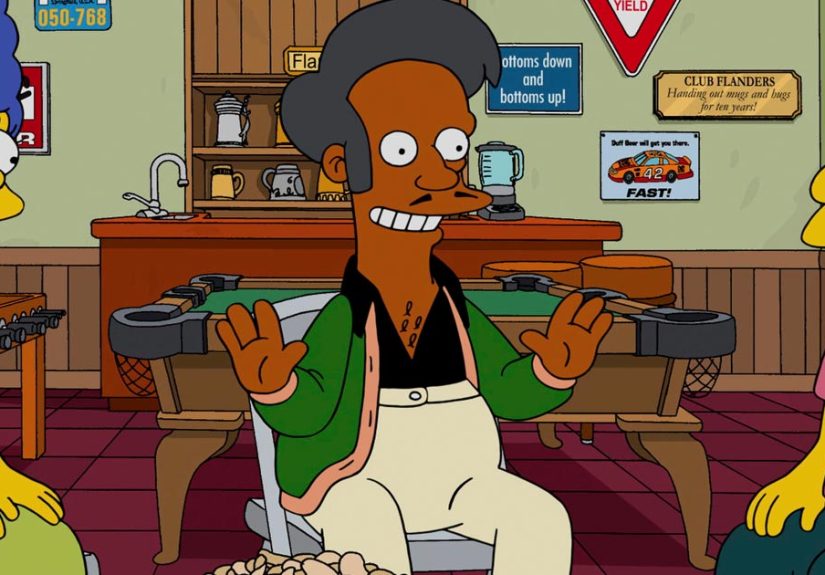
Apu Nahasapeemapetilon was never just a cartoon man standing behind a convenience-store counter. For millions of viewers, he was the smiling face of the Kwik-E-Mart, the king of “Squishees,” the exhausted employee who could somehow survive armed robberies, Homer Simpson, and Springfield’s questionable health code. But for many South Asian Americans, Apu was also something else: the first mainstream “Indian” character they saw on American televisionand, unfortunately, the one classmates copied on the playground.
That is why the origin of Apu from The Simpsons is worse than many fans remember. The issue is not simply that a white actor voiced an Indian immigrant in a funny accent. The deeper problem is that the character was born from a stack of old entertainment habits: brownface performance, writers’ room shortcuts, immigrant stereotypes, and a TV culture that gave one cartoon clerk the burden of representing an enormous, diverse community.
To be fair, The Simpsons has always been built on exaggeration. Homer is not a fair portrait of every American dad. Mr. Burns is not every billionaire, though he does make a strong case for vampire zoning laws. But Apu’s case was different because, for years, he was nearly the only South Asian character many American viewers could name. When one joke becomes the whole picture, the joke stops being harmless background noise and starts doing public relations for ignorance.
Who Is Apu Nahasapeemapetilon?
Apu is the Indian immigrant shopkeeper who runs Springfield’s Kwik-E-Mart, a fictional convenience store where expired food, suspicious hot dogs, and corporate absurdity live happily under fluorescent lights. He first appeared in the early days of The Simpsons, when the show was still becoming the sharpest animated satire on American television.
On paper, Apu had more dimensions than many side characters. He was hardworking, educated, religious, entrepreneurial, and often smarter than the customers wandering into his store. Over time, the show gave him a brother, a wife named Manjula, eight children, a backstory, and occasionally even emotional storylines. He was not written as stupid. In fact, Springfield was usually much dumber than he was.
But representation is not just about whether a character has a good résumé. It is also about how the character is framed. With Apu, the accent often came first. The joke frequently depended on how he sounded, how foreign he seemed, or how easily his Indian identity could be folded into quick gags about arranged marriage, Hindu gods, spicy food, cheap labor, and the eternal convenience-store counter.
The Origin Story: A Joke That Became a Cultural Shortcut
The troubling part of Apu’s origin is that he was not carefully developed as a South Asian immigrant with cultural texture. He emerged from an early comedy process that rewarded what got a laugh in the room. The character’s voice, performed by Hank Azaria, became central almost immediately. That voice was not a subtle Indian American performance. It was broad, theatrical, and designed for instant recognition.
Azaria has said that one influence was Peter Sellers’ performance as Hrundi V. Bakshi in the 1968 film The Party. That matters because Sellers, a white British actor, played an Indian character in brownface-like comic tradition, relying on exaggerated speech and physical awkwardness. In other words, one of the most famous Indian characters in American animation partly grew from another white performer’s caricature of an Indian man. That is not exactly a family tree you want framed above the fireplace.
Apu’s name also carries a strange cultural weight. “Apu” echoes the beloved character from Satyajit Ray’s Apu Trilogy, one of the most important works in world cinema. But the Simpsons character’s long surname became a gag in itself: difficult to pronounce, funny because of its length, and treated like another piece of comic furniture. The contrast is painful. A name connected to serious Indian art was repurposed for a character whose identity often served as the punchline.
Why the Voice Became the Main Problem
There is a reason so much criticism focuses on Apu’s voice. In animation, voice is not decoration. Voice is the character. Before the viewer knows what Apu wants, fears, loves, or believes, the viewer hears the accent. The accent tells the audience how to process him.
For many fans, Apu’s accent was just part of the show’s comic universe. For many South Asian Americans, it was the sound other people used to mock them. Hari Kondabolu’s documentary The Problem with Apu captured this especially clearly. The film gathered South Asian actors, comedians, and writers who remembered being called “Apu” or being asked to “do the voice.” The character did not remain safely inside Springfield. He followed real people into classrooms, auditions, offices, and awkward parties where someone always thinks they are the first genius to say, “Thank you, come again.”
The worst stereotypes are often the ones people defend as affection. “But I love Apu!” became a common response. And yes, many viewers did love him. Some Indian and South Asian viewers liked him too, especially because any visibility felt better than invisibility. But affection does not erase impact. You can love a character and still admit that he was built from lazy ingredients.
How One Character Became the Default South Asian Image
Apu might have caused less harm if television had been full of South Asian characters in the 1990s. Imagine a media landscape with Indian American lawyers, teachers, slackers, villains, detectives, weird neighbors, romantic leads, terrible cooks, great cooks, and at least one guy who refuses to explain cricket at parties. In that world, Apu would have been one exaggerated character among many.
But that was not the world many viewers got. For a long stretch of American pop culture, South Asian representation was thin enough to see through. When South Asian characters appeared, they were often taxi drivers, convenience-store clerks, doctors with no personal lives, tech workers, mystics, or punchlines with heavy accents. Apu became the most famous example because The Simpsons was so huge.
That is the “worse than you think” part. Apu was not just a questionable character. He became a casting template. South Asian performers have described being asked to sound more like Apu. That means a cartoon accent created by a white actor helped shape what real brown actors were expected to sound like. The copy became the standard. The stereotype became a job requirement. That is not comedy aging badly; that is comedy leaking into an industry.
The Kwik-E-Mart Was Funny, But It Also Locked Apu in Place
The Kwik-E-Mart is one of the great fictional businesses in TV history. It is ridiculous, memorable, and instantly recognizable. The problem is that Apu was fused so tightly to that store that he became a symbol of the immigrant shopkeeper stereotype. The joke was not merely that convenience stores are weird. The joke often leaned on the idea that this particular immigrant man belonged there, working endless hours, speaking in a funny accent, smiling through disrespect, and absorbing Springfield’s chaos.
To be clear, immigrant-owned convenience stores are real, and many families have built lives through difficult retail work. There is dignity in that. But Apu’s world rarely explored the labor, risk, ambition, or pressure behind such work with real depth. The show occasionally hinted at his intelligence and exhaustion, but it mostly returned him to the counter. The reset button was powerful. No matter what happened, Apu was back at the Kwik-E-Mart, ready to be robbed, mocked, or used as local color.
Hari Kondabolu and the Documentary That Changed the Conversation
The Apu debate did not explode because people suddenly forgot how jokes work. It exploded because Hari Kondabolu gave language to something South Asian viewers had discussed for years. His documentary The Problem with Apu, released in 2017, argued that the character was not an isolated gag but part of a long pattern in American entertainment.
Kondabolu’s approach was powerful because he was not attacking The Simpsons from outside fandom. He loved the show. That made the critique harder to dismiss. He was essentially saying: this series taught many of us how to laugh at power, hypocrisy, media, politics, religion, advertising, and family life. So why could it not turn that same intelligence on its own brown stereotype?
The documentary also showed that the issue was not whether Apu had ever made anyone laugh. Of course he had. The issue was who paid the social price for the laugh. If the joke travels from Sunday-night television to Monday-morning bullying, the punchline has a longer commute than expected.
The Simpsons’ Response Made Things Worse
In 2018, The Simpsons responded to the controversy in the episode “No Good Read Goes Unpunished.” The scene was widely criticized because it appeared to reduce the issue to political correctness. Lisa Simpson, usually the show’s conscience, looked toward a framed picture of Apu while discussing something that “started decades ago” and was once considered inoffensive but is now politically incorrect.
For many viewers, the moment felt dismissive. It was not the nimble satire fans expected from a show that had spent decades mocking everyone else’s blind spots. Instead of wrestling with the critique, the scene seemed to shrug at it. And when a show as smart as The Simpsons shrugs, it is not a normal shrug. It is a heavily animated, prime-time shrug with writers, producers, and network approval behind it.
The backlash was immediate because people expected better. The show had always been good at identifying hypocrisy. Here, critics argued, it missed its own reflection in the glass of the Kwik-E-Mart door.
Hank Azaria’s Shift and Public Apology
Hank Azaria’s response evolved over time. He eventually said he would step away from voicing Apu and later apologized publicly for his role in the portrayal. That apology mattered because it acknowledged something larger than one performance. Azaria did not merely say, “Sorry if you were offended,” the classic celebrity apology equivalent of microwaved lettuce. He spoke about harm, structural racism in entertainment, and the importance of listening to Indian and South Asian people.
In 2020, The Simpsons also announced that white actors would no longer voice non-white characters on the show. That decision reflected a broader shift in animation, where shows began reconsidering long-standing casting habits. Voice acting is acting, yes. But when entire communities have been underrepresented both onscreen and behind the microphone, “anyone can play anything” becomes less neutral than it sounds.
The point is not that actors can never cross identity lines. The point is that, for decades, performers from marginalized groups were often excluded from roles representing their own communities while white actors were celebrated for exaggerated versions of them. That is not creative freedom. That is a locked door with a funny voice coming from inside.
Was Apu All Bad? Not Exactlyand That Is Why the Debate Is Complicated
One reason the Apu controversy became so heated is that the character was not a one-note villain. He had admirable qualities. He was intelligent, patient, entrepreneurial, and devoted to his family. In some episodes, he was more moral and competent than almost everyone around him. Some viewers saw him as an immigrant success story, a small-business owner who survived Springfield’s madness with discipline and wit.
That complexity matters. It is too simple to say Apu was only hateful or only beloved. He was both meaningful and damaging, depending on who was watching, when they were watching, and what they had to deal with after the credits rolled.
But complexity should not be used as a smoke bomb. Apu’s better qualities do not cancel out the structural problem of his creation. A character can be smart and still stereotyped. A character can be lovable and still harmful. A character can be iconic and still need repair. Pop culture history is full of things we enjoy and later examine with a wince. That wince is not weakness; it is growth wearing uncomfortable shoes.
Why Apu’s Origin Still Matters Today
The origin of Apu from The Simpsons matters because media does not stay on the screen. It gives people shortcuts for understanding one another. Sometimes those shortcuts are useful. Often they are lazy. In Apu’s case, the shortcut told audiences that Indian identity could be reduced to an accent, a job, a religion, a catchphrase, and a set of exotic references.
Today, South Asian representation in American media is broader. Audiences have seen performers, writers, and creators such as Mindy Kaling, Aziz Ansari, Hasan Minhaj, Kumail Nanjiani, Poorna Jagannathan, Riz Ahmed, Priyanka Chopra Jonas, Dev Patel, and many others reshape the landscape. There are still stereotypes, of course. Hollywood never throws away a cliché when it can reboot it in a slightly nicer jacket. But the range is wider than it was when Apu dominated the frame.
That progress makes Apu easier to analyze. He no longer has to carry the entire weight of South Asian visibility. But his legacy remains useful as a warning: representation without participation can go wrong fast. If a writers’ room does not include the people being portrayed, it may confuse recognition with accuracy. It may write a character who feels funny to outsiders and exhausting to insiders.
What The Simpsons Could Have Done Differently
The solution never had to be “delete Apu and pretend he never existed.” In fact, erasing him would be too easy. A smarter solution would have been to evolve him. The show could have brought in South Asian writers, recast the voice, developed Apu’s children, explored his ambitions beyond the Kwik-E-Mart, or even written an episode where Springfield confronts how it has treated him.
Imagine an episode where Apu, tired of being reduced to a catchphrase, runs for local office, opens a new business, mentors another immigrant family, or finally tells Homer that friendship does not include unpaid emotional damage. That would be a very Simpsons move: funny, self-aware, and sharper than denial.
The show has always survived by changing just enough while pretending Springfield never changes at all. Apu could have been part of that evolution. Instead, for years, the character mostly became silent background furniturea strange fate for someone once central enough to spark a national conversation.
Personal and Cultural Experiences Connected to Apu’s Legacy
Many viewers who grew up with The Simpsons have a complicated relationship with Apu. They remember laughing at the Kwik-E-Mart scenes before they had the vocabulary to question them. They remember the joy of the show’s speed, sarcasm, and endless quotability. Then, later, they remember hearing from South Asian friends, classmates, coworkers, or creators who experienced Apu very differently. That is often how media criticism beginsnot with outrage, but with the uncomfortable realization that the same joke did not land the same way for everyone.
One common experience around Apu is the delayed “oh no” moment. A person rewatches an old episode and notices what they missed as a kid. The accent feels louder. The jokes feel thinner. The character’s intelligence is still there, but it is wrapped in a costume of assumptions. The viewer may still love The Simpsons, but the laughter now has a small crack in it. That crack matters. It is where better understanding gets in.
Another experience is hearing how often South Asian people were personally connected to Apu by others. Some were called Apu in school even if they were not Indian. Some were asked to repeat the catchphrase. Some actors were pushed to perform a broader accent in auditions because casting teams believed that was what audiences recognized. These experiences show how a fictional character can become social shorthand. The cartoon does not bully anyone by itself, but it gives bullies a script. And bullies, as history proves, are terrible writers but enthusiastic performers.
There is also the experience of defending something you love while learning why it hurt someone else. Fans of The Simpsons often feel protective because the show shaped their humor. It made them skeptical of authority, advertising, politics, and family myths. So when someone criticizes Apu, some fans hear an attack on their childhood. But criticism is not the same as confiscation. Nobody is sneaking into your house to take your DVDs, your Disney+ password, or your emotional attachment to “Marge vs. the Monorail.” The question is not whether fans are allowed to love the show. The question is whether love can be honest.
For writers and content creators, Apu’s legacy is a practical lesson. A joke can be technically funny and still culturally lazy. A character can be memorable for the wrong reasons. A single detailan accent, a name, a job, a costumecan dominate the audience’s understanding if the writing does not build enough humanity around it. Good storytelling does not mean avoiding identity. It means treating identity as lived experience rather than seasoning sprinkled on a punchline.
For audiences, the Apu debate teaches media literacy. We can ask: Who created this character? Who benefits from the joke? Who becomes the joke? Who gets to be complex, and who gets reduced to a sound effect? These questions do not ruin comedy. They improve it. The funniest comedy usually comes from truth, not from recycling the easiest available stereotype and hoping nobody checks the expiration date.
In everyday conversations, Apu also reveals how people handle feedback. Some respond with curiosity: “I never thought about it that way.” Others respond with defensiveness: “People are too sensitive now.” But sensitivity is not the enemy of comedy. Laziness is. The best comedians adapt. They find sharper angles. They punch up, sideways, inward, and occasionally at a perfectly innocent rake lying in Sideshow Bob’s path. If a joke only works when a marginalized group absorbs the bruise, maybe the joke needs a rewrite.
The most useful experience connected to Apu is the experience of changing your mind without pretending your past self was evil. Many people laughed at Apu because the culture around them taught them to. Later, they learned more. That does not require shame spirals or dramatic declarations. It requires honesty. You can say, “I loved this show, I laughed at this character, and now I understand why the origin was worse than I thought.” That sentence is not a betrayal of comedy. It is a sign that the audience grew upeven if Bart Simpson never will.
Conclusion: Apu Was a Joke, a Mirror, and a Warning
The origin of Apu from The Simpsons is worse than you think because it was never just about one cartoon clerk. It was about who had the power to define an immigrant community for a mass audience. It was about a white actor building a famous Indian voice from old stereotypes. It was about a brilliant show failing, for too long, to apply its own intelligence to one of its weakest creations.
Apu’s legacy should not be flattened into “good character” or “bad character.” The truth is more interesting and more uncomfortable. He was funny, beloved, stereotyped, influential, and harmful all at once. He gave some viewers visibility and gave others a nickname they never asked for. He became a pop culture icon because The Simpsons was powerfuland that is exactly why the criticism matters.
The best lesson is not that comedy must become timid. It is that comedy should become braver. A sharper version of Apu could have existed. A richer version still could. But to get there, creators have to listen to the people who lived with the consequences of the joke after everyone else changed the channel.