Table of Contents >> Show >> Hide
- Why These Brutally Honest Parenting Comics Feel So Real
- What the 10 Comic Moments Really Say About Parenthood
- 1. Your “Before” and “After” Self Are Basically Different Species
- 2. Going Out Is No Longer a Casual Event
- 3. Personal Space Becomes a Historical Concept
- 4. Your Standards Shift Fast
- 5. Fathers Change, Too
- 6. Tiny Humans Somehow Control the Entire Household
- 7. Chaos and Love Show Up Together
- 8. Your Body and Brain Need Grace
- 9. The Household Runs on Teamwork, Not Mind Reading
- 10. The Absurdity Is Part of the Beauty
- Why Humor Matters in the Middle of the Mess
- The Bigger Takeaway From These Motherhood Comics
- 500 More Words on the Real Experiences Behind the Topic
- Conclusion
- SEO Tags
Before kids, adulthood can feel like a carefully color-coded spreadsheet. You sleep when you want, leave the house with one bag, and believe phrases like “quick errand” and “lazy Sunday” still belong in the English language. Then a baby arrives, and suddenly your life becomes part love story, part survival challenge, part slapstick comedy with snack crumbs in the bedsheets.
That is exactly why Weng Chen’s brutally honest parenting comics hit so hard. Through her Messycow illustrations, she captures the weird, funny, exhausting, and deeply human ways life changes after children enter the picture. These are not polished “look how perfect we are” snapshots. They are the kind of comics that make parents laugh, wince, nod, and whisper, “Yep, that happened in my house too.”
What makes these motherhood comics and parenting comics so effective is not just the punchline. It is the accuracy. They show how parenting changes your schedule, your body, your priorities, your relationship, your sense of self, and even your definition of fun. A peaceful morning becomes a luxury. A solo bathroom break becomes a mythical event. Your partner starts discussing diaper quality with the seriousness of a Wall Street analyst. Glamorous? No. Relatable? Painfully.
And yet, that is the charm. Honest comics about parenting do not mock family life. They translate it. They take the invisible labor, emotional whiplash, and beautiful chaos of raising kids and turn it into something parents can point at and say, “Finally, someone gets it.”
Why These Brutally Honest Parenting Comics Feel So Real
The best parenting humor works because it tells the truth without sounding like a lecture. Chen’s comics do that beautifully. They show that life changes after having kids are not always dramatic in a movie-scene way. More often, they happen through tiny daily shifts that pile up until you wake up one day realizing your old life has quietly packed a suitcase and moved out.
1. Sleep Stops Being a Basic Right and Becomes a Competitive Sport
One of the first major life changes after having kids is sleep. Or, more accurately, the lack of it. Parents do not just lose sleep; they learn to negotiate with it. You become the kind of person who feels victorious after four uninterrupted hours and talks about naps like they are luxury travel experiences.
That is why so many mom comics and motherhood comics circle back to the same theme: exhaustion with a side of irony. The joke lands because parents know fatigue is not just about being tired. It affects mood, patience, focus, and the ability to remember why you walked into the kitchen in the first place. Add a crying baby, an overflowing laundry basket, and a toddler yelling because the toast is “too toasty,” and suddenly the whole house is one missed coffee away from mutiny.
2. Your Relationship Changes, Too
Another reason these honest comics about parenting resonate is that they capture a truth many couples are not prepared for: having kids changes the relationship dynamic. You still love each other, sure, but romance now competes with bottle washing, pediatric appointments, and conversations that begin with, “Did anyone pack the wipes?”
Parenting humor often reveals this shift better than serious advice ever could. A comic can show two adults passing each other like exhausted coworkers in a tiny startup called “Our Household,” and somehow that says more than a five-page essay on emotional labor. The sweetness is still there, but now it lives between shared glances, tag-team bedtime routines, and the thrilling intimacy of someone else loading the dishwasher without being asked.
3. The Mental Load Gets Loud
If there is one concept that honest parenting comics expose especially well, it is the mental load of motherhood. This is the invisible project management work of family life: remembering appointments, anticipating needs, restocking diapers, noticing the outgrown shoes, planning meals, scheduling vaccines, and somehow knowing where the missing blue water bottle was last seen three days ago.
It is not always the physical task that wears parents down. Often, it is being the person who has to remember the task exists. That is where brutally honest mom comics are so powerful. They make invisible labor visible. They show how parenting is not just doing things; it is carrying the running list in your brain at all times, even while pretending to relax on the couch.
4. Your Identity Gets a Rewrite
Motherhood does not erase who you were, but it absolutely edits the script. Many new moms talk about feeling like themselves and not themselves at the same time. You are still funny, ambitious, smart, creative, and tired of folding tiny socks. But you are also operating in a new role that can feel enormous.
This is one reason Chen’s comics feel so sharp. They are not just about spilled snacks and weird toddler logic. They are also about identity. About becoming “Mom” while still trying to remember the parts of you that existed before anyone called you that. That tension makes the humor richer. It is not just “kids are chaotic.” It is “kids are chaotic, and I am changing right alongside them.”
What the 10 Comic Moments Really Say About Parenthood
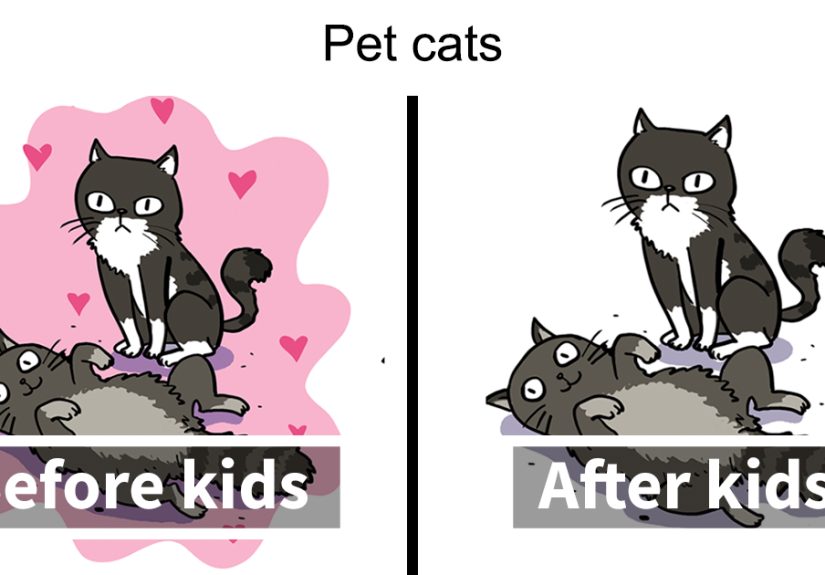
Even without seeing every panel side by side, the title alone tells you what kind of ride these 10 comic moments deliver. They are snapshots of the transformation that happens when children turn a normal household into a lovable circus with sticky hands.
1. Your “Before” and “After” Self Are Basically Different Species
Before kids, you may have had hobbies, matching socks, and opinions about artisanal coffee. After kids, your personality includes phrases like “Don’t lick that” and “Who put a cracker in my shoe?” The funny part is not just that life changes. It is how quickly those changes become normal.
2. Going Out Is No Longer a Casual Event
Once children arrive, leaving the house requires planning worthy of a space mission. Snacks, wipes, backup clothes, water, toys, emergency bribery crackers, random mystery object the child insists on bringing. The comic version is funny because the real version is somehow even messier.
3. Personal Space Becomes a Historical Concept
Kids love their parents with glorious intensity. That means the baby wants to nap on you, the toddler wants to sit on you, and the preschooler wants to narrate their thoughts while you are trying to think your own. These comics understand that affection is adorable right up until someone follows you into the bathroom.
4. Your Standards Shift Fast
Pre-kid you might have judged a stained shirt. Post-kid you ask whether the stain is fresh, permanent, or can be hidden with a cardigan. Parenting comics thrive on this kind of practical surrender. You do not become careless. You become efficient. There is a difference, and it probably has yogurt on it.
5. Fathers Change, Too
One of the smartest things about this corner of parenting humor is that it does not treat dads like furniture. Fatherhood changes men, too. Their priorities shift, their sleep disappears, and they can become emotionally invested in very specific poop-related milestones. It is funny because it is true, and also because nobody warns you how completely kids can rearrange a grown man’s conversation topics.
6. Tiny Humans Somehow Control the Entire Household
Children are small, but their influence is enormous. Meal times, bedtimes, wake-up times, weekend plans, and even your grocery list begin orbiting around them. The comics nail this imbalance perfectly: the smallest person in the room somehow has the strongest negotiating position.
7. Chaos and Love Show Up Together
This is what separates a good parenting comic from a throwaway joke. The best ones understand that the hard parts and the sweet parts are roommates. The same kid who destroyed your living room can also crawl into your lap and melt your heart in ten seconds flat. Parenthood is not either/or. It is both/and.
8. Your Body and Brain Need Grace
Brutally honest mom comics often touch on something bigger than mess and inconvenience: recovery, stress, and the reality that new parents are going through a lot physically and mentally. That honesty matters. It pushes back against the fantasy that once the baby arrives, everyone should instantly feel radiant, grateful, and camera-ready. Real life is much more textured than that.
9. The Household Runs on Teamwork, Not Mind Reading
One quiet message inside so many motherhood comics is that resentment grows where communication shrinks. The load gets heavier when one parent becomes the default planner, default finder-of-shoes, default rememberer-of-everything. Humor works here because it highlights imbalance without making the conversation impossible.
10. The Absurdity Is Part of the Beauty
Parenthood can be noisy, inconvenient, expensive, repetitive, hilarious, and emotionally overwhelming. It can also be incredibly meaningful. These honest comics about parenting do not hide the absurdity because the absurdity is part of the point. Children turn everyday life upside down, and somewhere in that upside-down world, families build new rhythms, new jokes, and new versions of themselves.
Why Humor Matters in the Middle of the Mess
There is a reason parents share these comics so enthusiastically. Humor is not just entertainment. It is relief. A funny comic can name an experience that has been sitting in your chest all week. It can turn guilt into recognition, stress into solidarity, and isolation into community.
That is especially important in modern parenting culture, which often swings between two extremes. On one side, there is glossy perfection: tidy homes, calm children, and lunches cut into star shapes by someone who apparently has eight extra hours a day. On the other side, there is doom-and-gloom exhaustion that makes parenting sound like a hostage situation. Chen’s work sits in the smarter middle. It says, “This is hard. This is funny. This is ridiculous. This is love. Welcome.”
In that sense, these brutally honest parenting comics do more than make people laugh. They validate the complicated truth of family life. They remind parents that frustration does not cancel devotion, boredom does not cancel love, and needing a break does not make anyone a bad mother or father. It makes them human.
The Bigger Takeaway From These Motherhood Comics
If you strip away the punchlines, what remains is a surprisingly thoughtful portrait of how life changes after having kids. Your time becomes less predictable. Your emotional world becomes more intense. Your relationship needs more intentional care. Your home gets louder, your routines get stranger, and your heart gets stretched in directions you did not know existed.
And yet parents keep going. They adapt. They laugh. They make peace with cold coffee. They become experts in tiny socks, giant feelings, and carrying three unrelated objects up the stairs in one trip. The transformation is not always graceful, but it is real.
That is why Chen’s comics land so well. They are not trying to sell a fantasy. They are showing the life many parents are already living: one where love is enormous, sleep is scarce, patience is a daily exercise, and humor may be the thing keeping the whole operation from collapsing into a pile of Lego pieces and laundry.
500 More Words on the Real Experiences Behind the Topic
Talk to almost any parent long enough, and you will hear a version of the same story: no one fully explains how thoroughly children reorganize everyday life. People mention diapers, school costs, and sleepless nights, but they do not always explain the emotional shape-shifting involved. It is not just that your schedule changes. Your internal weather changes, too.
For many mothers, the early months feel like a strange mix of tenderness and disorientation. One minute you are staring at a sleeping baby like you have witnessed a miracle. The next minute you are crying because someone asked what you want for dinner and your brain simply left the building. That contrast can feel startling, especially for people who expected the transition to look neater. Honest mom comics help because they give language to those swingy, contradictory moments.
Then there is the practical side of the experience, which is where the humor gets especially rich. Parents often describe life after kids as a permanent state of interruption. You start a task, stop halfway through, answer a question, wipe a spill, locate a stuffed animal, break up a sibling argument, and then return to the original task only to realize you no longer remember what century it is. This is why comics about parenting resonate so strongly. They capture the rhythm of domestic life in a way that feels specific, not abstract.
Another common experience is the gradual disappearance of spontaneity. Before children, going out might mean grabbing your keys and heading out the door. After children, it can mean packing supplies like you are crossing a desert on foot. Parents laugh at this because the preparation is so disproportionate to the event. A 20-minute outing can require enough gear to support a mid-sized expedition. It is ridiculous, yes, but also completely normal.
Many parents also describe a quiet grief for their former independence. Not because they regret having children, but because they recognize that freedom now looks different. You may miss sleeping in, finishing a thought, taking a shower without an audience, or spending money on something that is not snack-related. That feeling can coexist with deep gratitude. In fact, it often does. The most truthful stories about parenthood make room for both.
And then there is the surprise humor of children themselves. They are chaotic, stubborn, and oddly philosophical. They ask questions with the timing of stand-up comics and create household disasters with the confidence of action heroes. Parents may spend half the day cleaning up after them and the other half laughing at things that would sound unbelievable to anyone without kids. That constant collision of frustration and comedy is exactly what the best motherhood comics understand.
Perhaps the most universal experience, though, is this: parents change in ways they do not always notice right away. They become more patient in some areas, less patient in others, softer in places they used to be rigid, stronger in places they did not know were weak. They learn to function while tired, love while overwhelmed, and keep showing up even when the day feels like three separate Mondays glued together. That is the emotional truth running underneath these brutally honest comics. The mess is real, the transformation is real, and somehow the laughter is real, too.
Conclusion
This Mom’s Brutally Honest Comics Show How Your Life Changes After Having Kids (10 Pics) is more than a funny roundup concept. It is a mirror for modern family life. Weng Chen’s parenting comics work because they do not pretend children only bring sweetness or only bring stress. They show the whole deal: the sleep deprivation, the mental load, the relationship shifts, the identity changes, the absurd routines, and the love that somehow keeps getting bigger in the middle of all that chaos.
That is why these brutally honest parenting comics stay with readers. They are funny, yes, but they are also reassuring. They remind exhausted parents that if their life feels louder, stranger, and far less photogenic than it used to, they are not failing. They are simply living the very real, very messy, very hilarious truth of raising kids.