Table of Contents >> Show >> Hide
Disco did not politely knock on rock’s door in the late 1970s. It kicked the thing open wearing platform shoes, carrying a mirror ball, and demanding a better bass line. For a few glorious, confusing, occasionally horrifying years, even the most established rock acts had to decide whether to fight the groove or jump into it headfirst. Some resisted. Some dabbled. Some cannonballed into the dance floor and hoped their leather jackets still looked cool under club lights.
This is the story of the bands that gave in to disco fever, whether for one single, one album, or one very obvious “what are we doing?” moment. To be clear, this list is not about artists who were always comfortable in dance music. It is about rock bands that bent their sound toward disco’s signature ingredients: four-on-the-floor drums, slinky bass, glossy production, falsetto hooks, nightclub swagger, and a very real desire to get bodies moving. Sometimes the experiment made them bigger. Sometimes it annoyed old fans. Sometimes it did both at once, which is honestly the most rock-and-roll outcome possible.
And yes, before anyone throws a jewel case across the room, this list sticks mostly to bands rather than solo stars. So legendary disco detours by acts like Rod Stewart are standing just outside the velvet rope. Inside, though, are 10 rock bands that heard disco booming from the next room and said, “Fine. One song. Maybe two. But we’re keeping the guitars.”
What Counts as “Succumbing” to Disco Fever?
Not every danceable rock song belongs here. The difference is intent. These bands didn’t merely stumble into a groove by accident. They responded to the moment. Some chased chart success. Others absorbed the changing sound of radio and clubs. A few found surprising creative freedom in disco’s rhythm-heavy structure. The result was a run of songs that still sound like cultural snapshots: part rock, part disco, part identity crisis, and all very 1979.
10. The Kinks
(Wish I Could Fly Like) Superman
The Kinks had spent years proving they could write sharp, witty, deeply British rock songs about class anxiety, nostalgia, and everyday absurdity. So naturally, when disco conquered pop culture, Ray Davies responded by writing a song about wanting to be Superman. That is either deeply silly or secretly brilliant. In true Kinks fashion, it is both.
(Wish I Could Fly Like) Superman from Low Budget wrapped economic frustration and end-of-decade dread inside a dance pulse that felt suspiciously ready for a mirrored club floor. The beat chugged. The guitars still bit. The chorus had just enough glammy lift to sound like the band was poking fun at the trend while also shamelessly using it. That tension is what makes it work. The Kinks did not fully abandon their identity; they simply wore a sequined cape over it for four minutes.
It was also commercially smart. The song helped Low Budget become one of the band’s biggest U.S. successes, which suggests American listeners were perfectly happy to hear the Davies brothers loosen their collars a bit. Apparently even chronic worriers can dance.
9. Grateful Dead
Shakedown Street
If any band seemed constitutionally incapable of going disco, it was the Grateful Dead. This was a group built on cosmic drift, folk-blues roots, jammed-out improvisation, and the general energy of a van that may or may not contain 14 tambourines. Yet along came Shakedown Street, and suddenly the Dead were flirting with tight grooves, urban funk, and enough bounce to make people mutter the phrase “disco Dead” with equal parts amusement and horror.
The title track is the key exhibit. Shakedown Street rides a clipped, danceable rhythm that feels far more deliberate than the band’s usual freewheeling sprawl. Jerry Garcia’s guitar still sounds like Garcia, but the pulse is unmistakably aimed at movement. Even the production feels more polished than many fans expected. The funny part is that while some listeners treated the album like a betrayal, the song itself survived just fine. It became a live staple and eventually lent its title to the unofficial bazaar scene around Dead concerts.
So did the Grateful Dead become a disco band? Absolutely not. Did they borrow the groove, powder it with cosmic dust, and act like nobody noticed? Oh, very much yes.
8. Wings
Goodnight Tonight
Paul McCartney did not need disco. Paul McCartney has never technically needed anything except melody, charm, and a bass line that strolls around like it owns the building. But on Goodnight Tonight, Wings embraced the era’s dance instincts with enough enthusiasm to leave no doubt: this was not an accident, and this was not a joke.
The track is all silky groove and rhythmic glide, with a rubbery bass line and a polished feel that places it squarely in late-’70s dance-pop territory. It still carries McCartney’s melodic fingerprints, but the energy is far closer to a club than a pub. Even the title sounds like something delivered at last call by a charming guy in a satin shirt who absolutely knows where the after-party is.
What makes Goodnight Tonight memorable is that it never sounds embarrassed by its own dance-floor ambition. Wings did not dip a cautious toe into disco; they stepped in confidently and somehow kept the whole thing breezy instead of desperate. That may be the most McCartney trick of all: even when trend-chasing, he made it sound effortless.
7. The Doobie Brothers
What a Fool Believes
Purists can argue about labels all day, but What a Fool Believes absolutely belongs in the disco-fever conversation. It is not full glitter-ball disco in the Donna Summer sense, but it is drenched in late-’70s dance sophistication: a soft but persistent groove, sleek keyboards, polished production, and a rhythm section that knows exactly how much motion the song needs.
By the Michael McDonald era, the Doobie Brothers were already moving away from biker-bar boogie and toward a smoother, more soulful sound. What a Fool Believes became the perfect expression of that transition. It did not kick down the club door; it floated in with immaculate hair and elite chord changes. But make no mistake, this was dance music for grown-ups who preferred emotional regret with their rhythm.
The song’s enormous success showed that a rock band could adapt without sounding like it had sold its instruments for white suits. In fact, this track is so elegant that it almost makes the disco pivot sound classy. Almost. Somewhere, a denim vest still disapproved.
6. Electric Light Orchestra
Shine a Little Love and the Discovery Era
ELO’s disco turn was so obvious that fans have jokingly renamed Discovery as Disco Very, which is either the best pun in classic rock history or the most painful. Possibly both. Jeff Lynne’s symphonic-pop machine was already polished and theatrical, so sliding toward disco required less reinvention than you might think. Add a harder dance beat, keep the strings, and suddenly the spaceship lands at Studio 54.
Shine a Little Love is the cleanest example. The song swirls with ELO’s trademark lushness, but its propulsion is unmistakably dance-oriented. It sparkles, struts, and practically begs for synchronized pointing at the ceiling. At the same time, it still sounds like ELO and not a band in costume. That balance matters. Some bands chased trends and looked nervous doing it. ELO sounded like they could build disco in a lab and improve the wiring.
The broader Discovery album also leaned into funkier rhythms and smoother pop surfaces, showing how porous genre lines had become by 1979. When prog-minded orchestral pop starts slipping on platform shoes, you know disco fever was truly everywhere.
5. Pink Floyd
Another Brick in the Wall (Part 2)
Pink Floyd making a disco-infused hit sounds like a sentence assembled by a malfunctioning jukebox. And yet here we are. Another Brick in the Wall (Part 2) became the band’s only No. 1 single in the United States, and one reason it crossed over so forcefully is that producer Bob Ezrin helped give it a thumping dance pulse beneath all the alienation and schoolyard rebellion.
This is what makes the song so fascinating. Under the sneer, the choir, and Roger Waters’ concept-album seriousness, there is a beat you can actually move to. Not joyfully, perhaps. More like angrily, in a trench coat, while questioning authority. But move, yes.
Pink Floyd never became disco converts, and no one expects them to. Still, the song is proof that the era’s rhythmic language could seep into even the most concept-heavy rock projects. Somehow, a track about oppressive education systems found common ground with dance-floor mechanics. That should not work. It absolutely works.
4. Blondie
Heart of Glass
Blondie’s case is slightly different because the band’s DNA was always hybrid. Punk, pop, glam, girl-group sweetness, downtown cool, and genre curiosity were already part of the package. Even so, Heart of Glass was a major leap. Here was a New York band with CBGB credibility turning out one of the definitive disco hits of the era, and doing it so well that history basically shrugged and said, “Fine, this counts as a masterpiece.”
The song’s sleek pulse and shimmering arrangement made Blondie stars far beyond punk circles. It also irritated some fans who thought disco and cool-guy rock tribalism were supposed to remain enemies. Blondie ignored that nonsense and delivered a hit so undeniable that the genre argument now feels quaint.
Heart of Glass matters because it did more than follow a trend. It dissolved a border. It showed that a supposedly edgy rock band could make dance music without becoming bland, and that a disco beat could coexist with attitude, intelligence, and weirdness. Debbie Harry did not just walk into disco; she sauntered in and rearranged the furniture.
3. Queen
Another One Bites the Dust
Queen were never shy about excess, so the leap into disco-funk was less a betrayal than a new costume change. Another One Bites the Dust is driven by one of the most famous bass lines in rock history, and its groove owes a clear debt to Chic and the wider dance music exploding at the time. The result was leaner, meaner, and much more rhythmic than the operatic bombast many fans associated with the band.
That difference is exactly why it hit so hard. Instead of layering everything to the heavens, Queen left space. The groove stalks. Freddie Mercury sounds hungry. The guitar is used more like texture than heroics. It is a lesson in restraint from a band not usually known for whispering.
The gamble paid off spectacularly. The song became a massive crossover success and proved Queen could dominate a dance floor without surrendering their larger-than-life identity. If anything, the track broadened it. Under all the theatricality, Queen always understood rhythm. Disco just gave them a new way to flex it.
2. KISS
I Was Made for Lovin’ You
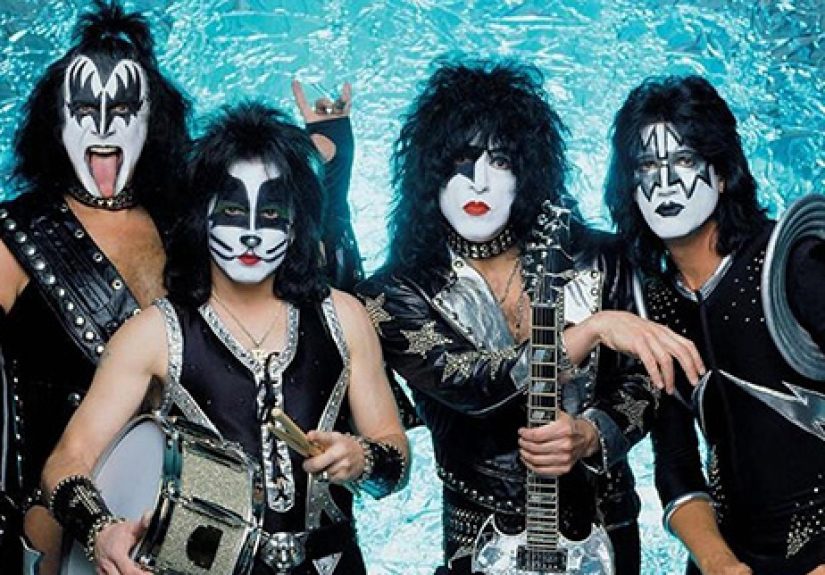
No band on this list better captures the phrase “succumbed to disco fever” than KISS. This was a group built on greasepaint, pyrotechnics, hard-rock riffs, and songs designed to sound enormous in arenas. Then, in 1979, they released I Was Made for Lovin’ You and basically said, “What if the arena also had a light-up dance floor?”
The song is disco-rock in neon letters: a pulsing beat, glossy harmonies, and a chorus engineered for mass sing-alongs. It is catchy to the point of absurdity. That was part of the problem. Plenty of longtime fans heard it as an unforgivable softening of the band’s image, while everyone else heard a giant hook and kept dancing.
That tension has followed the song for decades. Some KISS devotees still treat it like a guilty pleasure they met behind the gym after school. But history has been kind to it, because the track remains huge, instantly recognizable, and weirdly durable. In other words, KISS did the least subtle disco pivot imaginable and somehow got away with it. That deserves points.
1. The Rolling Stones
Miss You
If there is a single song that defines classic rock’s flirtation with disco, it is Miss You. The Rolling Stones did not merely dabble here. They took their ragged swagger, ran it through the rhythm of late-’70s New York nightlife, and came out with a No. 1 hit that still sounds sharp, sexy, and a little dangerous.
The genius of Miss You is that it is obviously disco-influenced without ever sounding like cosplay. The beat is danceable. The bass line glides. The arrangement has room to breathe. But Mick Jagger still sounds like Mick Jagger, and the band’s looseness keeps the track from becoming too polished. It lives in that sweet spot where a rock band adapts just enough to capture the moment without erasing its own fingerprints.
Fans noticed, of course. Some loved the groove. Others reacted as if the sacred walls of guitar rock had been personally vandalized. Yet time has settled the argument. Miss You was not a sellout move; it was a smart, stylish, musically alert response to what was happening around the band. More than that, it was a reminder that rock and disco were never as far apart as people pretending to hate fun wanted to believe.
Why These Songs Still Matter
What makes these disco-flavored rock songs endure is not novelty alone. Plenty of trend-chasing records age like milk left on a windowsill. These survived because the bands brought something of themselves into the experiment. The Stones added attitude. KISS added bombast. Queen added precision. Blondie added cool. Pink Floyd added menace. ELO added maximalism. The Dead added cosmic looseness. The Kinks added satire. Wings added melody. The Doobies added smooth sophistication.
In other words, disco did not erase these bands. It revealed how flexible they could be when the cultural temperature changed. Even when fans grumbled, the songs often became huge hits, and in several cases they remain among the most recognizable tracks in those bands’ catalogs. That is not a footnote. That is musical survival with a dance beat.
The Experience of Hearing Rock Bands Catch Disco Fever
The funniest thing about these songs is that they often make more sense in real life than they do on paper. Read a sentence like “Pink Floyd made a disco-infused No. 1 single” or “KISS released a glossy dance-rock anthem,” and it sounds like a prank pulled by a drunk record-store clerk. Then the songs come on, and suddenly the weirdness turns into recognition. Of course this worked. Of course people danced to it. Of course rock bands, watching the entire culture shift around them, started thinking less about purity and more about pulse.
There is also a very specific thrill in hearing one of these tracks in a mixed crowd. Put Miss You on at a wedding, a bar, or a house party and watch what happens. The rock fans nod because it is the Stones. The dance fans nod because the groove is undeniable. Nobody needs to hold a committee meeting about genre. The bass line solves the argument in seconds. The same goes for Heart of Glass and Another One Bites the Dust. These songs outlived the debate because they work physically before they work intellectually. Your feet get there ahead of your opinion.
That is probably why the backlash looks a little silly now. In the late ’70s, there was a lot of anxious posturing around what counted as “real” rock, as if a dance beat might melt a guitar on contact. But listeners have always been less rigid than subcultures pretending to guard the gate. People who bought hard-rock records also went to clubs. People who loved punk also liked pop hooks. People who said “disco sucks” somehow still knew every word to songs built on disco rhythms. Human beings are messy like that. Music is, too.
There is a deeper experience here as well: these songs capture the sound of adaptation. You can hear bands negotiating with the moment in real time. Sometimes they sound excited. Sometimes cautious. Sometimes almost competitive, as if they are saying, “Fine, you want dance music? Here is our version, and it still hits harder than half the stuff on the radio.” That spirit gives the songs extra drama. They are not just records; they are reactions. Tiny cultural documents with choruses.
And maybe that is why this era remains so entertaining. Rock bands did not always look natural under the disco ball, but they were rarely boring there. The experiments produced some masterpieces, some arguments, some glorious overreactions, and a lot of unforgettable hooks. If nothing else, they remind us that genres are more porous than fans admit, trends are more contagious than artists admit, and almost every supposedly tough band is only one irresistible groove away from doing a little strut of its own.
Conclusion
Disco fever did not destroy rock. It challenged it, teased it, dressed it up, and occasionally made it dance in public. The best bands on this list did not lose themselves in the process. They discovered new grooves, new audiences, and, in a few cases, some of the biggest hits of their careers. That is why these songs still matter: they are proof that great bands can bend without breaking, and that even the most stubborn rock act is sometimes only a hi-hat away from a nightclub classic.