Table of Contents >> Show >> Hide
- What Are Two-Toned Wood Spreaders?
- Why Two-Toned Wood Spreaders Work So Well
- Best Uses for Two-Toned Wood Spreaders
- Common Woods Used for Spreaders
- What to Look for When Buying Two-Toned Wood Spreaders
- How to Style Two-Toned Wood Spreaders
- How to Clean Two-Toned Wood Spreaders
- How to Maintain the Wood
- DIY Two-Toned Wood Spreaders
- Are Two-Toned Wood Spreaders Food-Safe?
- Two-Toned Wood Spreaders vs. Metal Cheese Knives
- Decorating Ideas by Color
- Buying Tips for Hosts and Gift-Givers
- of Real-Life Experience With Two-Toned Wood Spreaders
- Conclusion
Two-toned wood spreaders are the tiny table tools that make people pause mid-snack and say, “Wait, where did you get those?” They are simple, useful, and charming in a way that feels almost unfair. One half shows off warm natural wood grain; the other half brings a glossy painted accent, creating a utensil that looks handmade, giftable, and ready for a cheese board cameo.
Originally popularized as dipped teak serving pieces, two-toned wood spreaders fit beautifully into the modern tabletop trend: natural materials, small pops of color, and objects that work hard without looking like they are trying too hard. They are ideal for butter, soft cheese, jam, chutney, pâté, tapenade, honey butter, fruit preserves, and every spreadable thing that deserves better than a random dinner knife from the drawer.
This guide explores what two-toned wood spreaders are, why they have become a favorite for casual entertaining, how to choose the right set, how to care for them, and how to style them without making your table look like it was attacked by a lifestyle catalog.
What Are Two-Toned Wood Spreaders?
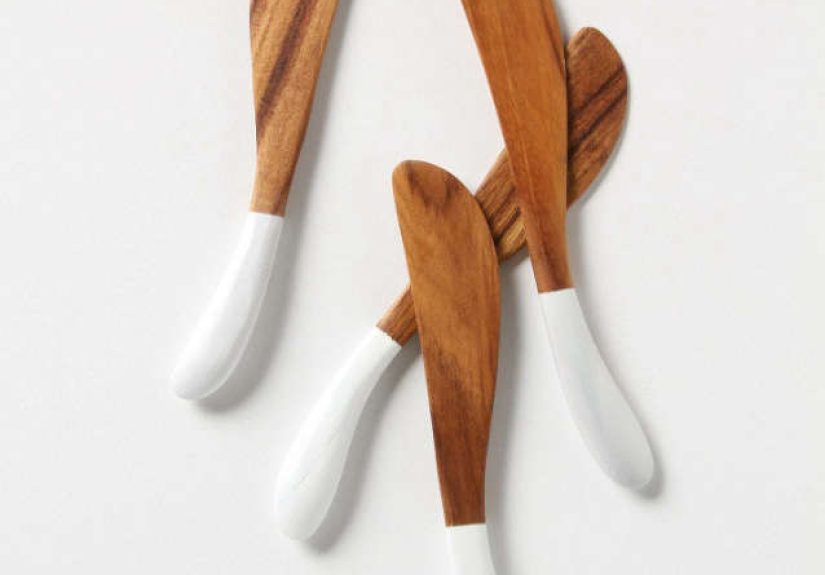
Two-toned wood spreaders are small serving utensils made primarily from wood, usually with a rounded or paddle-shaped blade and a painted or dipped handle. The “two-toned” effect often comes from combining visible wood grain with a contrasting painted section. Classic versions feature teak wood with handles dipped halfway in glossy white, black, coral, blue, green, or other playful colors.
The appeal is not complicated. The natural wood keeps the spreader warm and organic, while the painted end adds personality. It is a small design move, but it changes the entire mood of the table. A plain wood spreader says, “I brought crackers.” A two-toned wood spreader says, “I brought crackers, fig jam, and emotional stability.”
Why Two-Toned Wood Spreaders Work So Well
They Combine Function and Style
Wood spreaders are gentle on serving boards, ceramic dishes, and small bowls. Unlike metal utensils, they do not clink loudly against plates or scratch delicate surfaces. The broad, smooth shape makes them practical for scooping, smoothing, and spreading soft foods. The painted handle makes them easy to spot on a crowded appetizer board.
They Feel Casual but Thoughtful
Two-toned wood spreaders are not formal silverware, and that is exactly the point. They work for brunch, picnics, wine nights, backyard dinners, holiday appetizer boards, and “I accidentally invited six people over and now cheese is dinner” situations. They make simple food feel intentionally served.
They Make Great Small Gifts
A set of wood spreaders is compact, affordable, and easy to pair with other items. Add a jar of local jam, a cheese board, a linen napkin, or a small crock of sea salt butter, and suddenly you have a polished host gift. Nobody needs another novelty mug with a questionable quote. A pretty spreader set is actually useful.
Best Uses for Two-Toned Wood Spreaders
Two-toned wood spreaders are designed for soft, spreadable foods. They are not meant to replace sharp cheese knives or heavy-duty kitchen tools. Their specialty is the delicious middle ground where food is soft enough to glide but thick enough to need a little encouragement.
- Soft cheeses such as Brie, chèvre, cream cheese, ricotta, mascarpone, and Boursin-style spreads
- Butter, compound butter, honey butter, and herb butter
- Jams, marmalades, fruit preserves, and chutneys
- Hummus, baba ganoush, whipped feta, and bean dips
- Pâté, tapenade, pesto, and savory spreads
- Nut butters, chocolate spread, and dessert toppings
For hard cheeses, use a proper cheese knife. A wood spreader is a graceful helper, not a tiny lumberjack.
Common Woods Used for Spreaders
Teak
Teak is a classic choice for wood spreaders because it has a rich golden-brown tone, attractive grain, and natural durability. It has long been used for kitchen tools, boat decks, and outdoor furniture because it handles moisture better than many softer woods. For tabletop pieces, teak offers a polished look without feeling fragile.
Acacia
Acacia is another popular wood for serving pieces. It is known for dramatic grain patterns, warm color variation, and good durability. Acacia spreaders pair especially well with charcuterie boards, rustic trays, and darker stoneware.
Mango Wood
Mango wood often has softer golden and brown tones with natural variation. It is widely used in decorative serving boards, bowls, and utensils. Mango wood can look slightly more relaxed and artisan-inspired, which makes it excellent for casual entertaining.
Olive Wood
Olive wood is prized for its swirling grain and dense feel. It is beautiful, but usually more expensive. Olive wood spreaders look especially good with Mediterranean-style boards featuring olives, feta, roasted peppers, and rustic bread.
What to Look for When Buying Two-Toned Wood Spreaders
1. Smooth Finish
A good wood spreader should feel smooth in your hand. Run your fingers along the edge if you are shopping in person. There should be no splinters, rough seams, sticky paint, or uneven ridges where the painted section meets the wood.
2. Food-Safe Materials
Because spreaders touch food directly, the finish matters. Look for products described as food-safe, especially when the handle is painted or lacquered. The painted area should ideally be on the handle rather than the blade, so the natural wood section does most of the food contact work.
3. Comfortable Shape
The best spreaders have a slightly rounded blade and a handle that feels balanced. Too thin, and the spreader can feel flimsy. Too bulky, and it becomes awkward in small bowls. A good spreader should feel like it knows exactly what it came to do.
4. Easy Care Instructions
Most wood spreaders should be hand washed, dried immediately, and kept out of the dishwasher. If a product listing promises “dishwasher-safe wood,” read carefully. Wood and long dishwasher cycles are usually not best friends.
5. A Color That Fits Your Table
White-dipped handles feel clean and coastal. Black-dipped handles look modern. Pastels are cheerful for spring brunches. Deep green, navy, or burgundy can feel seasonal and sophisticated. If you entertain often, neutral two-toned wood spreaders are the easiest to mix with different dishes, linens, and boards.
How to Style Two-Toned Wood Spreaders
For a Cheese Board
Use one spreader for each soft item. Place a white-dipped spreader beside Brie, a darker one near fig jam, and another with whipped goat cheese. This helps guests avoid mixing everything into one mysterious beige situation. Your board stays prettier, and your chutney does not end up tasting like garlic herb cheese unless you invited that chaos.
For Brunch
Two-toned wood spreaders shine at brunch. Use them with butter, cream cheese, flavored honey, fruit jam, lemon curd, or almond butter. Place them in small ramekins beside toast, scones, muffins, bagels, or waffles. Suddenly your countertop breakfast looks like a boutique inn, minus the tiny shampoo bottles.
For Picnics
Wood spreaders are lightweight and easy to pack. Wrap them in a cloth napkin with reusable utensils and pair them with crackers, soft cheese, and fruit preserves. Since the painted handles are easy to spot, they are less likely to disappear into the picnic blanket wilderness.
For Holiday Tables
Use two-toned wood spreaders to create color accents. Red or green handles can work for Christmas, deep blue for winter gatherings, white for Thanksgiving neutrals, and soft pastels for Easter brunch. They are small details, but small details are often what make a table feel finished.
How to Clean Two-Toned Wood Spreaders
Wood spreaders are easy to care for if you respect three rules: wash by hand, dry quickly, and do not soak them. After use, rinse away food residue, wash with mild dish soap and warm water, then dry with a towel. Let them air-dry completely before storing.
Do not leave them sitting in a sink full of water. Wood absorbs moisture, and too much soaking can cause swelling, warping, cracking, or dullness. The dishwasher is also a bad idea because high heat, detergent, and long water exposure can damage the wood and weaken the finish.
How to Maintain the Wood
If the natural wood starts looking dry or pale, condition it with food-grade mineral oil or a wood-care product made for cutting boards and utensils. Apply a small amount with a soft cloth, let it absorb, and wipe away the excess. This helps the wood maintain its color and reduces the chance of cracking.
Avoid olive oil, vegetable oil, or other cooking oils for regular maintenance. They can oxidize, become sticky, or develop unpleasant odors over time. Your spreaders should smell like snacks, not like a forgotten pantry experiment.
DIY Two-Toned Wood Spreaders
If you enjoy simple craft projects, plain wood spreaders can be turned into two-toned table accessories with careful preparation. Choose unfinished or lightly finished wooden spreaders, sand the handle area gently, tape off a clean line, and paint only the handle end with a food-safe or non-toxic paint suitable for decorative use. Keep paint away from the spreading blade and any area that will sit directly in food.
For a cleaner finish, apply several thin coats instead of one thick coat. Let each coat dry fully. A sealed handle can add durability, but again, use materials appropriate for kitchen items and follow the product label carefully. DIY spreaders are great for weddings, party favors, housewarming gifts, or themed dinner nights.
Are Two-Toned Wood Spreaders Food-Safe?
They can be food-safe when made with suitable wood, smooth construction, and appropriate finishes. Wood has been used for kitchen tools for generations, and many food-safety resources allow wood cutting boards and utensils when they are properly cleaned, maintained, and replaced if badly cracked or damaged.
The main safety concern is not the wood itself; it is poor maintenance. Deep cracks, peeling paint, rough surfaces, and trapped moisture can make utensils harder to clean. If a spreader becomes split, sticky, moldy, or heavily damaged, retire it from food service. It can become a plant marker, craft tool, or tiny decorative object with an honorable past.
Two-Toned Wood Spreaders vs. Metal Cheese Knives
Metal cheese knives are better for cutting firm cheeses, slicing wedges, and handling harder foods. Two-toned wood spreaders are better for soft, creamy, scoopable items. The smartest serving setup uses both. Place metal knives near cheddar, gouda, or parmesan, and use wood spreaders for Brie, jam, butter, and dips.
Wood spreaders also create a softer, warmer table presentation. They look relaxed beside linen napkins, ceramic bowls, woven trays, stoneware plates, and rustic boards. Metal tools can feel more formal; wood tools feel like they are here for a good time and brought sourdough.
Decorating Ideas by Color
White-Dipped Spreaders
White handles are the most versatile. They look fresh with marble boards, pale ceramics, coastal decor, and minimalist tables. They are perfect for weddings, showers, and brunch spreads.
Black-Dipped Spreaders
Black handles add contrast and modern style. Pair them with slate boards, dark stoneware, walnut trays, or black-rimmed plates for a crisp, grown-up look.
Blue-Dipped Spreaders
Blue handles feel casual and coastal. They work well with seafood appetizers, summer picnics, striped linens, and white serving bowls.
Pastel-Dipped Spreaders
Pastel handles are playful and cheerful. Use them for baby showers, spring brunch, Easter boards, tea parties, or dessert tables with lemon curd, berry jam, and whipped cream cheese.
Buying Tips for Hosts and Gift-Givers
If you are buying two-toned wood spreaders as a gift, choose a set of four. Four is practical because most appetizer boards have multiple spreads. A two-piece set may look cute but can feel limiting once there is butter, jam, cheese, and dip on the table. A set of four says, “I understand your snack infrastructure.”
Pair the spreaders with a small serving board, a jar of artisan preserves, or a wedge of soft cheese. For a housewarming gift, add a handwritten note with care instructions: hand wash, dry promptly, oil occasionally, and never put in the dishwasher. That note may save the spreaders from a tragic and steamy dishwasher ending.
of Real-Life Experience With Two-Toned Wood Spreaders
The best thing about two-toned wood spreaders is that they quietly upgrade ordinary moments. I first noticed their charm at a casual weekend gathering where the food was simple: crackers, soft cheese, pepper jelly, olives, and a bowl of whipped butter. Nothing was fancy enough to require a reservation voice, but the spreaders made the table feel pulled together. The natural wood looked warm against the board, and the painted handles gave each small dish its own personality.
In daily use, they are especially helpful because they reduce utensil confusion. When you serve several spreads at once, people often use the same knife for everything. That is how strawberry jam ends up in the garlic dip and nobody admits responsibility. With a set of four two-toned wood spreaders, each bowl gets its own tool. Guests understand the system without needing a lecture, which is ideal because nobody attends a party hoping for a seminar on condiment boundaries.
They also feel better in the hand than many metal spreaders. Wood has a soft warmth that makes serving feel less clinical. When spreading room-temperature butter on toast or dragging goat cheese across a cracker, the motion feels smooth and gentle. The blade is not sharp, so it is comfortable for relaxed serving. For families, brunch tables, and informal gatherings, that softness is part of the appeal.
Another experience worth mentioning is how much better they photograph than basic stainless utensils. If you create recipe content, host often, or simply enjoy pretty table settings, two-toned wood spreaders add texture without stealing attention from the food. A white-dipped handle beside berry jam looks bright and clean. A black-dipped handle near fig spread looks elegant. A pastel handle beside lemon curd looks like spring showed up early and brought carbs.
Care is where people sometimes learn the hard way. Wood spreaders should never be abandoned in the sink after a party. The next morning, they may look tired, swollen, or dull. The easy habit is to wash them right after clearing the board, towel-dry them, and leave them out until completely dry. Every few weeks, especially after frequent use, a quick rub with food-grade mineral oil brings back the richness of the grain.
Over time, small marks may appear, and that is not always a flaw. Wood develops character. The goal is not to keep spreaders looking untouched forever; the goal is to keep them clean, smooth, and pleasant to use. A well-cared-for set becomes part of your entertaining rhythm. You reach for them automatically when opening jam, serving butter, or building a cheese board.
In the end, two-toned wood spreaders are proof that useful objects do not have to be boring. They are small, affordable, decorative, and practical. They make snacks look better, guests behave slightly more hygienically around dips, and hosts feel like they have their lives together, even when the main course is crackers and confidence.
Conclusion
Two-toned wood spreaders are more than cute tabletop accessories. They are practical serving tools that combine natural wood grain, cheerful color, and everyday usefulness. Whether you use them for cheese boards, brunch spreads, holiday appetizers, or relaxed picnics, they bring warmth and polish to the table without making things feel fussy.
Choose smooth, food-safe spreaders made from durable wood. Wash them by hand, dry them promptly, and condition the natural wood occasionally with food-grade mineral oil. Treat them well, and they will reward you with many seasons of butter, jam, cheese, and tiny compliments from guests who notice the details.
Note: This article is written in original standard American English for web publication and synthesizes real product, food-safety, wood-care, and tabletop styling information without source-link insertion in the article body.