Table of Contents >> Show >> Hide
- What Is a Wooden Folk Art Tree Topper?
- Why Wooden Folk Art Tree Toppers Are So Popular
- A Brief History of Tree Toppers and Folk Art Style
- Common Designs for Wooden Folk Art Tree Toppers
- How to Choose the Best Wooden Folk Art Tree Topper
- Decorating Ideas for a Wooden Folk Art Tree Topper
- How to Secure a Wooden Tree Topper
- How to Care for a Wooden Folk Art Tree Topper
- Buying Handmade vs. Vintage Wooden Folk Art Tree Toppers
- Can You Make Your Own Wooden Folk Art Tree Topper?
- Why a Wooden Folk Art Tree Topper Makes a Meaningful Gift
- Personal Experiences With Wooden Folk Art Tree Toppers
- Conclusion
Note: This article is written in original American English and synthesized from reputable U.S.-focused sources on folk art, holiday decorating traditions, handmade wooden ornaments, and care guidance for wooden decorative objects.
A wooden folk art tree topper is not the loudest decoration in the room, and that is exactly why people fall in love with it. It does not blink in twelve colors, play tinny holiday music, or require a ladder, three extension cords, and a family meeting. Instead, it sits at the very top of the Christmas tree with quiet confidence, like a handmade little mayor of the living room.
Part decoration, part keepsake, and part storytelling object, a wooden folk art tree topper brings warmth to holiday decor in a way mass-produced plastic rarely can. Whether shaped like a star, angel, bird, Santa, snowman, dove, or simple carved finial, it adds character, texture, and a touch of old-fashioned charm. It feels less like something bought in a rush and more like something discovered, gifted, inherited, or lovingly chosen.
In an age when holiday trends can change faster than a toddler can remove ornaments from the bottom branches, wooden folk art remains beautifully steady. It celebrates handcraft, regional tradition, natural materials, and imperfect details. That small brushstroke that is not perfectly straight? That is not a flaw. That is personality. And frankly, your tree could use a little personality.
What Is a Wooden Folk Art Tree Topper?
A wooden folk art tree topper is a decorative piece made primarily from wood and placed on the crown of a Christmas tree. Unlike shiny commercial toppers that often lean toward polished glamour, folk art toppers usually highlight hand-carved forms, hand-painted details, rustic finishes, symbolic shapes, and traditional motifs.
The phrase “folk art” generally refers to creative work rooted in community traditions, everyday life, regional identity, and practical materials. Folk art is often made by self-taught or community-trained makers rather than by artists following formal academic styles. In home decor, folk art can appear in quilts, carvings, painted furniture, weathervanes, decoys, signs, toys, and holiday decorations.
When that folk art spirit meets the Christmas tree topper, the result is a decoration with heart. A wooden star might be painted in deep red and cream. A carved angel may have simple wings and a peaceful face. A primitive Santa might look charmingly serious, as if he has been keeping track of naughty and nice lists since 1843. A bird topper might suggest peace, nature, or family heritage. The best versions feel personal, not generic.
Why Wooden Folk Art Tree Toppers Are So Popular
Wooden folk art tree toppers are popular because they do something many holiday decorations cannot: they make a tree feel collected instead of decorated. There is a difference. A decorated tree may be beautiful, but a collected tree tells a story. It includes ornaments from vacations, crafts from children, gifts from friends, vintage finds, and that one odd ornament nobody remembers buying but everyone defends emotionally.
A wooden folk art topper fits naturally into that kind of tree. It has texture, age, and visual warmth. Wood also pairs well with many decorating styles, from farmhouse Christmas decor to vintage holiday themes, Scandinavian-inspired simplicity, cabin decor, cottage style, primitive country design, and modern rustic interiors.
It Brings Warmth to the Tree
Wood has a natural softness that metal, glass, and plastic often lack. Even when painted, distressed, or carved into a bold shape, it keeps a grounded feeling. A wooden folk art tree topper can make a room feel cozy without trying too hard. It is the decor equivalent of a wool blanket, hot cocoa, and socks that actually stay up.
It Celebrates Handmade Character
Many folk art pieces show the hand of the maker. Brush marks, carved lines, layered paint, uneven edges, and slightly asymmetrical shapes are part of the appeal. These details give a wooden topper its charm. Instead of looking factory-perfect, it looks alive.
It Works With Sentimental Decorating
Holiday decorating is emotional. People do not usually unpack Christmas boxes and say, “Ah yes, my neutral seasonal asset collection.” They say, “Remember when Grandma gave us this?” or “Why is there glitter in this box from 2009?” A wooden folk art tree topper supports that sentimental mood because it feels heirloom-worthy.
A Brief History of Tree Toppers and Folk Art Style
The tradition of decorating Christmas trees has deep European roots and became especially fashionable in North America during the 19th century. Early Christmas trees were decorated with candles, fruits, sweets, paper chains, handmade ornaments, small gifts, and later glass decorations. Tree toppers developed as symbolic finishing touches, with stars and angels becoming two of the most familiar designs.
The star often represents the Star of Bethlehem, while angel toppers connect to the Nativity story. Over time, families expanded the idea of the topper beyond religious symbols. Today, tree toppers may include bows, snowflakes, birds, Santas, gnomes, finials, doves, woodland animals, or abstract sculptural forms.
Folk art brings another layer to that history. In American homes, handmade and hand-decorated objects have long served both practical and expressive purposes. Carved wood, painted household items, stitched textiles, and simple decorative forms were not just pretty things. They reflected local materials, family traditions, beliefs, humor, and available skills. A wooden folk art tree topper continues that tradition in miniature. It is a small object with a big job: crown the tree and say something about the home beneath it.
Common Designs for Wooden Folk Art Tree Toppers
One of the joys of choosing a wooden folk art tree topper is that there is no single “correct” look. Folk art is wonderfully flexible. It can be sweet, rustic, whimsical, spiritual, historical, or slightly odd in the best possible way.
Wooden Star Tree Toppers
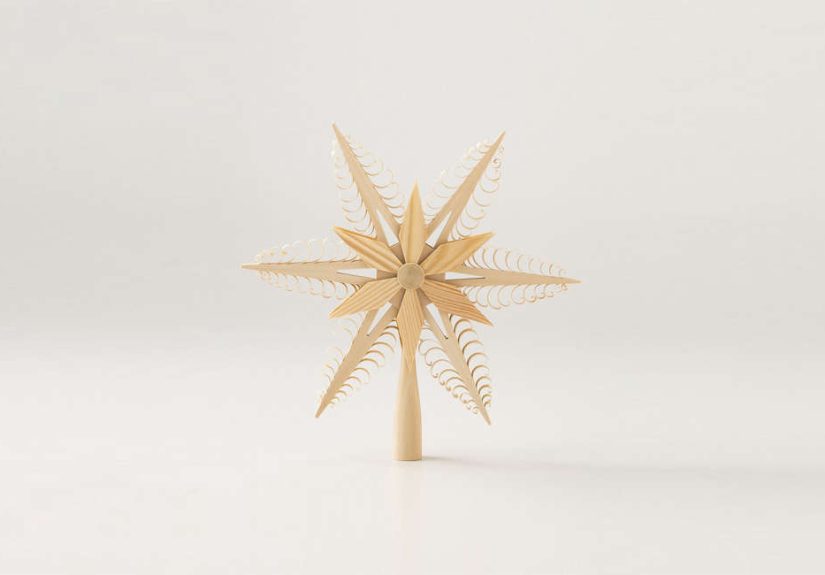
The wooden star is the classic choice. It may be carved, cut from a flat panel, layered with smaller stars, painted with folk patterns, or finished with a distressed surface. Colors such as barn red, antique white, navy, gold, forest green, and black are common in primitive and country-style holiday decor.
A star topper is especially useful because it works on almost any tree. It can look traditional on a green tree with red ornaments, rustic on a tree with burlap ribbon and pinecones, or modern when paired with simple white lights and neutral wooden ornaments.
Wooden Angel Tree Toppers
A wooden angel topper brings softness and symbolism. Folk art angels often have simple faces, carved wings, painted robes, and a peaceful expression. Some look refined, while others look endearingly homemade. Both can be beautiful.
Angel toppers are ideal for families who want a traditional Christmas theme with a handmade touch. They also pair well with vintage ornaments, candle-style lights, lace ribbon, dried orange slices, and old-fashioned garlands.
Primitive Santa Toppers
A primitive wooden Santa is perfect for people who love Christmas decor with humor and nostalgia. These toppers may feature a hand-carved face, rosy cheeks, a tall hat, a long beard, or a painted coat with distressed details. Some Santas look jolly. Others look like they just reviewed the heating bill at the North Pole.
Primitive Santa toppers work beautifully with plaid ribbon, cranberry garlands, wooden bead strands, miniature sleds, bells, and handmade ornaments.
Bird, Dove, and Woodland Toppers
Birds are common in folk art because they are simple, symbolic, and visually graceful. A wooden dove can suggest peace. A cardinal may represent winter beauty, remembrance, or regional charm. Owls, roosters, and carved songbirds can add a whimsical woodland feeling.
These toppers are excellent for nature-inspired trees decorated with pinecones, acorns, berries, mushrooms, felt animals, and warm white lights.
Finials and Abstract Folk Forms
Not every tree topper needs to be a figure. A wooden finial, carved spiral, painted cone, or stacked geometric shape can give the tree height and elegance while still feeling handmade. These designs are especially useful for people who want folk art charm without a strongly religious or character-based theme.
How to Choose the Best Wooden Folk Art Tree Topper
Choosing a tree topper is not quite as serious as choosing a mortgage lender, but it does deserve a little thought. The topper is the visual period at the end of your tree’s sentence. Choose the wrong one and the whole thing may feel slightly confused, like a snowman wearing scuba goggles.
Consider the Size of Your Tree
A large tree needs a topper with enough presence to be seen from across the room. A tiny topper on a nine-foot tree can look like the tree is wearing a party hat from a dollhouse. On the other hand, a heavy oversized topper on a small tabletop tree may lean dramatically to one side and create unnecessary suspense.
For a standard six- to seven-foot tree, many toppers in the range of 8 to 14 inches work well, depending on shape and weight. For tabletop trees, a smaller topper around 4 to 8 inches is usually better. Tall trees may need a topper that is 14 inches or more, especially if it has an open star shape or vertical finial design.
Check the Weight
Wood is sturdy, but it can be heavier than fabric, paper, or lightweight plastic. Before buying a wooden folk art tree topper, consider whether your tree’s top branch can support it. Artificial trees with strong center poles can usually handle more weight than delicate real trees with flexible tops.
If the topper is heavy, secure it with floral wire, twist ties, or a hidden support rod. The goal is “festive and upright,” not “slowly falling into the eggnog.”
Match the Color Palette
Wooden folk art tree toppers often look best when they connect to at least one color already used on the tree. A red star can echo cranberry garland. A cream angel can match warm lights and ivory ornaments. A black and gold finial can complement vintage metallic accents.
That said, folk art does not require perfect matching. A little contrast can be charming. The topper should feel related to the tree, not trapped in a corporate branding guide.
Look for Craftsmanship
A good wooden topper should feel stable, balanced, and thoughtfully finished. Look for smooth edges where needed, secure attachments, safe paint or finish, and a base that can be fastened to the tree. Distressing is fine. Splintering is not. Rustic charm should not require a first-aid kit.
Decorating Ideas for a Wooden Folk Art Tree Topper
Once you have the topper, the fun begins. A wooden folk art tree topper can guide the entire look of your tree, or it can quietly blend into an existing collection.
Rustic Farmhouse Tree
Pair a distressed wooden star with burlap ribbon, galvanized bells, dried orange slices, wooden bead garland, white lights, and simple red ornaments. Add a few handmade-looking pieces such as felt hearts, carved animals, or small stitched stockings. The final effect is warm, casual, and welcoming.
Primitive Country Christmas Tree
Choose a primitive Santa, angel, or star with antique-style paint. Use deep red, mustard yellow, black, cream, and forest green. Decorate with cranberry garlands, homespun fabric strips, miniature wooden signs, tin ornaments, and old-fashioned candy canes.
Woodland Folk Art Tree
Top the tree with a carved bird, owl, dove, or simple wooden star. Add pinecones, mushroom ornaments, felt foxes, small deer, acorns, berry picks, and warm lights. This style works especially well in cabins, cottages, and homes where nature is already part of the decor.
Minimal Handmade Tree
Use a plain carved wooden finial or unpainted star. Keep ornaments simple: white ceramic shapes, straw ornaments, paper snowflakes, small wooden beads, and linen ribbon. The result feels peaceful and intentional without becoming cold or overly polished.
How to Secure a Wooden Tree Topper
A beautiful tree topper is only successful if it stays where it belongs. To secure a wooden folk art topper, first inspect its base. Some toppers come with a cone, spiral wire, clip, dowel, or hollow opening. Others may need extra support.
If your tree topper has a spiral base, slide it gently over the top branch and wrap the branch around the spiral when possible. If it has a flat back or no built-in holder, use green floral wire to attach it to the top trunk and nearby branches. For heavier pieces, a wooden dowel or narrow support stake can be wired to the tree’s center pole, then attached to the topper.
Always step back and check the topper from multiple angles. A topper can look straight from the front and wildly ambitious from the side. This is also a good time to invite one honest family member into the room. Not the brutally honest one. Just the useful one.
How to Care for a Wooden Folk Art Tree Topper
Wooden decorations can last for many years when treated properly. Because wood responds to moisture, heat, light, and handling, a little care goes a long way.
Keep It Away From Moisture
Store wooden toppers in a dry place. Avoid damp basements, humid attics, and storage areas where temperature swings are extreme. Moisture can cause wood to swell, paint to lift, or finishes to deteriorate.
Avoid Direct Heat
Do not place wooden holiday decor near fireplaces, heaters, radiators, or hot lights. Wood is a natural material, and heat can dry it out, warp it, or damage painted surfaces. If your tree uses lights, choose modern low-heat options and make sure bulbs do not press directly against the topper.
Dust Gently
Use a soft dry cloth or gentle brush to remove dust. Avoid soaking, scrubbing, or using harsh cleaners. If the topper is painted or antique, treat it with extra care. A little dust says “vintage.” A missing painted eyebrow says “we got too aggressive.”
Store It Properly
Wrap the topper in acid-free tissue, soft cotton, or clean unprinted paper. Place it in a sturdy box where it will not be crushed by heavier ornaments. Label the box clearly so nobody stacks a slow cooker on top of your heirloom angel.
Buying Handmade vs. Vintage Wooden Folk Art Tree Toppers
Both handmade and vintage wooden folk art tree toppers have advantages. A new handmade topper supports current artisans and may offer custom colors, names, dates, or designs. It can become the heirloom your family starts now.
A vintage topper brings age, patina, and mystery. It may show older paint styles, traditional carving techniques, or charming wear. Before buying vintage, check for cracks, loose parts, flaking paint, and signs of pests. If the piece is very old, avoid sanding or repainting it unless you understand its value. Sometimes the worn finish is the best part.
Can You Make Your Own Wooden Folk Art Tree Topper?
Yes, and it can be a wonderful holiday project. A basic wooden star topper can be made from a lightweight wood cutout, acrylic paint, sandpaper, and a simple mounting method. Paint it in a folk palette, add dots, vines, stripes, or simple florals, then lightly distress the edges for an aged look.
For a more advanced project, you can carve a bird, angel, or Santa shape from basswood or pine. Keep the design simple. Folk art does not need photographic realism. In fact, if your Santa looks a little surprised, that may only improve him.
When making your own topper, keep weight in mind. Use lightweight wood, avoid bulky attachments, and test the balance before decorating the whole tree. Also allow paint and sealant to dry completely before placing it near lights or greenery.
Why a Wooden Folk Art Tree Topper Makes a Meaningful Gift
A wooden folk art tree topper makes a thoughtful gift because it feels personal and lasting. It is especially fitting for newlyweds, new homeowners, collectors, grandparents, folk art lovers, cabin owners, and families starting new holiday traditions.
For an extra meaningful touch, choose a topper that reflects the recipient’s personality. A bird for a nature lover. A star for someone who loves classic Christmas decor. An angel for a spiritual household. A primitive Santa for someone with a sense of humor and a weakness for vintage holiday charm.
You can also include a small note explaining why you chose it. Holiday gifts do not always need to be expensive. Sometimes they just need to say, “I saw this and thought it belonged in your home.” That is a pretty good sentence to wrap in tissue paper.
Personal Experiences With Wooden Folk Art Tree Toppers
The first time I really noticed a wooden folk art tree topper, it was not in a glossy magazine or a perfectly styled holiday catalog. It was in a real living room, on a real tree, surrounded by mismatched ornaments and the kind of holiday chaos that makes a house feel alive. The topper was a hand-painted wooden star, slightly uneven, with faded red edges and tiny cream dots. It leaned a little to the left, but somehow that made it better.
That tree was not coordinated in the professional sense. There were glass balls from decades ago, paper ornaments made by children, a tiny sled with one missing runner, and at least three ornaments shaped like food for reasons nobody could fully explain. But the wooden star at the top pulled everything together. It made the whole tree feel intentional, even though it clearly had been assembled through years of family history, impulse purchases, school crafts, and sentimental refusal to throw anything away.
That is the magic of a wooden folk art tree topper. It does not demand perfection. In fact, it seems to forgive imperfection. A shiny modern topper can make older ornaments look out of place, but a folk art topper welcomes them. It says, “Come on up, macaroni wreath. You’re family.”
Another memorable example was a carved wooden angel on a small apartment tree. The apartment was not large, and the tree was modest, tucked between a bookshelf and a window. The angel had simple wings, a blue painted dress, and a face made from only a few careful lines. It was not dramatic, but it changed the entire mood of the room. At night, when the warm lights were on, the angel looked calm and watchful. It made the small space feel peaceful, like the holidays had arrived without needing to shout.
Wooden folk art toppers also have a way of starting conversations. Guests notice them because they look different from standard store-bought decorations. Someone will ask where it came from, who made it, or whether it is old. That question often leads to stories: a craft fair visit, a grandmother’s collection, a road trip through a small town, a handmade gift from a friend, or a family tradition that began almost by accident.
One of the best things about using a wooden folk art tree topper is how easy it is to build a decorating tradition around it. You can choose one special topper and use it every year, letting it become part of the season’s rhythm. Or you can rotate toppers depending on the mood of the tree. A star one year, a bird the next, a Santa when the house needs more cheer, an angel when the season feels reflective.
There is also something satisfying about the physical act of placing a wooden topper on the tree. Because it has weight and texture, it feels substantial in your hands. You notice the carved edges, the painted surface, the grain of the wood, the little details that make it unlike every other topper. It turns the final step of decorating into a small ceremony.
In many homes, the topper is the last piece added to the tree. People gather around. Someone gets the step stool. Someone else gives unnecessary directions from across the room. The topper goes on, everyone debates whether it is straight, and the tree is officially finished. A wooden folk art topper makes that moment feel grounded and memorable. It is not just the top of the tree. It is the closing note of the whole holiday scene.
For families with children, a wooden topper can become part of memory-making. Children may not remember every ornament, but they often remember the special object at the top. They remember who lifted them up to place it, who made it, or why it mattered. Years later, that same topper can carry more meaning than anyone expected when it was first bought.
That is why wooden folk art tree toppers continue to appeal to people who want holiday decor with soul. They are simple, but not boring. Rustic, but not careless. Nostalgic, but not stuck in the past. They work because they connect decoration with memory, craft with comfort, and tradition with personal style.
Conclusion
A wooden folk art tree topper is more than a finishing touch. It is a statement of warmth, tradition, handmade beauty, and personal storytelling. Whether you choose a carved angel, rustic star, primitive Santa, peaceful dove, or simple wooden finial, the right topper can transform your Christmas tree from pretty to meaningful.
Its appeal comes from the things that cannot be perfectly duplicated: the grain of the wood, the touch of the maker, the slight irregularities, the aged paint, and the memories it gathers year after year. In a holiday world full of sparkle and speed, a wooden folk art tree topper reminds us to slow down, look closely, and enjoy the charm of something made with care.